
Ir al contenido
Flalingo

Práctica de inglés

Used to y didn’t use to para B1 Preliminary: hablar y escribir sobre hábitos del pasado

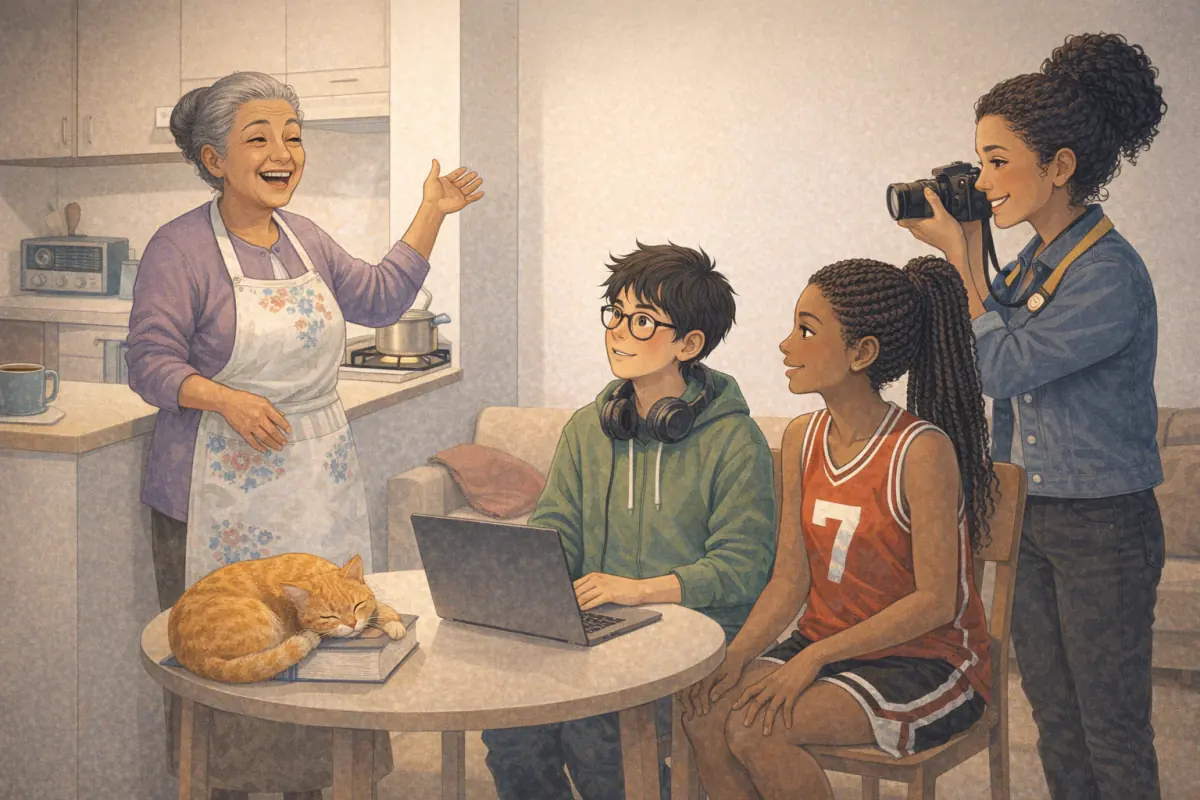
A grandmother tells her story in her small kitchen corner while three friends listen and film; an orange cat sleeps on a dictionary.

Cómo usar used to, didn’t use to y Did you use to …? si preparas B1 Preliminary (B1), cómo combinarlos con el past simple y el past continuous, y cómo escribir un párrafo de 40–50 palabras sobre antes y ahora.

Usa used to + verbo para un hábito o un estado del pasado que ya no es así: “I used to learn English from cartoons.” Después de did y didn’t se escribe use to: “I didn’t use to speak much.”, “Did you use to sing?” El past simple cuenta una acción terminada, y el past continuous, una acción en curso. Con estas formas darás respuestas más largas sobre tu pasado en el Speaking de B1 Preliminary. Esta guía es para estudiantes de nivel intermedio (B1) de unos 12–16 años.

¿Para quién es este artículo?

  • Estudiantes que preparan B1 Preliminary o B1 Preliminary for Schools, de unos 12–16 años.
  • Sabes contar lo que hiciste el fin de semana, pero cuando hablas de tu infancia la respuesta se queda en una frase, o escribes “didn’t used to”.
  • Para madres y padres: pregunta a tu hijo o hija cómo aprendía inglés de pequeño y qué hace ahora. Si la respuesta tiene un antes, un cambio y un ahora, ya tiene el plan del párrafo.
  • Demasiado pronto: si “How often do you …?” y los hábitos del presente todavía te cuestan, empieza por el artículo de A2 Key sobre la frecuencia (enlace abajo).
  • Demasiado fácil: si ya escribes párrafos de antes y ahora sin errores, pasa al correo de 100 palabras de la Parte 1 de Writing y al perfil de anfitrión (enlaces abajo).

Abrir las páginas de muestra

Abrir las páginas de muestra

Tarjetas de vocabulario

vocabulary

all the words you know in a language

The Language Swap is helping everyone's vocabulary grow.

translate

to say or write something in another language

Can you translate 'window' into Turkish? It's 'pencere'.

repeat

to say or do something again

Deniz repeated the word slowly three times.

revise

to study something again before a test

Kai revises his Turkish words on the bus.

Conversación

Kai Abuela, tell everyone how you learned English.

Abuela Rosa I grew up in Mexico City, and I didn't speak much English then. When I first moved to Kingsbay, I used to learn English from song lyrics.

Abuela Rosa Every evening, while the radio was playing, I wrote the words in a little notebook.

Abuela Rosa One evening I was singing in my kitchen when my neighbour knocked on the door.

Abuela Rosa I thought she was angry, but she asked me to join her choir! That's how I made my first English friend.

Kai Did you use to sing in Mexico too?

Abuela Rosa No, I didn't use to sing in front of people at all. Now I sing with her choir every week!

Amara That's like me. When I was little, I used to switch between English and Twi at home, sometimes in the same sentence!

Estructura de la frase

Hana's paragraph: How I used to learn English

When I was eight, I used to learn English from cartoons. I didn't use to understand much, but I loved the songs. Later I started drawing comics with English words. Now I read English websites every day, and I'm not afraid of mistakes.

Hana's paragraph has 43 words: then (used to), a change (later), and now.

  • When I was …, I used to …
  • I didn't use to …
  • Later I …
  • Now I …

Más práctica

Abuela Rosa's story

Abuela Rosa tells her story in her small kitchen corner while Kai, Amara and Zara listen and film; an orange cat sleeps on a dictionary.
lyrics

the words of a song

Rosa wrote the lyrics in a little notebook.

choir

a group of people who sing together

Rosa sings with her neighbour's choir every week.

Kai Abuela, tell everyone how you learned English.

Abuela Rosa I grew up in Mexico City, and I didn't speak much English then. When I first moved to Kingsbay, I used to learn English from song lyrics.

Abuela Rosa Every evening, while the radio was playing, I wrote the words in a little notebook.

Abuela Rosa One evening I was singing in my kitchen when my neighbour knocked on the door.

Abuela Rosa I thought she was angry, but she asked me to join her choir! That's how I made my first English friend.

Kai Did you use to sing in Mexico too?

Abuela Rosa No, I didn't use to sing in front of people at all. Now I sing with her choir every week!

Amara That's like me. When I was little, I used to switch between English and Twi at home, sometimes in the same sentence!

used to + verb: a past habit or state that is not true now

  • I used to learn English from song lyrics.
  • I didn't use to sing in front of people.
  • Did you use to sing?

was / were + -ing: an action in progress

  • while the radio was playing
  • I was singing in my kitchen

Past simple: a finished action; it can stop an action in progress

  • … when my neighbour knocked on the door.
  • She asked me to join her choir.

Speaking Part 1: when you were younger

Examiner Kai, what did you use to do in your free time when you were younger?

Kai I used to build games on my grandmother's old computer. It was really slow, but I loved it.

Examiner Do you still do that?

Kai Yes, but now I use the club laptop. At the moment I'm making a quiz game for the Language Swap.

Examiner How did you use to learn new words?

Kai I used to write them on sticky notes and put them on the fridge. My grandmother still finds some!

What did you use to do in your free time when you were younger?

I used to build games on my grandmother's old computer. It was really slow, but I loved it.

Compare then and now. Add a reason or an example to make your answer longer.

  • When I was younger, I used to …
  • I didn't use to …, but now I …
  • At that time I was living in …
  • These days I …
Aprende esta unidad
¿Cómo quieres aprender?

Used to: un hábito del pasado que ha cambiado

Used to + verbo describe algo que pasaba una y otra vez, o que fue verdad durante mucho tiempo, pero que ya no es así. En español suele corresponder a “solía + infinitivo” (solía ver dibujos animados) o al imperfecto. No tiene forma de presente: para los hábitos de ahora, usa el present simple.

Las formas (después de used to, el verbo va en su forma base):

  • Afirmativa: “I used to watch cartoons in English.”
  • Negativa: “I didn’t use to understand much.”
  • Pregunta: “Did you use to read comics?” “Yes, I did.” / “No, I didn’t.”
  • También para estados: “I used to be shy.”
  • Pronunciación: di used to como una sola palabra rápida, /ˈjuːstə/, con sonido s, no z.

Hábito, acción en curso, acción terminada

Una historia sobre tu pasado suele necesitar tres tiempos: used to para el hábito, el past continuous (was / were + -ing) para una acción en curso y el past simple para una acción terminada, que después de when puede interrumpir la acción en curso. Ojo: el imperfecto de hábito (“veía dibujos todos los días”) no se dice con “I was watching”, sino con used to.

Escucha a una abuela que le cuenta a su nieto cómo aprendió inglés. Fíjate en used to learn (hábito), was singing (en curso) y knocked (interrupción), y luego en una pregunta con did y una negación con didn’t:

Abuela I grew up in Mexico City, and I didn't speak much English then. When I first moved to Kingsbay, I used to learn English from song lyrics.

Abuela One evening I was singing in my kitchen when my neighbour knocked on the door.

Nieto Did you use to sing in Mexico too?

Abuela No, I didn't use to sing in front of people at all. Now I sing with her choir every week!

Escribe un párrafo de 40–50 palabras sobre antes y ahora

No es una tarea del examen, pero entrena lo que necesita una historia o un artículo de la Parte 2 de Writing: un comienzo, un cambio y un final claros. Planifica cuatro partes: When I was …, I used to …; I didn’t use to …; Later I … (past simple); Now I … (present simple).

Nuestro modelo tiene 43 palabras. Escribe sobre tu propio pasado.

  • “When I was nine, I used to learn English from video games.” → antes: un hábito con used to
  • “I didn’t use to speak much because I was shy.” → una negación con un motivo
  • “Later my cousin in Canada started sending me funny voice messages.” → el cambio, en past simple
  • “Now I reply in English, and we chat every weekend.” → ahora, en present simple

Palabras para hablar de cómo aprendes

Fíjate en la palabra pequeña que va después de cada adjetivo de sentimiento:

  • revise, repeat, translate (repasar, repetir, traducir): “I used to revise new words on the bus.”
  • afraid of, good at: “I used to be afraid of speaking. Now I’m good at it.”
  • interested in, proud of: “Now I’m proud of my accent.”
Aprende esta unidad a tu manera

Speaking Parte 1: respuestas sobre tu infancia

En la Parte 1 de Speaking de B1 Preliminary, el examinador te hace preguntas sobre ti, y algunas pueden ser sobre tu pasado. Di cómo era antes, cómo es ahora y añade un motivo o un ejemplo. La primera pregunta tiene una respuesta modelo:

  • “What did you use to do after school when you were younger?” → “I used to play football in the park every day. Now I have more homework, so I only play on Saturdays.”
  • “How did you use to learn English at first?”
  • “How is your life different now from when you were eight?”

Errores típicos y cómo corregirlos

Búscalos cuando revises (error a la izquierda, corrección a la derecha):

  • “I didn’t used to like reading.” → “I didn’t use to like reading.”
  • “I use to play football on Saturdays.” → “I usually play football on Saturdays.” El “suelo jugar” del español se dice con usually.
  • “I used to visit London twice.” → “I visited London twice.” Used to no sirve para contar veces.
  • “I’m used to watch cartoons.” → “I used to watch cartoons.” “I’m used to + -ing” significa “estoy acostumbrado a …”.
  • “I was singing when she was knocking.” → “I was singing when she knocked.”

Una rutina de práctica de 15 minutos

Con tres veces por semana basta. Una ronda es así:

  • 3 minutos: apunta dos hábitos del pasado, un cambio y algo que haces ahora.
  • 5 minutos: escribe el párrafo en 40–50 palabras.
  • 3 minutos: comprueba que después de did escribes use (no used) y que después de Now va el present simple.
  • 4 minutos: responde en voz alta a una de las preguntas de Speaking y grábate.

Tu siguiente paso

Cuando esto te resulte fácil, pasa al correo de 100 palabras de la Parte 1 de Writing y a un perfil de anfitrión para un estudiante de intercambio (enlaces abajo).

Preguntas frecuentes

¿Se dice “didn’t use to” o “didn’t used to”?

Escribe “didn’t use to” y “Did you use to …?”: did ya marca el pasado. Al hablar suenan igual, así que la diferencia importa al escribir.

¿Qué diferencia hay entre used to y be used to?

“I used to get up early” significa que antes madrugaba, pero ya no. “I’m used to getting up early” significa que estoy acostumbrado a madrugar; después de be used to va un sustantivo o un verbo en -ing.

¿Puedo usar el past simple en lugar de used to?

Para hábitos del pasado, muchas veces sí: “I watched cartoons every day” es correcto. Used to deja claro que el hábito ya terminó. Para una sola acción terminada, solo sirve el past simple.

Flalingo no está afiliado a Cambridge English, entidad que ofrece A2 Key y B1 Preliminary, ni cuenta con su respaldo.

Aprende esta unidad
¿Cómo quieres aprender?

¿Qué viene después?

Clases individuales con un profesor en vivo

En Flalingo, los adolescentes trabajan unidades como esta en clases individuales con un profesor en vivo, a su propio ritmo.

Reserva una clase de prueba gratis