
Best Online English Courses for Kids in Brazil (2026): 7 Platforms Compared
In public schools, English only becomes a compulsory subject in the 6th grade, when most children have already turned 11. This is what Brazil's Education Guidelines and Framework Law (LDB) has required since the 2017 reform (Law No. 9,394/1996, art. 26, § 5), and it is from this grade onward that the BNCC structures the English Language curriculum. Many families do not want to wait that long. Some pay for bilingual schools, others look for after-school courses, and many research the best online English courses for children in Brazil with two questions in mind: how much will this cost per month in reais, and is it safe to leave their child in front of a camera with an adult the family does not know?
At home, the starting point is often shaky. A British Council study found that only 5.1% of Brazilians aged 16 or over say they have some knowledge of English (British Council, 2019). In the EF EPI 2025, Brazil ranked 75th out of 123 countries, in the low-proficiency band, and 16th out of the 20 Latin American countries assessed. In practice, many children will be the first in their family to hold a conversation in English, and parents cannot always correct their pronunciation or check their homework. That is why, in this comparison, what parents can see after class matters almost as much as the class itself.
We compared seven options available in Brazil: one-on-one lessons with a regular teacher, an online school with a video-game feel, the children's version of a brand known throughout Latin America, a platform featuring only native speakers, a teacher marketplace, an app without a teacher, and a Brazilian school with live group classes. All prices are in reais.
Short answer
Our top pick is Flalingo Kids: one-to-one lessons with a regular teacher, a FLAI report after every lesson, background-checked teachers and R$34.20 per lesson on the 12-month plan, payable in card instalments. Novakid (games), Open English Junior (small groups), Cambly Kids (native speakers), Preply (choose your own tutor), Lingokids (up to age 8) and Kidsa (lowest monthly fee) complete the list.
Contents
- Our evaluation criteria
- Quick comparison of the best online English courses for children in Brazil
- Budget and safety: what to check before paying
- #1 - Flalingo Kids
- #2 - Novakid
- #3 - Open English Junior
- #4 - Cambly Kids
- #5 - Preply
- #6 - Lingokids
- #7 - Kidsa
- Which combination works for your child?
- Frequently asked questions
- Sources
Our evaluation criteria
The first lesson is almost always a hit. The real test comes in April, when the novelty has worn off, schoolwork has piled up, and the child starts bargaining to skip English. That is why we looked at what keeps a child engaged in week ten: a familiar face on the other side of the screen, a lesson designed for their age, and parents who know what is going on. We assessed all seven options against the same seven questions, based on what they publish on their pricing pages, in their terms of use, privacy policies, and help centers. The seventh criterion, in orange, reflects the Brazilian context: the monthly fee needs to fit the family budget, and since March 2026, Brazil's Digital Statute of the Child and Adolescent (ECA Digital) has changed what families can demand of digital services used by children.
Quick comparison of the best online English courses for children in Brazil
The last column shows the lowest starting price we found on the official websites. Since formats vary widely (25-minute one-on-one lessons, groups of up to 15 children, an app), compare the price with what it includes. The second-to-last column summarizes the Brazil-specific criterion: child protection and payment options.
Prices checked in November 2026.
Budget and safety: what to check before paying
Two families can spend almost the same each month and buy very different things. For R$120, one family gets three 50-minute sessions a week at Kidsa, in a group of up to 15 children. For R$136.28, the other gets one 25-minute one-to-one lesson a week at Flalingo Kids. In a group, the child spends more time listening. In a one-to-one lesson, every minute is theirs. Before comparing monthly fees, ask how many minutes a week your child will actually spend speaking English.
Next, look at the payment terms:
- Installments: paying for an annual plan in credit card installments eases the monthly burden, but ties up your credit limit and almost always locks the family in for the entire year. Check whether the installments carry interest and what happens if your child quits in May.
- Currency: when you are billed in dollars, the amount on your statement varies with the exchange rate and also includes a 3.5% IOF tax on international credit card purchases (Nubank, 2026).
- Cooling-off period: Brazil's Consumer Protection Code gives you 7 days to cancel an online purchase. Some platforms go further. Novakid offers 14 days, and Flalingo Kids offers 30.
- Renewal: check whether the plan renews automatically at the end of the term and how to cancel.
Safety standards rose in 2026. The Digital Child and Adolescent Statute (Law No. 15,211/2025), in force since March 17, applies to digital products and services aimed at children or likely to be accessed by them. The law requires the most protective settings to be the default and parental supervision tools to be available (Machado Meyer). Brazil's General Data Protection Law (LGPD) already required specific consent from at least one parent to process children's data. When choosing, ask any platform these four questions:
- Who checks the background of the teacher who will be alone with your child on camera?
- Are lessons recorded? Who can watch them, and how long are the recordings kept?
- In a group class, can other children see your child's video? Is there a chat between students?
- Can parents watch the lesson live, or do they receive a record of what happened?
On this list, Flalingo Kids and Open English Junior state that they check teachers' backgrounds. Cambly Kids and Lingokids display the kidSAFE seal. Novakid, Preply, and Kidsa do not provide details on this point on the pages we consulted, which does not mean they do not run checks. Ask before subscribing.
#1 - Flalingo Kids: a consistent teacher, reports for parents, and safety in every lesson
Flalingo Kids offers live, one-on-one English lessons for children and teenagers ages 3 to 17, in four age groups (3-5, 6-8, 9-12, and 13 and older). Each lesson lasts 25 or 50 minutes. For preschoolers and children in the early elementary grades, shorter lessons with pictures, songs, and games are recommended. The platform suggests two or three lessons a week and allows up to seven. According to Flalingo, more than 200,000 students and families have used the platform.
It is also the option on this list that provides the most detail about safety, the central consideration for Brazilian families. To teach, instructors must have a degree in English teaching or English language and literature, a teaching certificate, verified proficiency (IELTS 8 or TOEFL 100, or TEFL, TESOL, or CELTA for native speakers), and two years of experience. Following a live interview, a demonstration lesson, and reference checks, only one in every 73 applicants is accepted. Those who work with children also undergo background checks and child safeguarding training. Throughout the course, FLAI, Flalingo's artificial intelligence system, also analyzes every lesson for safety and alerts the quality team if anything raises concerns. All plans include access to native-speaking teachers.
The privacy policy follows the same approach. A minor's account can only be opened by their legal guardian. Lesson recordings are kept for one year, and within Flalingo, only authorized staff—the family's educational consultant, the quality team, and support—have access to them. Lessons involving students under 18 are never included in the company's anonymized data program.
What puts Flalingo Kids at the top, however, is continuity. During registration, Smart Matching collects 18 pieces of information about the child, such as age, level, interests, and the teaching style that suits them (calmer or more energetic), and suggests 22 to 30 profiles. The likelihood of staying with the same teacher through the end of the plan is over 90%. For a shy child, this is often what gets them talking: by around the third week, they recognize the person on the other side of the screen and pick up the conversation where they left off. Switching teachers is still possible before any lesson, at no cost.
Parents can watch lessons live, access recordings whenever they like, and receive a short lesson video via WhatsApp every week. An educational consultant supports the family, and lessons can be canceled up to eight hours in advance. For older students, The Loop books prepare them for the Cambridge A2 Key and B1 Preliminary for Schools exams. Those already considering a high school exchange program can find AI-graded IELTS and TOEFL practice tests on FlalingoExams, an English-language website.
Lessons use Smart Personalized Books, a collection that children can use for years. The Nia & Leo series starts with three Little Explorers books for preschool, moves through an introductory level (Hello, Little World!) and six further levels, and The Loop series continues from ages 11 to 14. Every unit has a game version. The teacher opens the game during the lesson, and the child searches, listens, guesses, and colors in the same picture as the teacher. At the end, the picture becomes a sticker in the child's collection., a collection that children can use for years. The Nia & Leo series starts with three Little Explorers books for preschool, moves through an introductory level (Hello, Little World!) and six further levels, and The Loop series continues from ages 11 to 14. Every unit has a game version. The teacher opens the game during the lesson, and the child searches, listens, guesses, and colors in the same picture as the teacher. At the end, the picture becomes a sticker in the child's collection.
Between lessons, Flalingo Stories offers 165 interactive stories for children ages 4 to 12, organized by Cambridge's Starters, Movers, and Flyers levels (we discuss them in more detail in Free Stories in English). Flalingo Games has multiplayer games for children ages 4 to 13. Both sites are in English, which is an advantage here. Before you sign up, the free placement test for children adjusts its questions to your child's age and reading ability, and the 25-minute free trial lesson requires no credit card or upfront payment.
Key features
- Live one-on-one lessons lasting 25 or 50 minutes, up to 7 per week, for ages 3 to 17
- Teachers with degrees and teacher training, background checks, and child safeguarding training
- Smart Matching using 18 criteria and a selection of 22 to 30 teachers
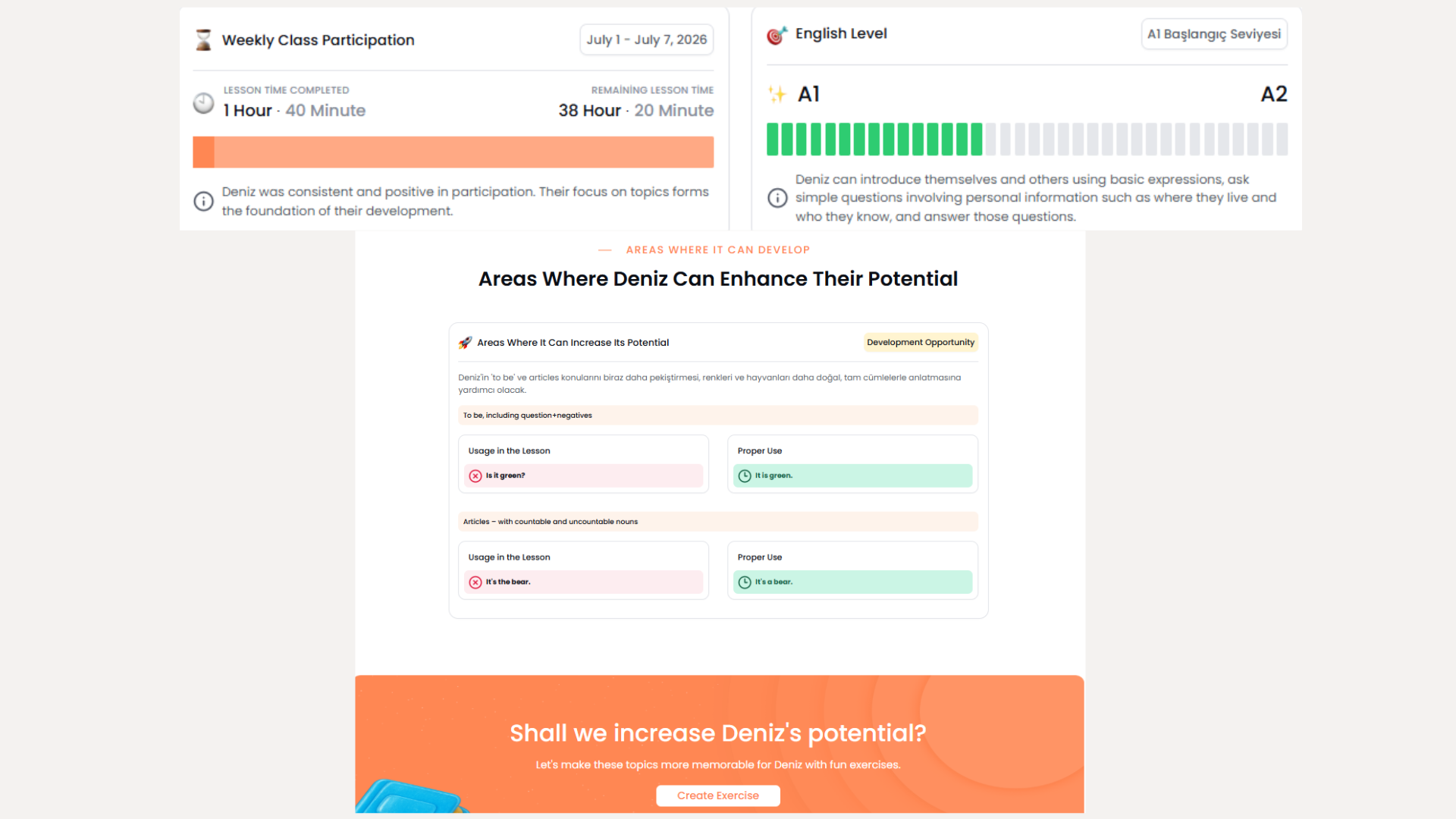
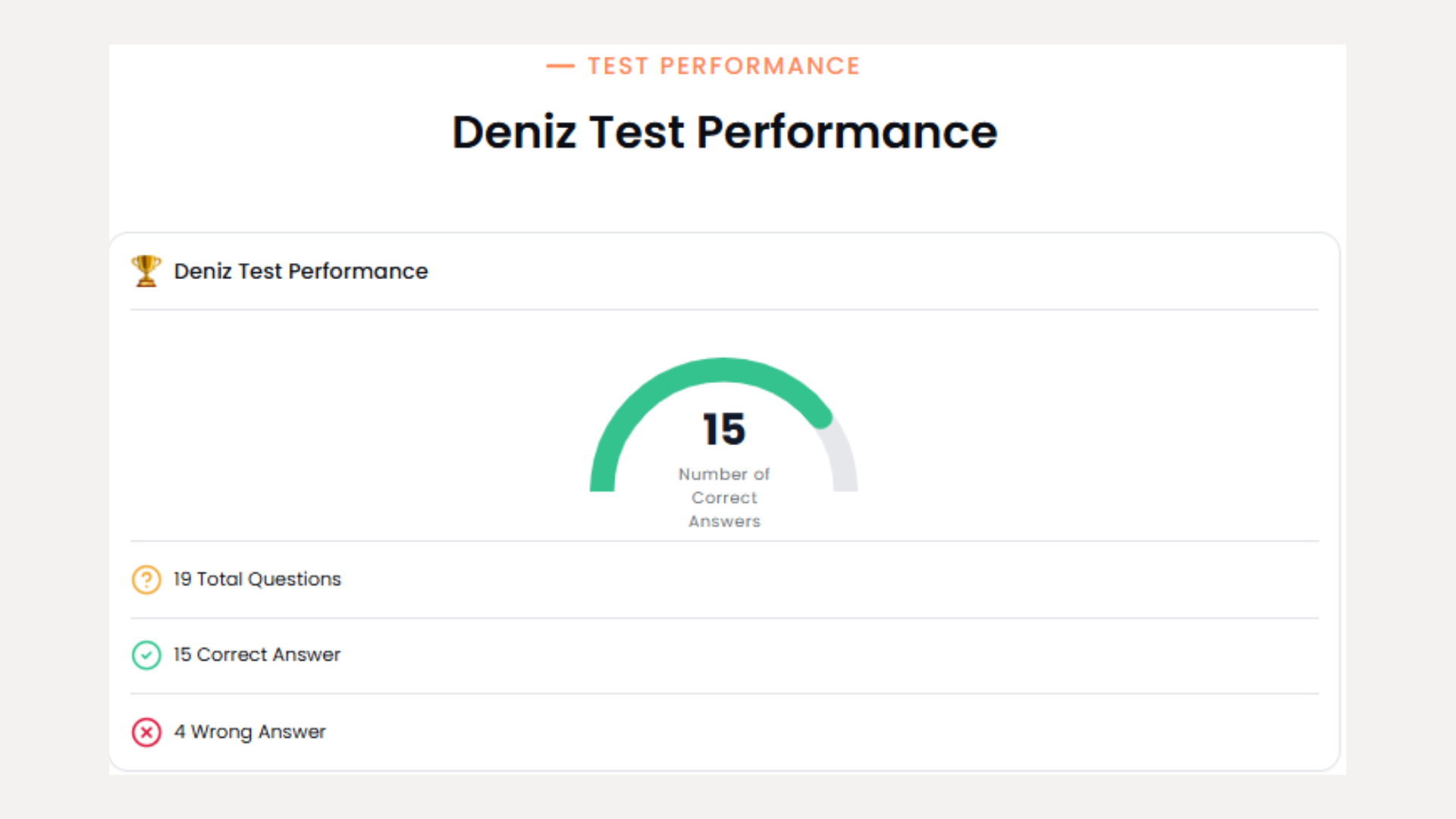
- FLAI report after every lesson and a weekly report for parents
- Personalized exercises created from the child's mistakes
- Parents can watch lessons live, with unlimited recordings and a weekly video via WhatsApp
- Nia & Leo and The Loop books, up to B1 Preliminary for Schools
- AI-powered lesson safety analysis, with alerts sent to the quality team
- Educational consultant for the family
- Free placement test for children and a free trial lesson
- 24-hour live support and messaging with the teacher
Price
There are two plans, differing only in duration and price per lesson. Both include native-speaking teachers, personalized smart textbooks, FLAI reports, 24-hour support, and unlimited access to recordings. The 12-month plan also includes group lessons. With one lesson per week, here is the breakdown (details on the Flalingo Kids pricing page):
- Payment in installments by credit card
- Extra-discount promotions throughout the year, such as Black Friday
- Second child: an additional 20% discount on all plans
- Free 25-minute trial lesson, no card details required
- Full refund within 30 days of the first lesson, no explanation required
- No automatic renewal at the end of the plan
Prices checked in November 2026.
Who is it for?
- Children ages 3 to 17, especially 5 to 12, who understand English but freeze when it is time to speak
- Families who want the same teacher throughout the year
- Parents who do not speak English and need a clear report to track progress
- Preteens aiming for A2 Key, B1 Preliminary for Schools, or a study-abroad program
- Budgets starting at R$136.28 per month on the 12-month plan, with one lesson per week
Parent reviews
On Google, Flalingo has a rating of 4.9 out of 5, with 710 reviews. The two reviews below are from families with children enrolled in Flalingo Kids. More opinions are collected in Flalingo Kids Reviews: What Parents Say.
#2 - Novakid: a gaming world for children ages 4 to 12
Novakid is an online English school designed only for children, with a page in Brazilian Portuguese. It focuses on ages 4 to 12, with 25-minute one-to-one lessons taught entirely in English. The programme follows the CEFR (Common European Framework of Reference for Languages) levels from pre-A1 to B1, with a certificate at the end of each level. Many teachers hold international teaching certificates such as CELTA, TEFL, TESOL or TKT.
There are two teacher categories: international teachers, who are not native speakers, and native speakers, who cost more. The platform does not guarantee a regular teacher, but you can rebook with the teacher your child liked best. Recordings and materials from every lesson are saved in the account, and parents receive regular progress updates. Novakid itself recommends that an adult sit in on the first lesson. The Brazilian website does not explain how teachers are vetted for child safety, so it is worth asking customer support.
To increase speaking time, Novakid supplements its one-on-one lessons with 45-minute group conversation sessions with children from various countries. For an outgoing child, this format works well. A shy child tends to let classmates do the talking. The curriculum is proprietary and does not tie in with what is taught in Brazilian schools. We compare the two methods in Flalingo Kids vs Novakid.
Key features
- 25-minute one-on-one lessons, entirely in English, for children ages 4 to 12
- International or native-speaking teachers, many with CELTA, TEFL, TESOL, or TKT certificates
- CEFR-aligned curriculum, from pre-A1 to B1, with a certificate for each level
- Avatars, tasks, stars, and certificates
- Recordings and materials from every lesson saved in the parent's account
- 45-minute group conversation lessons with children from various countries
- Free 25-minute trial lesson, no card required
Pricing
Novakid only publishes entry prices: from R$47.94 per 25-minute lesson with international teachers and from R$90.56 with native speakers. The 45-minute group conversation lessons start at R$42.62, with the first month free. The final price depends on the length of the subscription, the number of lessons per week and current promotions. With two lessons a week with international teachers, expect to pay at least around R$416 a month.
- Instalments: Novakid says it offers them in some regions, without saying which
- Up to 20% off for families with three children studying
- 14-day refund guarantee
- Free 25-minute trial lesson
Prices checked in November 2026.
Who is it for?
- Children aged 4 to 10 who get excited about games and rewards
- Families who can set aside two or three fixed time slots per week
- Parents who do not insist on having a regular teacher
- A budget starting at around R$416 per month for two lessons a week
Parent reviews
Novakid has a rating of 4.2 out of 5 on Trustpilot, with 2,602 reviews. The two reviews below are from satisfied parents, one of whom has been with the school for five years.
#3 - Open English Junior: classes of up to five children, every day
Open English is one of the best-known online English schools in Latin America and says it has taught more than 3.5 million students over more than 15 years. Open English Junior is the version for children and teenagers aged 8 to 14. Live lessons take place in groups of up to five children at the same level, last 25 minutes and run every day of the week, from 9 am to 9 pm Brasília time. Lessons must be booked at least 24 hours in advance, according to the FAQ.
At the first few levels, lessons are led by bilingual teachers, which helps children who still freeze when faced with a full sentence in English. Native-speaking teachers take over from level 3 onward. The company says all teachers have at least three years of experience with children and have passed a background check, and that the platform was designed exclusively for children. The course has 8 levels, starts with a free placement test, and provides a digital certificate at the end of each level. In addition to group lessons, there are game-based sessions (Play2Learn). Private lessons cost extra.
Parents can share access with their child to track their learning, watch lessons again, and read teachers' feedback, and they receive lesson reports by email. Open English makes no mention of a regular teacher, and since classes run at various times throughout the day, the teacher may change from one lesson to the next. For other options in this age range, see The 8 Best Online English Courses for Children Aged 10 to 12.
Key features
- Live 25-minute lessons in groups of up to 5 children at the same level
- Lessons every day, from 9 a.m. to 9 p.m. (Brasília time), booked 24 hours in advance
- Bilingual teachers at the first few levels and native speakers from level 3 onward
- Background checks and at least 3 years of experience with children, according to the company
- 8 levels, a free placement test, and a digital certificate for each level
- Game-based sessions (Play2Learn)
- Shared access for parents and lesson reports by email
Pricing
On its official blog, Open English states that Open English Junior annual plans start at R$292 a month (April 2026). There's no enrolment fee or printed book, and all materials are digital. The price changes with promotions and with extras such as private lessons.
- Payment by credit card, either in full or in monthly installments
- Cancellation with a full refund within the first 7 days of signing up
- No free trial lesson, just a platform demonstration for parents
Prices checked in November 2026.
Who is it for?
- Children ages 8 to 14 who enjoy learning with peers
- Busy families who need lessons available every day
- Beginners who feel more comfortable starting with a bilingual teacher
- Budgets starting at R$292 per month on an annual plan
Student reviews
Open English has a 4.2 out of 5 rating on Trustpilot, with 8,540 reviews across all its courses. We did not find any recent parent reviews of the Junior version. The two reviews below are from adult Open English students and discuss the app and customer service.
Reviews of Open English for adults, not Open English Junior.
#4 - Cambly Kids: native-speaking tutors only, with 30-minute lessons
Cambly Kids is the children's section of Cambly, the American platform known for conversations with native speakers. It serves children aged 4 to 15 in 30-minute one-to-one lessons. All tutors are native English speakers, and the courses follow the CEFR from A1 to C1. The website displays the kidSAFE safety seal. Plans range from two to seven lessons a week, paid monthly, quarterly or annually.
This format works best for children who already have a foundation and need to become more comfortable speaking. For complete beginners who need a rule explained patiently (and sometimes in Portuguese), it can be tough. You choose the tutor and can book lessons with them every week. Lessons are recorded, and the videos are deleted 12 months after the account is no longer used.
There are no regular reports for parents. To find out how your child is doing, you need to watch the recordings or ask them, which is difficult if you don't speak English. We compare the two approaches side by side in Flalingo Kids vs Cambly Kids.
Key features
- 30-minute one-on-one lessons for children ages 4 to 15
- Native-speaking tutors only
- Courses from A1 to C1, following the CEFR
- kidSAFE safety seal
- Recordings of every lesson
- Plans with 2, 3, 5, or 7 lessons per week
- Free games and activities, no subscription required
Price
Cambly charges per 30-minute lesson. On the two-lessons-a-week plan, the price is R$91.89 per lesson when paid monthly, R$59.40 quarterly (30% off) and R$42.40 annually (50% off). With two lessons a week, expect to pay between R$368 and R$796 a month. The page doesn't show prices for the 3-, 5- and 7-lesson plans.
- 30-minute trial lesson for a nominal fee
- Annual plan renews automatically every 12 months, with cancellation available at any time
- Full refund on the first plan if requested within the first 7 days
Prices checked in November 2026.
Who is it for?
- Children ages 7 to 15 who have a foundation and need more speaking practice
- Children who understand a lot but give one-word answers
- Families with changing schedules who prefer short lessons
- Budgets of around R$368 to R$796 per month for two lessons per week
User reviews
Cambly has a 2 out of 5 rating on Trustpilot, with 264 reviews across all its offerings. Many negative reviews come from tutors and discuss pay and scheduling. Students raise complaints about support and refunds. We did not find any recent parent reviews of Cambly Kids: the first review below is from an adult user, and the second is from a tutor on the platform.
#5 - Preply: the teacher you choose, for a specific need
Preply is a marketplace of independent tutors, not a school. Its page of English tutors for kids lists more than 14,700 tutors, and each one sets their own price, schedule and method. You filter by price, availability, country, specialism and languages spoken, and read other families' reviews before booking. Lessons usually last 50 minutes, and the trial lesson 25 or 50. If the first tutor isn't the right fit, you can try two more at no cost.
For Brazilian families, Preply has a practical advantage: it's easy to find teachers who speak Portuguese, which helps both children starting from scratch and parents who want to coordinate with the teacher. That freedom comes at a price. There is no shared curriculum for children, and the teacher's background, methods, and approach to working with a child depend on whom you choose. Screening is up to you, and with a child under 8, it's worth staying nearby during the first few lessons.
The Lesson Insights tool uses AI to summarize the lesson, including vocabulary, grammar, and review exercises. It only works if both teacher and student enable it, and it transcribes the lesson audio to do so. We compare this model with a curriculum designed for children in Flalingo Kids vs Preply for Kids.
Main features
- More than 14,700 English teachers, with filters for price, schedule, and languages spoken
- Portuguese-speaking teachers, helpful for beginners
- 50-minute lessons and a 25- or 50-minute trial lesson
- Free teacher replacement if the first isn't a good fit
- Subscription with your chosen teacher, with the option to pause
- Optional AI lesson summaries (Lesson Insights)
Price
Each tutor sets their own price. On the English tutors for kids page, the price filter ranges from R$16 to over R$213 per lesson, with highly experienced native speakers at the top of that range. To give you an idea, with a tutor charging R$80 per lesson, four lessons come to R$320 every 28 days.
- Subscription renews every 28 days, with at least four lessons per cycle
- Pause for up to 20 days, once per cycle
- Cancel up to one day before the next billing date
- Paid 25- or 50-minute trial lesson
Prices checked in November 2026.
Who is it for?
- Children with a specific need: subject tutoring, test preparation, reading, or pronunciation
- Families who want a Portuguese-speaking teacher during the first few weeks
- Parents willing to compare profiles and take two or three trial lessons
- Flexible budget: with four R$80 lessons, around R$320 every 28 days
Parent reviews
Preply has a rating of 4.4 out of 5 on Trustpilot, with 25,982 reviews. The two reviews below are from parents and discuss teacher feedback and customer support.
#6 - Lingokids: a game-based app for little ones, without a teacher
Lingokids is the only option in this comparison without live lessons. It's an app for children aged 2 to 8, with over 4,000 games, songs and activities and no ads. English sits alongside maths, reading, science and music, with characters many children already know. The app works offline and displays the kidSAFE COPPA seal. One detail that matters in Brazil: Lingokids now also has content in Portuguese and Spanish, so check in the settings that your child really is playing in English.
Here, the issue is screen time. The Brazilian Society of Pediatrics recommends avoiding screens before age 2 and limiting use to no more than 1 hour a day from ages 2 to 5, always with supervision. From ages 6 to 10, the limit rises to 1 to 2 hours (SBP, 2024). An app designed for ages 2 and up calls for discipline at home: playing alongside your child for short periods, rather than using it to keep them busy in the late afternoon.
The other limitation is speaking. Children listen, sometimes repeat, and tap the screen, but no one asks them a question or corrects what they say. Lingokids develops listening skills and vocabulary, while conversation requires a different format. For options with a teacher at this age, see The 7 Best Online English Courses for Children Ages 3 to 6.
Main features
- More than 4,000 games, songs, and activities for children ages 2 to 8
- English alongside math, reading, science, and music
- Content also available in Portuguese and Spanish
- Progress reports and profiles for multiple children
- Offline use and kidSAFE COPPA certification
- No ads
Price
On the Brazilian App Store, Lingokids costs R$59.90 a month or R$289.00 a year, which works out at around R$24 a month. The annual Plus subscription costs R$359.90. If you subscribe on your phone, you cancel in the app store settings, not inside Lingokids.
Prices checked in November 2026.
Who is it for?
- Children ages 3 to 8, especially preschoolers, with an adult nearby
- Families looking for an introduction to English without a fixed schedule
- Parents who want to supplement a live class with a little gaming on other days
- A budget of around R$24 per month on the annual plan
Parent reviews
Lingokids has a rating of 4.7 out of 5 on Trustpilot (164 reviews) and 4.4 on the Brazilian App Store. Both reviews below are from parents.
#7 - Kidsa: a Brazilian school with live group classes three times a week
Kidsa is a Brazilian online English school for children and teenagers aged 4 to 17. It has been running since 2019 and says it has more than 10,000 students. The most popular plan is the group plan, from age 5: three live sessions a week, 50 minutes each, made up of two content lessons and one practice workshop. Groups have up to 15 students, split by age and level into four bands, with morning, afternoon and evening slots on weekdays (Kidsa, FAQ).
In addition to classes, students can join daily hands-on workshops (art, games, Minecraft, yoga, sports, storytelling), access an app with videos, follow a gamified learning path with missions, coins, and prizes, and receive an exercise workbook at each level. In the Parent Portal, parents can view performance, progress, and certificates. At the end of each level, children take an individual live assessment and receive a non-accredited course certificate. Those who prefer individual lessons can choose Kidsa VIP: 30 minutes, once or twice a week, with the same teacher, for ages 4 and up.
For Brazilian families, Kidsa has an edge in price and local support: it is a Brazilian company, with contracts in Brazilian reais and customer service in Portuguese. Its privacy policy states that students' data is processed only with parents' explicit consent and that the company does not sell data to third parties. On the other hand, the website does not detail teachers' qualifications, say whether they are native speakers, or mention background checks. It also does not explain whether group classes are recorded or whether children have their cameras on for classmates to see. Before enrolling, ask about this in writing. For those with an older child, we have gathered other options in The 7 Best Online English Courses for Teenagers.
Key features
- Classes of up to 15 students, grouped by age and level, for ages 5 to 17
- Three 50-minute live sessions per week: two lessons and one practice workshop
- Daily hands-on workshops (art, games, Minecraft, yoga, sports, stories)
- App with videos and a gamified learning path featuring missions, coins, and prizes
- Exercise workbook for each level
- Parent dashboard with performance, progress, and certificates
- Certificate of completion for each level, with an individual live assessment
- Kidsa VIP: 30-minute one-on-one lessons with a dedicated teacher
Price
Kidsa publishes its prices in reais. On the annual group plan, it's 12 card instalments of R$120 (instead of R$180), with lessons guaranteed until December 2027, according to the enrolment page. The monthly plan costs R$180, with no lock-in and recurring card billing. The website doesn't publish the price of Kidsa VIP.
- Free cancellation with a full refund within the first 7 days
- Monthly plan: cancel whenever you like, with no penalty
- New level assessment if the child doesn't pass: R$30
- Requires a computer, tablet or phone with a camera, microphone and stable internet
Prices checked in November 2026.
Who is it for?
- Children ages 5 to 17 who enjoy group classes and are already comfortable speaking
- Families on a tight budget who want live lessons several times a week
- Parents who prefer a Brazilian company with customer support in Portuguese
- A budget of R$120 a month on the annual plan or R$180 on the monthly plan
Parent reviews
We could not find Kidsa on Trustpilot. The two reviews below were posted on Google by students' families.
Which option is the right fit for your child?
A ranked list does not tell you what your child needs this year. Start with what they are missing right now:
- Needs speaking practice with the same teacher all year, and you want to track progress even if you do not speak English: Flalingo Kids
- Is 4 to 10 years old and only engages when there is a star to earn: Novakid
- Is 8 to 14 years old, enjoys learning with peers, and the family's schedule changes every week: Open English Junior
- Already has a foundation and needs to build confidence with native speakers: Cambly Kids
- Needs a very specific teacher who speaks Portuguese or provides extra help with schoolwork: Preply
- Is under 6 and cannot yet manage a video call: Lingokids
- The budget is tight and the child does well in a large class: Kidsa
A simple test at home can help you decide. At the end of the trial lesson, ask your child to teach you a word they learned. If they do so proudly, without you having to insist, the format worked for them. On days without lessons, these 25 simple everyday phrases help keep English part of home life, even if you are still learning alongside them.
Flalingo Kids takes first place because it brings together what gets a child speaking throughout an entire school year: a teacher who stays with them, a textbook progression from preschool to B1, and a report parents can understand. For Brazilian families, it also offers card installments, 30 days to cancel, and a written child protection policy. For anyone looking for the best English course for children, the free trial lesson, with no card required, is a good first step.
If you also want to get back into English, our comparison of the best online English courses in Brazil for adults examines seven platforms, from one-on-one lessons to group classes with a structured curriculum.
A free trial lesson for your child

As an ESL educator of 5+ years, I am a guide for students and parents. I simplify complex English topics and online course selection for you. My goal is to help you turn learning from a stressful task into an enjoyable adventure.
English with Flalingo

Learning English with Flalingo means progressing with an intelligent system that works in an integrated manner.