
Flalingo Kids vs Cambly Kids: Native Speaker Access or Structured Curriculum?
Most parents who look for online English lessons for their child hit the same fork in the road. One kind of platform puts a native speaker on the screen and lets the conversation carry the lesson. The other one hands you a plan, a curriculum, a weekly report, and ideally the same teacher every week. Cambly Kids and Flalingo Kids sit on opposite sides of that choice.
Cambly built its name on native-speaker access. Flalingo built its around a structured method with Oxford University Press-supported materials and an AI report a parent can actually read. This guide walks through how each one works, what a lesson feels like for a kid, what you pay, and which kind of learner each suits. Neither wins for every family. The point is to match the model to your child, not to crown a champion.
Flalingo Kids vs Cambly Kids at a Glance
How Does Cambly Kids Work?
Cambly Kids offers one-on-one video lessons for children aged 4 to 15, taught entirely by native English speakers from countries like the United States, the United Kingdom, Canada and Ireland. The company states that 100% of its tutors are native speakers and that many hold graduate degrees from well-known universities. Lessons run 30 minutes.
The teaching approach leans on immersion and conversation. Cambly's own methodology describes a see, hear, speak, relate and analyse cycle. New words come in with images so the kid skips translation, the tutor models natural pronunciation, and the child is nudged to use each word in their own sentences. Games and prompts tie the new language back to the kid's real life, so it sticks better than a memorised list.
Courses are levelled against the CEFR, running from A1 for beginners up to C1. You reserve time with whichever qualified tutor is available, which gives you variety and flexible scheduling. You can favourite a tutor and try to rebook, but a steady, same-face-every-week relationship is not the built-in promise.
For safety, Cambly Kids carries the KidSafe Seal certification, and the whole thing is designed for parents to sit nearby and watch.
How Does Flalingo Kids Work?
Flalingo Kids is a one-on-one program built specifically for kids, from preschoolers around age three up through teenagers. The lesson design runs on the Flalingo Method, which teaches through stories and reinforces through games, so a kid tends to feel like they are playing rather than studying. The materials are supported by Oxford University Press and mapped to CEFR levels, but a five-year-old does not experience it as a syllabus. They experience it as a story with a friendly cast and a game to win at the end.
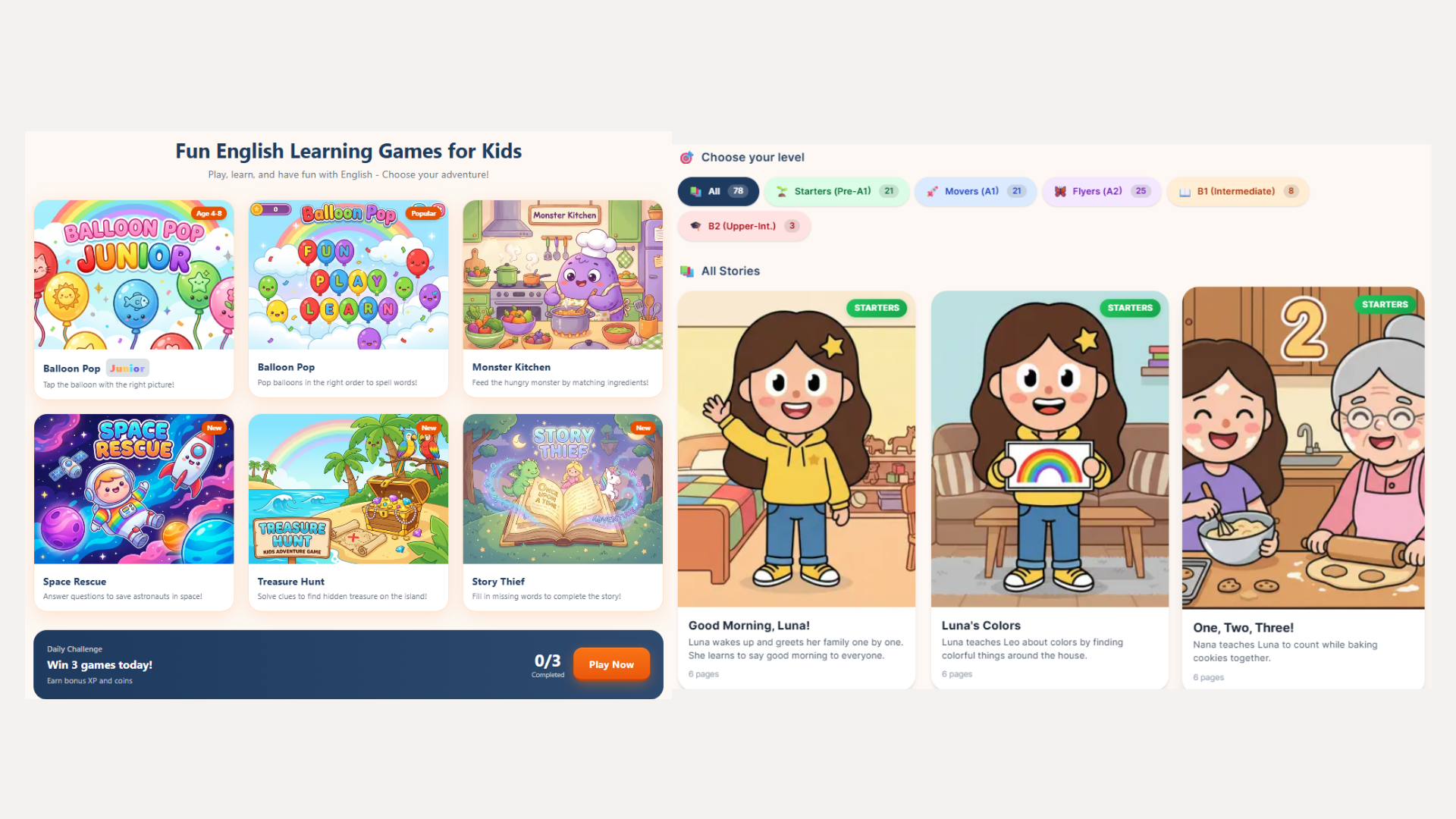
The play is not a lesson-time gimmick. It runs through the whole ecosystem, which is the part that keeps kids coming back on their own. Between live lessons, kids practice on Flalingo's own games platform, games.flalingo.com, with multiplayer titles like Balloon Pop and Monster Kitchen built for ages 4 to 13. They also read on stories.flalingo.com, a library of interactive Luna Stories that follow a little girl named Luna, her brother Leo and their cat Pixel through everyday adventures, levelled to the Cambridge Young Learners scale from Starters through Movers and Flyers.
A sticker economy ties it together. Children earn common, rare and epic stickers for joining lessons, reviewing their FLAI feedback and passing quizzes, then spend them on album pages, avatar decorations, a streak freeze or a mini game. A kid racing to finish a Luna story or chasing an epic sticker is not thinking about grammar drills. They are just having fun, which is the whole trick to making English stick at that age. For the older kids, a more structured approach is used. The lessons go alongside exam preparation and school work.
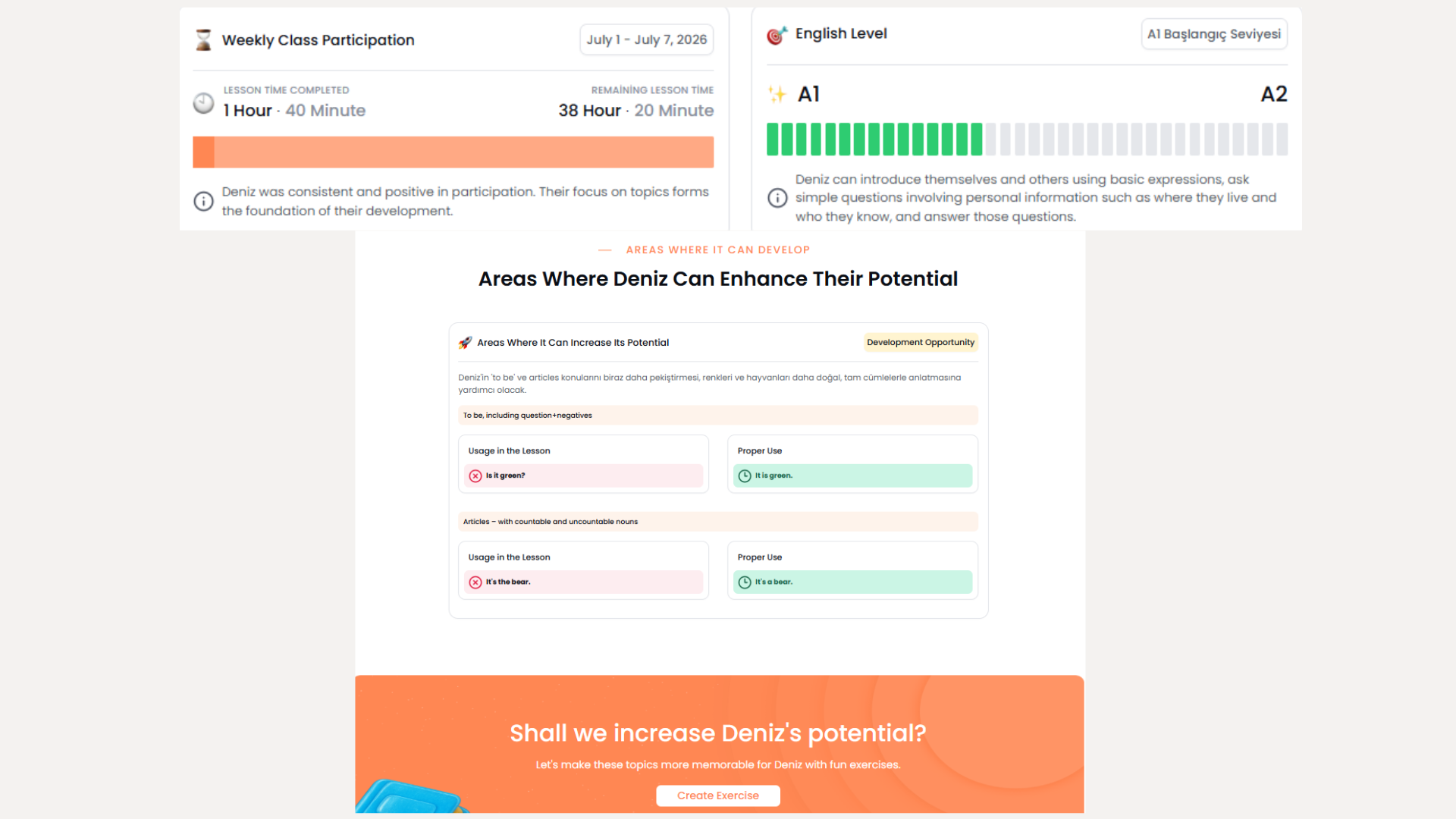
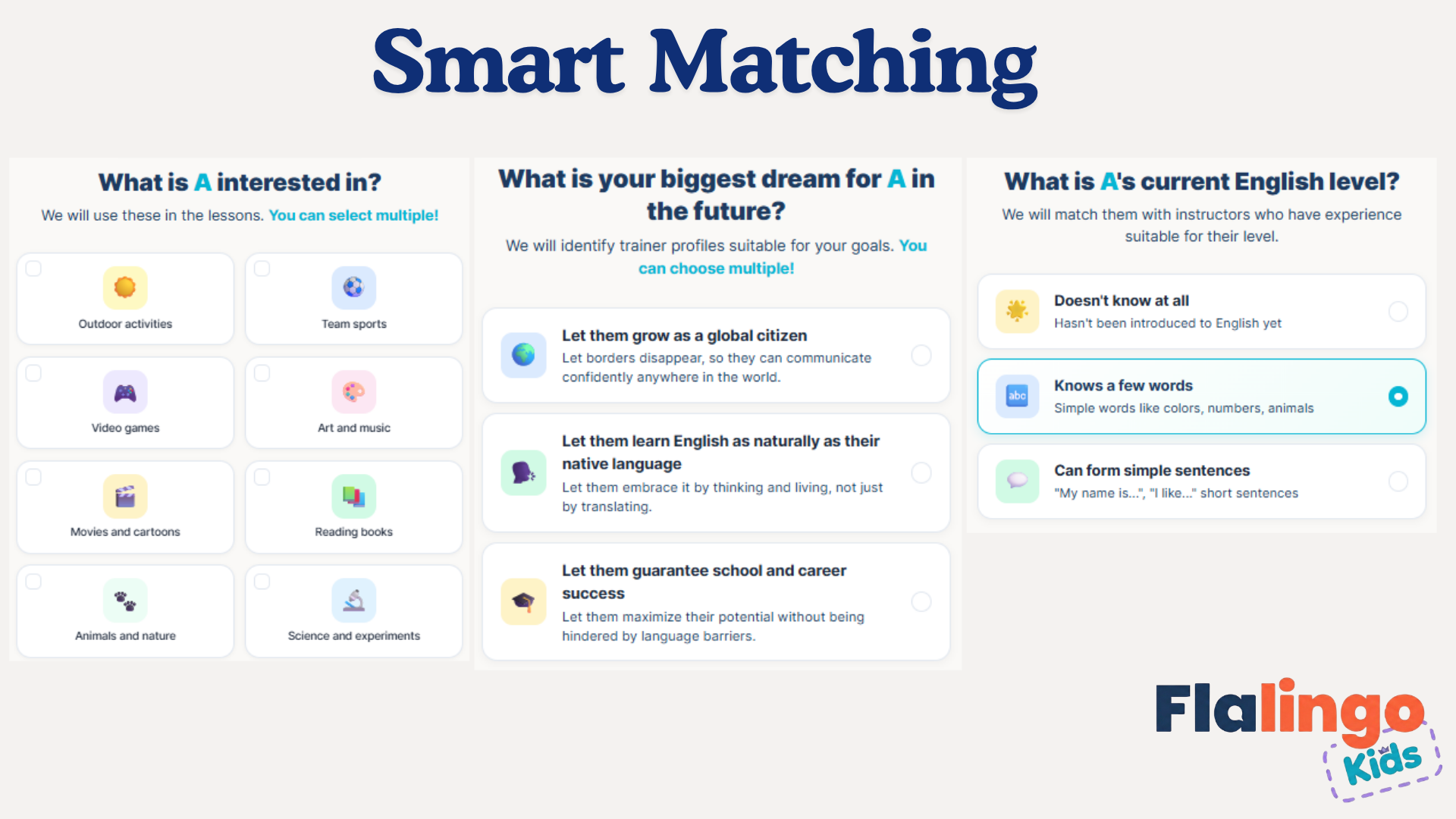
Three things sit at the centre of the experience. First, a Smart Matching algorithm pairs each child with a suitable teacher based on level, goals, schedule and personality, and it is tuned to keep that pairing steady over time. Second, after lessons, the FLAI education coach produces a weekly parent report that breaks down the words the kid learned, the grammar points they practised, and how they did on exercises. Third, personalised practice (Flalingo's Flomework engine) turns the mistakes a kid actually made in a lesson into targeted exercises, rather than generic homework.
Around that core, families get a personal education consultant, 24/7 live support, and a digital certificate to mark progress. Flalingo reports being trusted by more than 200,000 parents with a 4.9 out of 5 rating, and it organises its courses into clear age bands so the content fits the child. Parents comparing programs often look at this alongside Flalingo Kids vs Novakid, another CEFR-based option, to see how a purpose-built kids platform differs from the alternatives.
Native Speaker Does Not Equal Qualified Teacher
Is a native speaker the same thing as a good teacher for a young child? Not automatically. Speaking a language from birth and knowing how to teach it to a nervous seven-year-old are two different skills.
The research on early language learning is worth pausing on. Patricia Kuhl has shown in her work on the critical period for language that young kids are remarkably good at picking up the sounds of a new language, and that this ability is strongest early and fades as they grow.
A real person on the other end of the call genuinely helps, and this is a point in favour of any platform that puts a live native speaker in front of a child. But Kuhl's finding is about human interaction, not about accent alone. The person also has to know how to hold a small kid's attention, correct a mistake without deflating them, and connect this week's lesson to last week's. That is pedagogy, and pedagogy is learned.
Cambly's promise is native-speaker access with certified tutors and a conversational, immersive style, and that is a real strength for kids who mainly need to hear and use natural English. Flalingo makes pedagogical training a requirement for every teacher, not an optional bonus, and pairs it with a structured curriculum and progress data. If you want an honest read on whether a native-speaker platform is safe and reliable for kids, the answer for both is generally yes on safety. The deeper difference is whether native fluency comes with a guaranteed teaching method behind it.
Same-Teacher Continuity Compared
A five-year-old who spent three weeks learning to trust one friendly face often clams up when a new stranger appears, and the first ten minutes of every lesson get spent rebuilding comfort instead of learning.
Cambly's booking model is built around availability. You can mark favourite tutors and try to schedule them again, and plenty of families do land on a regular teacher this way. But the platform does not guarantee it, and the more often you book, the more likely some rotation creeps in. That flexibility is a feature for some parents and a friction for others.
Flalingo treats continuity as something to protect. The Smart Matching system considers a recommended teacher's schedule and lesson availability specifically so a child can keep working with the same person, and Flalingo reports that a student's chance of getting a lesson with their usual teacher sits above 90%. When the same teacher sees a child every week, the feedback in the parent report stays consistent, and the teacher can build deliberately on what came before instead of starting cold.
Curriculum Depth: Oxford Materials vs CEFR-Aligned Content
Both platforms use CEFR as their measuring stick, which is good news for parents. It means progress is described in the same internationally recognised terms rather than a made-up in-house scale.
Cambly's courses are CEFR-leveled from A1 to C1 and research-based, with a conversation-first shape. New vocabulary arrives through images and dialogue, and the kid practices by talking. For a lot of children, especially those who already get some English at school, that spoken practice is exactly the gap they need to fill.
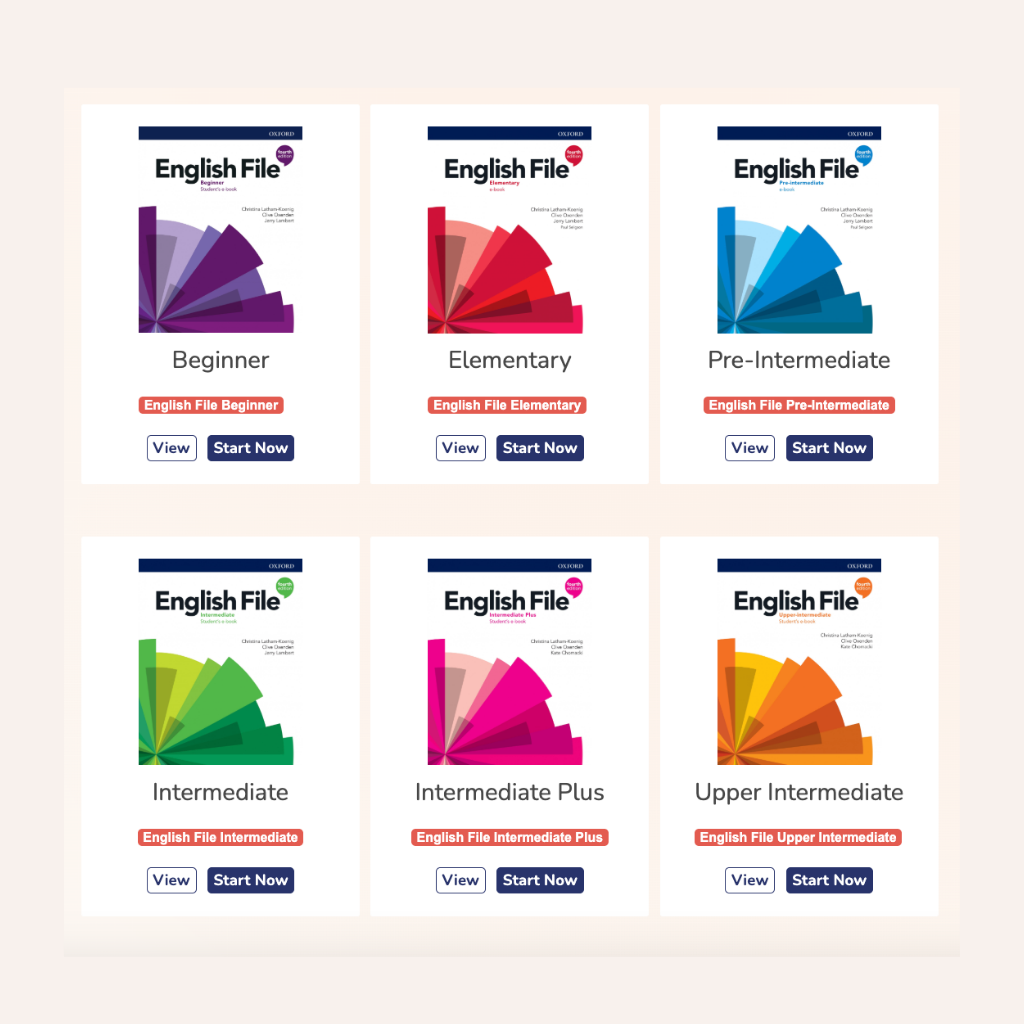
Flalingo layers more structure on top of the CEFR frame, but the structure hides inside the fun. The materials are Oxford University Press-supported, the progression is built around stories and games rather than loose conversation, and the FLAI feedback loop feeds each child's real errors back into personalised exercises. The clever part is how the grammar rides along inside the stories. A Luna Story about a sudden thunderstorm is really a lesson in past continuous versus past simple, and the kid absorbs the pattern without ever being told they are studying tenses. In practice, a child does not just chat and hope it sticks. They follow a path, they play their way through it, they get practice aimed at their own weak spots, and a parent can watch the vocabulary and grammar move on a weekly report. For families who want online English to prepare a child for school English and reading, not only for casual speaking confidence, that structure carries real weight.
Flalingo Kids vs Cambly Kids: Pricing Compared
Cambly Kids uses a subscription priced by how many lessons per week you want, with 30-minute lessons. The longer you commit, the lower the per-lesson cost falls. The headline low price only applies if you prepay for a full year, and higher-frequency plans (three, five or seven lessons a week) change the total. So the real monthly cost depends on both commitment length and frequency.
Flalingo Kids is also subscription and package based, and the price includes the Oxford University Press-supported materials, the FLAI reports, the education consultant and support rather than charging for those separately.
When you compare, look past the sticker price and weigh what each plan includes, since a slightly higher rate that bundles curriculum, continuity and weekly reporting is not really the same product as pure conversation time.
Who Is Cambly Kids Best For?
Cambly Kids is a strong fit when:
- ✔ Your main goal is maximum exposure to native speakers and a range of natural accents.
- ✔ Your kid mostly needs speaking practice and confidence rather than a formal syllabus.
- ✔ You value flexible scheduling, and you are comfortable with some variety in who teaches.
- ✔ You want the lowest possible per-lesson price, and you are willing to prepay for a year to get it.
- ✔ You like sitting in on lessons and steering the experience yourself.
Who Is Flalingo Kids Best For?
Flalingo Kids is a strong fit when:
- ✔ You want a structured curriculum with visible, measurable progress instead of open-ended chat.
- ✔ You want the same teacher week after week, which matters more the younger your child is.
- ✔ Your kid learns best through stories and games with a clear path from one level to the next.
- ✔ You want English to feel like play, with games and Luna Stories that keep your kid motivated between lessons.
- ✔ You want a weekly parent report you can actually read and act on, powered by FLAI.
- ✔ You care that every teacher has pedagogical training, not only native fluency.
- ✔ You are thinking about school performance and reading, not just holiday small talk.
Flalingo Kids vs Cambly Kids: The Verdict
The title frames this as native speaker access versus structured curriculum, and that really is the honest trade-off. Cambly Kids does native-speaker, conversation-led practice well, with flexible booking and a low per-lesson price if you commit for the year. If a child mainly needs to hear and speak natural English with a native voice, it delivers.
Flalingo Kids is built for a different priority. The same teacher most weeks, Oxford-supported materials on a CEFR path, pedagogical training required across the board, and a weekly FLAI report that shows what your kid learned. All of it is wrapped in games, Luna Stories and sticker rewards that make English feel like play instead of homework. For most parents who want steady, visible progress and a child who enjoys the process enough to keep going, that mix of structure, fun and continuity is what tips the balance.
Get a consistent, pedagogically trained teacher for your kid.




Joy Joel
My name is Joy. I am an online English teacher with five years of experience working with students of all ages. My teaching approach aims to build self-confidence and make the learning process productive through interactive, engaging and tailored support.
English with Flalingo

Learning English with Flalingo means progressing with an intelligent system that works in an integrated manner.