
Flalingo Kids vs Novakid: Comparing Two CEFR-Based Online English Programs for Kids
Choosing an online English program for a young kid usually comes down to a few quiet questions. Will my kid actually look forward to the lessons? Is the person on screen trained to teach kids, or simply a fluent speaker? And will the progress be something I can see week to week, rather than something I have to take on faith?
Flalingo Kids and Novakid both answer those questions from a CEFR foundation, so each program measures a child's growth against the same six-level European scale that schools and exams rely on. That shared reference point is where much of the similarity ends. Novakid leans on full English immersion, a game-driven student world, and a choice between native and non-native teachers at different price points. Flalingo Kids keeps native teachers as the standard for every plan, pairs each lesson with an Oxford University Press-supported curriculum, and runs an AI coach called FLAI after every session.
What follows is a practical walk-through of how each platform teaches, who stands in front of your child, what the curriculum covers, how progress reaches you, and what it costs. The goal is to help you match the right program to your child, not to the loudest homepage.
At a Glance: Flalingo Kids vs Novakid
A quick side-by-side before the detail. Each row is unpacked further down the page.
How Does Novakid Work?
Novakid is an online English school for kids aged 4 to 12, built around live one-to-one lessons and full immersion. Every class runs entirely in English, even for a four-year-old with no prior exposure, and teachers use the Total Physical Response method, leaning on gestures, facial expressions and props so a child can follow along without a word of translation.
The lessons are short on purpose. Each individual class lasts 25 minutes, which sits comfortably inside a young child's attention span, with a few minutes of warm-up activities before and follow-up games after. Learning happens on a colourful virtual whiteboard with slides, songs, embedded videos and small tasks, and children collect stars for the work they complete.
The curriculum follows CEFR standards from Pre-A1 to B1, organised into age-appropriate levels. Pre-K covers ages 4 to 5 with first words through songs and play, then Levels 1 through 5 climb steadily toward B1 intermediate proficiency in the mid-teens. Grammar is absorbed through comics, stories and conversation rather than drilled through tables.
What Novakid gives your child and you:
- Live 25-minute one-to-one lessons taught fully in English, with the TPR method to support beginners.
- A game-style student area, Novakid Game World, where children pick avatars, complete tasks, watch comics and compete with other learners.
- A 24/7 AI tutor for extra self-practice between lessons, plus international speaking groups for conversation.
- A parent account with written teacher feedback and a recording after every lesson, so you can rewatch and compare progress.
- A completion certificate at the end of each level to mark the milestone.
How Does Flalingo Kids Work?
Flalingo Kids is the children's arm of Flalingo's wider English-learning ecosystem, and it starts from a stricter teacher standard. Every kid works with a native teacher, and the Flalingo method is built so that each live lesson feeds a chain of follow-up practice rather than standing on its own.
Teacher selection is deliberately narrow. Flalingo accepts one teacher for every 73 who apply, after multi-stage interviews, sample lessons, and both pedagogical and technical assessments. Accepted teachers are tagged by speciality, including child pedagogy, and their performance is monitored continuously through student satisfaction, attendance and FLAI reports. Teachers who slip below the standard are removed.
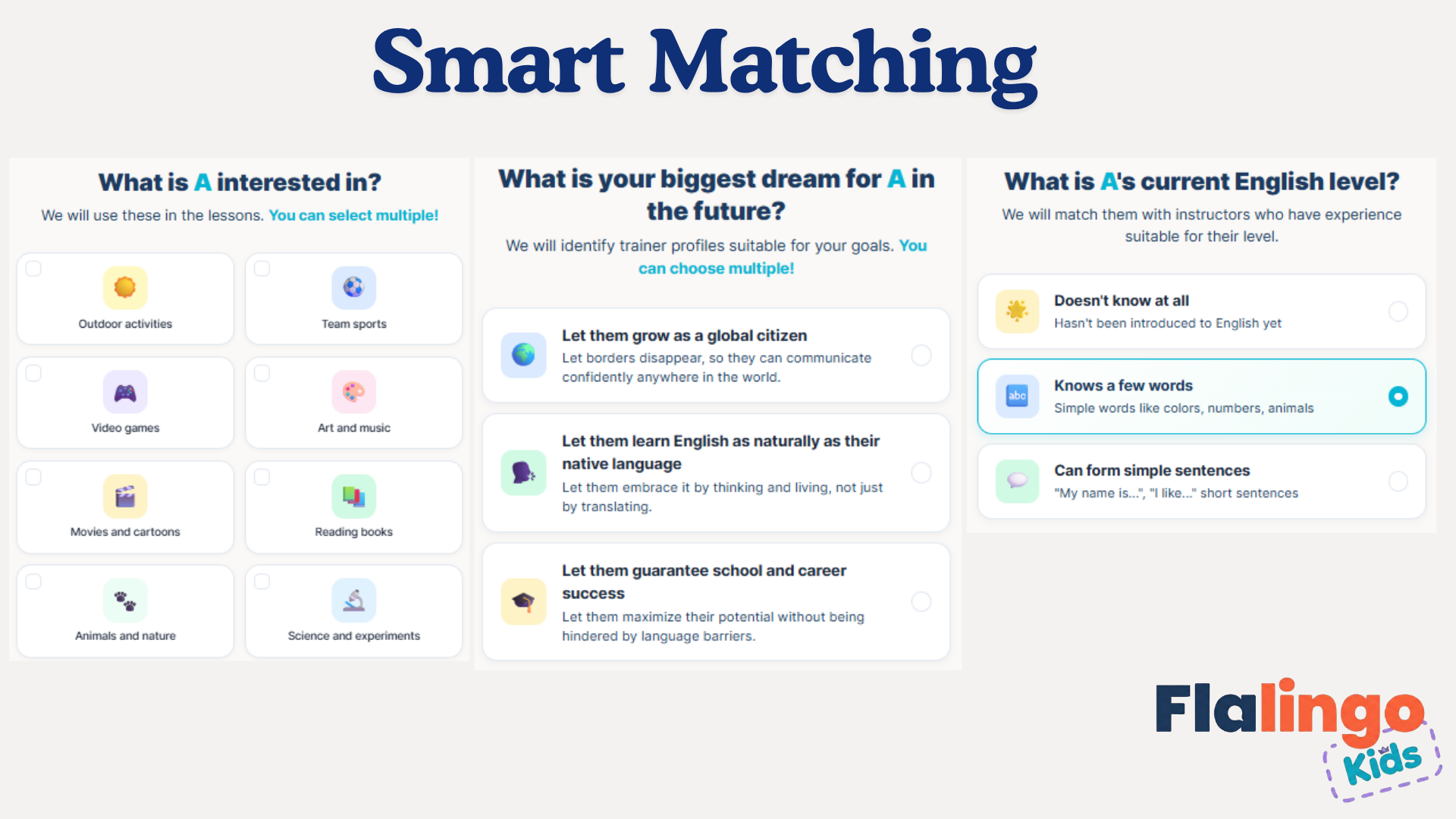
Lessons are shaped around a kid's age. Flalingo runs distinct patterns for ages 3 to 6, 7 to 11 and 12 to 18. The youngest group moves through visual cues, short gamified tasks and quick repetition with the teacher, while older kids shift toward task-based communication, vocabulary focus and short writing. A student and teacher are matched by Flalingo's Smart Matching system, which weighs 18 data points and keeps children with the same teacher wherever it can.
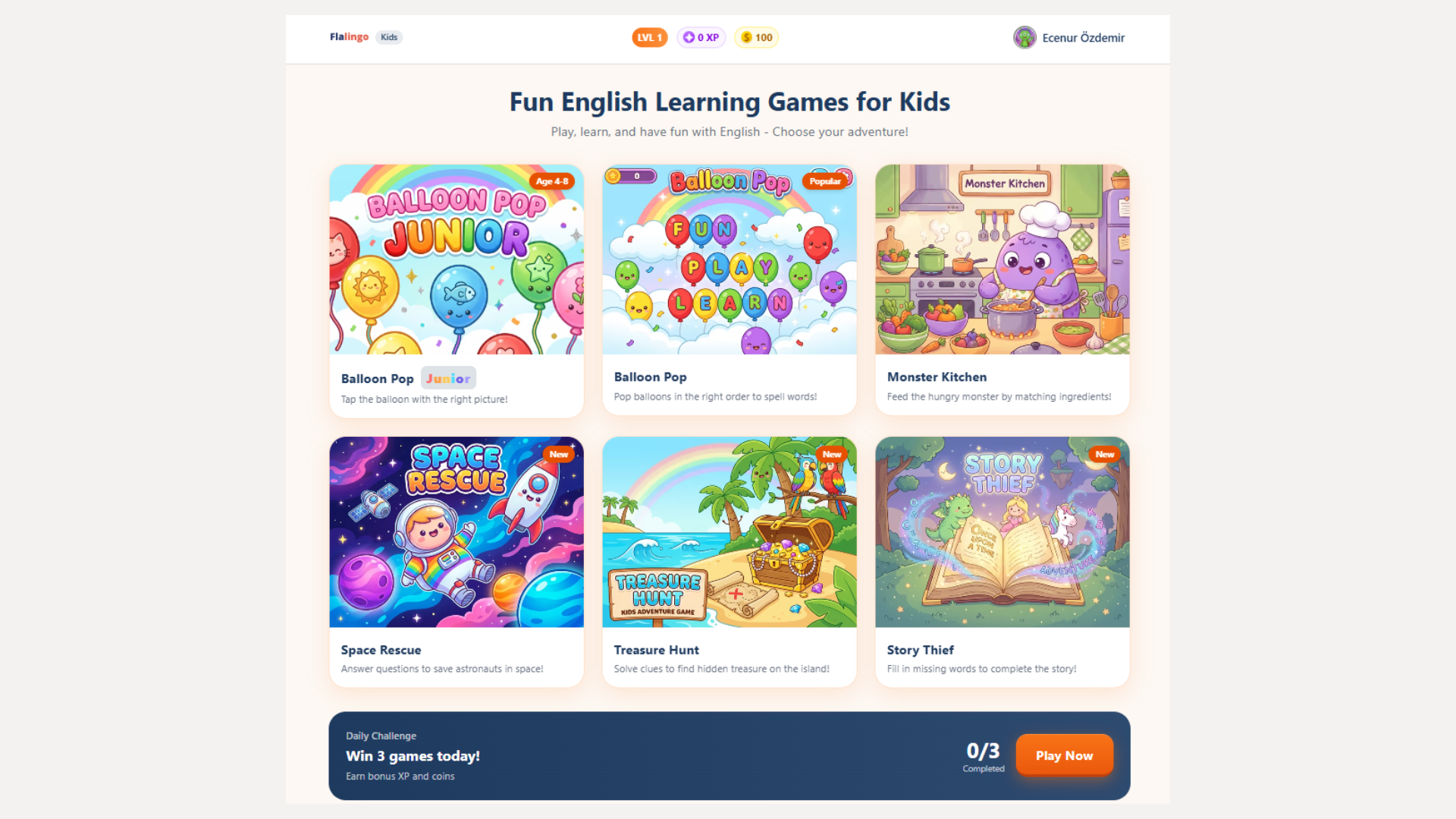
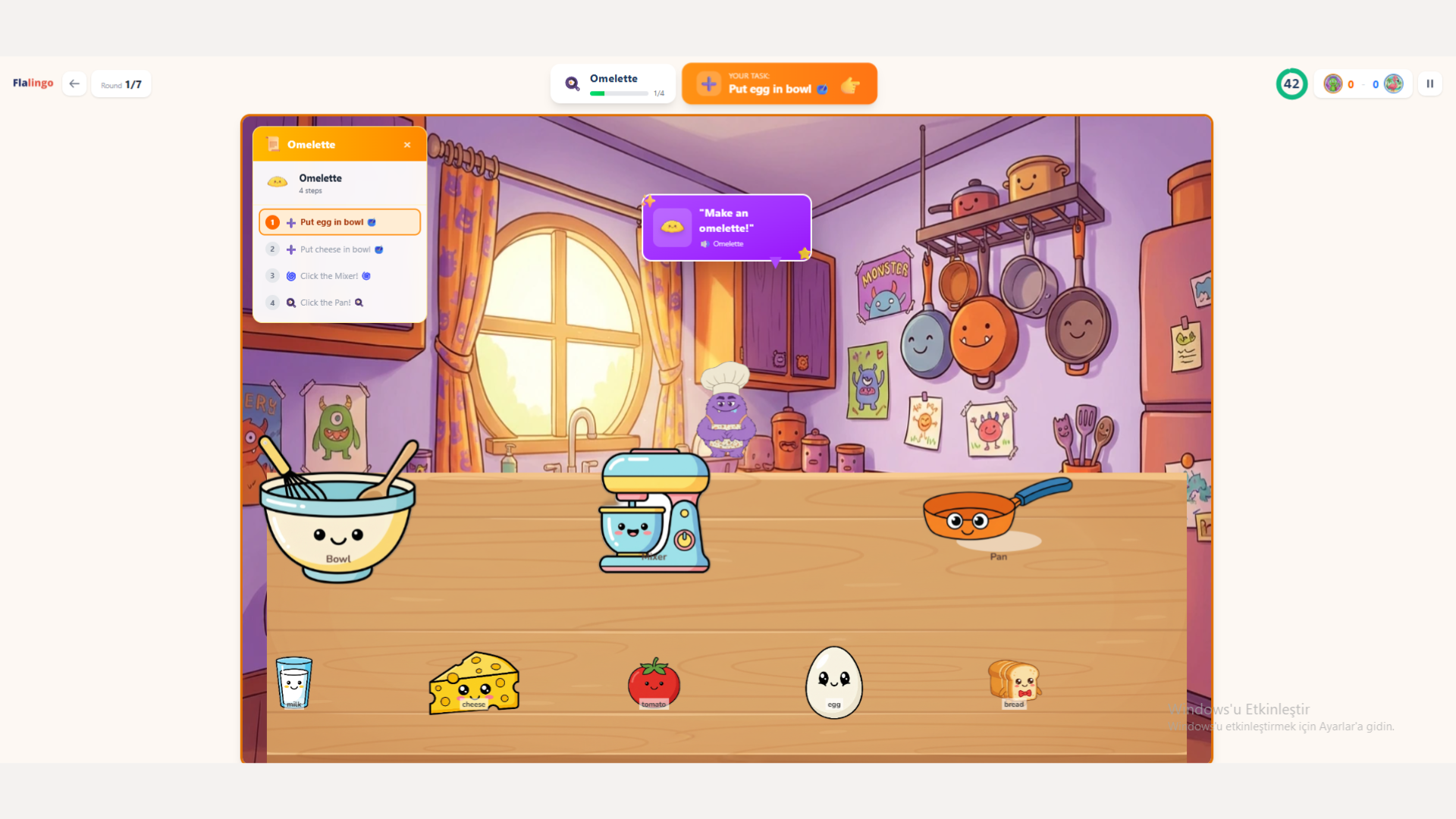
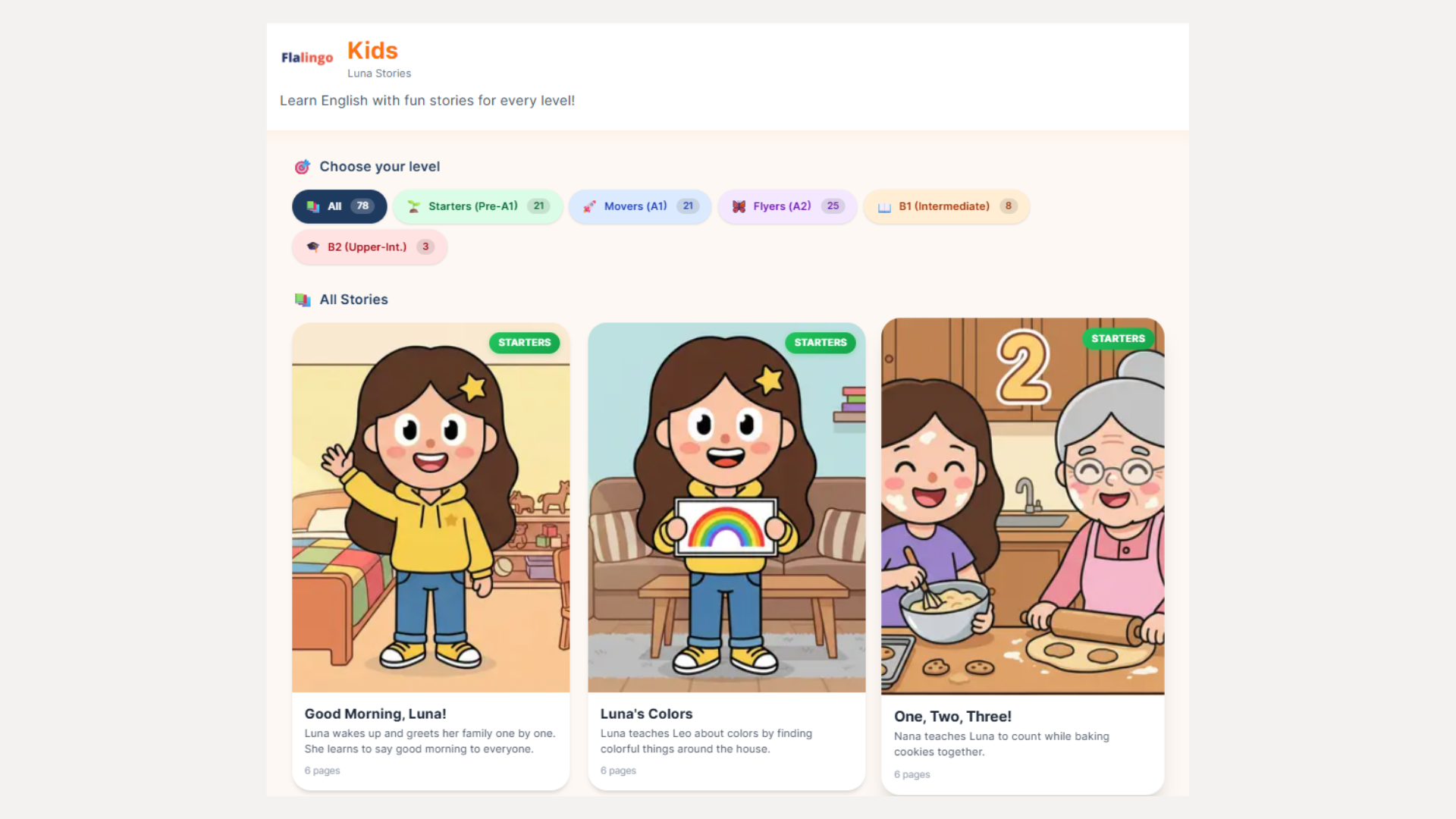
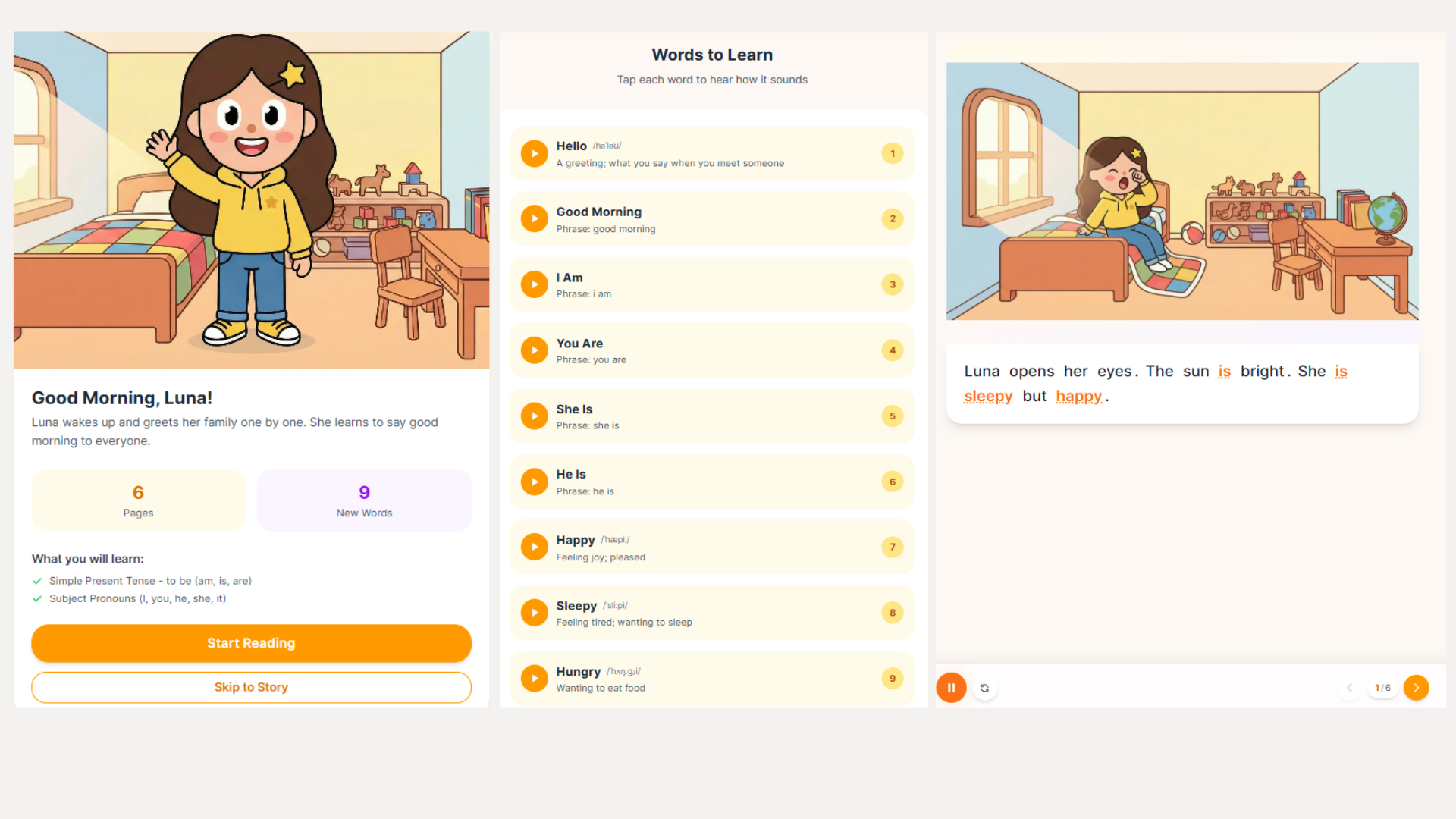
The rhythm outside the lesson is where Flalingo Kids differs most. Each week follows a fixed loop. Join the lesson, review the FLAI report, complete a short quiz or task, then practise speaking. Kids earn stickers in common, rare and epic tiers for showing up, reviewing their report and passing quizzes, and they spend those stickers on album pages, avatar decorations, streak freezes and mini-games. Much of that play lives on games.flalingo.com, a dedicated games space where children practise vocabulary and grammar through play rather than drills. Daily and weekly caps keep the sticker economy fair, so the reward stays fun without turning into pressure.
What Flalingo Kids gives your child and you:
- A native teacher on every plan, drawn from a pool where roughly 1 in 73 applicants is accepted, and pedagogical training is required.
- An Oxford University Press-supported curriculum with structured lessons and free-conversation sessions, mapped to CEFR level jumps.
- Gamified lessons that fit the child’s development. In younger kids, lessons are taught with games, stories and short activities.
- A FLAI parent report to keep tabs on your child’s progress. You can keep track of what they learned, what they struggled with, and how much they participated in the lessons.
- Flomework and FLAI Speaking to turn each lesson's mistakes into targeted practice and pronunciation work.
- A sticker economy and weekly cycle designed to build a habit and keep kids fond of the language.
Native-Only vs Tiered Teacher Options
The teacher model is the clearest practical difference between the two programs, and it is worth slowing down on.
Novakid splits its teachers into two tiers. Standard lessons are taught by certified non-native teachers who speak English fluently, and Premium lessons are taught by certified native speakers. Both tiers teach the same curriculum, and Novakid's hiring is genuinely selective. About one applicant in eleven passes a ten-step process, and every teacher holds a professional certificate and has at least a year of experience working with kids. The company also pays attention to accent, so a Standard teacher is fluent and trained rather than an afterthought.
Flalingo Kids does not put native access behind a paywall. A native teacher is the standard for every child on every plan, and each teacher must complete pedagogical training rather than simply pass an English check. The selection ratio is tighter at one in 73, and the same FLAI data used to report on kids is also used to keep teacher quality consistent.
On Novakid, a native accent sits behind the Premium tier, so a budget-minded family often lands on a fluent non-native teacher, with whom many kids thrive. On Flalingo Kids, the native teacher comes as standard, so there is no upgrade decision to make. If teacher quality and a native model are your first priority, this is the row that will decide it. For a closer look at how a native-first model plays out against another native-speaker service, see how Flalingo Kids compares with Cambly Kids.
Curriculum Comparison: Novakid CEFR vs Oxford University Press Kids
Both programs anchor to the CEFR, the six-level European scale from A1 to C2 maintained by the Council of Europe. The difference is what each builds on top of that scale.
Novakid teaches its own CEFR-aligned syllabus, running from Pre-A1 to B1 across clearly staged levels with a set number of lessons at each stage. The approach is immersion-first, so a child picks up grammar through play, comics and repeated conversation instead of formal explanation. That works well for young learners who need momentum and gentle exposure more than structure.
Flalingo Kids builds on Oxford University Press-supported materials tied to CEFR level transitions and blends structured curriculum lessons with free-conversation sessions. A kid can follow a syllabus from zero or aim at a specific level jump, and the same Oxford framing carries across the age segments. For a family that wants a recognisable publisher's scope and clear checkpoints, that structure is reassuring. Also, for younger learners, the lessons are taught with games and stories, and they are gamified to fit the child’s needs.
Neither approach is simply better. Immersion suits a child who learns by doing and repeating; a structured, Oxford-backed path suits a family that wants measurable stages and a familiar framework. Both keep the CEFR as the yardstick, so a level reached on one platform means the same thing on the other.
Progress Tracking and Technology: FLAI vs Novakid Reports
Both platforms report back to parents, but they gather and present very different information.
After each Novakid lesson, the teacher leaves written feedback in the parent account, and the class is recorded, so you can rewatch and compare your kid's speaking before and after a stretch of lessons. An Achievements section maps completed topics by level, and a 24/7 AI tutor gives children a place to practise on their own. It is clear, visual and easy for a busy parent to scan.
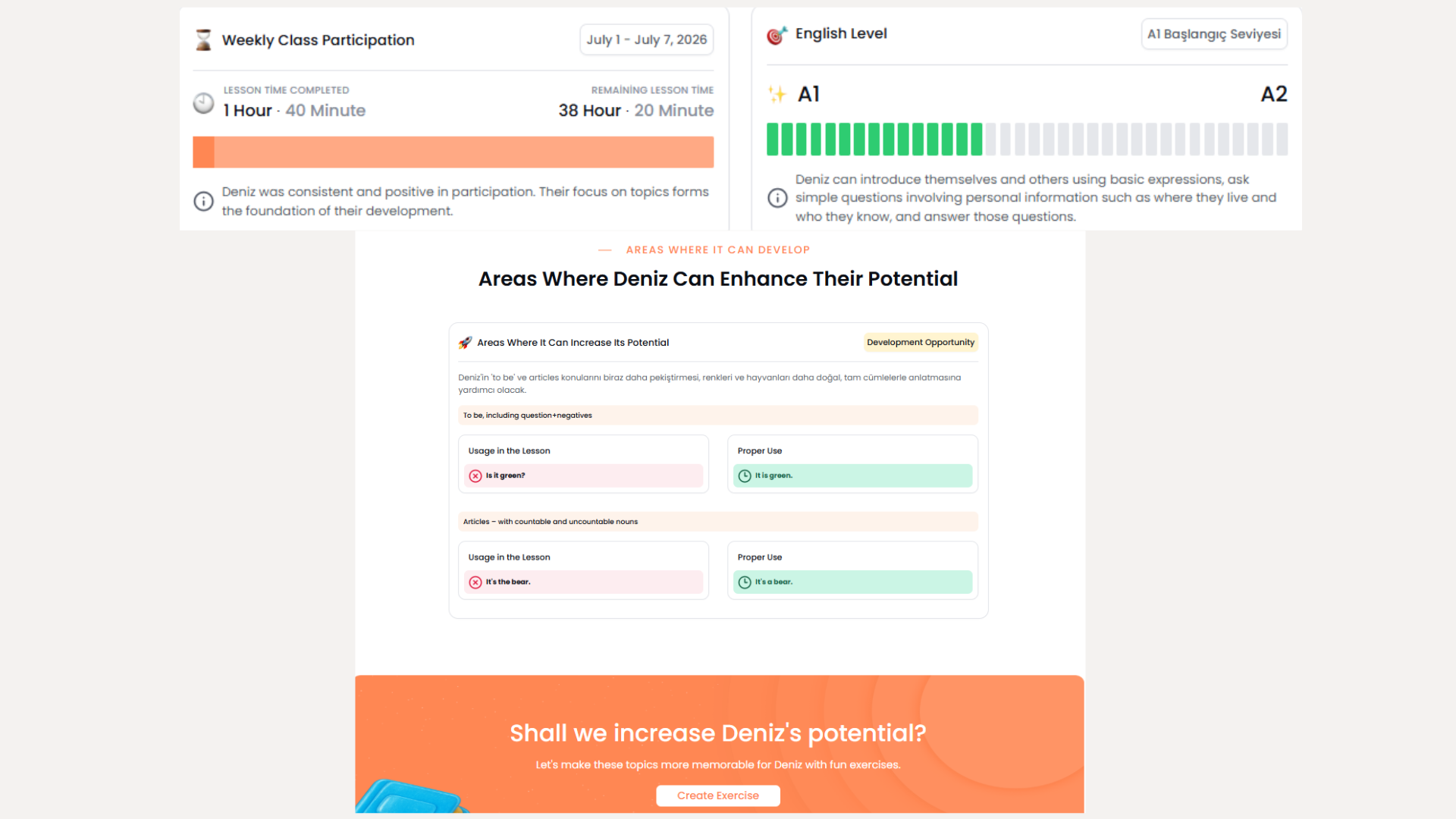
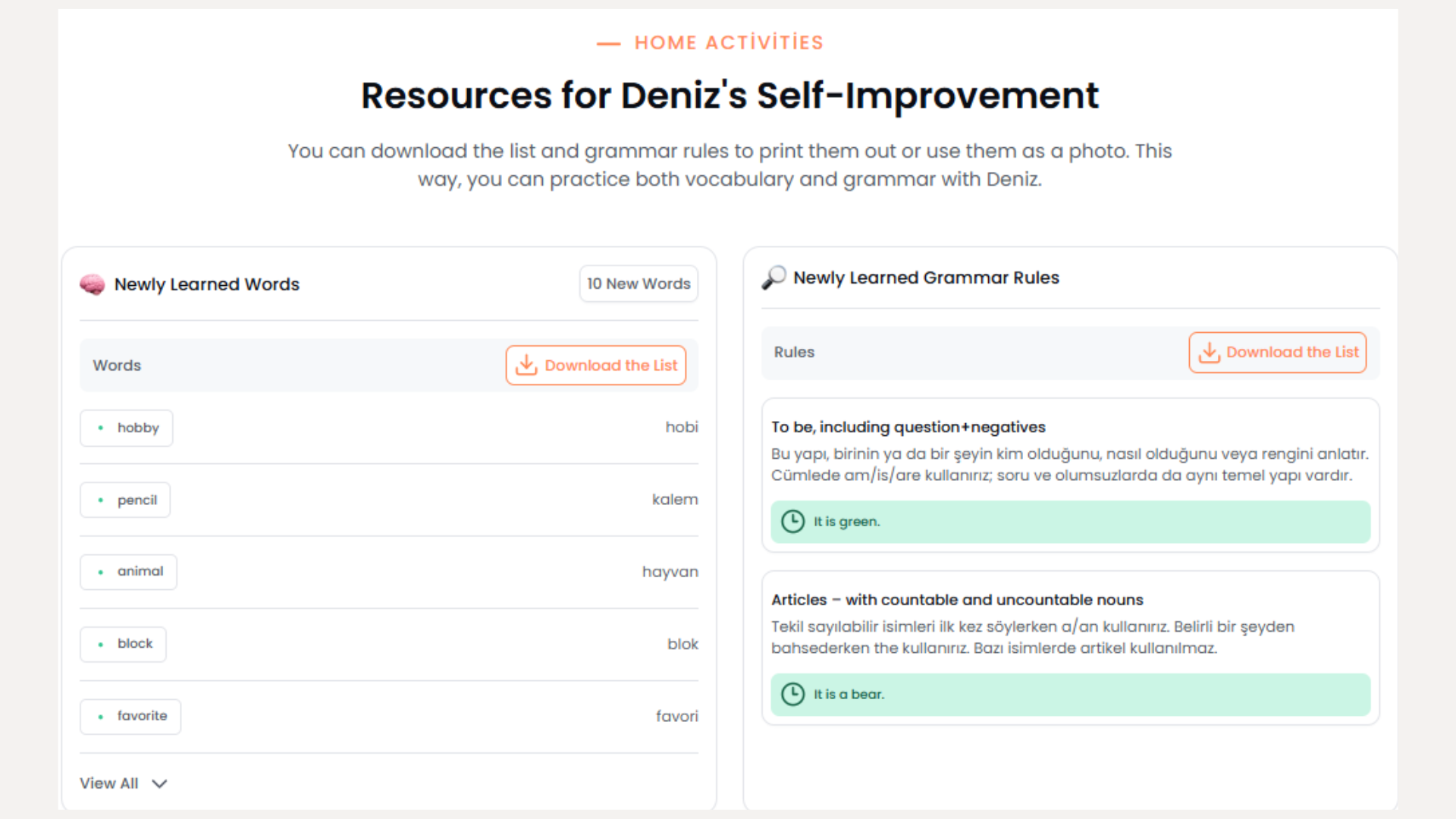
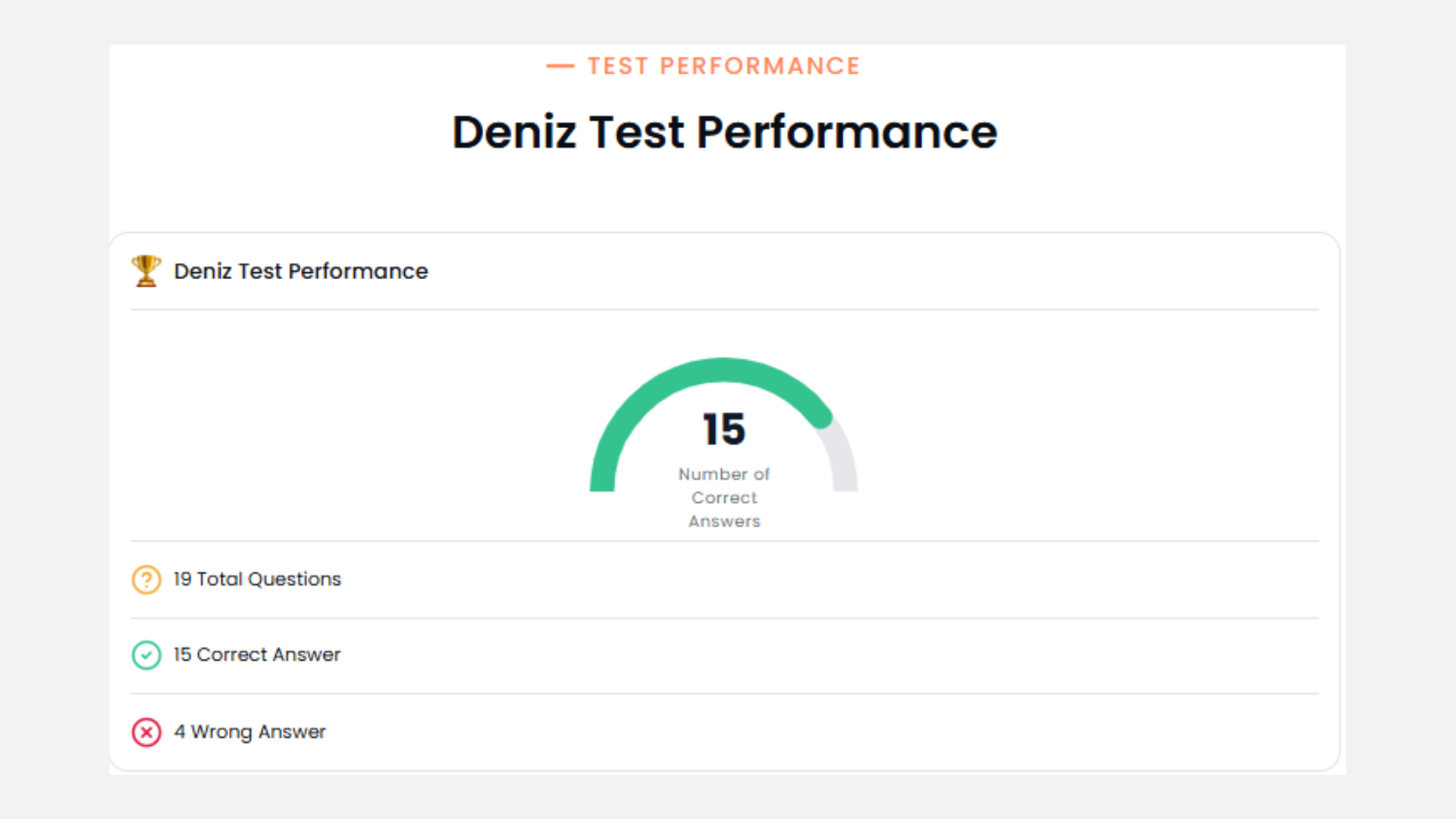
Flalingo's FLAI takes a more forensic route. It transcribes each lesson with speech recognition, then runs the language through natural-language processing to score against CEFR. FLAI then produces a parent report. As the parent in this report, you can see a highlight of the week, weekly class participation, English level, where they developed and which areas can improve. If they are older and taking tests, you can see their test performance in this report as well. You can also find some free resources specific to that week and a game you can play at home with them. FLAI also screens every lesson for anything that could put a kid at risk, alerting Flalingo's quality team when needed.
Two further systems extend that data. Flomework turns the specific errors FLAI finds into adaptive exercises across formats like fill-in-the-blank, matching and sentence ordering, with modules such as Vocabulary Boost and Grammar Repair. FLAI Speaking then builds personalised speaking practice around each child's weak spots, with real-time pronunciation feedback. The result is less a summary and more a per-lesson diagnosis that feeds the next week of practice.
Pricing Compared: Flalingo Kids vs Novakid
Pricing is where the two platforms feel most different, and it follows directly from their teacher models. Exact figures move with promotions, plan length and currency, so it is more useful to compare how each program charges rather than a snapshot price that dates quickly. The table below sets the two models side by side.
Novakid charges a per-lesson rate inside monthly and multi-month subscriptions. The longer the plan, the lower the price per lesson, and the teacher tier you choose, since native (Premium) lessons cost meaningfully more than the fluent non-native (Standard) tier.
Flalingo Kids prices its plans around native lessons as the baseline rather than an upgrade, so there is no separate premium charge for a native teacher. If you are comparing costs across ages, our breakdown of online English courses for the 3–6 age group is a useful companion, and it is worth seeing how Flalingo Kids stacks up against 51Talk on value.
Who Is Novakid Best For?
Novakid tends to fit families who want:
- ✔ Full English immersion from the first lesson, with a playful, game-first student world that keeps young kids coming back.
- ✔ A flexible budget, using the fluent non-native Standard tier to keep costs down or the native Premium tier when accent matters most.
- ✔ Short 25-minute lessons and rewatchable recordings that are easy to fit around school and to review later.
- ✔ A child aged roughly 4 to 12 who responds well to songs, comics, VR tours and a video-game learning space.
Who Is Flalingo Kids Best For?
Flalingo Kids tends to fit families who want:
- ✔ A native, pedagogically trained teacher as the default on every plan, with no upgrade decision to weigh.
- ✔ An Oxford University Press-supported curriculum and clear CEFR checkpoints alongside free-conversation practice.
- ✔ Deeper per-lesson insight through FLAI parent report, plus Flomework and FLAI Speaking to convert mistakes into targeted practice.
- ✔ A wider age reach across the 3–6, 7–11 and 12–18 segments, with a weekly cycle and sticker economy that build a lasting habit.
- ✔ Gamified, age-appropriate lessons to fit the child’s development.
Verdict: Flalingo Kids vs Novakid
Both programs are credible CEFR-based choices, and the fair answer is that they serve slightly different families rather than one beating the other outright.
Novakid is the stronger pick when immersion and a joyful, game-first experience matter most, and when you want the freedom to choose between a fluent non-native teacher and a pricier native one. Its short lessons, recordings and Game World are easy to love, especially for the youngest learners.
Flalingo Kids is the stronger pick when you want a native, pedagogically trained teacher as the standard rather than an add-on, an Oxford-supported curriculum, and the deeper per-lesson data that FLAI, Flomework and FLAI Speaking provide. It asks less of the parent at the point of choosing a teacher and gives more back in the detail of each report.
If your kid is a shy beginner who needs momentum and play, either program will serve you well. If you want a native teacher and measurable, granular feedback as the baseline, Flalingo Kids is built around exactly that.
Get native teachers as standard, not a paid tier
Other content that may interest you



As an ESL educator of 5+ years, I am a guide for students and parents. I simplify complex English topics and online course selection for you. My goal is to help you turn learning from a stressful task into an enjoyable adventure.
English with Flalingo

Learning English with Flalingo means progressing with an intelligent system that works in an integrated manner.