
Best 7 Online English Courses for Teenagers

A 15-year-old who can hold a conversation in English has options. University programmes taught in English across the Netherlands, Germany, and Scandinavia. Erasmus semesters that require B2-level proficiency before you even apply. Internships with global companies that will not read a CV submitted only in the candidate's mother tongue.
Online English courses for teenagers can close this gap, but only if the platform is designed around what actually motivates a 14 or 16-year-old to keep showing up. Self-Determination Theory, widely applied in language education research, identifies three psychological needs that drive sustained learning: autonomy (the sense of choosing to learn, not being forced), competence (visible evidence of progress), and relatedness (a genuine connection with the person teaching you). A platform that satisfies all three keeps teenagers engaged.
We evaluated seven platforms against the criteria that matter most in this age group. Not all of them are designed specifically for teens, but all of them accept teenage learners and are commonly marketed to families with high-school-aged children.
- Teacher-student fit: Can the platform match a teenager with a teacher who shares their interests, not just their time zone?
- Curriculum relevance: Is there structured content aligned with CEFR levels and real academic or professional goals?
- Progress visibility: Can both the teenager and their parents see measurable improvement after each session?
- Speaking output: Does the format push the learner to actually produce language, or does it allow passive listening?
- Motivation design: Does the experience feel relevant enough that a teenager chooses to continue, rather than being dragged to the screen by a parent?
- Practical factors: Pricing transparency, cancellation policies, trial access, and billing clarity.
A note on methodology: This guide focuses on what works for most teenage learners. A quiet 13-year-old preparing for Erasmus has different needs than a confident 17-year-old brushing up before a gap year. Where those differences matter, we flag them.
Table of Contents
- Quick Comparison Table
- #1 - Flalingo: Best Overall for Teenagers
- #2 - Preply
- #3 - 51Talk
- #4 - Cambly
- #5 - italki
- #6 - EF Education First
- #7 - British Council Online
- Oxford Teens/Academic curriculum with CEFR-aligned progression from B1 to C1
- Smart Match algorithm pairing teenagers with teachers based on interests, goals, and personality
- 100% native English teachers with verified pedagogical training
- Only 1 in 73 teacher applicants are accepted to the platform
- Fixed teacher model with 90%+ same-teacher booking rate
- FLAI AI Coach generating dual reports: one for the student, one for the parent
- FLAI child safety monitoring on every session
- exams.flalingo.com for timed IELTS, TOEFL, and YDS simulations
- demo.flalingo.com for pressure-free AI speaking practice
- Flomework adaptive homework engine targeting lesson-specific errors
- Free level assessment at start.flalingo.com
- 30-day unconditional refund policy, no automatic subscription renewal
- 42,000+ English tutors with filters for age group, speciality, price, and accent
- Subscription-based model with 25- or 50-minute lessons
- Lesson Insights (AI-generated post-lesson summaries)
- Daily Exercises for between-session practice
- Up to two free tutor replacements if the first match is not right
- Mobile app for on-the-go booking and lesson access
- Structured teen curriculum (ages 13-18) aligned with CEFR standards
- 25-minute one-on-one lessons with trained ESL educators
- Pre-class preview and post-class review resources
- Teacher-written lesson memos after each session
- NYSE-listed company with over a decade of operational history
- 100% native English-speaking tutors
- On-demand and scheduled lesson options
- Structured course pathways from A1 to C1
- Automatic lesson recording and transcription
- Translation-enabled in-lesson chat
- Subscription-based pricing with fixed weekly minutes
- 30,000+ tutors across Professional Teacher and Community Tutor tiers
- Pay-per-lesson model with no subscription or minimum commitment
- Discounted trial lessons with most tutors
- italki Plus (optional) for AI-generated lesson summaries and flashcards
- Integrated video classroom with screen sharing and whiteboards
- Verified student reviews on every tutor profile
- Proprietary Efekta methodology combining live classes, private lessons, and self-study
- 24/7 live group classes with certified teachers
- Cambridge and IELTS exam preparation tracks
- Study-abroad programmes for ages 13-16 (separate from online)
- Globally recognised certificates and level progression
- EF Hello app for supplementary mobile learning
- Secondary Plus course for ages 12-17 with collaborative, project-based learning
- EnglishScore Tutors: one-to-one platform for ages 13-17
- Cambridge First and Cambridge Advanced exam preparation courses
- CEFR-aligned curriculum with British Council certificates
- AiBC AI-powered speaking practice tool
- Free LearnEnglish Teens resource library (grammar, vocabulary, exam tips)
Quick Comparison Table
#1 - Flalingo: Best Overall for Teenagers
Flalingo is not a kids' platform that happens to accept older students, and it is not an adult platform that lets teenagers sign up as an afterthought. It has a dedicated teen learning track built around the Oxford Teens and Academic curriculum, with CEFR-aligned progression from B1 through C1. Teenagers occupy an awkward middle ground: too advanced for cartoon-based gamification, not yet ready for a corporate English format.
What sets Flalingo apart in this age group starts with Smart Match. The algorithm does not just pair your teenager with an available teacher. It evaluates 18 data points, including learning goals, personality preferences, scheduling patterns, and subject interests, to find a teacher who genuinely connects with the learner. A 14-year-old who is passionate about technology gets matched with a teacher who can hold a real conversation about it in English. A 16-year-old preparing for IELTS gets paired with an examiner-experienced instructor. That personalisation is grounded in what motivation research consistently shows: teenagers engage when they feel understood, not when they feel managed.
The fixed-teacher model reinforces this. Flalingo prioritises continuity. More than 90% of students can book the same teacher every week, which means the relationship deepens over time. The teacher becomes a mentor, not a rotating series of strangers. To teenagers already dealing with the social pressure of adolescence, the stability of a trusted adult who knows their weaknesses, remembers their goals, and adjusts each lesson accordingly is a significant factor in whether they keep showing up.
After every lesson, FLAI, Flalingo's AI coaching engine, generates a structured performance report. The report breaks down accuracy, fluency, and vocabulary breadth against CEFR standards, with specific examples from the lesson. There are two versions: one for the student, focused on actionable next steps, and one for the parent, summarising what was covered and where the teenager stands. This dual-report system means parents stay informed without sitting in on the lesson, and the teenager gets feedback they can actually use.
exams.flalingo.com provides timed IELTS, TOEFL, and YDS simulations. That kind of targeted exam preparation, delivered alongside weekly live lessons with a teacher who knows the student's patterns, is difficult to replicate on any other platform in this comparison.
Teenagers who want low-pressure speaking practice outside of live lessons can use demo.flalingo.com for AI-powered conversation sessions. There is no peer pressure, no judgment, and no audience. To teens who feel self-conscious about speaking English in front of classmates or even a teacher, this serves as a rehearsal space where mistakes carry no social cost. The AI tracks pronunciation, fluency, and vocabulary use in real time and feeds that data back into the FLAI system, so the live teacher can pick up where the AI practice left off.
Flomework, the platform's personalised homework engine, generates exercises based on errors from each live lesson. If a student consistently confuses conditionals or misuses prepositions, Flomework produces targeted drills that adjust difficulty automatically based on performance over time.
Key Features
Price
Packages run approximately $40-$130 per month, depending on lesson frequency and package length. A trial lesson is available. There is no auto-renewal, so the plan does not continue unless the family actively chooses to extend.
Prices last checked: May 2026. Always verify current packages on the platform's website before purchasing.
Best For
Flalingo is best for teenagers between 13 and 17 who need more than conversation practice. If your teen is building toward a university application, preparing for Erasmus, or starting early IELTS/TOEFL work, the combination of Oxford curriculum, Smart Match, and FLAI reporting provides the structure and personalisation that this age group needs. The fixed-teacher model is especially valuable to teenagers who are reluctant speakers. Familiarity reduces self-consciousness, and a teacher who has spent weeks learning a student's patterns can push them in ways a stranger cannot.
#2 - Preply
Preply is a global tutoring marketplace with over 42,000 English tutors and a presence in 180 countries. Families choose a weekly lesson plan, select a tutor, and commit to recurring sessions. Tutors set their own rates, create their own lesson plans, and manage their own schedules. For teenagers, this means the quality of the experience depends almost entirely on which tutor you pick.
The platform offers filters for age group, specialisation, and native language. Many tutors advertise exam preparation, academic English, or conversational fluency as specialities. Lesson Insights, an AI-powered tool, generates post-lesson summaries with vocabulary highlights and practice exercises.
Key Features
Price
Approximately $50-$250+ per month, depending on tutor rate and lesson frequency. The range is wide because tutors set their own prices. Community tutors start as low as $5-$10 per lesson; experienced professionals with exam-prep credentials charge $30-$50+.
Prices last checked: May 2026. Always verify current packages on the platform's website before purchasing.
Best For
Families who want full control over tutor selection and are willing to invest time upfront in finding and vetting the right match. Works well for teenagers with specific, niche goals (a particular accent, a dual-language tutor, or an unusual scheduling requirement) that a curated platform may not accommodate.
#3 - 51Talk
51Talk extends its frequency-first argument to teenagers with a structured curriculum track for ages 13-18, focused on deepening language thinking and strengthening academic and communicative English. Lessons are 25 minutes, one-on-one, and delivered by professionally trained ESL tutors, primarily based in the Philippines. The platform is publicly traded on the NYSE and has over a decade of operational history.
The curriculum is CEFR-aligned with pre-class previews and post-class review sessions. Teachers create lesson memos after each session. To families where budget is the primary constraint, 51Talk makes daily English practice financially realistic.
The trade-off is that 51Talk's teachers, while qualified, are predominantly non-native speakers. To teens at an intermediate or advanced level who need to refine pronunciation and develop natural fluency, native-speaker input becomes more important.
Key Features
Price
Approximately $40-$100 per month, depending on lesson frequency and package duration. This is the most affordable live-teacher option in this comparison for families who want multiple lessons per week.
Prices last checked: May 2026. Always verify current packages on the platform's website before purchasing.
Best For
Budget-conscious families who prioritise speaking frequency over native-speaker input. Also, a strong supplementary option that's already on a curriculum-driven platform who want additional daily practice at a low cost.
What People Are Saying
User reviews can offer a helpful perspective when evaluating online language learning platforms, but they are best considered alongside other factors.
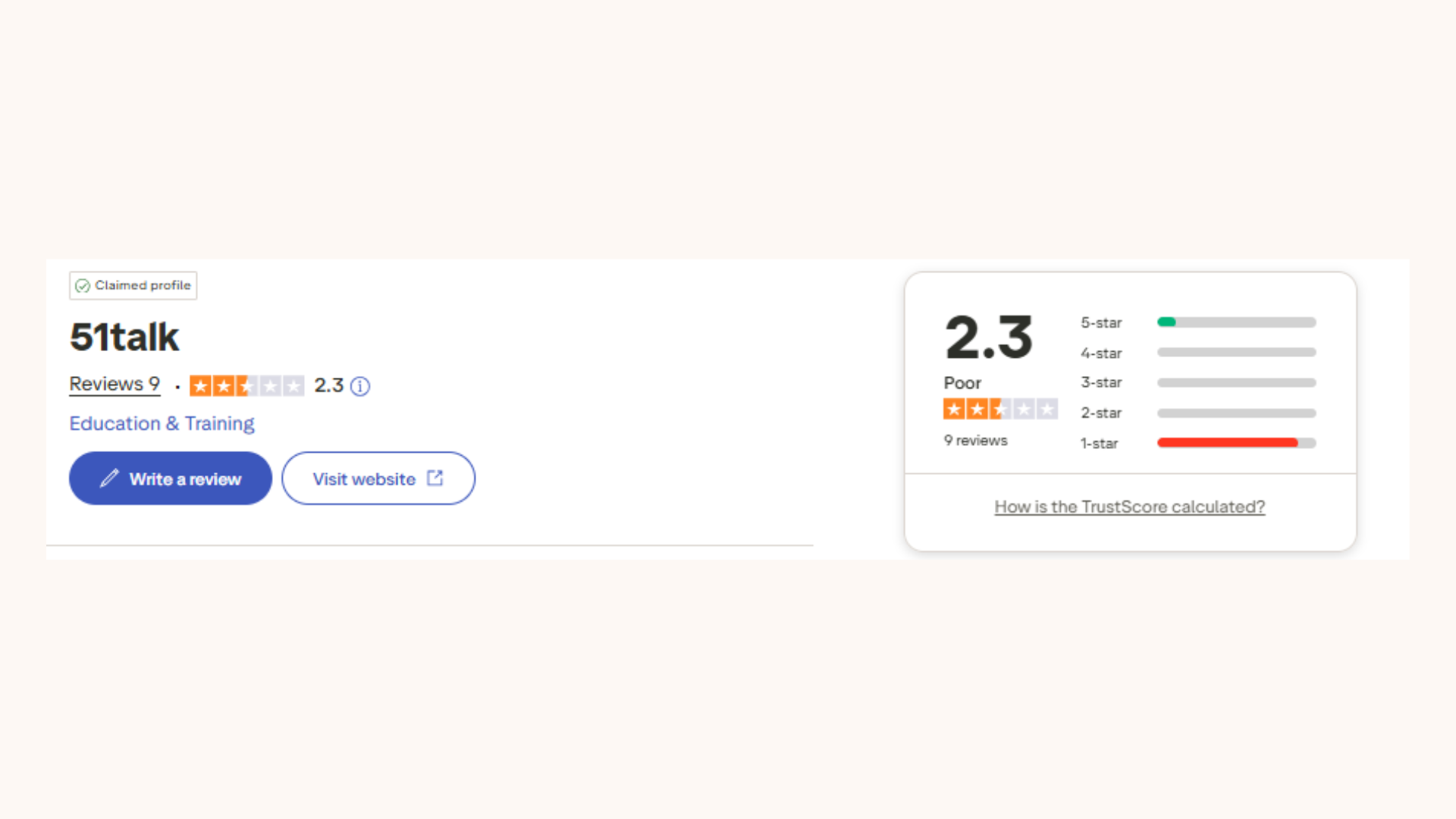
Currently, 51Talk has a 2.3 rating on Trustpilot based on 9 reviews. Because the number of reviews is still quite limited, this score may not provide a fully reliable representation of the platform’s overall quality. To review the feedback directly, you can visit the 51Talk Trustpilot page.
#4 - Cambly
Cambly connects learners with native English-speaking tutors on-demand or scheduled video sessions. Every tutor on the platform is a native speaker, and you can start a lesson within minutes of opening the app. Cambly offers structured course pathways from A1 to C1, including conversation-focused and skills-based tracks. The subscription model gives families a set number of minutes per week, and lessons are recorded automatically for review.
Where Cambly falls short for teenagers is in pedagogical structure. Tutors are not required to hold teaching credentials, and there is no centralised training programme for working with adolescent learners. To teens who need structured CEFR progression or exam preparation, the free-conversation format can feel directionless without a parent actively managing the learning plan.
Key Features
Price
Approximately $38-$200+ per month, depending on minutes per day, days per week, and plan tier (Small Groups, Private+, or Pro). Pro tier with structured lessons and dedicated tutors sits at the higher end.
Prices last checked: May 2026. Always verify current packages on the platform's website before purchasing.
Best For
Teenagers who want casual, high-frequency native-speaker conversation practice on a flexible schedule. Works well as a supplement to a more structured platform, or for confident teens who enjoy free conversation and do not need rigid curriculum guidance.
#5 - italki
italki is a language tutoring marketplace connecting over 10 million learners with 30,000+ teachers across 150+ languages. The platform divides tutors into Professional Teachers (verified credentials) and Community Tutors (native or fluent speakers for conversation practice). There are no subscriptions. Families pay per lesson, and tutors set their own rates.
The flexibility is real, but so is the effort required. There is no algorithm matching your teenager with a tutor based on interests or goals. Parents need to browse profiles, watch introduction videos, read reviews, and book trial lessons. Once a good tutor is found, continuity is straightforward. But finding that tutor can take three or four trials, and to families who do not enjoy the search process, this is a meaningful friction point.
Key Features
Price
Approximately $40-$250+ per month, depending entirely on tutor selection and lesson frequency. Community tutors start from $4-$8 per lesson; professional certified teachers typically charge $15-$30+. There is no subscription fee.
Prices last checked: May 2026. Always verify current packages on the platform's website before purchasing.
Best For
Parents who want maximum control over tutor selection and budget, and are willing to invest time in finding the right match. Particularly useful with niche needs (a tutor who speaks their native language, a specific dialect, or an unusual scheduling window) that curated platforms may not accommodate.
#6 - EF Education First
EF Education First is one of the oldest and largest private education companies in the world, founded in Sweden in 1965. For teenagers, EF offers immersive summer/winter courses abroad (ages 13-16) and year-round online English through EF English Live. The online platform uses EF's proprietary Efekta methodology, combining live group classes, private lessons, and self-study modules. Group classes run 24/7 with certified teachers, and Cambridge and IELTS exam preparation tracks are available.
EF's brand carries weight. A certificate from EF is recognised globally, and the study-abroad programmes provide genuine immersion. The challenge is pricing transparency. EF does not publish rates online, and users report aggressive upselling during the quote process. Monthly costs run roughly $89-$139 for 12-month plans. The online platform targets young adults (16+) more than younger teenagers, and group classes rotate teachers rather than providing a fixed relationship.
Key Features
Price
Because pricing isn’t listed, this estimation is given based on the reports of users. Approximately $89-$139 per month for 12-month plans, including group classes and limited private lessons. Shorter commitments cost more per month. Study-abroad programmes are priced separately and run significantly higher ($1,500-$4,000+ per month, including accommodation).
Prices last checked: May 2026. Always verify current packages on the platform's website before purchasing.
Best For
Families who value brand prestige and want a recognised certificate on their teenager's university application. Also strong for teens considering a future study-abroad experience and want to start with the same institution online before committing to travel.
#7 - British Council Online
The British Council is a global authority in English language teaching and assessment. Its online offering for teenagers includes Secondary Plus, the EnglishScore Tutors platform, and free resources through LearnEnglish Teens. The curriculum is CEFR-aligned and Cambridge exam-integrated, with online Cambridge First and Advanced preparation courses.
The British Council's reputation is a genuine asset. Universities, immigration services, and employers worldwide recognise British Council qualifications. The platform also integrates its own AI-powered speaking practice tool. The limitation is flexibility. Courses run on fixed schedules, and class instructors rotate.
Key Features
Price
Approximately $90-$250+ per month, depending on course type and format. The English Online course offers credit-based plans (Gold, Platinum) with group and private class options. Cambridge exam preparation courses are typically priced as a full-term package. EnglishScore Tutors pricing varies by tutor.
Prices last checked: May 2026. Always verify current packages on the platform's website before purchasing.
Best For
Teenagers who need formal, internationally recognised English qualifications for university applications or immigration purposes. Particularly strong for students targeting Cambridge First (FCE) or Cambridge Advanced (CAE) certificates, where the British Council's exam expertise provides a direct advantage.
The right platform depends on which specific problem your teenager faces. A teen who freezes when speaking needs a fixed teacher and pressure-free AI practice. A teen preparing for IELTS needs timed simulations and error-specific homework. A teen who simply needs more English hours needs affordable, high-frequency access. The seven platforms above address these needs in different combinations. The right question is not which platform is best, but which combination of features matches what your teenager needs right now.
For specific recommendations beyond teenage years, you can also explore our expert-tested rankings for IELTS preparation.
Frequently Asked Questions
At what age should a teenager start taking online English lessons seriously?
Most teenagers can handle structured, 50-minute one-on-one lessons from age 13 onward. The key variable is not age but goal clarity. A 13-year-old with a specific reason to learn (an international school application, a family move, early exam preparation) will engage differently than one who signed up without explanation. Motivation research consistently shows that when learners understand the personal relevance of what they are doing, they persist longer and perform better.
How many lessons per week work best for teenagers?
Two to three live lessons per week is a strong baseline. That frequency builds momentum without competing too aggressively with homework, sports, and social life. Teens preparing for a specific exam may benefit from four or five sessions weekly during a focused preparation period. Supplementary AI speaking practice between live lessons can extend exposure without adding another scheduled commitment.
Does the teacher need to be a native speaker for a teenager?
For teens at A2 or B1 level, a well-trained non-native teacher can be effective, especially if they share the students' first language. At B2 and above, native-speaker input becomes more valuable. Idiomatic expressions, natural phrasing, and unrehearsed fluency are harder to model without native exposure. The CEFR framework describes B2 as the level at which a speaker can interact with native speakers without strain. Reaching that standard is easier with a teacher who embodies it.
Can online lessons replace school English classes?
They address different skills. School English focuses on reading comprehension, written grammar, and exam technique. Online one-on-one lessons focus on speaking fluency, pronunciation, and real-time communication. For most teenagers, the two are complementary. A student who does well in school English but cannot hold a conversation needs live speaking practice. A student who speaks confidently but makes structural errors in writing may benefit more from school-based instruction.
My teenager refuses to speak English in front of people. Will online lessons help?
One-on-one lessons with a fixed teacher are the most effective format for reluctant speakers, because the teacher builds trust over time, and classmates are absent. AI-powered speaking tools like demo.flalingo.com provide a rehearsal space where mistakes carry no social cost. Most teenagers labelled as shy in English are actually self-conscious about errors in front of peers. Remove the audience, provide a patient teacher who returns every week, and most of them start talking.
How do I know if my teenager is actually making progress?
Look for platforms that provide structured post-lesson reports with measurable data. Metrics like words per minute, error frequency by type, and CEFR-level vocabulary distribution give concrete evidence of improvement. FLAI generates this kind of report automatically after every Flalingo lesson. On platforms without automated reporting, parents need to ask the tutor for periodic written assessments.




I'm Bright. I am a British-Nigerian English teacher with seven years of experience. I create engaging and tailored lessons that build confidence and fluency to support students to achieve their goals. My aim is to unlock the potential of students from different cultures, making the learning process both efficient and enjoyable.
English with Flalingo

Learning English with Flalingo means progressing with an intelligent system that works in an integrated manner.