
İçeriğe geç
Flalingo

İngilizce pratiği

B1 Preliminary için present passive: bir yemeğin nasıl yapıldığını anlatmak ve tarif kartı yazmak

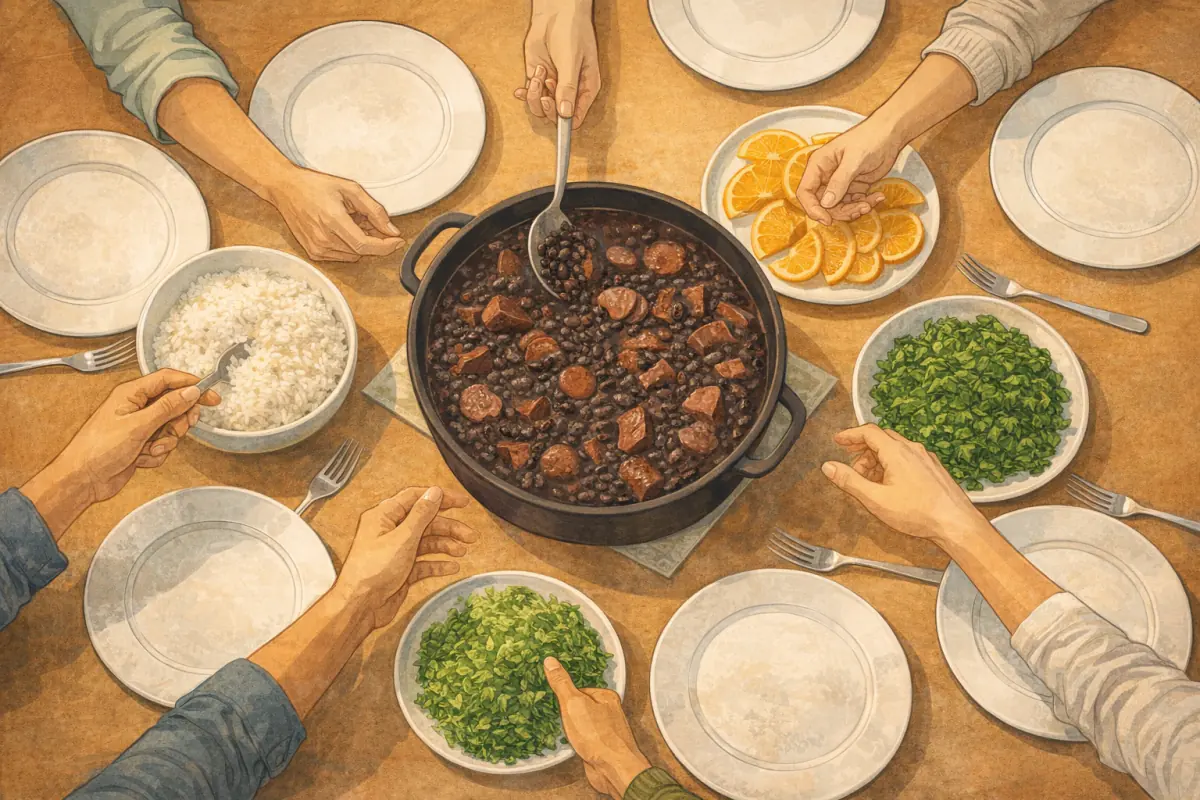
A Sunday lunch table seen from above: a pot of feijoada in the middle, with rice, orange slices, green vegetables and hands reaching for the food.

B1 Preliminary’ye (B1) hazırlanan gençler için present passive, a few, a little ve plenty of, yemek fiilleri ve sıra bildiren kelimelerle bir yemeğin yapılışını anlatmak ve 80 kelimelik tarif kartı yazmak.

Bir yemeğin nasıl yapıldığını anlatmak için present simple passive kullan: is ya da are + fiilin üçüncü hâli (past participle), örneğin “The rice is boiled.” Önce yemek gelir, çünkü onu kimin yaptığından çok ona ne olduğu önemlidir. Miktarları a few, a little ve plenty of ile ver; adımları First, Then, After that ve Finally ile sırala. B1 Preliminary Reading Bölüm 6’daki boşlukların birçoğunu da bu küçük kelimeler doldurur. Bu yazı yaklaşık 12–16 yaşındaki, orta (B1) seviyedeki öğrenciler için.

Bu yazı kimin için?

  • B1 Preliminary ya da B1 Preliminary for Schools sınavına hazırlanan, yaklaşık 12–16 yaşındaki öğrenciler.
  • Ailenin ne pişirdiğini söyleyebiliyorsun ama bir yemeğin nasıl yapıldığını anlatırken her cümle “you” ya da “my mum” ile başlıyor ya da a few ile a little’ı karıştırıyorsun.
  • Veliler için: Bir dahaki sefere birlikte yemek yaparken çocuğunuzdan adımları İngilizce anlatmasını isteyin: “The onions are cut, then …”. First, Then ve Finally ile söylenen dört adım, tarif kartının yarısı demektir.
  • Henüz erken: Kısa bir A2 Key e-postası bile hâlâ zor geliyorsa önce kalmaya gelen bir arkadaşa yazılan e-posta üzerine A2 yazısıyla başla (aşağıdaki bağlantı).
  • Fazla kolay: Bir süreci passive ile hatasız anlatabiliyorsan B1 Preliminary Reading’deki eşleştirme görevine ve Writing Bölüm 2’deki ekran kullanımı makalesine geç (aşağıdaki bağlantılar).

Örnek sayfaları açın

Örnek sayfaları açın

Kelime kartları

mix

to put different foods together and move them round

The cabbage is mixed with a spicy sauce.

add

to put one more thing in with the others

Salt is added to the cabbage first.

serve

to give food to people at a meal

Feijoada is served with rice.

taste

to put a little food in your mouth to see if it is good

Hana's grandfather always tastes the sauce first.

Konuşma

Kai So, Hana, how is kimchi made?

Hana First, the cabbage is cut into big pieces and salt is added.

Kai And then?

Hana Then it is left overnight. In the morning, the salt is washed off.

Kai What about the red sauce?

Hana The sauce is made with garlic, hot pepper and a little sugar. Then the cabbage is mixed with the sauce by my grandfather. He always does that part.

Hana Finally, the kimchi is put in big jars and kept somewhere cold.

Cümle yapısı

Write a recipe card for a family dish (about 80 words).

Lemon chicken with rice (for four people) Ingredients: four pieces of chicken, two lemons, a little oil, plenty of garlic, a few fresh herbs, rice, salt. Method: First, a little salt is added to the chicken. Then the garlic and lemon juice are mixed and poured over the chicken. After that, it is roasted in the oven for an hour. Meanwhile, the rice is boiled. Finally, everything is served with the fresh herbs on top. It's my favourite Sunday dish!

The model has 80 words. It has a name, ingredients with amounts (a little, plenty of, a few) and a method with passive verbs (is added, are mixed, is roasted, is boiled, is served) and order words (First, Then, After that, Finally).

  • Name: … (for … people)
  • Ingredients: a few …, a little …, plenty of …
  • First, … is / are …
  • Then …
  • After that, …
  • Finally, … is served with …

Diğer alıştırmalar

How is kimchi made?

Kai So, Hana, how is kimchi made?

Hana First, the cabbage is cut into big pieces and salt is added.

Kai And then?

Hana Then it is left overnight. In the morning, the salt is washed off.

Kai What about the red sauce?

Hana The sauce is made with garlic, hot pepper and a little sugar. Then the cabbage is mixed with the sauce by my grandfather. He always does that part.

Hana Finally, the kimchi is put in big jars and kept somewhere cold.

How is kimchi made?

The cabbage is cut and salt is added. Then everything is mixed with a spicy sauce.

Present simple passive: am / is / are + past participle (cut, added, made, mixed, kept). Use it when the food and the action are more important than the person. Add by + person only when it matters: The kimchi is mixed by my grandfather.

  • is cut
  • is added
  • is made
  • are mixed
  • are kept
  • is mixed by …

Lucas's recipe post

A Sunday lunch table seen from above: a pot of feijoada in the middle, with rice, orange slices, green vegetables and hands reaching for the food.

Our Sunday feijoada, by Lucas

Every Sunday, my family gets together for a big lunch, and the star of the table is always feijoada. It's a traditional Brazilian dish of black beans and meat. People say that every family in Brazil has its own recipe, and this is ours.

Our feijoada starts the night before: the black beans are washed and left in cold water. On Sunday morning, they are boiled slowly with the meat for about three hours. A few onions and plenty of garlic are fried in a little oil and then added to the pot. We don't add many herbs, because we want the beans to have the strongest flavour.

Feijoada is served with white rice, green vegetables and slices of orange. The orange isn't just there for its colour: its fresh, sour taste is perfect with the heavy beans.

My favourite part isn't the eating, though. It's the three hours in the kitchen, when everyone talks and laughs while the pot cooks. And every five minutes, someone asks when lunch is ready!

Want to try it? You'll need a big pot, a lot of time and some hungry friends.

On camera

What dish are you showing us today?

Hi, everyone! Today I'm showing you my family's lemon chicken. It's made every Sunday in our house. First, the chicken is covered in garlic and lemon, and then it's roasted. It smells delicious, and it tastes like home!

  • Hi, everyone! Today I'm showing you …
  • It's made …
  • First, … Then, …
  • It smells / tastes …
Bu üniteyi öğren
Nasıl öğrenmek istersin?

Present passive: is / are + fiilin üçüncü hâli

Bir şey ve ona ne olduğu, işi yapan kişiden daha önemliyse passive kullan: okur pirinci kimin karıştırdığını değil, pirince ne olduğunu bilmek ister. Tek bir şey ya da sayılamayan isim için is, çoğullar için are kullan.

Türkçe tariflerdeki “Soğanlar doğranır, yağda kavrulur.” yapısının karşılığı tam olarak budur: “The onions are chopped and fried in oil.” Fark şu: Türkçe edilgenliği ekle (-ılır, -nir) gösterir, İngilizce ise is / are ister. Tarifler emir kipini de kullanır (“Cut the cabbage.”), ama bir yemeğin nasıl yapıldığını anlatırken passive daha doğal durur.

  • Olumlu: “The peppers are filled with rice.”
  • Olumsuz: “The fish isn’t fried. It’s grilled.”
  • Soru: “How is kimchi made?”
  • Düzensiz üçüncü hâller: cut → cut, put → put, make → made, keep → kept, leave → left

Dinle: bir aile yemeği nasıl yapılır?

İki öğrenci, lahanadan yapılan acı bir Kore yemeği olan kimchi’yi konuşuyor. Yedi passive fiili bul. “By my grandfather” kişi önemli olduğu için orada; son satırda ise iki fiil tek bir is’i paylaşıyor.

Öğrenci 1 So, Hana, how is kimchi made?

Öğrenci 2 First, the cabbage is cut into big pieces and salt is added.

Öğrenci 2 The sauce is made with garlic, hot pepper and a little sugar. Then the cabbage is mixed with the sauce by my grandfather. He always does that part.

Öğrenci 2 Finally, the kimchi is put in big jars and kept somewhere cold.

Miktarlar: a few, a little, plenty of, none

Miktar kelimesi isme uymalıdır. İngilizce sayılabilen şeyleri (eggs, onions) sayılamayanlardan (salt, oil, milk) ayırır. Kabaca birkaç = a few, biraz = a little; ama Türkçede “biraz elma” denebilirken İngilizcede çoğul isimle a few gelir: “a few apples”.

  • “a few” + çoğul isim: “a few onions”, “a few spoonfuls of sugar”
  • “a little” + sayılamayan isim: “a little salt”
  • “plenty of” (bol, fazlasıyla) + ikisi de: “plenty of garlic”, “plenty of eggs”
  • “none” tek başına durur, “no” ismin önüne gelir: “How much sugar is left?” “None.”
  • Artikeller: ilk kez “a bowl”, sonra “the bowl”; genel olarak konuşurken artikel yok: “Kimchi is made from cabbage.” Türkçede artikel olmadığı için bunlar kolayca unutulur.

Yemek fiilleri ve -ed’in üç sesi

İşine yarayacak fiiller: boil (suda haşlamak), fry (yağda kızartmak), roast ve bake (fırında pişirmek), grill (ızgara yapmak), stir (karıştırmak), slice (dilimlemek), mash (ezmek) ve pour (dökmek). -ed ekinin üç sesi var:

  • /t/: k, s, p, ş, ç ve f’den sonra: mixed, sliced, baked
  • /d/: diğer seslerin çoğundan sonra: served, poured, boiled
  • /ɪd/, fazladan bir hece: t ya da d’den sonra: added, roasted

80 kelimelik bir tarif kartı yaz

Tarif kartı bir B1 Preliminary görevi değil, ama doğru dilbilgisini ve net sıralamayı çalışmanı sağlar. Yemeğin adını, miktarlarıyla malzemeleri ve yapılışını yaz; dört passive fiil, üç miktar ifadesi ve dört sıra kelimesi kullan. Bizim örneğimiz yaklaşık 80 kelime; sen kendi ailenin yemeğini yaz.

  • “Banana pancakes (for two people)” → ad
  • “Ingredients: two ripe bananas, two eggs, a few spoonfuls of flour, a little milk, a little butter, plenty of honey.” → miktarlarıyla malzemeler
  • “Method: First, the bananas are mashed with a fork. Then the eggs, flour and milk are added, and everything is mixed well.” → sıra kelimeleri, üç passive
  • “After that, a little butter is heated in a pan, and small spoonfuls of the mixture are cooked for two minutes on each side.” → iki passive daha
  • “Finally, the pancakes are served with plenty of honey on top.” → son adım
Bu üniteyi kendi yolunla öğren

B1 Preliminary’de nerede işine yarar?

fresh, spicy ve herbs gibi yemek kelimeleri, bir fotoğrafı yaklaşık bir dakika anlattığın Speaking Bölüm 2’de de işine yarar.

Reading Bölüm 6 bir open cloze’dur: altı boşluklu kısa bir metin, her boşluğa tek kelime. Boşlukların birçoğu tam da bu küçük kelimeleri ister. Şunları dene:

  • “The peppers ___ filled with rice and lamb.” → are
  • “You only need a ___ salt.” → little
  • “Use plenty ___ fresh herbs.” → of

Tipik hatalar ve doğruları

Kartını kontrol ederken bunları ara:

  • “The cabbage cut into pieces.” → “The cabbage is cut into pieces.” Türkçe edilgenliği ekle kurar, İngilizce is / are ister.
  • “Salt is add first.” → “Salt is added first.”
  • “The onions is fried.” → “The onions are fried.”
  • “The cabbage is cutted.” → “The cabbage is cut.”
  • “Add a few salt.” → “Add a little salt.”

15 dakikalık pratik rutini

Haftada üç kez yeter:

  • 3 dakika: Ailenden bir yemek seç ve malzemelerini miktarlarıyla yaz.
  • 6 dakika: Sıra kelimeleriyle dört beş passive adım yaz.
  • 3 dakika: is / are’ı, fiillerin üçüncü hâlini ve a few / a little’ı kontrol et.
  • 3 dakika: Yemeği 30 saniyede sesli anlat ve kaydet.

Sıradaki adım

Sırada Reading’deki eşleştirme görevi ve Writing Bölüm 2 makalesi var (aşağıdaki bağlantılar); past passive’i de dene: “This cake was first made by my grandmother.”

Sık sorulan sorular

İngilizcede present passive nasıl kurulur?

is ya da are + fiilin üçüncü hâli: “Salt is added.” Soru cümlesinde is ya da are özneden önce gelir: “How is it made?”

A few ile a little arasındaki fark ne?

A few çoğul isimlerle (a few eggs), a little sayılamayan isimlerle (a little milk) kullanılır. a olmadan few ve little “pek az” anlamına gelir.

Passive cümlede by ne zaman kullanılır?

Yalnızca kişi önemliyse: “The sauce is mixed by my grandfather.” Çoğu zaman by’ı yazmazsın: “The bread is baked daily.”

Flalingo, A2 Key ve B1 Preliminary sınavlarını sunan Cambridge English ile bağlantılı değildir ve bu kuruluşun onayını taşımaz.

Bu üniteyi öğren
Nasıl öğrenmek istersin?

Sırada ne var?

Canlı öğretmenle birebir ders

Flalingo’da gençler bu tür üniteleri canlı bir öğretmenle birebir, kendi hızlarında çalışır.

Ücretsiz deneme dersi al