İçeriğe geç
Flalingo

İngilizce pratiği

Çocuklara İngilizce just, already ve yet (A2, 9–12 yaş): present perfect ile “Gösteri hazır mı?”

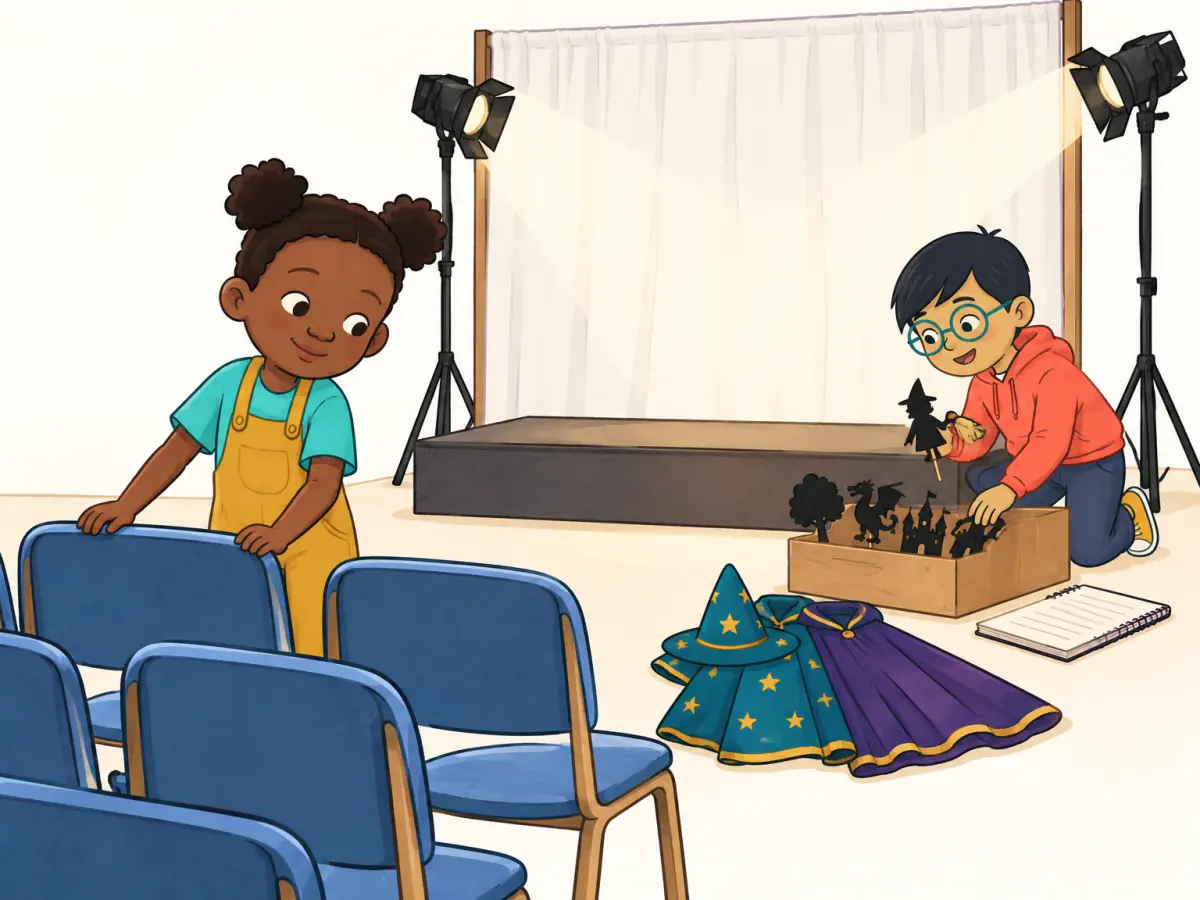
In a school shadow-theatre workshop, lights shine toward a white curtain. A script, two costumes and character cut-outs rest beside the empty stage while a child checks the audience seats.

9–12 yaşındaki çocuğunuz A2 seviyesinde bir gösteriye hazırlanırken just, already ve yet kullanmayı öğrensin; “We have just tested the lights.” ile “I finished it yesterday.” arasındaki farkı ayırt etsin.

Neyin hazır olduğunu, neyin hâlâ eksik olduğunu söylerken İngilizce present perfect kullanır: have ya da has + fiilin üçüncü hâli (past participle). “Just” az önce demektir (“We have just tested the lights.”), “already” işin bittiğini, çoğu zaman beklenenden erken bittiğini anlatır, “yet” ise hâlâ beklenen bir şey için soru ve olumsuz cümlelerin sonuna gelir (“Have you finished the script yet?”). Bir şeyin ne zaman olduğunu söylerseniz past simple kullanılır: “I finished it yesterday.” Bu A2 konusu, past simple’ı zaten kullanan yaklaşık 9–12 yaşındaki çocuklara uygundur.

Bu yazı kimin için?

  • Past simple’ı zaten kullanan çocukların velileri: çocuğunuz “I finished my homework yesterday.” diyebiliyor ve birkaç düzensiz fiil biliyor.
  • Tiyatroyu, okul gösterilerini ya da kukla oyunlarını seven çocukların aileleri: gösteriden önce neyin hazır olduğunu kontrol etmek yeni dil bilgisine gerçek bir görev verir.
  • Evde pratik yapmak isteyen veliler: okul çantası hazırlamak ya da bir partiye hazırlanmak da sahne kadar işe yarar.
  • Henüz erken: Çocuğunuz hâlâ “Yesterday I go to the concert.” diyorsa önce past simple çalışın; örneğin aşağıdaki konser anlatımı konusuyla.
  • Fazla kolay: “I haven’t packed yet, but I’ve already found my ticket.” gibi cümleleri yardımsız kurabiliyorsa en alttaki “Sonraki adım” bölümüne geçin.

Örnek sayfaları açın

Örnek sayfaları açın

Kelime kartları

lightslights
make-upmake-up
scriptscript
curtaincurtain
character

a person or creature in a story or play

stagestage
costumecostume
audience

the people watching or listening to a performance

Have you finished the script yet?

Study how this model connects form with meaning.

Yes. I finished it yesterday, and I have already checked the ending.

Study how this model connects form with meaning.

We have just tested the lights.

Study how this model connects form with meaning.

I have never performed this part before.

Study how this model connects form with meaning.

Konuşma

Leo Have you finished the script yet?

Nia Yes. First I finished it yesterday. Then I checked the ending, and we have just tested the lights.

Nia Have you found the costume?

Leo No, I have not found it yet.

Leo What have we just tested?

Nia We have just tested the lights.

Cümle yapısı

Have you finished the script yet?

Yes. I finished it yesterday, and I have already checked the ending.

  • We have just tested the lights.
  • I have never performed this part before.

Diğer alıştırmalar

Use the contrast

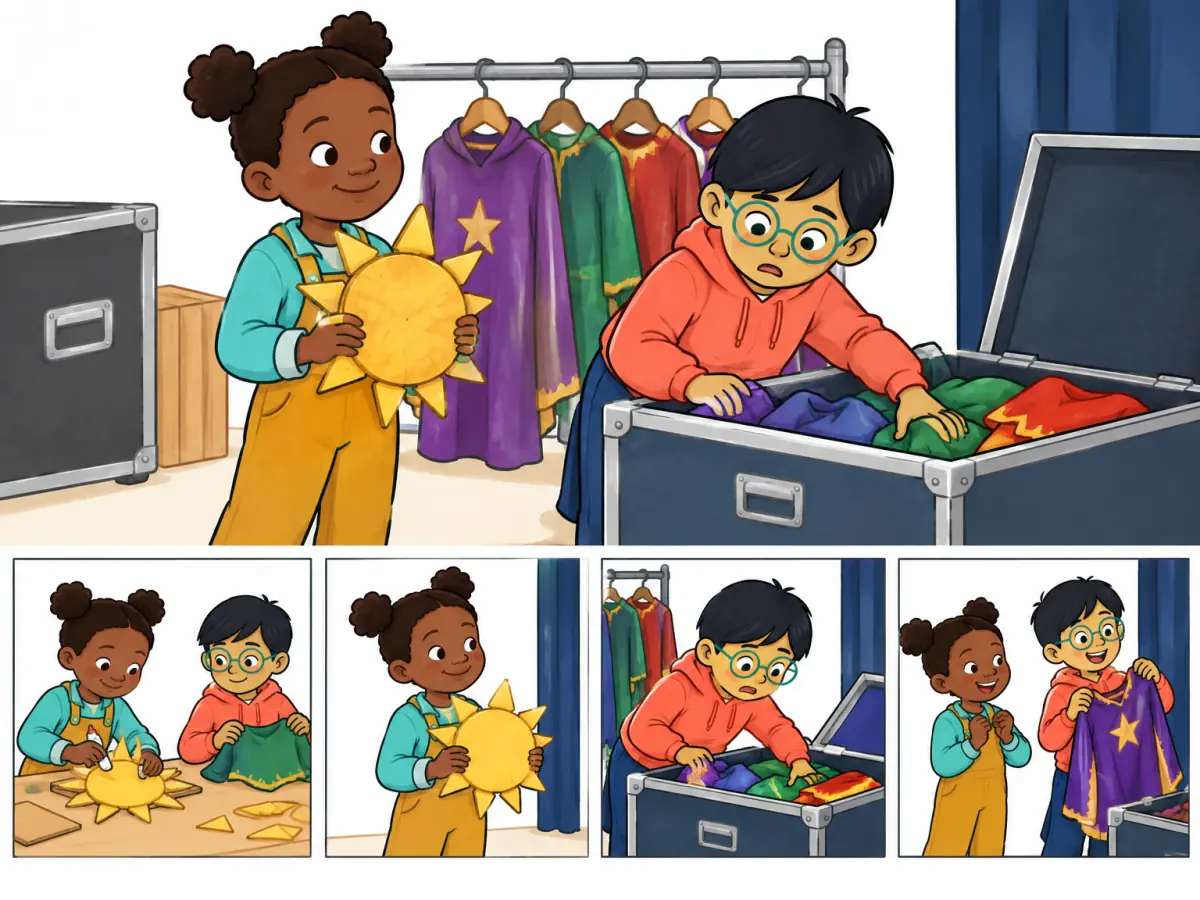
Backstage after rehearsal, Nia holds a completed prop, Leo searches for one missing costume, and a four-panel event strip shows actions before and after the current moment.

Leo Have you finished the script yet?

Nia Yes. I finished it yesterday, and I have already checked the ending.

Nia Have you found the costume?

Leo No, I have not found it yet.

Leo What have we just tested?

Nia We have just tested the lights.

Have you finished the script yet?

Yes. I finished it yesterday, and I have already checked the ending.

  • We have just tested the lights.
  • I have never performed this part before.

The moon behind the curtain

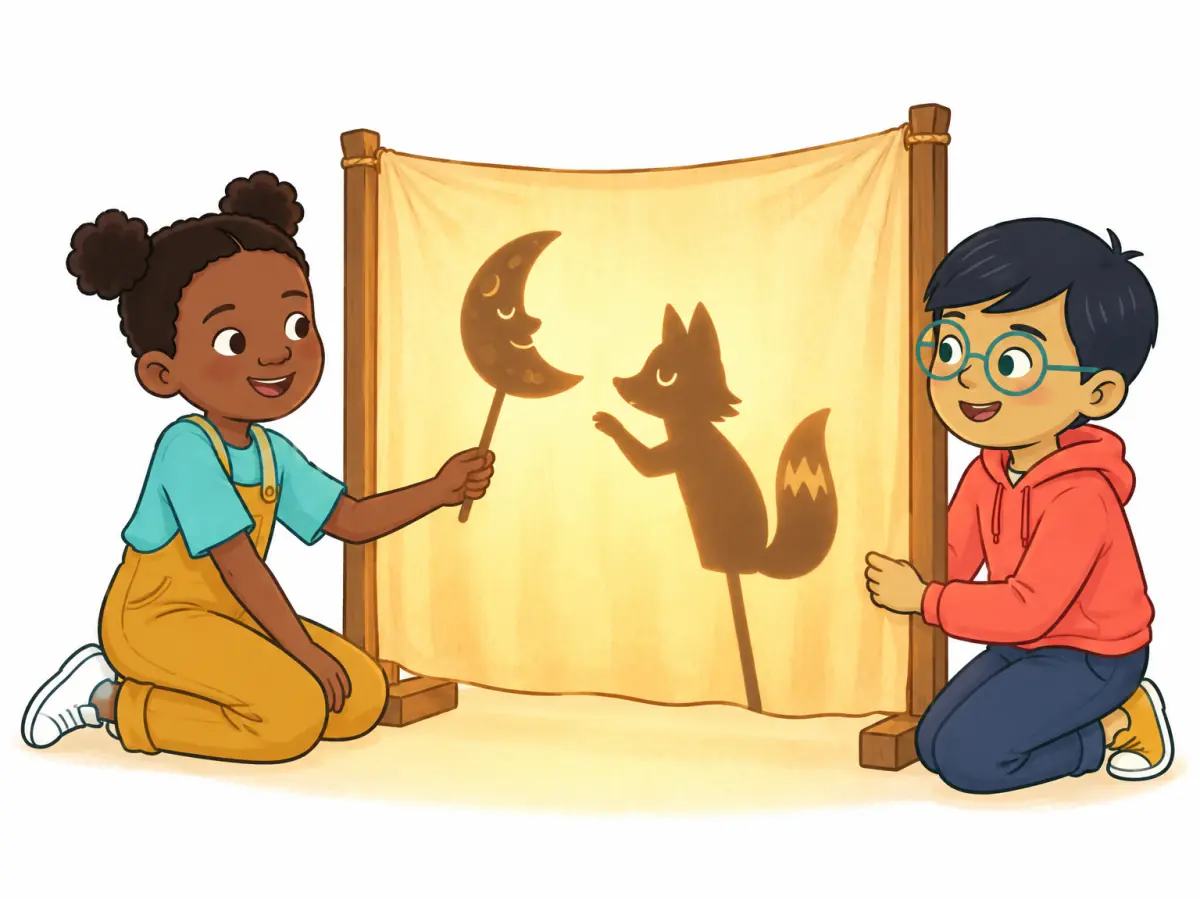
The end of the shadow play: behind a glowing curtain, Nia holds up the moon puppet that has been found, and the fox puppet reaches towards it while Leo holds the curtain.

THE MOON BEHIND THE CURTAIN

NARRATOR: The moon puppet has disappeared before the show.

FOX: I have already looked beside the lights.

CHILD: I checked the costume box ten minutes ago.

FOX: Listen! Something has just moved behind the curtain.

CHILD: It is the moon. The string caught on a nail.

NARRATOR: They free the puppet, and the audience sees a bright ending.

Plan aloud

The end of the shadow play: behind a glowing curtain, Nia holds up the moon puppet that has been found, and the fox puppet reaches towards it while Leo holds the curtain.

Nia How will your new scene end?

Leo The fox finds the moon puppet behind the curtain, and the light returns.

Leo Where will you put the stage directions?

Nia I will put them in brackets.

How will your new scene end?

CHARACTERS: Fox, Child, Narrator SCENE: Behind the theatre curtain. (Child lifts a silver string.) FOX: I have just found the moon puppet. CHILD: The audience is waiting! NARRATOR: The light returns and the scene ends.

  • character list
  • scene heading
  • stage direction in brackets
  • clear ending

Draft and revise

The end of the shadow play: behind a glowing curtain, Nia holds up the moon puppet that has been found, and the fox puppet reaches towards it while Leo holds the curtain.

Nia Who will read your text?

Leo My teacher and I will act it out.

Leo What will you check?

Nia I will check my spelling and punctuation.

How will your new scene end?

CHARACTERS: Fox, Child, Narrator SCENE: Behind the theatre curtain. (Child lifts a silver string.) FOX: I have just found the moon puppet. CHILD: The audience is waiting! NARRATOR: The light returns and the scene ends.

  • character list
  • scene heading
  • stage direction in brackets
  • clear ending
Bu üniteyi öğren
Nasıl öğrenmek istersin?

Gösteriye hazırlık kelimeleri

Bir gösteriye hazırlanmak bu dil bilgisi için doğal bir ortamdır, çünkü herkes sürekli neyin bittiğini kontrol eder. İki kelime genellikle açıklama ister: “character” bir hikâyedeki ya da oyundaki kişi veya canlıdır, “audience” ise izleyenler, yani seyircidir. Bir yazım tuzağı: “lights” kelimesindeki gh okunmaz, “night” kelimesinde de olduğu gibi.

  • stage – sahne, oyuncuların oynadığı yer
  • curtain – sahnenin önündeki perde
  • script – oyunun yazılı metni
  • costume, make-up – kostüm ve makyaj

Present perfect: have ya da has + past participle

Present perfect geçmişteki bir işi şimdiye bağlar: “We have tested the lights.” denemenin bittiğini ve ışıkların şu an hazır olduğunu anlatır. Düzenli fiillere -ed eklenir: finished, tested. Düzensiz fiillerin kendi biçimi vardır ve her zaman past simple ile aynı değildir: write, wrote, written.

Soruda have ya da has öznenin önüne gelir: “Have you found the costume?” Konuşurken olumsuz cümleler genellikle kısaltılır: “I haven’t found it.”

  • I, you, we, they ile: “We have tested the lights.”
  • he, she, it ile: “She has found the costume.”

Just, already, yet ve never

“Just” ve “already” have ile past participle arasına girer. “Just” çok kısa süre önce, yani “az önce” demektir: “We have just tested the lights.” “Already” “çoktan, zaten” anlamına yakındır; iş bitmiştir, çoğu zaman beklenenden erken: “I have already checked the ending.”

“Yet” soru ve olumsuz cümlelerde kullanılır ve en sona gelir: “No, I have not found it yet.” Türkçede “henüz” cümlenin başına yakın durabilir, İngilizcede “yet” ise sondadır. Kısa cevap “Not yet.” çok doğaldır. “Never” şimdiye kadar hiç demektir: “I have never performed this part before.”

Nia Have you found the costume?

Leo No, I have not found it yet.

Leo What have we just tested?

Nia We have just tested the lights.

Present perfect mi, past simple mı?

Asıl seçim budur. Bir şeyin ne zaman olduğunu söylüyor ya da soruyorsanız (yesterday, ten minutes ago, last year) past simple kullanılır; “When…?” soruları da past simple ister. Zaman söylenmiyorsa ve önemli olan şu anki sonuçsa present perfect kullanılır. Türkçede “bitirdim” hem “I finished” hem “I have finished” karşılığıdır, bu yüzden bu ayrım Türk çocuklar için yenidir. İpucu: cümlede bitmiş bir zaman varsa past simple seçin.

Gerçek cevaplarda ikisi bir arada kullanılır. Aşağıdaki cevap, bitmiş adımları past simple ile anlatır, sonra en yeni haberi “have just” ile verir.

  • “I have checked the costume box.”: zaman söylenmiyor
  • “I checked it ten minutes ago.”: bitmiş bir zaman var

Leo Have you finished the script yet?

Nia Yes. First I finished it yesterday. Then I checked the ending, and we have just tested the lights.

Bu üniteyi kendi yolunla öğren

Kısa bir oyun sahnesi yazmak

Aynı dil, gösteriden önce bir şeyin kaybolduğu kısa bir oyuna çok uyar. Önce karakterleri listeleyin, sahneyi adlandırın, sonra her konuşanın adını iki noktayla yazın. Sahne yönergeleri parantez içinde ve present simple ile yazılır. Çocuğunuzun değiştirebileceği bir örnek:

“CHARACTERS: Fox, Child, Narrator. SCENE: Behind the theatre curtain. (Child lifts a silver string.) FOX: I have just found the moon puppet. CHILD: The audience is waiting! NARRATOR: The light returns and the scene ends.”

  • Planlayın: ne kayboldu, nerede aranıyor, nereden çıkıyor
  • Kontrol edin: bir “just”, bir “already” ya da “yet” ve net bir son; sonra birlikte oynayın

Sık yapılan hatalar ve kolay düzeltmeleri

Bu hatalar A2 seviyesinde normaldir. Cümleyi doğru hâliyle tekrar edin ve devam edin.

  • “I have finished it yesterday.”: bitmiş bir zamanla past simple kullanılır: “I finished it yesterday.”
  • “I have already finish.”: past participle kullanılır: “I have already finished.”
  • “Have you yet finished?”: “yet” sona gelir: “Have you finished yet?”
  • “I have found it yet.”: olumlu cümlede “already” kullanılır: “I have already found it.”

Evde oyun: kulis kontrol listesi

Okul gezisi gibi gerçek bir etkinlikten önce altı işi bir listeye yazın. Şöyle sorun: “Have you packed your water bottle yet?” Çocuğunuz “Yes, I have already packed it.”, “Not yet.” ya da “I have just done it!” diye cevap versin. Sonra rolleri değişin. İkinci turda “When did you do it?” diye sorun ki çocuğunuz past simple’a geçsin. Daha büyük bir versiyon için el feneri ve çarşafla bir gölge kuklası gösterisi yapın.

Sonraki adım

Sonra çocuğunuz too ve enough ile sorunları ve çözümleri anlatabilir: “The costume is too big.” “The string is not long enough.” Bu da ters giden bir kostümle ilgili kısa bir hikâyeye götürür.

Sık sorulan sorular

Just, already ve yet arasındaki fark nedir?

“Just” çok kısa süre önce, “already” çoğu zaman beklenenden erken bitmiş demektir; “yet” ise beklenen bir şeyin olup olmadığını sorar ya da söyler: “Have you finished yet?”

“I have finished it yesterday” denir mi?

Hayır. Yesterday ya da last week gibi bitmiş bir zamanla past simple kullanılır: “I finished it yesterday.” Zaman söylenmiyorsa present perfect kullanılır: “I have finished it.”

“I just finished it” yanlış mı?

Hayır. Amerikan İngilizcesi just, already ve yet ile sık sık past simple kullanır: “Did you finish it yet?” İngiliz İngilizcesi genellikle present perfect tercih eder. İkisi de doğrudur.

Bu üniteyi öğren
Nasıl öğrenmek istersin?

Sırada ne var?

Canlı öğretmenle öğrensin

Flalingo çocuk derslerinde çocuğunuz bu tür üniteleri canlı bir öğretmenle birebir, aynı ekrandaki oyunlarla çalışır.

Ücretsiz deneme dersi alın