
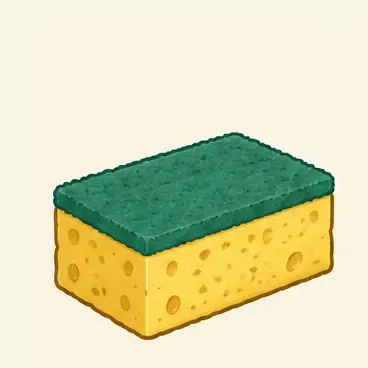
 sponge
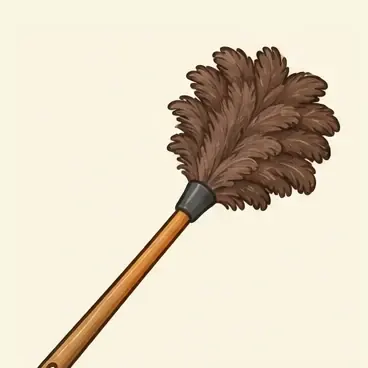 feather duster
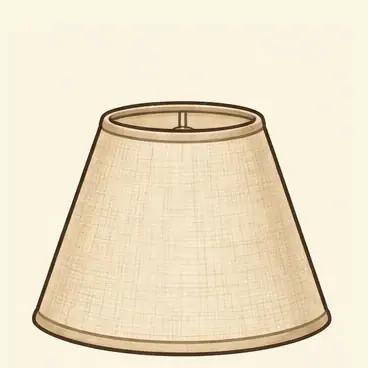 lampshade
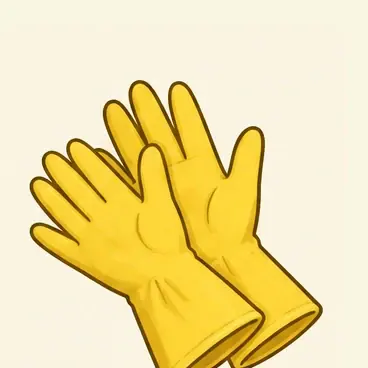 rubber gloves
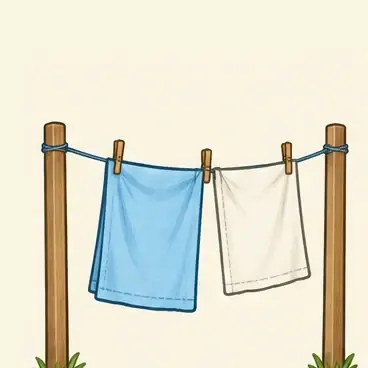 washing line
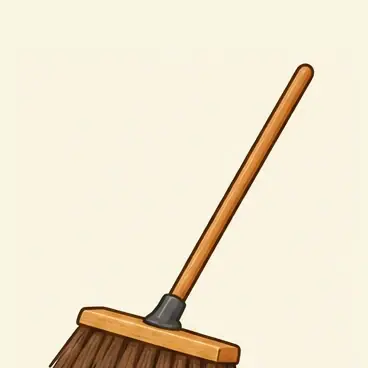 broom
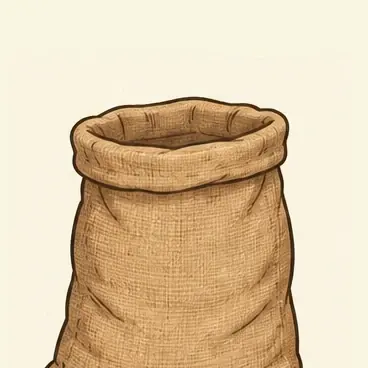 sack
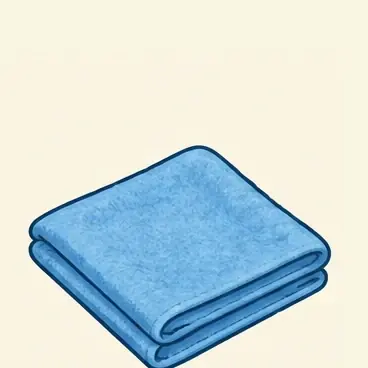 cloth
Ev eşyası kelimeleri ve tarif kelimeleri
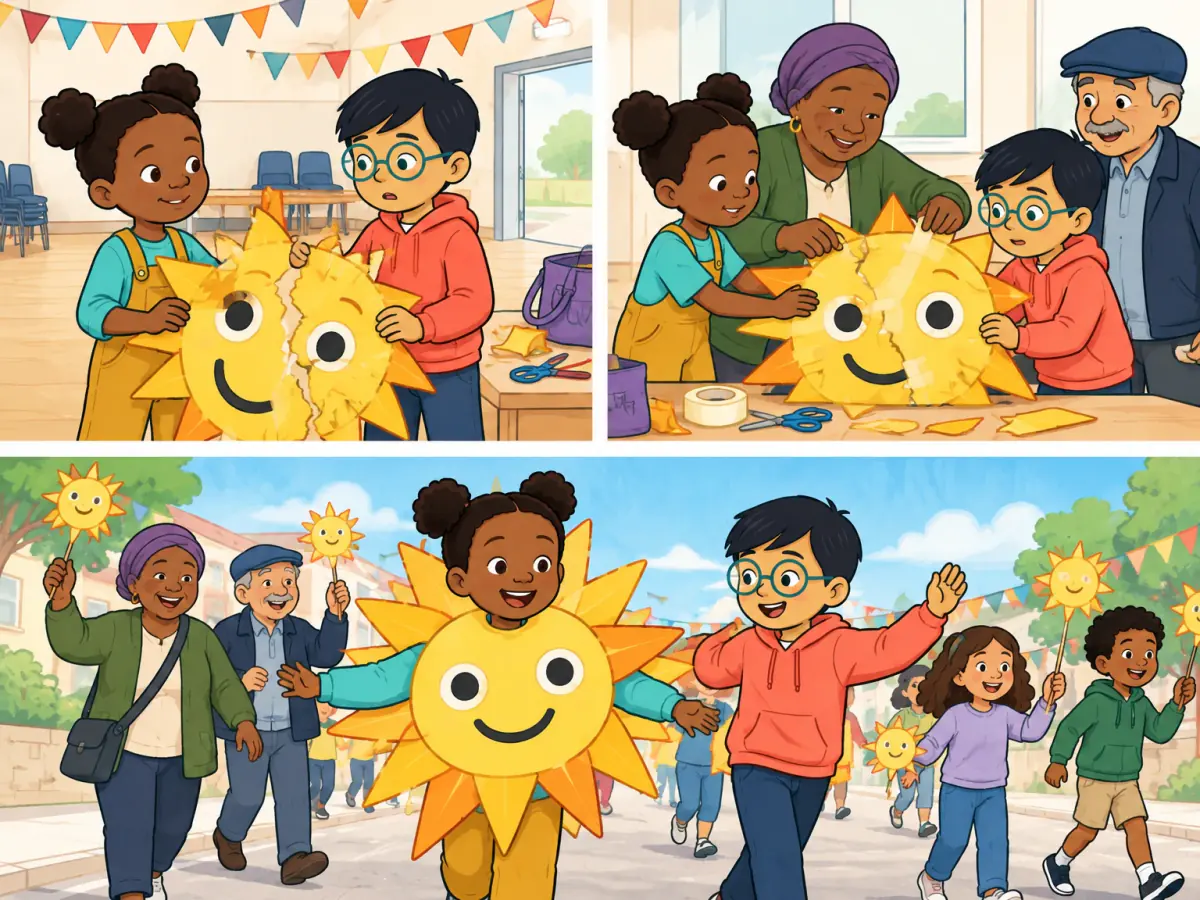
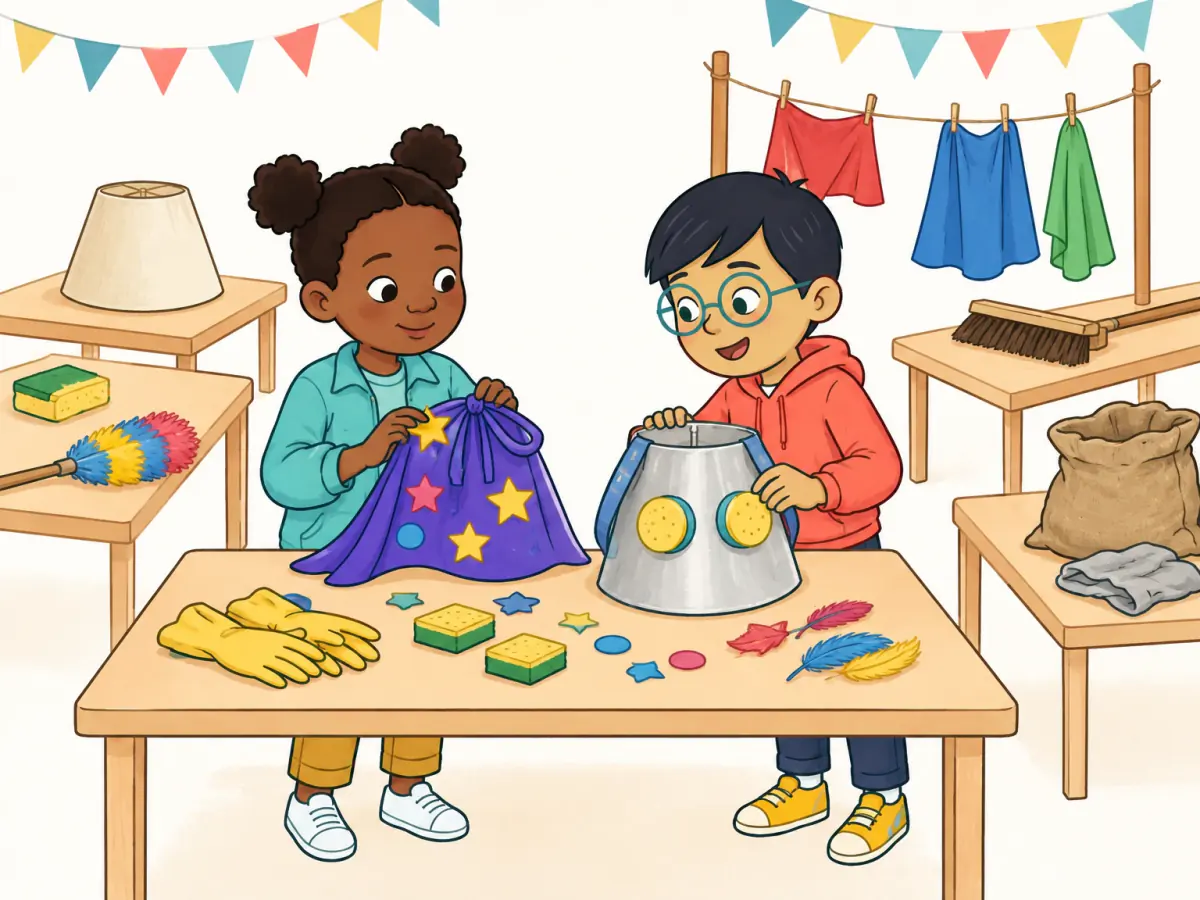
Her şeyin dolaptan çıktığı bir kostüm partisi düşünün: süngerle yıldız basılıyor, bir parça kumaş pelerine dönüşüyor. Bir kelimeye dikkat: “cloth” kumaş demektir; giydiğimiz şeyler ise “clothes” olur.
Karşılaştırma için zıt çiftleri ekleyin: soft ve rough (yumuşak, pürüzlü), light ve heavy (hafif, ağır), bright ve dark (parlak, koyu), long ve short (uzun, kısa).
- sponge – sünger
- feather duster – tüylü toz alıcı
- lampshade – abajur başlığı
- rubber gloves – lastik bulaşık eldiveni
- washing line – çamaşır ipi
- broom – saplı süpürge
- sack – kaba kumaştan büyük çuval
- cloth – kumaş (giysi ya da pelerin için)
Too ve enough: bu iş için uygun mu?
“Too” bir amaç için gerekenden fazla demektir, yani bir sorun vardır: “The sack is too rough.” “Enough” ihtiyacımız kadar demektir, yani iş görür: “It is light enough.” “Not” ile eksik olanı anlatır: “The string is not long enough.”
“Too” sıfattan önce, “enough” sıfattan sonra gelir. Türkçede “yeterince hafif” deriz ve kelime öne gelir; İngilizcede ise “light enough” denir. Amacı söylemek için “to” + fiil eklenir: “too heavy to carry” (taşınamayacak kadar ağır), “light enough to wear” (giyilecek kadar hafif).
- “The cape is too long.”: bir sorun var
- “It is short enough to wear safely.”: sorun çözüldü
As … as, -er than ve the -est
“As … as” iki şeyin eşit olduğunu söyler, Türkçedeki “kadar” gibi: “The sponge is as soft as the cloth.” (Sünger kumaş kadar yumuşak.) “Not as … as” ilkinde daha az olduğunu söyler. Çocuğunuz büyük ihtimalle iki şey için “-er than” (“The feather duster is softer than the broom.”) ve bir gruptaki tek şey için “the -est” kalıbını biliyordur (“The lampshade is the brightest item on the table.”).
Bu konudaki ana kalıp, bir karşılaştırmayı ve bir kararı “but” ile birleştirir: “Is the cloth as bright as the lampshade?” “No. It is not as bright, but it is light enough to wear.” Kumaş parlaklıkta geride kalır ama yine de işe yarar.
Tahmin et, dinle, kontrol et
Dinlemeden önce “What do you think will happen to the costume?” diye sorun; çocuğunuz “I predict that… will…” ile cevap versin. Sonra konuşmayı oynatın, “Who ties the rope?” diye sorun ve kontrol için tekrar dinleyin.
Tahmin gelecekle ilgili olduğu için “will” kullanır; adımlar ise bir hikâye özetinde olduğu gibi present simple ile anlatılır (“cuts”, “ties”).
Nia What do you think will happen to the costume?
Leo I predict that the bright cloth will become a cape.
Nia Then Mara cuts the cloth and Amir ties the rope.
Leo Jo paints the lampshade, and Suri uses the sponge to add stars.
Nia Was your prediction correct?
Leo Yes. The cloth becomes a cape for the final scene.
Kostüm tamiri hikâyesi yazmak
Bir tamir hikâyesinin dört bölümü vardır: bir başlangıç, “too” ya da “not … enough” ile anlatılan bir sorun, bir tamir ve “enough” içeren bir son. Hikâyeyi gerçek bir okur için yazın; örneğin küçük bir kuzen için.
Değiştirilebilecek bir örnek: “The music started, but the silver cape was too long. The two friends folded it and fixed it with cloth tape. It was short enough to wear safely. The dancers entered together, and the audience cheered.”
- Planla: kostüm, sorun, çözüm
- Yaz: “too” ve “enough” içeren, past simple ile dört cümle
- Kontrol et: bir karşılaştırma, büyük harfler, noktalar
Sık yapılan hatalar ve kolay düzeltmeleri
Bu hatalar A2 seviyesinde normaldir: cümleyi doğru hâliyle tekrar edin ve devam edin.
- “It is enough light.”: “enough” sıfattan sonra gelir: “It is light enough.”
- “The cape is too much long.”: “much” gerekmez: “The cape is too long.”
- “Your costume is too beautiful!”: sorun yoksa “really” kullanın: “Your costume is really beautiful!”
- “too heavy for carry”: fiilden önce “to” gelir: “too heavy to carry”.
- “as bright than”: “as bright as” ya da “brighter than” denir.
Evde oyun: kostüm görevi
Birkaç güvenli eşya toplayın; örneğin bir atkı, bir mutfak havlusu, bir kâğıt torba ve bir kutu. Bir kostüm seçin, mesela süper kahraman pelerini. Çocuğunuz her eşyayı eline alıp karar versin: “The tea towel is too small.” “The scarf is long enough.” Siz de sorun: “Is the bag as strong as the box?”
Sonra rolleri değişin ve tahmin ekleyin: “What do you think will happen to the box?” “I predict that it will become a robot head.”
Sonraki adım
Too ve enough kolaylaşınca çocuğunuz fikirleri bağlaçlarla birleştirebilir: “The cape was too long, so we folded it.” Bu da sebep ve sonuç anlatan kısa bilgi metinlerine götürür.