

İçeriğe geç
Flalingo

İngilizce pratiği

Çocuklara İngilizce bağlaçlar (A2, 9–12 yaş): çevre dostu ev metninde and, but, or, so ve because

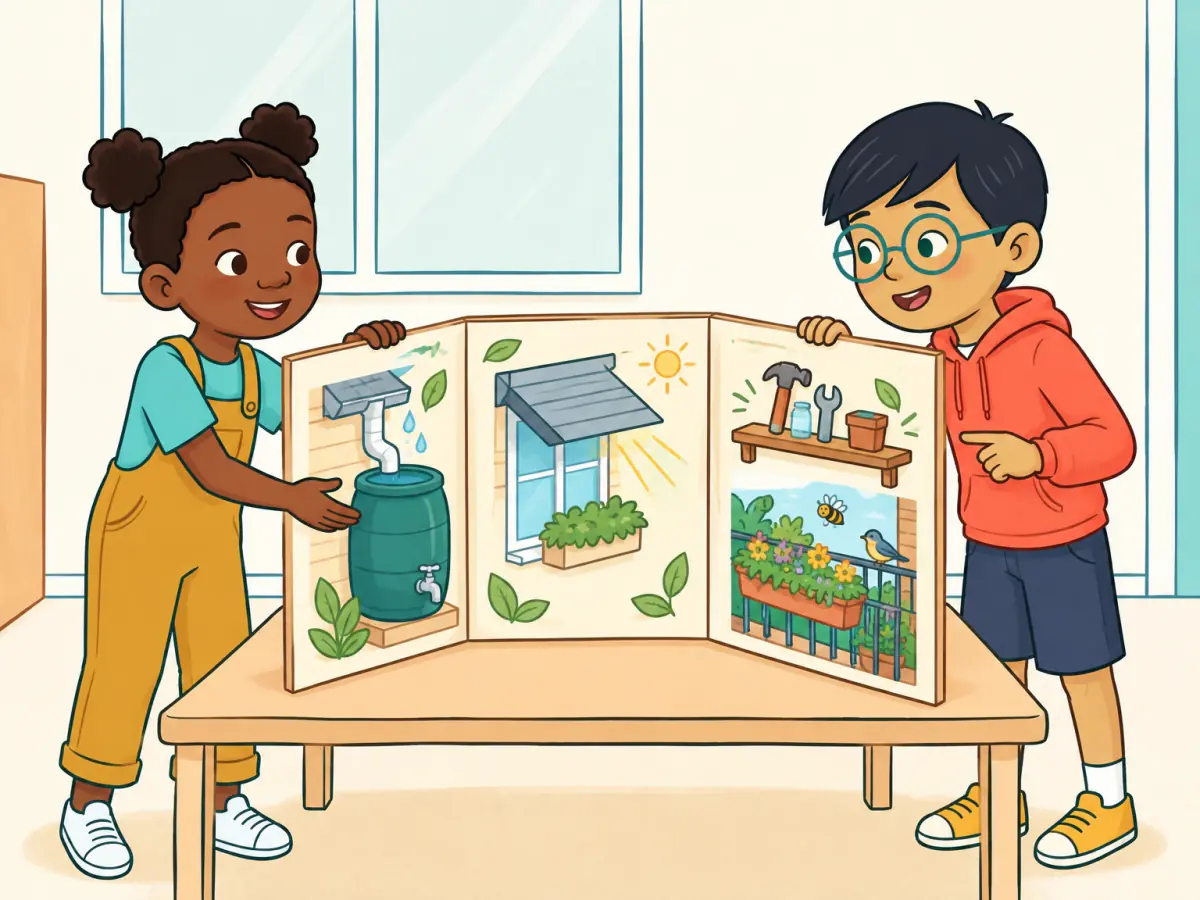
An eco-home information display shows a rain barrel, shaded window, repair shelf and wildlife-friendly balcony garden.

9–12 yaşındaki çocuğunuz A2 seviyesinde fikirleri and, but, or, so ve because ile bağlamayı, eski alışkanlıkları “used to … but now” ile bugünle karşılaştırmayı ve daha yeşil bir ev hakkında kısa bir bilgilendirici metin yazmayı öğrensin.

Bağlaçlar iki fikri birleştirir ve aralarındaki ilişkiyi gösterir: “and” bilgi ekler, “but” karşıtlık ya da değişim gösterir, “or” seçenek sunar, “so” sonucu, “because” sebebi verir: “We repair toys and lamps, so less rubbish leaves the building.” Bu A2 konusu, geçmiş ve şimdiki zamanda basit cümleler yazabilen yaklaşık 9–12 yaşındaki çocuklara uygundur. Konu, komşular için daha yeşil bir ev hakkında kısa bir metinle biter.

Bu yazı kimin için?

  • Basit cümleler yazabilen çocukların velileri: çocuğunuz geçen hafta sonu ne yaptığını ve her gün ne yaptığını anlatabiliyor.
  • Hayvanları, parkları ya da geri dönüşümü önemseyen çocuklar: daha yeşil bir ev, bağlaçlara gerçek bir görev verir.
  • Evde pratik yapmak isteyen veliler: kendi evinizle ilgili gerçek bilgiler yeter; bu sayfadaki kartlarda her kelimenin ve cümlenin sesi var.
  • Henüz erken: Çocuğunuz bir olay hakkında iki net geçmiş zaman cümlesi yazamıyorsa önceki konuyla, kısa bir tamir hikâyesinde too ve enough ile başlayın (aşağıda bağlantısı var).
  • Fazla kolay: Kısa bir metinde bilgileri yardımsız bağlayabiliyorsa broşürde gerekçeli öneriler konusuna geçin (aşağıda bağlantısı var).

Örnek sayfaları açın

Örnek sayfaları açın

Kelime kartları

clean up

remove litter or mess from a place

damage

harm that makes a place or object worse

the environment

the natural world and the places where people and animals live

litterlitter
planetplanet
pollution

harmful waste that makes air, water or land dirty

rubbish dump

a place where large amounts of waste are taken

wildlife

animals and plants living in natural places

What were you doing when the rain started?

Study how this model connects form with meaning.

I was picking up litter with gloves when the rain started.

Study how this model connects form with meaning.

We used to waste water.

Study how this model connects form with meaning.

The team was planting while we were cleaning.

Study how this model connects form with meaning.

Konuşma

Leo What does your group do for the environment?

Nia We clean up the stream bank every Saturday and pick up litter with gloves.

Nia Why does the litter matter?

Leo It can damage wildlife, and a lot of it ends up at the rubbish dump.

Leo What is the biggest problem here?

Nia Plastic pollution. We want to protect our planet, one small place at a time.

Cümle yapısı

What were you doing when the rain started?

I was picking up litter with gloves when the rain started.

  • We used to waste water.
  • The team was planting while we were cleaning.

Diğer alıştırmalar

Use the contrast

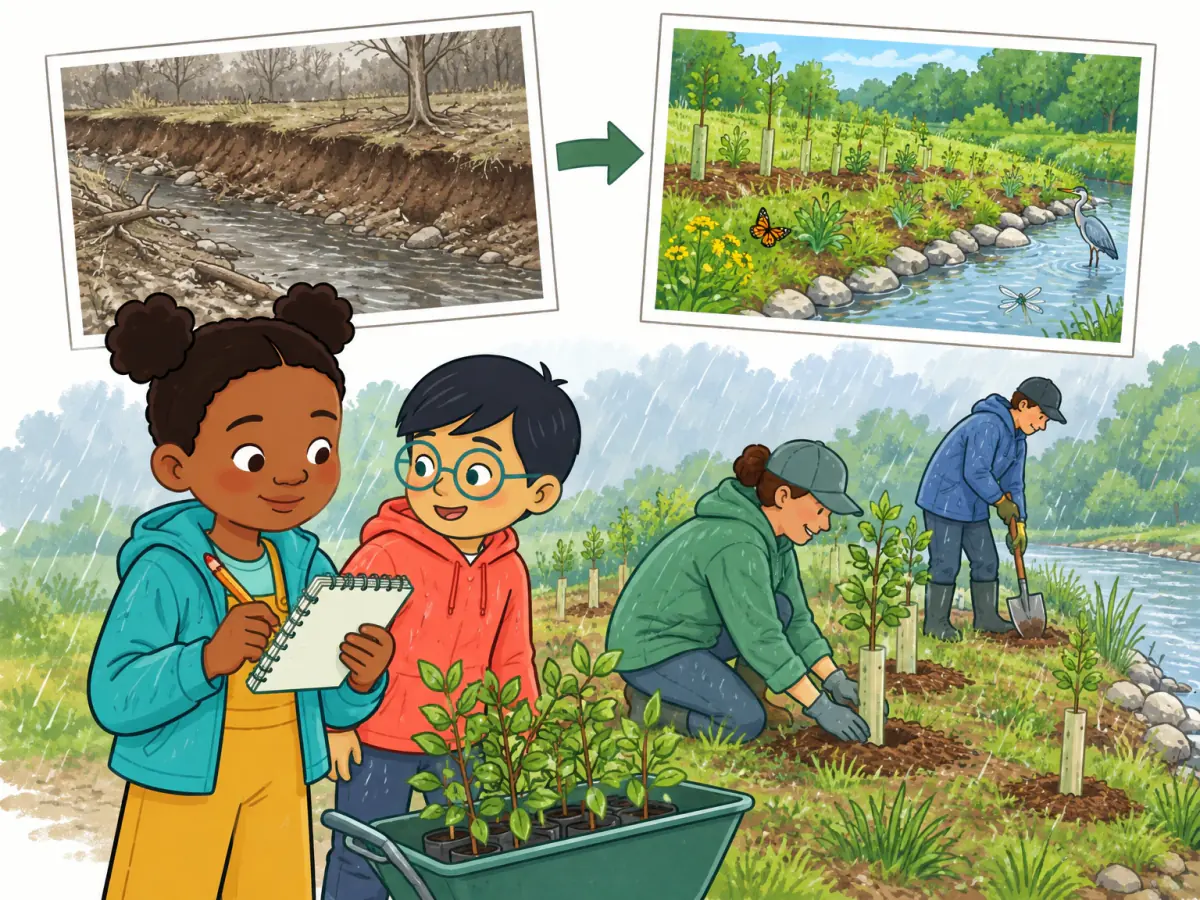
A before-and-now display contrasts a damaged stream bank in an old photograph with a planted bank and clear wildlife area today. Nia records what volunteers were doing when rain began.

Leo What were you doing when the rain started?

Nia I was picking up litter with gloves when the rain started.

Nia What was the team doing?

Leo They were planting while we were cleaning.

Leo Did this place use to have more litter?

Nia Yes, but people changed their habits.

What were you doing when the rain started?

I was picking up litter with gloves when the rain started.

  • We used to waste water.
  • The team was planting while we were cleaning.

Four quiet changes at home

An eco-home information display shows a rain barrel, shaded window, repair shelf and wildlife-friendly balcony garden.

FOUR QUIET CHANGES AT HOME

A greener home does not need dramatic machines. First, a covered rain barrel can store water for plants. Second, a shaded window stays cooler in summer. Third, a repair shelf gives broken objects another chance. Finally, balcony flowers can support insects. Our building used to throw away small items, but neighbours now meet once a month to repair them.

Plan aloud

An eco-home information display shows a rain barrel, shaded window, repair shelf and wildlife-friendly balcony garden.

Nia How will your eco-home text flow?

Leo It will start with what we used to do, and then it will say what we do now.

Leo Which linking words will you use?

Nia I will use but, so and because.

How will your eco-home text flow?

Our building used to waste water, but now we collect rain for the garden. We repair toys and lamps, so less rubbish leaves the building. Neighbours choose herbs or flowers because both support insects.

  • and / but
  • or / so / because
  • used to/now
  • information text

Draft and revise

An eco-home information display shows a rain barrel, shaded window, repair shelf and wildlife-friendly balcony garden.

Nia Who will read your text?

Leo Neighbours in our building will read my information text.

Leo What will you check?

Nia I will check my spelling and punctuation.

How will your eco-home text flow?

Our building used to waste water, but now we collect rain for the garden. We repair toys and lamps, so less rubbish leaves the building. Neighbours choose herbs or flowers because both support insects.

  • and / but
  • or / so / because
  • used to/now
  • information text
Bu üniteyi öğren
Nasıl öğrenmek istersin?

Bu konudaki çevre kelimeleri

Bu kelimelerle çocuğunuz park ya da dere gibi gerçek bir yeri korumaktan söz edebilir. “Litter” çoğul olmaz: Türkçede “çöpler” deriz ama İngilizcede “litters” değil, “a lot of litter” denir. “Rubbish” İngiliz İngilizcesidir; Amerikan İngilizcesinde “trash” denir.

  • clean up – bir yerdeki çöpü ya da dağınıklığı temizlemek
  • litter – yere atılmış çöp
  • damage – bir şeyi kötüleştiren zarar
  • wildlife – doğada yaşayan hayvanlar ve bitkiler, yaban hayatı
  • pollution – havayı, suyu ya da toprağı kirleten atık, kirlilik
  • rubbish dump – büyük miktarda atığın götürüldüğü yer, çöplük
  • the environment – çevremizdeki doğal dünya, çevre
  • planet – uzayda Dünya gibi büyük, yuvarlak bir gök cismi, gezegen

Kelimeleri kısa bir röportajda dinleyin

İki çocuk, bir dere kenarını temizleyen bir gruptan söz ediyor. Bir kez dinledikten sonra “When does the group clean up?” (every Saturday) ve “What can litter damage?” (wildlife) diye sorun, sonra kontrol için tekrar açın.

Leo What does your group do for the environment?

Nia We clean up the stream bank every Saturday and pick up litter with gloves.

Nia Why does the litter matter?

Leo It can damage wildlife, and a lot of it ends up at the rubbish dump.

Beş bağlaç, beş görev

Okullarda bu kelimelere “connectives” ya da “conjunctions” da denir. Birini seçmek için ikinci bilginin ne yaptığını sorun: ekleme mi, karşıtlık mı, seçenek mi, sonuç mu, sebep mi?

“So” ve “because” aynı iki bilgiyi zıt uçlardan bağladığı için çocuklar bunları sık karıştırır. “So” sonuçtan önce gelir, tıpkı “bu yüzden” gibi; “because” sebepten önce gelir, tıpkı “çünkü” gibi: “Less rubbish leaves the building because we repair toys.” İki tam cümle arasında “so” ve “but” önüne virgül konur, “because” önüne ise genellikle konmaz.

  • and – ekler: “A rain barrel stores water, and we use it for the plants.”
  • but – karşıtlık ya da değişim: “Our flat is small, but it has a balcony.”
  • or – seçenek: “Neighbours can plant herbs or flowers.”
  • so – sonuç: “The window has a shade, so the room stays cooler.”
  • because – sebep: “We grow flowers because they support insects.”

Eski alışkanlıklar ve geçmişte süren eylemler: used to ve was doing

“Used to” + fiil, değişmiş eski bir alışkanlığı anlatır, Türkçedeki “eskiden … -ardık” gibi: “We used to waste water.” (Eskiden suyu boşa harcardık.) Soruda “d” düşer: “Did you use to recycle?” Değişimi göstermek için “but now” ve geniş zaman ekleyin: “I used to throw old bottles away, but now I recycle them.”

Was ya da were + -ing, geçmişte sürmekte olan bir eylemi anlatır; Türkçedeki “-iyordu” ekine benzer. “When” ile kısa bir eylem onu böler: “I was picking up litter with gloves when the rain started.” (Yağmur başladığında eldivenle çöp topluyordum.) “While” ile iki eylem aynı anda olur: “The team was planting while we were cleaning.”

Bu üniteyi kendi yolunla öğren

Komşular için bilgilendirici metin yazmak

Bilgilendirici metin gerçek bir okura bilgi verir; burada okurlar komşulardır. Çocuğunuz daha yeşil bir ev hakkında dört bilgi planlar, örneğin yağmur suyu fıçısı, gölgelikli pencere, tamir rafı ve balkon çiçekleri, sonra bunları bağlar. Değiştirilebilecek bir örnek: “Our building used to waste water, but now we collect rain for the garden. We repair toys and lamps, so less rubbish leaves the building. Neighbours choose herbs or flowers because both support insects.”

Sonra her bağlacı kontrol edin: “so” ya da “because” yalnızca bir bilgi gerçekten ötekine yol açıyorsa kullanılır. “We collect rain, so the window stays cool.” bağlıymış gibi durur ama doğru değildir.

Sık yapılan hatalar ve kolay düzeltmeleri

Bu hatalar A2 seviyesinde normaldir: cümleyi doğru hâliyle tekrar edip devam edin.

  • “It was raining, because we went home.”: “It was raining, so we went home.”
  • Bugün de süren bir alışkanlık için “I use to recycle.”: “I usually recycle.”
  • “Now we used to repair lamps.”: “Now we repair lamps.”
  • “We was cleaning.”: “We were cleaning.”
  • “a lot of litters”: “a lot of litter”

Evde oyun: bağla

Beş kart hazırlayın: and, but, or, so, because. Kâğıt şeritlere evinizle ilgili gerçek bilgi çiftleri yazın, örneğin “We turn off the lights.” ve “We use less electricity.” Çocuğunuz uyan kartı seçsin, cümleyi yüksek sesle okusun ve nedenini söylesin. Sonra bir büyükanne ya da büyükbabaya “What did you use to do with old bottles?” diye sorsun.

Sonraki adım

Sırada gerekçeli öneri vermek var, örneğin bir broşürde: “Why not repair your lamp? It saves money.” Ardından çocuğunuz uzun metinleri konu cümleleri olan paragraflara ayırmayı öğrenir.

Sık sorulan sorular

İngilizcede “so” ile “because” arasındaki fark nedir?

“Because” sebebi, “so” sonucu başlatır; Türkçedeki “çünkü” ve “bu yüzden” gibi: “The room stays cool because the window has a shade.” “The window has a shade, so the room stays cool.”

İngilizcede cümle “Because” ile başlayabilir mi?

Evet, cümlede iki bölüm de varsa: “Because it was raining, we went home.” Yazıda tek başına “Because it was raining.” eksik kalır; konuşmada “Why?” sorusuna kısa cevap olarak ise doğaldır.

“Used to” yalnızca geçmiş için mi kullanılır?

Evet. Bugün de süren alışkanlıklar için geniş zaman kullanılır: “We usually recycle.”

Bu üniteyi öğren
Nasıl öğrenmek istersin?

Sırada ne var?

Canlı öğretmenle öğrensin

Flalingo çocuk derslerinde çocuğunuz bu tür üniteleri canlı bir öğretmenle birebir, aynı ekrandaki oyunlarla çalışır.

Ücretsiz deneme dersi alın