İçeriğe geç
Flalingo

İngilizce pratiği

İngilizce fotoğraf nasıl anlatılır? B1 orta altı seviye: yer, kişiler, eylemler ve fotoğrafın anlamı

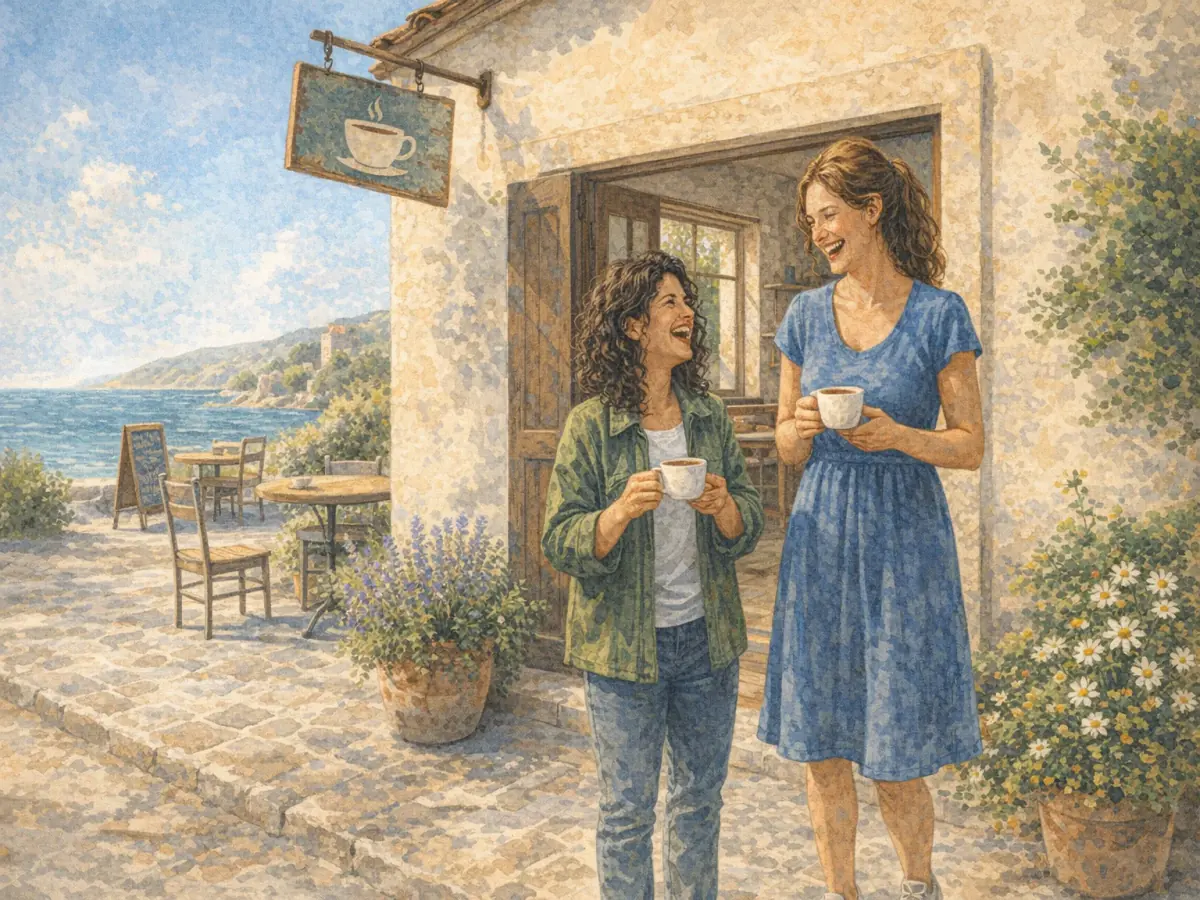
Two women laugh outside their new café on opening morning, each holding a cup of coffee, under a sign that hangs at an angle.

Bir fotoğrafı İngilizce anlatmak için B1 cümleleri: there is/are, next to, behind ve between, kişilerin ne giydiği ve ne yaptığı, sonunda fotoğrafın sizin için anlamını söyleyen 100–130 kelimelik bir paragraf.

Bir fotoğrafı dört adımda anlatın. Önce ne gösterdiğini söyleyin: “This photo shows my sister and her business partner outside their new café.” Sonra kişilerin ve eşyaların yerini: “on the left”, “next to”, “behind”. Ardından kişilerin ne giydiğini ve ne yaptığını present continuous ile: “She’s wearing a green jacket.” “They’re laughing.” En sonda fotoğrafın sizin için neden önemli olduğunu söyleyin. Fotoğrafın dışındaki alışkanlıklar için present simple kullanın: “She usually works in the kitchen.” Bu konu B1 (orta altı) seviyesindedir; kendine güvenen A2 öğrencileri de takip edebilir. Kendi fotoğraflarınızla günde 10 dakika yeterli.

Bu yazı kimin için?

  • Orta altı seviyedeki yetişkinler: kendinizden söz edebiliyorsunuz ama bir resmi anlatmanız istenince susuyorsunuz.
  • Fotoğraf anlatma görevi olan bir konuşma sınavına ya da mülakata hazırlananlar.
  • İngilizce konuşan arkadaşlarına ya da iş arkadaşlarına fotoğraf gösterip “This is my family.” cümlesinden fazlasını söylemek isteyenler.
  • Henüz erken: “She’s wearing…” ve “There are two…” size hâlâ yeni geliyorsa önce A2 seviyesindeki “şu anda olanlar” ve “eşyaların yeri” yazılarıyla başlayın.
  • Fazla kolay: Bir fotoğraf hakkında not olmadan iki dakika konuşup neden önemli olduğunu anlatabiliyorsanız geçmiş zamanda hikâye anlatmaya geçin.

Örnek sayfaları açın

Örnek sayfaları açın

Kelime kartları

inin

inside an area or enclosed space

Maya is standing in the doorway.

onon

touching and supported by a surface

The camera is on the wooden table.

underunder

lower than and often directly below something

The black bag is under the chair.

next tonext to

at the side of and very near something or someone

Owen is standing next to the woman in the red coat.

behindbehind

at the back of something or someone

The coat is on the rail behind you.

in front ofin front of

further forward than something or someone, facing the same way

The photographer stands in front of the group.

betweenbetween

in the space that separates two people or things

Maya’s aunt can stand between Maya and Owen.

wear / carry / dress

wear takes clothes or jewellery; carry takes bags and cases; dress without an object describes someone’s clothing style

Maya is wearing a coat, carrying a case, and dressing casually this week.

a pair of

a quantity phrase used with plural clothes and footwear such as jeans, trousers, tights, shoes, and boots

I bought a pair of trousers and two pairs of socks.

Konuşma

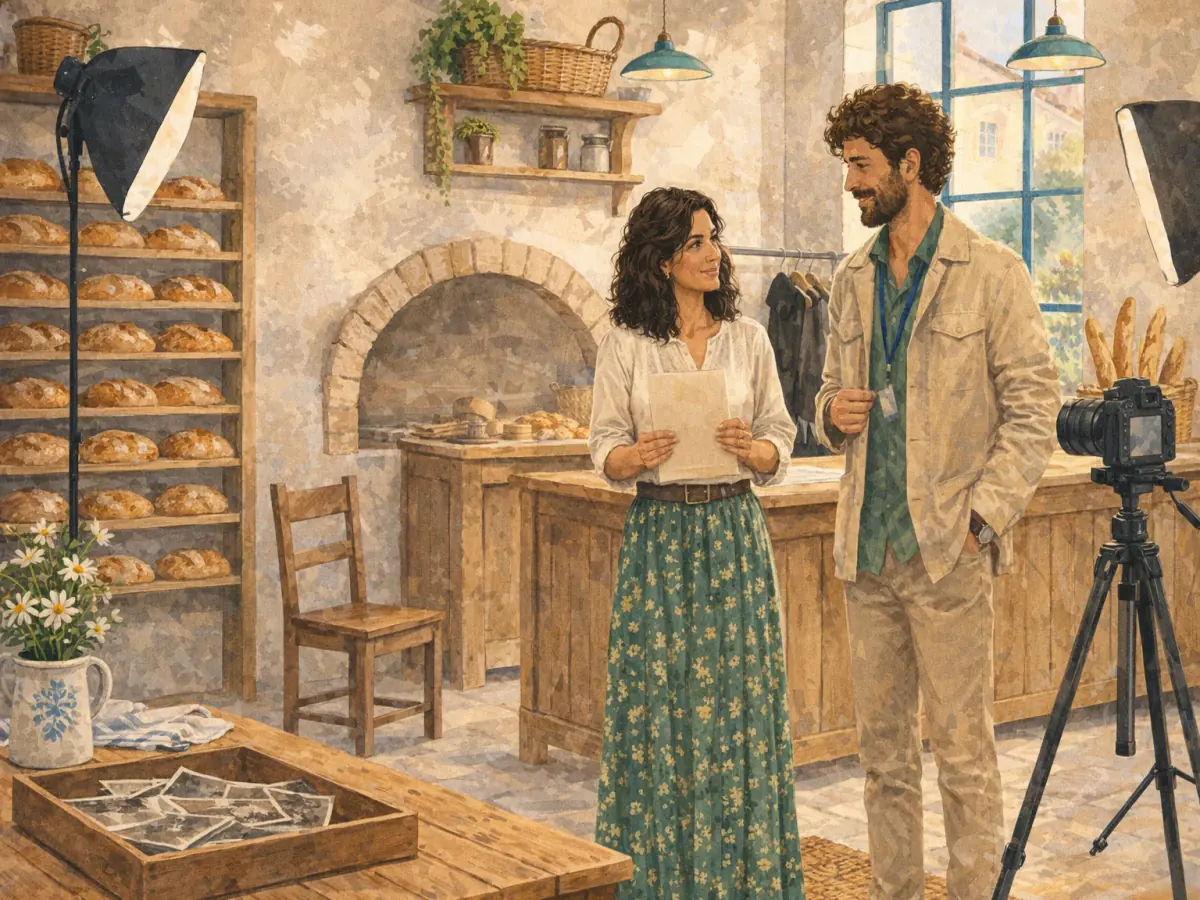
owen The archive photo shows your grandparents in their bakery in 1986. Where does the wooden chair go?

maya It goes next to the counter, not under the window. My grandfather is sitting on it in the original.

owen I’m moving it now. Am I wearing the right jacket?

maya No, you aren’t. He’s wearing a white shirt and a dark coat. The coat is on the rail behind you.

owen Got it. What are you holding in the old photo?

maya A tray of bread. I’m holding the menu at the moment, so let’s swap it.

owen Your aunt usually works at the new bakery. Is she joining us?

maya Yes. She’s parking the car, and then she can stand between us for the final picture.

Cümle yapısı

What is different from the old photograph?

The chair is in the wrong place, Owen is wearing the wrong jacket, and Maya is holding a menu instead of a tray.

Present simple gives routine facts; present continuous and place phrases describe today’s scene.

  • usually works
  • is helping today
  • next to
  • in front of

Diğer alıştırmalar

Present continuous: now and around now

Adults arranging clothes and objects for an archive photo recreation.
am/is/are + verb-ing

Use the present continuous for an action happening now

The photographer is moving the lamp.

am not / isn’t / aren’t + verb-ing

Put not after am, is, or are for a negative action now

The models aren’t looking at the camera yet.

Am/Is/Are + subject + verb-ing?

Move am, is, or are before the subject to ask about an action now

Is Owen wearing the original coat?

present simple: routine or fact

Use the present simple for things that happen regularly or are generally true

Owen works in a studio every weekday.

present continuous: temporary or now

Use the present continuous for the current moment or a temporary situation

This month, Owen is helping with an archive project.

There is / There are

Use there is/are to say what exists in a picture before describing actions

There are two chairs next to the window.

about /ə/ · photographer /ə/

The weak sound /ə/ often appears in unstressed syllables

The photographer is standing behind the camera, and about ten people are waiting.

shirt /ɜː/ · skirt /ɜː/

The long central sound /ɜː/ is stressed in words such as shirt and skirt

The woman in the purple skirt is wearing a white shirt.

Write a concise photo description

Two women laugh outside their new café on opening morning, each holding a cup of coffee, under a sign that hangs at an angle.

This photo shows my sister Lale and her business partner, June, outside their new café in Brighton. I took it on the morning they opened last May. Lale is the short woman on the left. She has curly dark hair and she’s wearing a green jacket over a white T-shirt. June is standing next to her in a blue dress and trainers. They both look tired but excited.

Lale usually works in the kitchen, and June manages the customers. In the photo, they’re holding the first two cups of coffee and laughing because the café sign is hanging at an angle. I like this picture because they spent a year preparing the business, and it captures the exact moment their plan became real.

What information makes a photo description complete?

Identify the people, give the time and place, describe appearance and actions, explain the relationship, and say why the photo matters.

A connected paragraph guides the reader from the whole photo to specific people and its personal meaning.

  • This photo shows…
  • The person on the left…
  • is wearing…
  • At the moment…
  • I like it because…
Bu üniteyi öğren
Nasıl öğrenmek istersin?
Hesabın var mı?

Ücretsiz hesap bir üniteyi kalıcı olarak açar.

Önce fotoğrafın tamamı, sonra ayrıntılar

Açık bir anlatım büyükten küçüğe gider: fotoğrafın ne gösterdiği, ne zaman ve nerede çekildiği, kişiler tek tek ve en sonda neden önemli olduğu. İşin çoğunu şu açılışlar yapar:

  • “This photo shows …” – Bu fotoğrafta … görülüyor.
  • “I took it last summer at my cousin’s wedding.” – Geçen yaz kuzenimin düğününde çektim.
  • “The person on the left is …” – Soldaki kişi …
  • “I like this picture because …” – Bu fotoğrafı seviyorum, çünkü …

There is, there are ve yer bildiren ifadeler

Eylemlerden önce fotoğrafta ne olduğunu there is/are ile söyleyin: “There are two chairs next to the window.” Türkçedeki “var” tekil ve çoğulda aynıdır; İngilizcede çoğul için “there are” gerekir. Sonra her kişiyi ve eşyayı yerleştirin. Türkçede yer bildiren kelime sona gelir (“masanın üstünde”), İngilizcede başa: “on the table”.

  • in (içinde): “A woman is standing in the doorway.”
  • under (altında): “The black bag is under the chair.”
  • next to (yanında): “He’s standing next to the woman in the red coat.”
  • in front of (önünde): “The photographer is standing in front of the group.”
  • between (arasında): “Her aunt is standing between them.”

Fotoğraf için present continuous, alışkanlık için present simple

Fotoğraftaki kişilerin yaptığı şey o anda oluyor; bu yüzden am/is/are + -ing kullanın. Anın dışındaki gerçekler ve alışkanlıklar için present simple kullanın. Türkçede “-yor” ikisini de karşılayabilir (“Mutfakta çalışıyor.”); İngilizcede ayırmanız gerekir. İkisi bir paragrafta olunca okuyan neyin olağan, neyin o ana özel olduğunu görür.

  • Şu an: “The photographer is moving the lamp.”
  • Alışkanlık: “He works in a studio every weekday.”
  • Geçici durum: “This month, he’s helping with an archive project.”
  • Durum fiilleri çoğunlukla simple kalır: “They look tired but excited.”

Kısa bir konuşma: eski bir fotoğrafı yeniden çekmek

İki kişi 1986’da bir fırında çekilmiş bir aile fotoğrafını yeniden canlandırıyor; kimin elinde ne olduğunu ve herkesin nerede duracağını kontrol ediyorlar. “usually works” (alışkanlık) ile “is parking” (şu an) arasındaki geçişe kulak verin.

Owen Got it. What are you holding in the old photo?

Maya A tray of bread. I’m holding the menu at the moment, so let’s swap it.

Owen Your aunt usually works at the new bakery. Is she joining us?

Maya Yes. She’s parking the car, and then she can stand between us for the final picture.

Kıyafetler: wear, carry ve a pair of

Kişilerin olduğu hemen her fotoğrafta kıyafetler var. Sorunların çoğu üç küçük kelimeden çıkar:

  • wear kıyafet ve takı için: “She’s wearing a green jacket over a white T-shirt.”
  • carry çanta ve bavul için (taşımak): “He’s carrying a case.”
  • dress nesnesiz, giyim tarzı için: “She’s dressing casually this week.”
  • a pair of çoğul kıyafetler için: “a pair of trousers”, “two pairs of socks”. Türkçede “bir pantolon” denir ama İngilizcede “a trousers” denmez.
  • shirt ve skirt, “her”deki uzun sesle söylenir: “The woman in the purple skirt is wearing a white shirt.” “Shirt” gömlektir; Türkçedeki “şort” İngilizcede “shorts”tur.
Bu üniteyi kendi yolunla öğren

100–130 kelimelik fotoğraf anlatımı yazmak

100–130 kelimelik bir paragraf yer, kişiler ve bir neden için yeterince uzun, yaklaşık bir dakikada söylenecek kadar da kısadır. Şu sırayla kurun:

  • Ne ve kim: “This photo shows my sister Lale and her business partner, June, outside their new café.”
  • Ne zaman: “I took it on the morning they opened last May.”
  • Soldan sağa her kişi: nerede durduğu, neye benzediği ve ne giydiği.
  • Alışkanlık ve o an: “Lale usually works in the kitchen … In the photo, they’re holding the first two cups of coffee.”
  • Neden önemli: “I like this picture because … it captures the exact moment their plan became real.”

Sık yapılan hatalar

Hepsinin kolay bir düzeltmesi var:

  • “He wears a coat.” Fotoğrafta gördüğünüz için “He’s wearing a coat.” deyin.
  • “There is two chairs.” Çoğulda “there are”: “There are two chairs.”
  • “She’s wearing a bag.” Çanta taşınır: “She’s carrying a bag.”
  • “She is working in a bank.” Kalıcı iş için present simple: “She works in a bank.” Geçici bir durumsa continuous doğrudur: “This month, she’s working in a bank.”
  • “a trousers”, “a jean”. “A pair of trousers”, “jeans” deyin.
  • Kişileri sayıp bitirmek. Fotoğrafın neden önemli olduğunu söyleyen son cümle olmazsa anlatım bir listeye döner.

Günde 10 dakikalık pratik

Telefonunuzdan gerçek bir fotoğraf seçin; tanıdığınız insanları anlatmak daha kolaydır.

  • 2 dakika: Konuşmayı dinleyin; her cümleden sonra durdurup sesli tekrar edin.
  • 3 dakika: Fotoğrafınız hakkında beş cümle söyleyin: biri there is/are ile, ikisi yer bildiren ifadeyle, ikisi -ing fiille.
  • 3 dakika: Paragrafı yukarıdaki sırayla yazın ve kelimeleri sayın: 100–130.
  • 2 dakika: Sesli okuyun. “photographer” ve “about” kelimelerindeki zayıf sese (/ə/) dikkat edin.

Sonraki adım

Bir anı anlatabildiğinizde, öncesinde ve sonrasında ne olduğunu anlatın: arka planı, dönüm noktası ve sonu olan kısa bir seyahat hikâyesi. Ardından geçmiş olayları bugüne bağlayın; örneğin bir deneyimi ve onun neyi değiştirdiğini anlatan bir yazı.

Sık sorulan sorular

İngilizcede bir fotoğrafı anlatmaya nasıl başlanır?

Fotoğrafın tamamını tek cümleyle verin: “This photo shows …” ve ardından kim ve nerede. Sonra ne zaman çektiğinizi söyleyin, kişileri ancak bundan sonra tek tek anlatın. Küçük bir ayrıntıyla başlamak anlatımı takip etmeyi zorlaştırır.

Fotoğraf anlatırken present simple mı, present continuous mı kullanılır?

Fotoğrafta kişilerin yaptığı şey için present continuous: “They’re laughing.” O anın dışındaki gerçekler için present simple: “She usually works in the kitchen.” Look, have ve be gibi fiiller çoğunlukla simple kalır: “They look tired.”

Bir fotoğraf anlatımı kaç kelime olmalı?

Bu seviyede pratik için 100–130 kelime hedefleyin, yani altı ila sekiz cümle. Bu; yeri, kişileri, bir alışkanlık ayrıntısını ve fotoğrafın neden önemli olduğunu kapsar ve söylemesi yaklaşık bir dakika sürer.

Bu üniteyi öğren
Nasıl öğrenmek istersin?
Hesabın var mı?

Ücretsiz hesap bir üniteyi kalıcı olarak açar.

Sırada ne var?

Flai ile pratiğe devam et

Flai, Flalingo'nun sesli konuşmalar, düzeltmeler ve ders raporlarıyla pratik yapmaya yardımcı olan yapay zekâ destekli konuşma uygulamasıdır.

Canlı öğretmenle öğren

Flalingo derslerinde bu tür üniteleri canlı bir öğretmenle birebir çalışırsın.