
Used to: 이제는 바뀐 과거의 습관
used to + 동사원형은 과거에 여러 번 되풀이했거나 오랫동안 사실이었지만 지금은 아닌 일을 말해요. 한국어의 “예전에는 ~했다”, “~하곤 했다”는 대부분 used to로 말할 수 있어요. used to에는 현재형이 없어요. 지금의 습관은 현재형(present simple)으로 말해요.
형태(used to 뒤의 동사는 원형 그대로):
- 긍정: “I used to watch cartoons in English.”
- 부정: “I didn’t use to understand much.”
- 의문: “Did you use to read comics?” “Yes, I did.” / “No, I didn’t.”
- 상태에도 써요: “I used to be shy.”
- 발음: used to는 한 단어처럼 빠르게 /ˈjuːstə/로 말해요. 가운데 소리는 z가 아니라 s예요.
습관, 진행 중인 동작, 끝난 동작
과거 이야기에는 보통 세 가지 시제가 필요해요. 습관은 used to, 그때 진행 중이던 동작은 과거진행형(was / were + -ing), 끝난 동작은 과거형으로 말해요. 과거형은 when 뒤에서 진행 중이던 동작을 끊을 수 있어요.
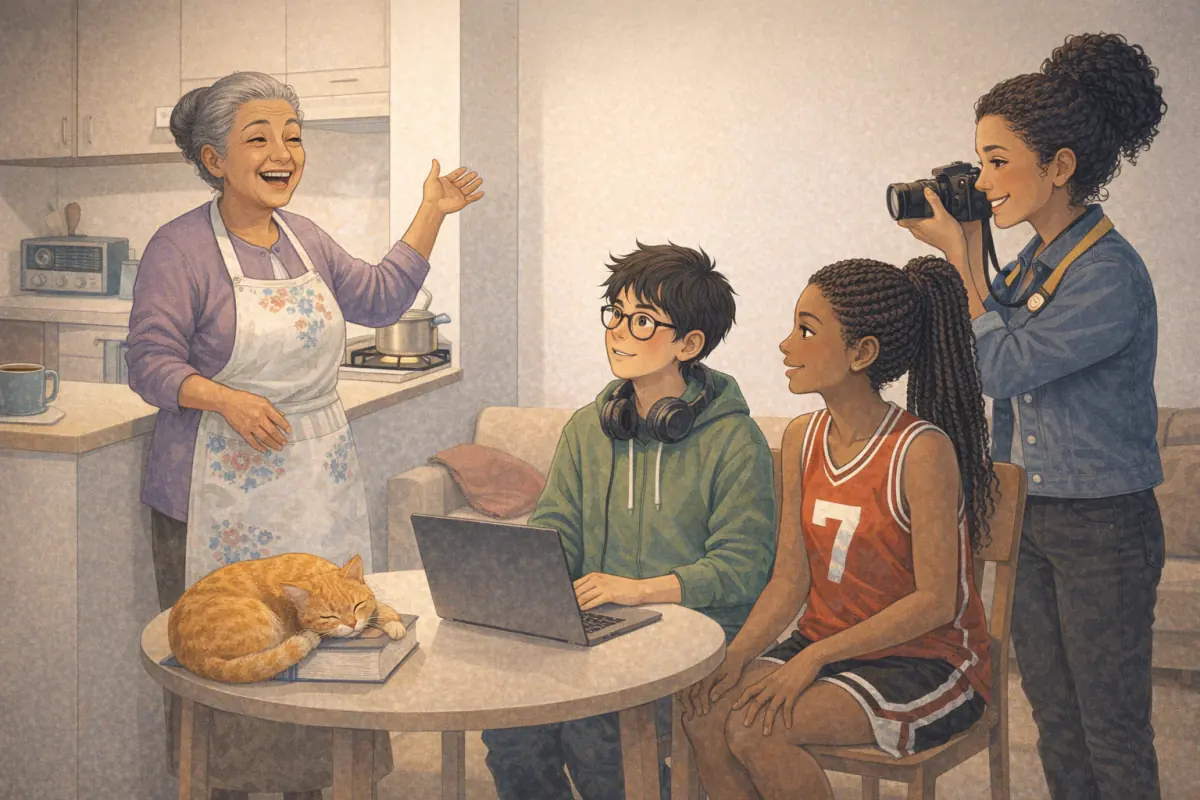
할머니가 손자에게 영어를 어떻게 배웠는지 들려주는 이야기를 들어 보세요. used to learn(습관), was singing(진행 중), knocked(끊는 동작)에 주목하고, 이어지는 did 의문문과 didn’t 부정문도 찾아보세요.
할머니 I grew up in Mexico City, and I didn't speak much English then. When I first moved to Kingsbay, I used to learn English from song lyrics.
할머니 One evening I was singing in my kitchen when my neighbour knocked on the door.
손자 Did you use to sing in Mexico too?
할머니 No, I didn't use to sing in front of people at all. Now I sing with her choir every week!
40–50단어 “예전과 지금” 문단 쓰기
시험 과제는 아니지만, 쓰기 Part 2의 이야기나 기사에 필요한 힘을 길러 줘요. 분명한 시작, 변화, 끝이요. 네 부분을 계획하세요: When I was …, I used to …; I didn’t use to …; Later I …(과거형); Now I …(현재형).
저희 예시는 43단어예요. 여러분은 자기 과거에 대해 쓰세요.
- “When I was nine, I used to learn English from video games.” → 예전: used to로 쓴 습관
- “I didn’t use to speak much because I was shy.” → 이유가 들어간 부정문
- “Later my cousin in Canada started sending me funny voice messages.” → 변화: 과거형
- “Now I reply in English, and we chat every weekend.” → 지금: 현재형
배움에 대해 말하는 단어
감정을 나타내는 형용사 뒤에 오는 작은 단어에 주목하세요.
- revise, repeat, translate(복습하다, 반복하다, 번역하다): “I used to revise new words on the bus.”
- afraid of, good at: “I used to be afraid of speaking. Now I’m good at it.”
- interested in, proud of: “Now I’m proud of my accent.”
말하기 Part 1: 어렸을 때에 관한 대답
B1 Preliminary 말하기 Part 1에서 시험관은 여러분 자신에 대해 질문해요. 그중 몇 개는 과거에 관한 질문일 수 있어요. 예전, 지금, 그리고 이유나 예를 말하세요. 첫 번째 질문에는 모범 답변이 있어요.
- “What did you use to do after school when you were younger?” → “I used to play football in the park every day. Now I have more homework, so I only play on Saturdays.”
- “How did you use to learn English at first?”
- “How is your life different now from when you were eight?”
흔한 실수와 고치는 법
확인할 때 이런 실수를 찾아보세요(화살표 왼쪽이 실수, 오른쪽이 고친 문장).
- “I didn’t used to like reading.” → “I didn’t use to like reading.”
- “I use to play football on Saturdays.” → “I usually play football on Saturdays.” “토요일마다 축구를 해요”는 지금의 습관이에요.
- “I used to visit London twice.” → “I visited London twice.” 몇 번 했는지 말할 때는 used to를 쓰지 않아요.
- “I’m used to watch cartoons.” → “I used to watch cartoons.” “I’m used to + -ing”는 “~에 익숙하다”라는 뜻이에요.
- “I was singing when she was knocking.” → “I was singing when she knocked.”
15분 연습 루틴
일주일에 세 번이면 충분해요. 한 번은 이렇게 해요.
- 3분: 과거 습관 두 개, 변화 하나, 지금 하는 일 하나를 메모해요.
- 5분: 40–50단어로 문단을 써요.
- 3분: did 뒤에 used가 아니라 use를 썼는지, Now 뒤에 현재형을 썼는지 확인해요.
- 4분: 말하기 질문 하나에 소리 내어 답하고 녹음해요.
다음 단계
이 문단이 쉬워지면 쓰기 Part 1의 100단어 이메일과 방문 학생을 위한 집 소개글로 넘어가세요(아래 링크).