
본문으로 바로가기
Flalingo

영어 연습

B1 Preliminary 현재 수동태: 음식이 어떻게 만들어지는지 설명하고 레시피 카드 쓰기

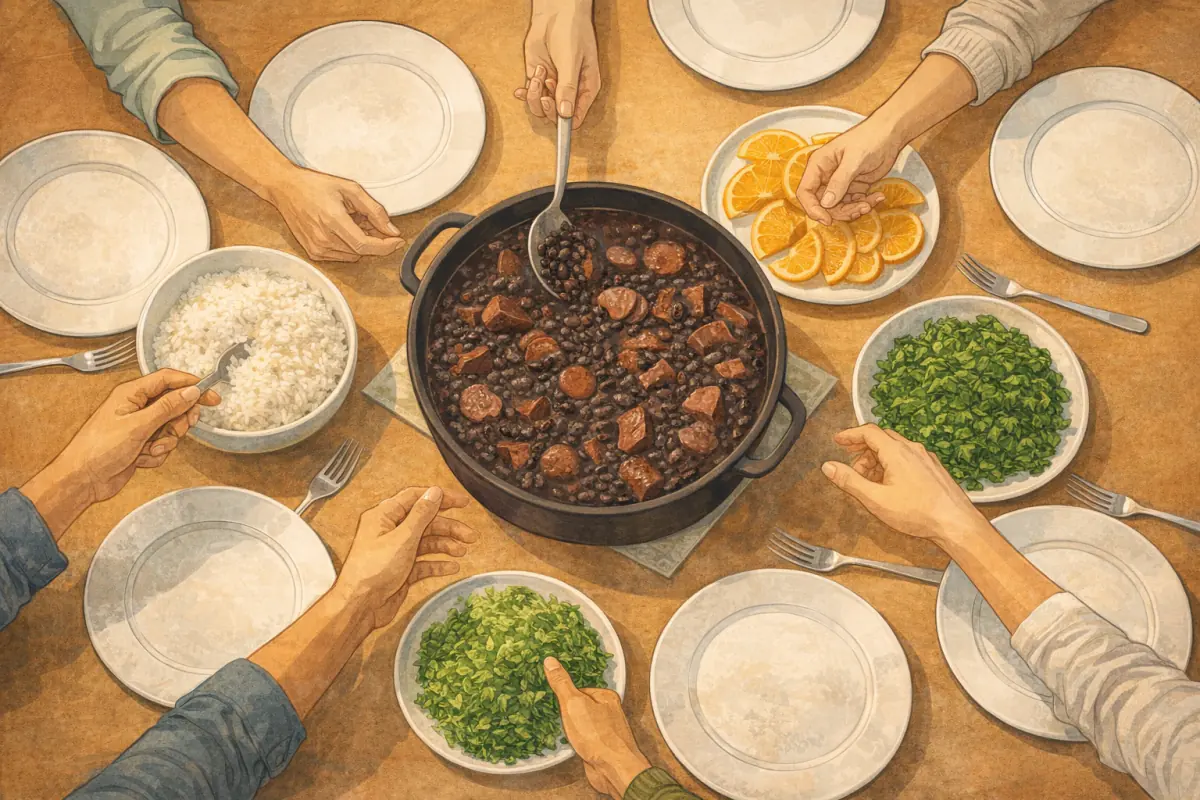
A Sunday lunch table seen from above: a pot of feijoada in the middle, with rice, orange slices, green vegetables and hands reaching for the food.

B1 Preliminary(B1)를 준비하는 청소년을 위한 글: 현재 수동태, a few·a little·plenty of, 요리 동사와 순서 표현으로 만드는 과정을 설명하고 80단어 레시피 카드를 쓰는 법.

음식이 어떻게 만들어지는지 설명할 때는 현재 수동태를 써요. is나 are 뒤에 과거분사를 붙이면 돼요. 예를 들어 “The rice is boiled.”처럼요. 누가 하는지보다 음식에 무슨 일이 일어나는지가 중요하니까 음식이 문장 앞에 와요. 양은 a few, a little, plenty of로 말하고, 단계는 First, Then, After that, Finally로 순서를 정하세요. B1 Preliminary 읽기 Part 6의 빈칸도 이런 작은 단어로 채우는 경우가 많아요. 이 글은 12–16세 정도의 중급(B1) 학생을 위한 글이에요.

이 글이 맞는 분

  • B1 Preliminary나 B1 Preliminary for Schools를 준비하는 12–16세 정도의 학생.
  • 가족이 무슨 요리를 하는지는 말할 수 있지만, 만드는 과정을 설명하면 모든 문장이 “you”나 “my mum”으로 시작하거나 a few와 a little을 헷갈리는 학생.
  • 부모님께: 다음에 함께 요리할 때 자녀에게 단계를 영어로 설명해 보라고 해 주세요(“The onions are cut, then …”). First, Then, Finally로 네 단계를 말할 수 있다면 레시피 카드의 절반은 이미 완성이에요.
  • 아직 일러요: 짧은 A2 Key 이메일도 어렵다면, 집에 와서 지낼 친구에게 쓰는 이메일을 다룬 A2 글부터 시작하세요(아래 링크).
  • 너무 쉬워요: 수동태로 과정을 실수 없이 설명할 수 있다면 B1 Preliminary 읽기 매칭 문제와 쓰기 Part 2의 화면 사용 기사로 넘어가세요(아래 링크).

예시 학습 페이지 열기

예시 학습 페이지 열기

단어 카드

mix

to put different foods together and move them round

The cabbage is mixed with a spicy sauce.

add

to put one more thing in with the others

Salt is added to the cabbage first.

serve

to give food to people at a meal

Feijoada is served with rice.

taste

to put a little food in your mouth to see if it is good

Hana's grandfather always tastes the sauce first.

대화

Kai So, Hana, how is kimchi made?

Hana First, the cabbage is cut into big pieces and salt is added.

Kai And then?

Hana Then it is left overnight. In the morning, the salt is washed off.

Kai What about the red sauce?

Hana The sauce is made with garlic, hot pepper and a little sugar. Then the cabbage is mixed with the sauce by my grandfather. He always does that part.

Hana Finally, the kimchi is put in big jars and kept somewhere cold.

문장 형태

Write a recipe card for a family dish (about 80 words).

Lemon chicken with rice (for four people) Ingredients: four pieces of chicken, two lemons, a little oil, plenty of garlic, a few fresh herbs, rice, salt. Method: First, a little salt is added to the chicken. Then the garlic and lemon juice are mixed and poured over the chicken. After that, it is roasted in the oven for an hour. Meanwhile, the rice is boiled. Finally, everything is served with the fresh herbs on top. It's my favourite Sunday dish!

The model has 80 words. It has a name, ingredients with amounts (a little, plenty of, a few) and a method with passive verbs (is added, are mixed, is roasted, is boiled, is served) and order words (First, Then, After that, Finally).

  • Name: … (for … people)
  • Ingredients: a few …, a little …, plenty of …
  • First, … is / are …
  • Then …
  • After that, …
  • Finally, … is served with …

추가 연습

How is kimchi made?

Kai So, Hana, how is kimchi made?

Hana First, the cabbage is cut into big pieces and salt is added.

Kai And then?

Hana Then it is left overnight. In the morning, the salt is washed off.

Kai What about the red sauce?

Hana The sauce is made with garlic, hot pepper and a little sugar. Then the cabbage is mixed with the sauce by my grandfather. He always does that part.

Hana Finally, the kimchi is put in big jars and kept somewhere cold.

How is kimchi made?

The cabbage is cut and salt is added. Then everything is mixed with a spicy sauce.

Present simple passive: am / is / are + past participle (cut, added, made, mixed, kept). Use it when the food and the action are more important than the person. Add by + person only when it matters: The kimchi is mixed by my grandfather.

  • is cut
  • is added
  • is made
  • are mixed
  • are kept
  • is mixed by …

Lucas's recipe post

A Sunday lunch table seen from above: a pot of feijoada in the middle, with rice, orange slices, green vegetables and hands reaching for the food.

Our Sunday feijoada, by Lucas

Every Sunday, my family gets together for a big lunch, and the star of the table is always feijoada. It's a traditional Brazilian dish of black beans and meat. People say that every family in Brazil has its own recipe, and this is ours.

Our feijoada starts the night before: the black beans are washed and left in cold water. On Sunday morning, they are boiled slowly with the meat for about three hours. A few onions and plenty of garlic are fried in a little oil and then added to the pot. We don't add many herbs, because we want the beans to have the strongest flavour.

Feijoada is served with white rice, green vegetables and slices of orange. The orange isn't just there for its colour: its fresh, sour taste is perfect with the heavy beans.

My favourite part isn't the eating, though. It's the three hours in the kitchen, when everyone talks and laughs while the pot cooks. And every five minutes, someone asks when lunch is ready!

Want to try it? You'll need a big pot, a lot of time and some hungry friends.

On camera

What dish are you showing us today?

Hi, everyone! Today I'm showing you my family's lemon chicken. It's made every Sunday in our house. First, the chicken is covered in garlic and lemon, and then it's roasted. It smells delicious, and it tastes like home!

  • Hi, everyone! Today I'm showing you …
  • It's made …
  • First, … Then, …
  • It smells / tastes …
이 단원 배우기
어떻게 배우고 싶나요?

현재 수동태: is / are + 과거분사

누가 하는지보다 어떤 것에 무슨 일이 일어나는지가 중요할 때 수동태를 써요. 레시피를 읽는 사람은 누가 밥을 젓는지가 아니라 밥이 어떻게 되는지 알고 싶어 해요. 하나이거나 셀 수 없는 명사에는 is, 복수에는 are를 써요.

한국어 레시피는 보통 “양파를 썬다”처럼 주어 없이 쓰지만, 영어에서는 명령문이 아니면 주어가 필요해요. 그래서 “The onions are cut.”(수동태)이나 “Cut the onions.”(명령문)으로 써요. 음식이 어떻게 만들어지는지 설명할 때는 수동태가 자연스러워요.

  • 긍정: “The peppers are filled with rice.”
  • 부정: “The fish isn’t fried. It’s grilled.”
  • 의문: “How is kimchi made?”
  • 불규칙 과거분사: cut → cut, put → put, make → made, keep → kept, leave → left

들어 보기: 집에서 만드는 음식은 어떻게 만들어질까요?

두 학생이 김치에 대해 이야기해요. 수동태 동사 일곱 개를 찾아보세요. “by my grandfather”는 그 사람이 중요해서 들어갔고, 마지막 줄에서는 동사 두 개가 is 하나를 함께 써요.

학생 1 So, Hana, how is kimchi made?

학생 2 First, the cabbage is cut into big pieces and salt is added.

학생 2 The sauce is made with garlic, hot pepper and a little sugar. Then the cabbage is mixed with the sauce by my grandfather. He always does that part.

학생 2 Finally, the kimchi is put in big jars and kept somewhere cold.

양: a few, a little, plenty of, none

양을 나타내는 말은 명사에 맞춰야 해요. 영어는 셀 수 있는 것(eggs, onions)과 셀 수 없는 것(salt, oil, milk)을 구분해요. 한국어는 복수를 꼭 표시하지 않아서 a few 뒤에 오는 명사의 -s를 빠뜨리기 쉬워요.

  • “a few” + 복수 명사: “a few onions”, “a few spoonfuls of sugar”
  • “a little” + 셀 수 없는 명사: “a little salt”
  • “plenty of”(충분하고도 남을 만큼) + 둘 다: “plenty of garlic”, “plenty of eggs”
  • “none”은 혼자 쓰고, “no”는 명사 앞에 와요: “How much sugar is left?” “None.”
  • 관사: 처음에는 “a bowl”, 그다음에는 “the bowl”. 일반적인 것을 말할 때는 관사 없이: “Kimchi is made from cabbage.” 한국어에는 관사가 없으니 특히 확인하세요.

요리 동사와 -ed의 세 가지 소리

유용한 동사: boil(물에 삶다), fry(기름에 볶거나 튀기다), roast와 bake(오븐에 굽다), grill(석쇠에 굽다), stir(젓다), slice(얇게 썰다), mash(으깨다), pour(붓다). -ed 끝소리는 세 가지예요.

  • /t/: k, s, p, sh, ch, f 소리 뒤: mixed, sliced, baked
  • /d/: 그 밖의 대부분의 소리 뒤: served, poured, boiled
  • /ɪd/, 한 음절이 더 생겨요: t나 d 뒤: added, roasted

80단어 레시피 카드 쓰기

레시피 카드는 B1 Preliminary 과제는 아니지만, 정확한 문법과 분명한 순서를 연습하기에 좋아요. 음식 이름, 양이 들어간 재료, 만드는 법을 쓰고, 수동태 동사 네 개, 양 표현 세 개, 순서 표현 네 개를 넣으세요. 저희 예시는 약 80단어예요. 여러분은 자기 집 음식으로 써 보세요.

  • “Banana pancakes (for two people)” → 이름
  • “Ingredients: two ripe bananas, two eggs, a few spoonfuls of flour, a little milk, a little butter, plenty of honey.” → 양이 들어간 재료
  • “Method: First, the bananas are mashed with a fork. Then the eggs, flour and milk are added, and everything is mixed well.” → 순서 표현, 수동태 세 개
  • “After that, a little butter is heated in a pan, and small spoonfuls of the mixture are cooked for two minutes on each side.” → 수동태 두 개 더
  • “Finally, the pancakes are served with plenty of honey on top.” → 마지막 단계
나에게 맞는 방법으로 이 단원 배우기

B1 Preliminary에서 어디에 도움이 될까요?

fresh, spicy, herbs 같은 음식 단어는 사진을 1분 정도 묘사하는 말하기 Part 2에서도 도움이 돼요.

읽기 Part 6은 오픈 클로즈예요. 빈칸 여섯 개가 있는 짧은 글을 읽고 빈칸마다 한 단어를 써요. 많은 빈칸이 바로 이런 작은 단어를 요구해요. 풀어 보세요.

  • “The peppers ___ filled with rice and lamb.” → are
  • “You only need a ___ salt.” → little
  • “Use plenty ___ fresh herbs.” → of

흔한 실수와 고치는 법

카드를 다 쓰면 이런 실수를 찾아보세요(화살표 왼쪽이 실수, 오른쪽이 고친 문장).

  • “The cabbage cut into pieces.” → “The cabbage is cut into pieces.” 한국어 수동 표현은 동사 형태로 나타내지만, 영어는 is / are가 꼭 필요해요.
  • “Salt is add first.” → “Salt is added first.”
  • “The onions is fried.” → “The onions are fried.”
  • “The cabbage is cutted.” → “The cabbage is cut.”
  • “Add a few salt.” → “Add a little salt.”

15분 연습 루틴

일주일에 세 번이면 충분해요.

  • 3분: 집 음식을 하나 고르고 재료와 양을 적어요.
  • 6분: 순서 표현을 넣어 수동태 단계 네다섯 개를 써요.
  • 3분: is / are, 과거분사, a few / a little을 확인해요.
  • 3분: 음식을 30초 동안 소리 내어 설명하고 녹음해요.

다음 단계

다음에는 읽기 매칭 문제와 쓰기 Part 2 기사(아래 링크)에 도전하고, 과거 수동태도 써 보세요. “This cake was first made by my grandmother.”

자주 묻는 질문

영어 현재 수동태는 어떻게 만들어요?

is나 are + 과거분사예요. “Salt is added.” 의문문에서는 is나 are가 주어 앞으로 가요. “How is it made?”

a few와 a little은 어떻게 달라요?

a few는 복수 명사(a few eggs), a little은 셀 수 없는 명사(a little milk)와 써요. a 없이 few, little만 쓰면 “거의 없는”이라는 뜻이 돼요.

수동태 문장에서 by는 언제 써요?

그 사람이 중요할 때만 써요. “The sauce is mixed by my grandfather.” 보통은 빼요. “The bread is baked daily.”

Flalingo는 A2 Key와 B1 Preliminary를 제공하는 Cambridge English와 제휴 관계가 없으며, 해당 기관의 승인을 받은 서비스가 아닙니다.

이 단원 배우기
어떻게 배우고 싶나요?

다음에는 무엇을 할까요?

라이브 선생님과 1:1 수업

Flalingo에서 청소년은 이런 단원을 라이브 선생님과 1:1로, 자기 속도에 맞춰 공부합니다.

무료 체험 수업 예약하기