
본문으로 바로가기
Flalingo

영어 연습

영어 빈도부사와 “How often…?”: A2 Key 말하기 Part 1을 위한 질문, 대답, 결과 전하기

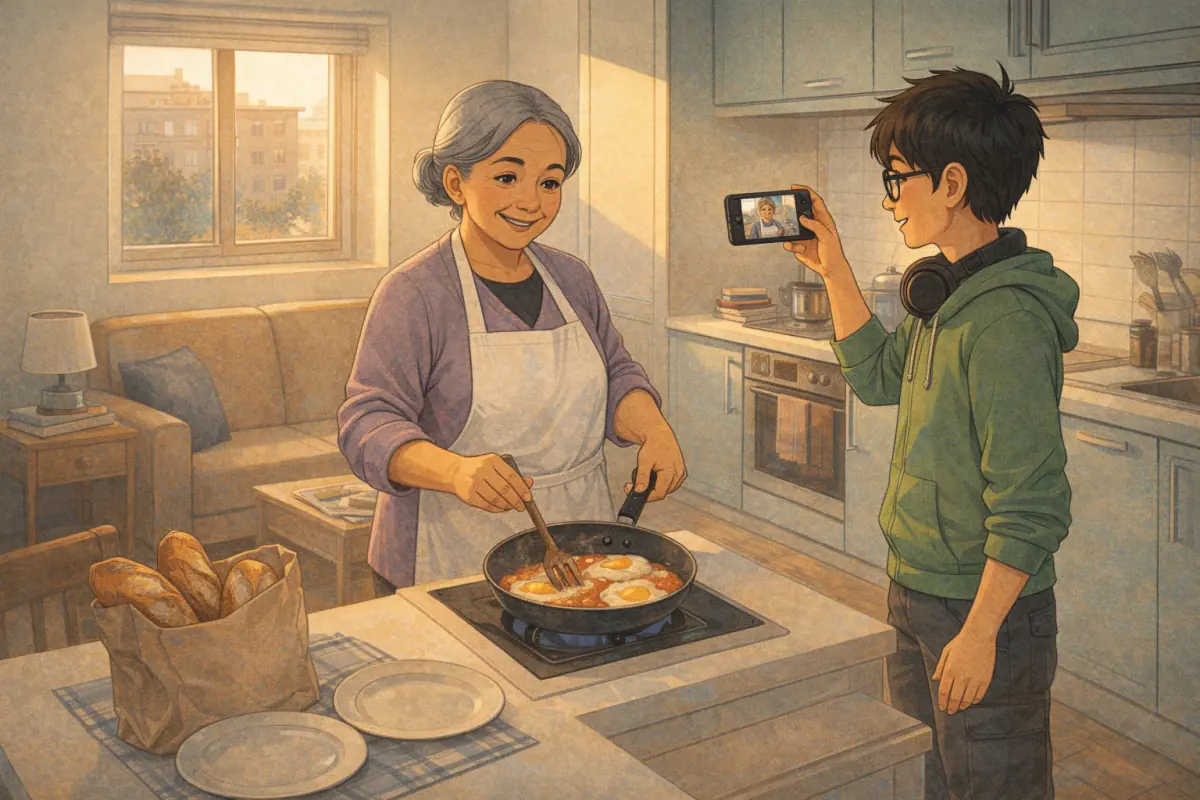
A teenager films his grandmother cooking eggs with tomatoes in her small kitchen corner.

always부터 never까지, once와 twice a week, “Do you ever…?”, he/she 뒤의 -s: A2 수준에서 생활 습관을 묻고 답을 전하는 법. A2 Key와 A2 Key for Schools 말하기 Part 1 대비.

“How often do you…?”라고 묻고, 빈도를 나타내는 단어나 표현으로 답해요: “always”, “usually”, “often”, “sometimes”, “never”, “twice a week”. 들은 답을 다른 사람에게 전할 때는 “I”를 “he”나 “she”로 바꾸고, 동사에 -s나 -es를 붙이고, 빈도는 그대로 둬요. “I wash the plates twice a week.”는 “He washes the plates twice a week.”가 돼요. 시험관이 일상생활을 묻는 A2 Key 말하기 Part 1에서 바로 필요한 내용이에요. 이 글은 A2 Key나 A2 Key for Schools를 준비하는 A2(기초) 수준, 11–15세 정도의 학생을 위한 거예요.

이 글이 맞는 분

  • A2 Key나 A2 Key for Schools를 준비하는 11–15세 정도의 학생.
  • “always”와 “never”는 알지만, 다른 사람 이야기를 하는 순간 -s를 잊어버리는 학생.
  • 부모님께: 아이가 인터뷰하는 상대가 되어 주세요. 아래 루틴을 도와주는 데 영어를 잘할 필요는 없어요.
  • 아직 이른 경우: 나에 대한 짧은 문장(이름, 나이, 좋아하는 것)이 아직 어렵다면, 자기소개를 담는 A2 Key 이메일 글부터 시작하세요.
  • 너무 쉬운 경우: 습관을 생각하지 않고도 말할 수 있다면 B1으로 넘어가 “used to”로 예전 습관과 지금 습관을 비교해 보세요.

예시 학습 페이지 열기

예시 학습 페이지 열기

단어 카드

always

every time

I always make breakfast for Kai before school.

usually

almost every time

Kai usually eats at our little table… with his phone!

often

many times

We often have eggs with tomatoes.

sometimes

some of the time, not always

Kai sometimes helps me. Sometimes!

never

not at any time

I never cook without music.

대화

Amara Kai, how often do you play video games?

Kai Every day. Well, usually!

Amara And how often do you help Abuela Rosa in the kitchen?

Kai Sometimes. I wash the plates twice a week.

Zara Does Kai ever do his homework before dinner, Abuela?

Abuela Rosa No, he doesn't!

Amara OK. So Kai plays video games every day, he washes the plates twice a week, and he never does his homework before dinner!

문장 형태

How often do you play video games?

I play video games twice a week.

Ask with How often do you…? Report with he/she + verb + -s: She watches films once a week.

  • How often do you…?
  • Do you ever…?
  • every day
  • once a week
  • twice a week
  • My teacher plays… / washes… / never…

추가 연습

Present simple

I get up / she gets up

Present simple: add -s or -es after he, she and it.

Zara gets up at half past five.

don't / doesn't + verb

negative: I don't…, he doesn't… (no -s on the verb)

Kai doesn't get up before seven.

Do you…? / Does she…?

questions: Do or Does first, then the verb with no -s

Does Zara have breakfast at home?

Yes, I do. / No, she doesn't.

short answers

Do you like getting up early? No, I don't!

always / usually / often / sometimes / never + verb

these words go before the main verb

Theo often forgets his helmet.

is always / is never

but after am, is and are

Zara is never late.

at 5.30, on Monday, in the morning

at + a time; on + a day or a date; in + part of the day

The club meets on Monday at 3.30.

once a week / twice a day

how many times: at the end of the sentence

Kai washes the plates twice a week.

gets, goes, watches

/s/ gets, helps, eats, likes

After sounds like t, p and k, the -s is a short /s/.

Zara gets up at half past five.

/z/ goes, plays, lives, comes

After most other sounds, the -s sounds like /z/.

Theo goes to school by bike.

/ɪz/ watches, washes, brushes, catches

After ch, sh, s and x, say an extra part: /ɪz/.

Kai brushes his teeth on video!

does, says

These two have a different sound: /dʌz/ and /sez/.

Kai does his homework after dinner.

이 단원 배우기
어떻게 배우고 싶나요?

A2 Key에서 “How often” 질문은 어디에 나올까요?

A2 Key와 A2 Key for Schools의 말하기 Part 1은 일상생활에 대한 짧은 인터뷰예요. 학교, 여가 시간, 주말 같은 이야기를 해요. 끝부분에는 길게 답해야 하는 질문이 하나 나와요. 예를 들면 이런 질문이에요: “Please tell me something about what you do at the weekend.”

서너 문장으로 답하고, 문장마다 요일이나 시간, 그리고 빈도 단어를 넣으세요. 같은 문장은 읽기·쓰기 Part 6의 짧은 메시지에도 쓸 수 있어요.

“always”부터 “never”까지: 빈도 사다리

매번부터 한 번도 안 하는 것까지, 사다리처럼 외워 두세요:

  • “always” = 항상: “I always have breakfast before school.”
  • “usually” = 대개, 거의 매번: “I usually walk to school.”
  • “often” = 자주: “We often play football after school.”
  • “sometimes” = 가끔: “I sometimes cook with my dad.”
  • “never” = 한 번도 ~하지 않다: “My sister never gets up before eight.”
  • 정확한 횟수: “every day”, “once a week”(일주일에 한 번), “twice a week”(일주일에 두 번), “three times a month”. 한국어는 “일주일에 두 번”처럼 기간을 먼저 말하지만, 영어는 횟수가 먼저 와요.

빈도 단어는 문장 어디에 올까요?

A2 문장은 대부분 세 가지 규칙으로 해결돼요. “sometimes”와 “usually”는 문장 맨 앞에 와도 돼요(“Sometimes I walk.”). “always”와 “never”는 가운데에 둬요.

  • 일반동사 앞: “I often play basketball.”
  • am, is, are 뒤: “She is never late.”
  • “twice a week” 같은 표현은 문장 끝: “I wash the plates twice a week.”

묻기: “How often…?”와 “Do you ever…?”

이 설문에서 한 학생이 친구 Kai에게 한 주를 어떻게 보내는지 묻고, 다른 친구는 Kai의 할머니에게 확인해요(“Abuela”는 스페인어로 “할머니”예요). 마지막 줄은 답을 정리한 문장이에요.

“How often…?”는 빈도를 묻는 질문이에요. “Does he ever…?”는 예/아니요 질문이고(“ever” = 한 번이라도), 보통 “Yes, sometimes.”나 “No, never.”로 답해요. “ever”는 질문에, “never”는 대답에 써요.

Interviewer Kai, how often do you play video games?

Kai Every day. Well, usually!

Interviewer And how often do you help Abuela Rosa in the kitchen?

Kai Sometimes. I wash the plates twice a week.

Friend Does Kai ever do his homework before dinner, Abuela?

Grandmother No, he doesn't!

Interviewer OK. So Kai plays video games every day, he washes the plates twice a week, and he never does his homework before dinner!

전하기: “I”에서 “he”나 “she”로

마지막 줄을 앞의 대답과 비교해 보세요. “I wash”는 “he washes”가 돼요. he, she, it 뒤에서는 동사에 -s나 -es가 붙고, “have”는 “has”가 돼요. “No, he doesn’t”는 “he never does”가 돼요. “never”에 이미 부정의 뜻이 있으니 “doesn’t”를 또 붙이지 않아요. 세부 내용도 그대로예요. “twice a week”를 “sometimes”로 바꾸면 안 돼요.

예외가 하나 있어요. “doesn’t”와 “does” 뒤의 동사에는 -s가 붙지 않아요: “He doesn’t play tennis.”, “Does she cook?” 한국어 동사는 주어에 따라 모양이 바뀌지 않아서 이 -s를 빠뜨리기 쉬워요.

나에게 맞는 방법으로 이 단원 배우기

시험관에게 들리도록 -s 발음하기

-s가 빠지면 귀에 바로 들리고, 발음도 채점 항목이에요. 이 끝소리는 세 가지예요:

  • /s/: p, t, k 소리 뒤: “helps”, “gets”, “likes”.
  • /z/: 대부분의 다른 소리 뒤: “plays”, “goes”, “lives”.
  • /ɪz/: s, x, sh, ch 소리 뒤에서는 음절이 하나 더 생겨요: “watches”, “washes”.
  • 특별한 두 단어: “does”는 /dʌz/, “says”는 /sez/로 발음해요.

자주 하는 실수와 고치는 법

전한 문장을 아래 실수와 비교해 보세요(화살표 앞이 실수, 뒤가 고친 문장이에요). 한국어는 “전혀 안 해요”처럼 부정하는 말을 함께 쓰기 때문에, “never”에 “doesn’t”까지 붙이는 실수를 하기 쉬워요.

  • “He play video games every day.” → “He plays video games every day.”
  • “How often you play football?” → “How often do you play football?”
  • “I play always football.” → “I always play football.”
  • “She doesn’t watches TV.” → “She doesn’t watch TV.”
  • “He doesn’t never cook.” → “He never cooks.”

10분 설문 루틴

부모님이나 친구와 함께 해 보세요:

  • 1–3분: “How often…?” 질문 다섯 개와 “Do you ever…?” 질문 하나를 하고, 답을 메모하세요.
  • 4–6분: 소리 내어 전하세요: “My mum cooks twice a week. She never plays video games.”
  • 7–8분: 상대가 -s를 하나하나 들어 줘요. 빠진 동사는 다시 말하세요.
  • 9–10분: “Please tell me something about what you do at the weekend.”에 서너 문장으로 답하세요.

다음 단계

다음에는 같은 문장으로 학교에서의 하루를 알려 주는 짧은 메시지를 써 보세요. 그다음 A2에서는 “must”, “mustn’t”, “have to”로 학교 규칙을 말하고, B1에서는 “used to”로 예전 습관과 지금 습관을 비교해요.

자주 묻는 질문

영어 빈도부사는 문장 어디에 오나요?

일반동사 앞에 와요(“I often swim.”). 하지만 am, is, are가 있으면 그 뒤에 와요(“She is never late.”).

“How often”과 “How many times”는 어떻게 다른가요?

“How often do you swim?”은 전반적인 빈도를 물어요: “sometimes”, “every day”. “How many times a week…?”는 횟수를 물어요: “Three times.” 둘 다 맞는 표현이에요.

현재 시제에서 -s 대신 -es는 언제 붙이나요?

-ch, -sh, -s, -x, -o로 끝나는 동사예요: watches, washes, misses, fixes, goes. 자음 + y로 끝나면 -ies가 돼요: studies.

Flalingo는 A2 Key와 B1 Preliminary를 제공하는 Cambridge English와 제휴 관계가 없으며, 해당 기관의 승인을 받은 서비스가 아닙니다.

이 단원 배우기
어떻게 배우고 싶나요?

다음에는 무엇을 할까요?

라이브 선생님과 1:1 수업

Flalingo에서 청소년은 이런 단원을 라이브 선생님과 1:1로, 자기 속도에 맞춰 공부합니다.

무료 체험 수업 예약하기