
본문으로 바로가기
Flalingo

영어 연습

B1 Preliminary 쓰기 Part 2: 화면 사용에 관해 양쪽 의견을 담은 기사 쓰는 법

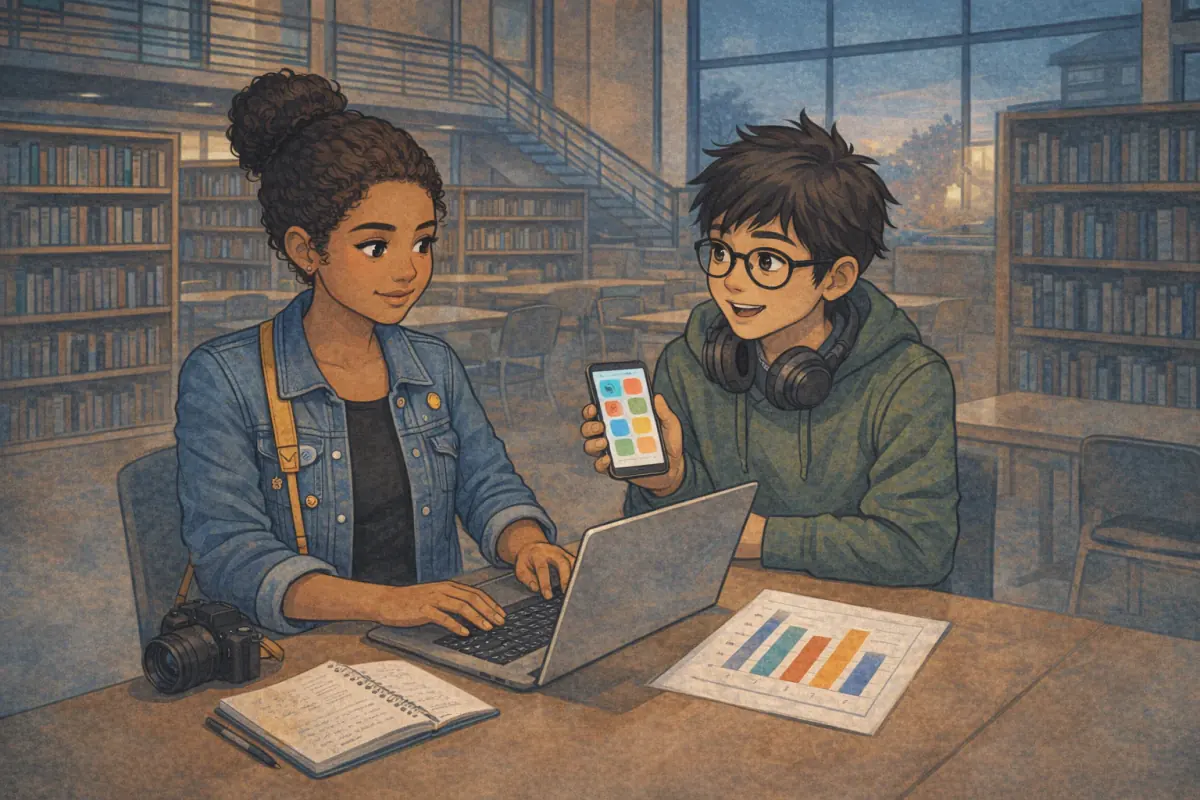
A girl writes her article in the library while a friend shows her his app on his phone.

B1 Preliminary와 B1 Preliminary for Schools의 기사 과제: 네 문단 계획, 화면에 관한 약 100단어 모범 기사, 현재완료와 과거형 구분, 흔한 실수, 시험 루틴.

B1 Preliminary 쓰기 Part 2에서는 잡지나 웹사이트 공지의 질문에 답하는 약 100단어 기사를 고를 수 있어요. 화면처럼 좋은 점과 나쁜 점이 함께 있는 주제라면 짧은 문단 네 개로 쓰세요. 읽는 사람에게 던지는 질문, 좋은 점과 예시, 문제점과 예시, 그리고 내 의견이에요. 지금까지의 경험은 현재완료로, 언제인지 말하는 순간부터는 과거형으로 써요. 이 글은 12–16세 정도의 중급(B1) 학생을 위한 글이에요.

이 글이 맞는 분

  • B1 Preliminary나 B1 Preliminary for Schools를 준비하면서 쓰기 Part 2에서 기사를 고를까 생각 중인 12–16세 정도의 학생.
  • 휴대폰이나 게임에 대한 생각은 있지만, 기사가 좋은 점만 늘어놓거나 내 생각을 말하지 않고 끝나 버리는 학생.
  • 부모님께: 저녁 식사 때 자녀에게 한 가지만 물어보세요. “What’s one good thing and one bad thing about your phone?” 예시가 붙은 두 대답이면 기사의 가운데 부분이 벌써 완성돼요.
  • 아직 일러요: 제안과 이유를 담은 25–40단어짜리 짧은 메시지도 어렵다면 A2 수준의 학교 식당 제안 메시지부터 시작하세요(아래 링크).
  • 너무 쉬워요: 100단어짜리 균형 잡힌 기사를 이미 잘 쓴다면 Part 2의 다른 선택지인 주어진 첫 문장으로 시작하는 이야기나, 아이디어를 의논하고 함께 결정하는 말하기 과제로 넘어가세요(아래 링크).

예시 학습 페이지 열기

예시 학습 페이지 열기

단어 카드

headline

the title of a news story, printed in large letters

Zara needs a strong headline for her first article.

audience

the people who watch, read or listen to something

The documentary's audience is teenagers in four countries.

research

careful study to find new facts; (verb) to study something carefully

The club did some research before writing the article.

data

facts or numbers that people collect and study

Kai checked the survey data twice.

compare

to look at two or more things to see how they are the same or different

Zara compared the results from Kingsbay and Busan.

대화

Narrator Ms Rivera needs the documentary's first article by next week, and Zara hasn't written a word yet.

Zara I've chosen my topic: screen time. We've already sent a survey to all four schools.

Hana The results have just arrived. My classmates have reduced their screen time a lot since last year.

Amara And the Loop? Oh no. We're the worst in the whole survey!

Theo Five hours a day on average? I've never counted my hours before.

Kai Wait, that isn't fair. I've been building my app, LoopLink, for months. That's not the same as watching video clips all night.

Zara Did you use your phone after midnight last night?

Kai Yes, but I was fixing a problem in my app. Not all screen time is the same!

Ms Rivera Then put both sides in your article. And check your facts!

Zara OK. The numbers and Kai's point of view. Deal?

문장 형태

You see this notice in an English-language magazine for teenagers: 'Articles wanted! Screens: good or bad for teenagers? Tell us what you think, and give examples from your own life. The best articles will go on our website.' Write your article in about 100 words.

Screens: friend or enemy? Have you ever counted the hours you spend on your phone? I did it last week, and the number shocked me: four hours a day! Screens are not all bad. I use my smartphone to do research for homework, and I've learned to make short videos. I also chat with my cousin, who lives abroad. However, some habits are a problem. I often watched clips late at night and felt tired the next morning. Now I switch off my phone at ten. In my opinion, screens are good when we use them to learn and connect, but we should limit the rest. What about you?

Model: 105 words (without the title). It has a title, a question to the reader, reasons with examples on both sides and a conclusion with an opinion.

  • Have you ever…?
  • However,…
  • For example,…
  • In my opinion,…
  • What about you?

추가 연습

Zara's article

Zara writes her article in the library while Kai shows her his app on his phone.

Are we glued to our screens?

by Zara Haddad, The Loop

Last month, our club asked 400 students in four schools – in Kingsbay, Izmir, Busan and Curitiba – one simple question: how many hours a day do you spend on screens? We didn't want people to guess, so we asked everyone to check the screen time on their phones.

The results surprised me. The average for all four schools was three and a half hours a day, and sixty percent of students use a screen after ten at night. In Hana's class in Busan, the average was only two hours, because her classmates have already changed their habits: they leave their phones in a box during lessons and switch them off at nine in the evening. And the worst results in the whole survey? They came from us, the Loop: five hours a day.

At first, I wanted to write an article that told everyone to put their phones down. Then my friend Kai Morales disagreed. He has been building an app for months. 'That isn't the same as watching video clips all night,' he told me. 'Some screen time is creative.' I have to admit that he has a point. When I make our videos, I'm learning, not just chilling out.

So, is screen time good or bad? I think it depends on what we do and when we do it. Using a screen to create something or to connect with friends abroad is different from watching clip after clip at midnight. My advice is simple: compare your own habits with our numbers, and then choose one small change. I've already made mine: no phone in my bedroom.

Help with words

  • glued to your screen = looking at your screen all the time
  • admit = agree that something is true, even if you didn't want to

Check your article

Narrator Zara's article, with the numbers and Kai's point of view, became the Loop's best-read piece so far.

Narrator Then Theo's phone made a sound. It was a message from Lucas in Curitiba.

Theo Listen to this: 'The river near our school is full of plastic. Can your club help?'

Does your article have…?

  • a title
  • a question to the reader
  • reasons for your opinion
  • an example for each reason
  • a conclusion with your opinion

Homework: finish your article

Screens: good or bad for teenagers? Write your article in about 100 words.

Have you ever counted the hours you spend on your phone? I did it last week, and the number shocked me: four hours a day!

Start like the model: a question to the reader and a fact about you. Then write three more paragraphs.

  • title
  • question to the reader
  • two sides
  • examples
  • conclusion
이 단원 배우기
어떻게 배우고 싶나요?

기사 과제는 어떻게 생겼을까요?

Part 2에서는 기사와 이야기 중 하나를 골라요. 기사 과제는 영어 잡지나 웹사이트에 실린 공지로, 주제 하나와 질문 두세 개가 있어요. 질문에는 모두 답해야 해요. 아래는 저희가 만든 연습용 공지예요.

  • “Articles wanted! Phones, tablets, laptops: do screens make teenagers’ lives better or worse?”
  • “What do you use screens for? What problems have they caused for you? Tell us in your article.”

짧은 문단 네 개를 계획하세요

3분 동안 계획하세요. 질문마다 밑줄을 긋고, 문단마다 할 일을 하나씩 정해요.

  • 시작: 읽는 사람에게 던지는 질문과 나에 관한 사실 하나: “Have you ever counted …?”
  • 좋은 점과 예시: “One good thing is that …”, “For example, …”
  • 문제점과 예시: “However, …”, “On the other hand, …”
  • 의견: “In my opinion, … because …”, 그리고 “What about you?”

모범 기사, 문단별로 보기

제목을 빼고 약 100단어예요. 각 부분의 역할은 화살표 뒤에 있어요.

  • “Screens: helper or time thief?” → 제목
  • “Have you ever checked your screen time? I checked mine last month, and I was shocked: almost four hours a day!” → 질문 + 숫자가 들어간 사실
  • “Of course, screens help me a lot. I’ve learned to edit videos from online lessons, and every Sunday I video-call my grandmother, who lives in another city.” → 좋은 점 + 예시
  • “However, they can also cause problems. Last winter I played one game until midnight almost every night, and I was always tired at school. In the end, I deleted it.” → 문제점: 과거형으로 쓴 일
  • “In my opinion, screens are great helpers but bad bosses. Since January, my phone has stayed in the kitchen after ten, and I sleep much better. What about you?” → 의견 + 마무리 질문

현재완료일까, 과거형일까?

현재완료(have / has + 과거분사)는 끝난 시점을 말하지 않고 지금까지의 경험을 말할 때 써요. “I’ve learned to edit videos.” 자주 함께 쓰는 말은 ever, never, just, already, yet, since, for예요.

언제인지 말하는 순간 과거형으로 바꿔요. “I deleted the game last night.” 질문은 현재완료로 하고, 대답의 자세한 내용은 과거형으로 말해 보세요. “Have you ever counted your hours? I counted mine last week.”

설문 결과에 반응하는 학생들의 말에서 already, just, since, never를 찾아 들어 보세요.

학생 1 I've chosen my topic: screen time. We've already sent a survey to all four schools.

학생 2 The results have just arrived. My classmates have reduced their screen time a lot since last year.

학생 3 Five hours a day on average? I've never counted my hours before.

양쪽을 보여 주고, 결정하세요

균형 잡힌 글이라고 의견이 없어도 되는 건 아니에요. 양쪽에 이유 하나와 실제 예시 하나씩을 주고, 내 입장을 분명히 말하세요.

여기서는 한 친구가 늦은 밤의 화면 사용을 변호하고, 선생님이 양쪽을 다루는 모든 기사에 필요한 조언을 해요.

학생 1 Did you use your phone after midnight last night?

학생 2 Yes, but I was fixing a problem in my app. Not all screen time is the same!

선생님 Then put both sides in your article. And check your facts!

나에게 맞는 방법으로 이 단원 배우기

기사를 B1 수준으로 올려 주는 단어

“good”, “bad”, “use”만 되풀이하는 대신 이런 단어로 더 넓은 어휘를 보여 주세요.

  • “habit”(습관), “limit”(제한), “reduce”(줄이다): “I want to reduce my screen time.”
  • “on average”(평균적으로), “survey”(설문 조사), “data”(데이터): “On average, I spend three hours a day online.”
  • “install”(설치하다), “delete”(삭제하다), “sign up for”(가입하다): “I signed up for an app, then deleted it.”
  • “switch off”(끄다), “hang out”(친구와 어울리다), “keen on” + -ing(무척 좋아하다): “I’m keen on making videos.”

흔한 실수와 고치는 법

다 쓴 뒤에 이런 실수를 찾아보세요(화살표 왼쪽이 실수, 오른쪽이 고친 문장).

  • “I have deleted the game last night.” → “I deleted the game last night.” 한국어 “삭제했어”는 두 시제의 뜻을 모두 담을 수 있지만, 영어에서 “last night”처럼 끝난 시점이 있으면 과거형을 써요.
  • “I use my phone since two years.” → “I’ve used my phone for two years.” “2년째 쓰고 있다”는 영어에서 현재완료와 for로 말해요.
  • “I’m keen on make videos.” → “I’m keen on making videos.” “on” 같은 전치사 뒤에는 -ing를 써요.
  • 공지의 질문 하나에 답이 없음 → 답할 때마다 그 질문에 표시하세요.

20분 시험 루틴

일주일에 두 번이면 충분해요. 이 공지로 시작해 보세요. “Articles wanted! Online games: a waste of time or a great hobby? Tell us what you think.”

  • 3분: 질문에 밑줄을 긋고, 양쪽에 쓸 예시를 하나씩 메모해요.
  • 12분: 네 문단으로 약 100단어를 써요.
  • 5분: 모든 질문에 답했는지, 의견이 분명한지, 시제가 시간 표현과 맞는지 확인해요.

다음 단계

기사가 쉬워지면 주어진 첫 문장으로 시작하는 Part 2 이야기에 도전하거나, 함께 결정하는 말하기 과제에서 의견을 소리 내어 말해 보세요(아래 링크).

자주 묻는 질문

B1 Preliminary 기사는 몇 단어로 써야 하나요?

약 100단어예요. 단어를 하나하나 세기보다 공지의 모든 질문에 답했는지 확인하세요.

Part 2에서 기사와 이야기 중 무엇을 골라야 하나요?

하나만 써요. 의견을 말하는 게 좋으면 기사, 사건을 지어내는 게 좋으면 이야기를 고르세요.

B1 Preliminary for Schools에서도 기사 과제가 같나요?

네, 기사와 이야기 중 하나를 고르는 방식은 같고, 주제는 여러분 또래에게 맞게 나와요.

Flalingo는 A2 Key와 B1 Preliminary를 제공하는 Cambridge English와 제휴 관계가 없으며, 해당 기관의 승인을 받은 서비스가 아닙니다.

이 단원 배우기
어떻게 배우고 싶나요?

다음에는 무엇을 할까요?

라이브 선생님과 1:1 수업

Flalingo에서 청소년은 이런 단원을 라이브 선생님과 1:1로, 자기 속도에 맞춰 공부합니다.

무료 체험 수업 예약하기