


본문으로 바로가기
Flalingo

영어 연습

Some, any, much, many 구별하기: 학교 급식실에 보내는 짧은 영어 제안 메시지 (A2 Key Part 6)

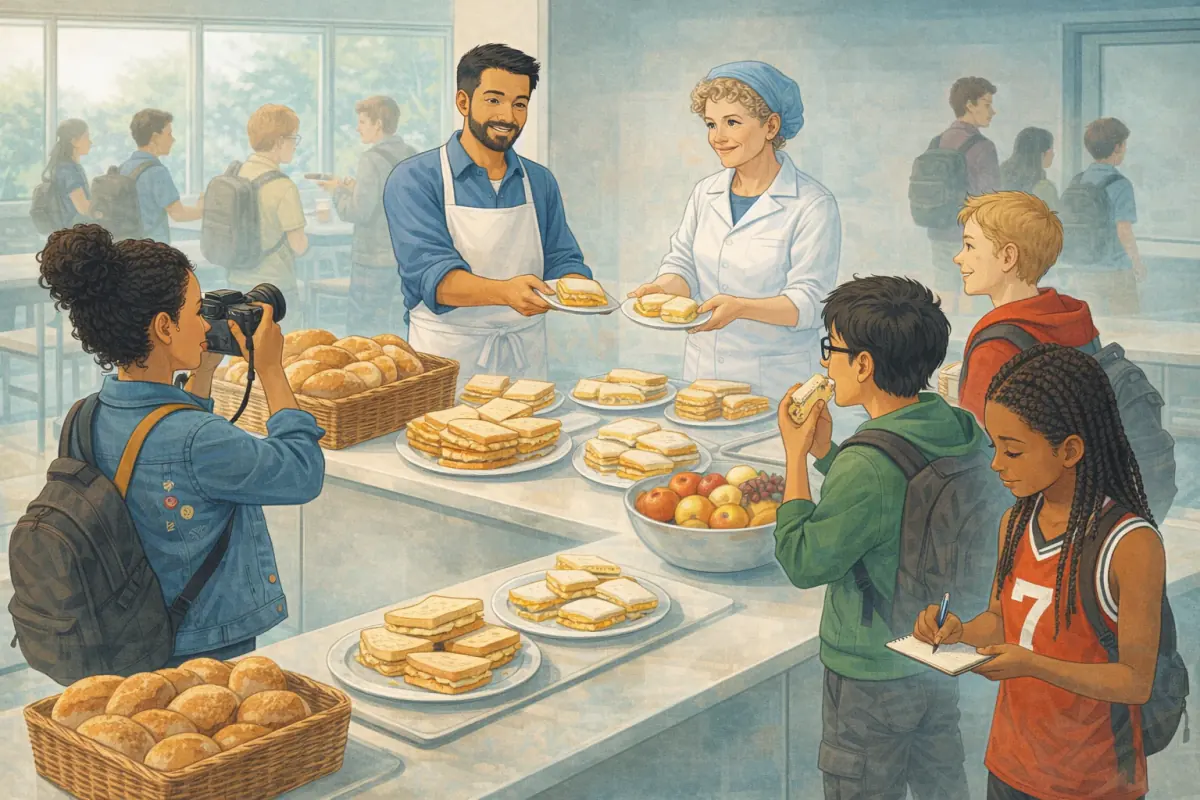
Bakery Friday: fresh bread, sandwiches and fruit in the canteen, with happy students.

“I think we should … because …”로 급식실에 25–40단어 제안 메시지를 쓰고, some, any, much, many와 음식 단어를 바르게 쓰는 법. A2 Key, A2 Key for Schools, 11–15세.

학교 음식에 대한 짧은 제안 메시지에는 네 가지가 필요해요. 인사말(“Dear Mr Ross,”), 분명한 아이디어 하나(“I think we should have a fruit day.”), “because”로 말하는 이유, 그리고 이름이에요. 흔한 실수는 음식 단어에서 나와요. “a bread”가 아니라 “some bread”, 부정문과 의문문에는 “any”, 우유에는 “much”, 달걀에는 “many”를 써요. A2 Key와 A2 Key for Schools 읽기·쓰기 Part 6(25단어 이상)을 위한 좋은 연습이에요. 이 글은 A2 수준, 11–15세 정도의 학생을 위한 거예요.

이 글이 맞는 분

  • A2 Key나 A2 Key for Schools를 준비하는 11–15세 정도의 학생.
  • 음식 단어는 알지만 글을 쓸 때 “some”과 “any”, “much”와 “many”를 헷갈리는 학생.
  • 부모님께: 영어를 잘하지 않아도 도울 수 있어요. 냉장고를 함께 열고 아이에게 “some”, “any”, “a lot of”로 세 문장을 말해 보라고 해 보세요.
  • 아직 이른 경우: 짧은 이메일 쓰기가 아직 낯설다면 친구에게 우리 집을 소개하는 이메일 가이드(A2 Key Part 6)부터 시작하세요.
  • 너무 쉬운 경우: 100단어 정도의 글로 이미 의견을 쓸 수 있다면 스크린 사용에 대한 균형 잡힌 글을 다루는 B1 가이드로 넘어가세요.

예시 학습 페이지 열기

예시 학습 페이지 열기

단어 카드

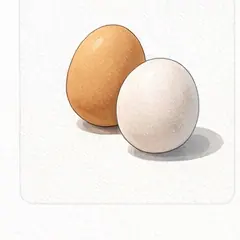
eggegg

a round food from a chicken; it has a hard outside

Mr Haddad needs a lot of eggs for his cakes.

milkmilk

a white drink from cows

Amara's brothers drink a lot of milk.

menumenu

a list of the food and drinks you can buy in a cafe or restaurant, with the prices

Look at the menu. How much is an egg sandwich?

대화

Examiner You will hear Amara talking to Mrs Dunn, the canteen manager, about food at school.

Amara Thank you for this interview, Mrs Dunn. Why isn't there any fresh bread in the canteen now?

Woman Some people think students don't like bread, but that isn't true. They love it! And the bakery near the school is still open. The problem is money. Fresh bread is too expensive for us now.

Amara How much money does the canteen have for each student's lunch?

Woman Two pounds. Last year it was three pounds. And a cheese sandwich with fresh bread costs us one pound fifty to make.

Amara So what do students buy now?

Woman We sell a lot of biscuits, but most students buy crisps. There's some fruit too, but not many students choose it.

Amara What would you like to sell?

Woman Not soup. Students don't eat much soup. And we've got salad already. I'd really like to sell cheese sandwiches with fresh bread again.

Amara Can The Loop help? We could ask the students what they want.

Woman Everyone wants bread, Amara! You don't need to ask them. Talk to a bakery first. Then talk to the head teacher.

Amara Good idea. First, I'll ask Zara's dad. He has a bakery!

문장 형태

Write to the head teacher about a healthy food idea.

Dear Mr Bramley, Thanks for Bakery Friday! I think we should have a fruit day on Wednesdays. There isn't much fruit on the menu, and a lot of students want more, because it's healthy. Best wishes, Amara

Amara's message has 37 words. It says thank you, gives one idea, gives a reason and ends with her name.

  • Dear Mr Bramley,
  • I think we should …
  • because …
  • Best wishes,

추가 연습

The bakery list

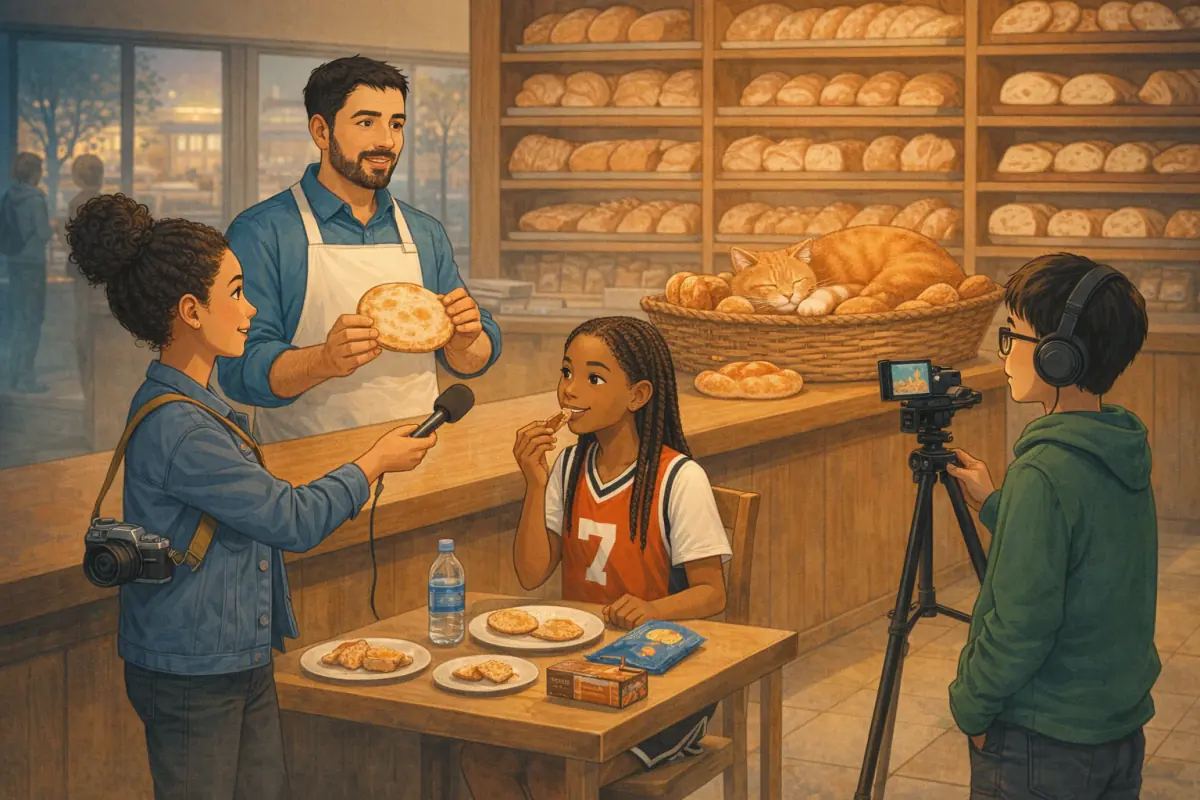
Zara interviews her dad at Haddad's Bakery while Kai films Amara's taste test. A cat is sleeping in the bread basket.

Zara Dad, how much bread do you make every day?

Mr Haddad A lot of bread! We start at four o'clock in the morning.

Zara How many eggs do you need?

Mr Haddad Not many for bread. But we need a lot of eggs for the cakes.

Zara Is there any sugar in our bread?

Mr Haddad Only a little. There's some salt and some butter, but there isn't much sugar.

Zara Are there any sandwiches for the taste test?

Mr Haddad Not yet. We haven't got any cheese! Can you buy some?

Is there any cheese?

No, there isn't any cheese, but there's some butter.

Use some in + sentences. Use any in – sentences and questions. We also use some when we ask for things: Can I have some milk?

Countable: a / an, many

  • an egg → some eggs
  • a sandwich → two sandwiches
  • How many eggs? Not many.

Uncountable: much, no a / an, no -s

  • some bread, some butter, some sugar
  • How much sugar? Not much.
  • NOT: a bread, two breads

some and any

  • + There's some salt. There are some eggs.
  • – There isn't any cheese. There aren't any sandwiches.
  • ? Is there any sugar? Are there any biscuits?

a lot of: countable and uncountable

  • a lot of eggs
  • a lot of bread

Say your idea

Bakery Friday: fresh bread, sandwiches and fruit in the canteen, with happy students.

Zara What's your idea for the canteen?

Amara I think we should have a fruit day, because fruit is healthy.

What's your idea for the canteen?

I think we should have a fruit day, because fruit is healthy.

Say your idea with I think we should … and give a reason with because.

Start and finish

  • Dear Mr Bramley,
  • Best wishes, + your name

Your idea

  • I think we should …
  • Could the canteen sell …?

Your reason

  • … because it's healthy / fresh / delicious.
  • There isn't any … now, and a lot of students want some.

Check your message

There isn't some fresh fruit on the menu.

There isn't any fresh fruit on the menu.

Use any in – sentences.

Check

  • some in + sentences: We want some fruit.
  • any in – sentences and questions: There isn't any salad.
  • no a / an or -s with bread, butter, fruit, milk
  • much + uncountable, many + countable
이 단원 배우기
어떻게 배우고 싶나요?

좋은 제안 메시지에는 무엇이 있을까요?

좋은 제안은 짧고 예의 발라요. 아이디어 하나, 분명한 이유 하나면 돼요. A2 Key 읽기·쓰기 Part 6에서는 세 가지 내용을 담은 25단어 이상의 이메일이나 메모를 써요. 아래는 그 형식으로 저희가 만든 과제예요.

  • “Your school wants ideas for the canteen. Write a message to your head teacher, Mr Ross.”
  • “Suggest one new food or drink.”
  • “Say why it is a good idea.”
  • “Say which day it could be on the menu.”
  • “Write 25 words or more.”

아이디어와 이유를 말하는 표현

“should”, “could”, “can” 뒤에 오는 동사에는 “to”도 “-s”도 붙지 않아요. 같은 표현은 짝에게 좋아하는 것과 그 이유를 말하는 A2 Key 말하기 Part 2에서도 쓸모 있어요.

  • 아이디어: “I think we should have a fruit day.”, “I think the canteen should sell soup.”
  • 공손한 질문: “Could the canteen sell fresh bread?”
  • 이유: “because it’s healthy”, “because students love it”

모범 메시지, 한 줄씩 보기

인사말과 맺음말까지 합쳐 38단어예요.

  • “Dear Mr Ross,” → 인사말: “Dear”, 호칭, 성.
  • “I think the canteen should sell fruit salad.” → 내용 1: 아이디어 하나.
  • “There isn’t any fruit on the menu now, and a lot of students want some because it’s healthy.” → 내용 2: 이유. “any”, “a lot of”, “some”이 들어 있어요.
  • “Could we have it on Mondays?” → 내용 3: 요일, 공손한 질문으로.
  • “Best wishes, Deniz” → 맺음말과 이름.

셀 수 있을까, 없을까? 주의할 음식 단어

셀 수 있는 명사에는 복수형이 있어요: an egg, two eggs. 셀 수 없는 명사에는 “a/an”도 “-s”도 붙지 않아요. “a bread”나 “breads”가 아니라 “some bread”예요. 한국어로는 “빵 두 개”라고 셀 수 있어서 이 실수가 특히 흔해요. 셀 때는 한국어의 “한 잔, 한 병, 한 조각”처럼 양이나 용기를 나타내는 말을 앞에 붙이세요.

  • 셀 수 있는 명사: egg, sandwich, biscuit, apple, vegetable, snack
  • 셀 수 없는 명사: bread, butter, cheese, milk, sugar, salt, water, juice, rice, pasta, fruit
  • 양과 용기: a piece of bread, a glass of milk, a bottle of water, a packet of crisps, a box of biscuits
  • “Fruit”는 보통 셀 수 없어요: “some fruit”, “a piece of fruit”. 사과 한 개는 “an apple”이에요.
나에게 맞는 방법으로 이 단원 배우기

Some, any, much, many, a lot of

한국어의 “많은, 많이”는 much, many, a lot of를 모두 뜻해요. 영어에서는 명사를 셀 수 있는지, 어떤 문장인지 보고 골라요. “하나도 없다”는 보통 “any”로 옮겨요: “빵이 하나도 없어요.” → “There isn’t any bread.” 아래 녹음에서는 학교 급식실 책임자가 학생의 질문에 답해요. “not many students”(복수)와 “much soup”(셀 수 없음)를 들어 보세요.

  • 긍정문, 권할 때, 부탁할 때는 “some”: “There are some eggs.” “Can I have some milk?”
  • 부정문과 의문문에는 “any”: “There isn’t any bread.” “Are there any biscuits?”
  • 셀 수 없는 명사에는 “much”, 주로 부정문과 의문문에서: “How much sugar?”
  • 복수 명사에는 “many”: “How many eggs?” “Not many students eat soup.”
  • 둘 다에 “a lot of”, 특히 긍정문에서: “We eat much bread.”가 아니라 “We eat a lot of bread.”

Student So what do students buy now?

Canteen manager We sell a lot of biscuits, but most students buy crisps. There's some fruit too, but not many students choose it.

Student What would you like to sell?

Canteen manager Not soup. Students don't eat much soup. And we've got salad already. I'd really like to sell cheese sandwiches with fresh bread again.

자주 하는 실수와 고치는 법

다 쓰고 나서 찾아보세요(화살표 앞이 실수, 뒤가 고친 문장이에요). 한국어는 명사에 복수 표시를 꼭 하지 않아서 “two egg”, “a lot of student”처럼 쓰기 쉬워요. 이유만 따로 한 문장으로 두지도 마세요. “Because it’s cheap.”는 아이디어 문장에 이어 붙이세요.

  • “Can I have a bread?” → “Can I have some bread?”
  • “There isn’t some fruit on the menu.” → “There isn’t any fruit on the menu.”
  • “How many sugar do you want?” → “How much sugar do you want?”
  • “I think we should to sell soup.” → “I think we should sell soup.”
  • “because of it’s healthy” → “because it’s healthy”

10분 루틴

이 과제를 10분 안에 써 보세요. 계획 2분, 쓰기 6분, 확인 2분이에요.

  • “Your class is planning a healthy snack table. Write a note to your teacher, Ms Patel. Suggest one snack, say why and say one food the table shouldn’t have. Write 25 words or more.”
  • 확인 1: 아이디어 하나, “because”로 말한 이유 하나, 세 번째 내용이 있나요?
  • 확인 2: 부정문과 의문문에 “any”를 썼나요?
  • 확인 3: bread, milk, fruit에 “a”나 “-s”를 붙이지 않았나요?

다음 단계

다음에는 음식에서 스포츠로 넘어가요. 경기를 지금 벌어지는 일처럼 다섯 문장으로 묘사해요. 그때까지는 식사할 때마다 접시 위 음식에 대해 “some”, “any”, “a lot of”로 한 문장씩 말해 보세요.

자주 묻는 질문

“some”과 “any”는 어떻게 달라요?

“some”은 긍정문, 그리고 무언가를 권하거나 부탁할 때 써요(“Can I have some milk?”). “any”는 부정문과 대부분의 의문문에 써요(“There isn’t any bread.”).

“bread”는 셀 수 있는 명사인가요?

아니요, 셀 수 없어요. “some bread”라고 하고, “a bread”나 “breads”는 틀려요. 셀 때는 “a piece of bread”나 “a slice of bread”라고 해요.

“much”와 “many”는 언제 쓰나요?

“much”는 셀 수 없는 명사(“How much milk?”), “many”는 복수 명사(“How many eggs?”)와 써요. 긍정문에서는 둘 다 “a lot of”가 더 자연스러워요.

Flalingo는 A2 Key와 B1 Preliminary를 제공하는 Cambridge English와 제휴 관계가 없으며, 해당 기관의 승인을 받은 서비스가 아닙니다.

이 단원 배우기
어떻게 배우고 싶나요?

다음에는 무엇을 할까요?

라이브 선생님과 1:1 수업

Flalingo에서 청소년은 이런 단원을 라이브 선생님과 1:1로, 자기 속도에 맞춰 공부합니다.

무료 체험 수업 예약하기