
본문으로 바로가기
Flalingo

영어 연습

mustn’t와 don’t have to의 차이는? A2 Key 읽기 Part 1을 위한 영어 학교 규칙 표현

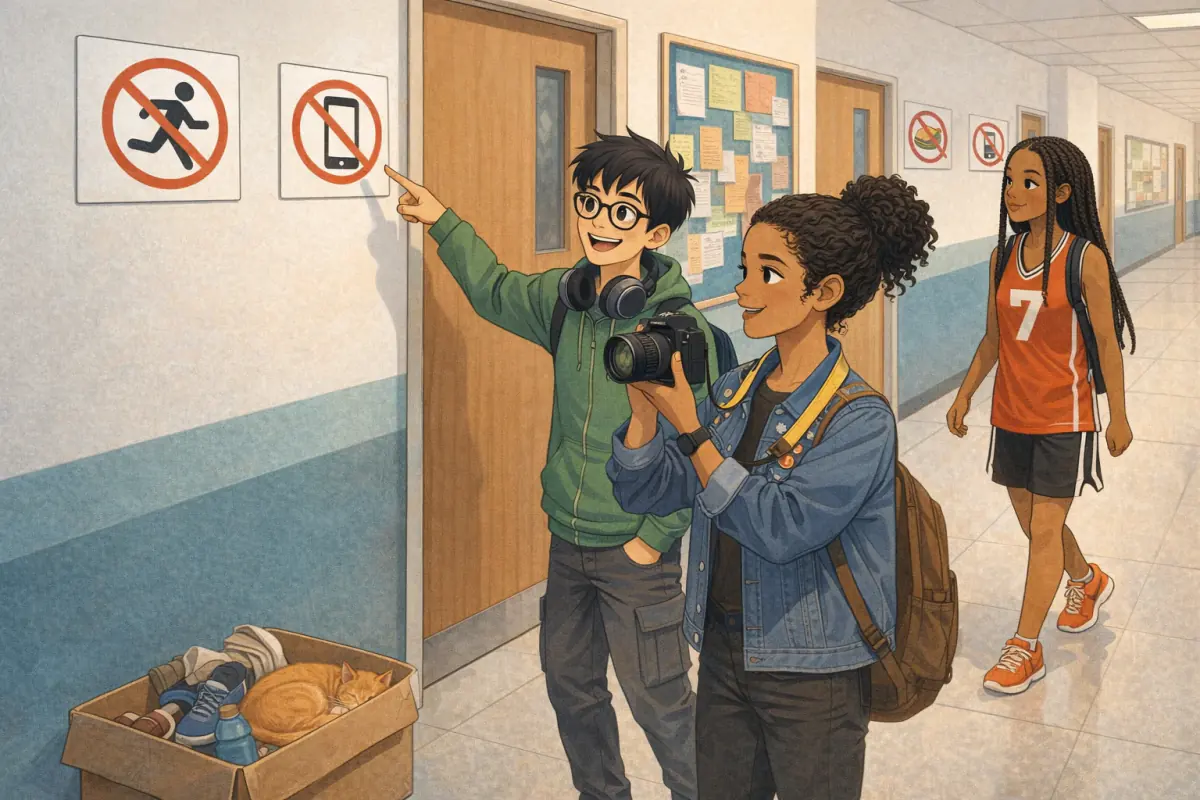
Three friends look at the picture signs in a school corridor next to a lost-property box.

can, must, mustn’t, have to, don’t have to로 영어로 규칙 말하기, “Are we allowed to…?”로 묻기, 학교 안내문 읽기. A2 수준, A2 Key와 A2 Key for Schools 대비, 11–15세.

꼭 필요한 일에는 “must”나 “have to”, 허용되지 않는 일에는 “mustn’t”나 “can’t”, 필요하지 않은 일에는 “don’t have to”를 써요. 가장 중요한 짝은 이거예요. “You mustn’t run.”은 “뛰지 마!”라는 뜻이고, “You don’t have to run.”은 “안 뛰어도 돼. 걷고 싶으면 걸어.”라는 뜻이에요. A2 Key와 A2 Key for Schools에서는 이런 규칙이 읽기·쓰기 Part 1의 표지판과 안내문에 나와요. 이 글은 A2(기초) 수준, 11–15세 정도의 학생을 위한 거예요.

이 글이 맞는 분

  • A2 Key나 A2 Key for Schools를 준비하는 11–15세 정도의 학생.
  • “must”는 알지만 “mustn’t”와 “don’t have to”를 헷갈리거나 “must to”라고 쓰는 학생.
  • 부모님께: 아이에게 학교 규칙을 물어보세요. 아래의 짧은 게임은 영어를 잘하지 못해도 함께할 수 있어요.
  • 아직 이른 경우: “always”, “sometimes”, “never”로 하루 일과를 말하는 게 아직 어렵다면 “How often…?” 질문을 다룬 A2 Key 글부터 보세요.
  • 너무 쉬운 경우: 이 표현들을 생각하지 않고도 쓰고, 과거의 규칙도 “had to”로 말할 수 있다면 B1 Preliminary 과제로 넘어가세요.

예시 학습 페이지 열기

예시 학습 페이지 열기

단어 카드

notice

a piece of paper on a wall or board with information

The notice on the gym door says: Basketball on Wednesday.

allow

to say that someone can do something

We aren't allowed to eat in the science lab.

uniform

special clothes that all pupils in a school wear

Harbour Park has no uniform, so Kai wears his green hoodie.

pupil

a child or teenager at school

All pupils must be in class at 8.45.

term

one part of the school year

Amara started at Harbour Park at the beginning of this term.

대화

Zara Look at these signs for the guide. This one means you mustn't run.

Kai And that one means you can't use your phone in the library.

Amara At my school in Accra, we had to wear a uniform.

Kai Here we don't have to wear one. I can wear my green hoodie every day!

Zara But you have to be on time. The notice says pupils must be in class at 8.45.

Amara Are we allowed to eat in the science lab?

Zara No, we aren't. It's a new rule this term.

문장 형태

What's the difference between mustn't and don't have to?

You mustn't run means: Don't run! You don't have to run means: You can walk. It's OK.

After can and must, use the verb with no "to": You must be on time. (not: must to be)

  • can + verb
  • must + verb
  • mustn't + verb
  • have to / has to + verb
  • don't have to + verb

추가 연습

Tips from Year 8

AMARA: I'm new too. I started at Harbour Park this September. On my first day, I got lost and walked into the wrong classroom! My tip: ask for a school map in the library. The librarian can give you one. And don't be afraid to ask other pupils. Most people here are really friendly.

KAI: Here's my best tip: the dining room gets very busy after 12.45, so go early. You don't have to buy lunch. You can bring food from home. Oh, and you mustn't use your phone in lessons. Teachers take it away until the end of the day!

ZARA: Always look at your timetable the night before. Put your books, a pencil and a ruler in your bag before you go to bed. You must be in class at 8.45, so don't be late. If you have a problem, you can talk to any teacher.

How to give tips

How do you give tips to a new pupil?

You can ask for a map. You must be on time. Don't run in the corridors. Always check your timetable.

After can, must and mustn't, use the verb with no "to": You must go (not: You must to go).

  • You can ...
  • You must ...
  • You mustn't ...
  • You don't have to ...
  • Don't ...
  • Always ...

Write your survival guide

Survival Guide: five tips for new pupils at my school

1 You must be on time. Lessons start at 8.45. 2 You can ask older pupils for help. They're friendly! 3 Don't forget your timetable. 4 You mustn't use your phone in class. 5 You don't have to eat in the dining room. You can eat outside too.

Use a different start for each tip.

  • You must ...
  • You can ...
  • Don't ...
  • You mustn't ...
  • You don't have to ...

Check your tips

You must go. ✓

not: You must to go.

You must be on time.

You can ask. ✓

not: You can to ask.

You can ask the librarian.

You have to bring ... ✓

have to needs "to".

You have to bring a pencil.

He has to leave. ✓

he / she / it: has to

Theo has to leave at 3.30.

이 단원 배우기
어떻게 배우고 싶나요?

규칙 표현 여섯 개, 뜻은 네 가지

학교 규칙은 대부분 짧은 표현 여섯 개로 말해요. 하나씩 외우기보다 뜻으로 묶어서 기억하세요: “괜찮아”, “해!”, “하지 마!”, “안 해도 돼”.

  • “can” (괜찮아): “You can borrow three books.”
  • “can’t” (안 돼): “You can’t use your phone in lessons.”
  • “must” (규칙): “You must be in class by 8.30.”
  • “have to” / “has to” (필요해): “We have to wear trainers in the gym.”
  • “mustn’t” (하지 마): “You mustn’t run in the corridors.”
  • “don’t have to” (필요 없어): “You don’t have to buy lunch.”

mustn’t와 don’t have to: 꼭 알아야 할 차이

긍정문에서 “must”와 “have to”는 둘 다 꼭 필요하다는 뜻이에요. 하지만 부정문이 되면 뜻이 갈라져요. “mustn’t”는 규칙에 어긋난다는 뜻이고, “don’t have to”는 규칙이 없으니 내가 고르면 된다는 뜻이에요. 한국어로 떠올리면 쉬워요: “~하면 안 돼” → “mustn’t”, “~안 해도 돼” → “don’t have to”. 확인하는 법: 뒤에 “하지만 하고 싶으면 해도 돼”를 붙일 수 있으면 “don’t have to”예요.

  • “You mustn’t eat in the lab. It isn’t safe.” → 하면 안 돼요.
  • “You don’t have to wear a uniform.” → 입고 싶은 옷을 입어요.
  • “It’s Saturday, so I don’t have to get up early.” → 그럴 필요가 없어요.

들어 보기: 새 학교의 규칙

세 학생이 학교의 표지판을 보고 있어요. 그중 한 명은 새로 온 학생이고, 가나 아크라에 있던 예전 학교를 떠올려요. “had to”에 주목하세요. “must”에는 과거형이 없어서 “must”와 “have to”의 과거는 둘 다 “had to”예요.

Student Look at these signs for the guide. This one means you mustn't run.

Friend And that one means you can't use your phone in the library.

New student At my school in Accra, we had to wear a uniform.

Friend Here we don't have to wear one. I can wear my green hoodie every day!

Student But you have to be on time. The notice says pupils must be in class at 8.45.

규칙 묻기: “Can I…?”와 “Are we allowed to…?”

해도 되는지 물을 때는 “Can I…?”나 “Are we allowed to…?”, 꼭 해야 하는지 물을 때는 “Do I have to…?”를 써요. 짧은 대답에서는 질문의 첫 단어를 다시 써요. 한국어 질문에는 “do”에 해당하는 말이 없어서 “We have to wear a uniform?”처럼 말하기 쉬운데, “Do we have to wear a uniform?”이 맞아요.

  • “Can I sit here?” “Yes, you can.”
  • “Are we allowed to use calculators?” “No, we aren’t.”
  • “Do I have to bring a dictionary?” “No, you don’t.”

New student Are we allowed to eat in the science lab?

Student No, we aren't. It's a new rule this term.

나에게 맞는 방법으로 이 단원 배우기

표지판 속 규칙: A2 Key 읽기 Part 1

읽기·쓰기 Part 1에서는 표지판, 안내문, 메시지 같은 짧은 글 여섯 개를 읽고, 세 문장 중 같은 뜻인 것을 골라요. 정답은 같은 규칙을 다른 말로 표현한 경우가 많아요. 아래는 저희가 만든 예시예요:

  • “POOL: Students must wear a swimming cap.” → “You need a cap to swim here.”
  • “No food in the computer room.” → “You can’t eat in the computer room.”
  • “Sports Day: no uniform needed.” → “You don’t have to wear a uniform on Sports Day.”
  • 함정: 안내문에 “No…”라고 쓰여 있는데 “can”이 들어간 선택지, 또는 필요하지 않다는 내용일 뿐인데 “mustn’t”가 들어간 선택지.

자주 하는 실수와 고치는 법

“can”과 “must” 뒤의 동사에는 “to”도 -s도 붙지 않아요. “to”가 남는 건 “have to”뿐이고, he, she, it과 함께 쓰면 “has to”가 돼요. 다 쓰고 나서 아래 실수를 찾아보세요(화살표 앞이 실수, 뒤가 고친 문장이에요).

  • “No running! You don’t have to run.” → “No running! You mustn’t run.”
  • “You must to be on time.” → “You must be on time.”
  • “She have to take the bus.” → “She has to take the bus.”
  • “Yesterday we must stay late.” → “Yesterday we had to stay late.”

연습: 새로 온 학생을 위한 팁 다섯 개

이건 시험 과제가 아니라 연습이에요. 학교에 새로 온 사람을 위해 팁 다섯 개를 쓰세요. 문장을 시작하는 말은 적어도 세 가지로 다르게 하고, 하나는 “don’t have to”로 쓰세요. 저희 예시와 10분 루틴이에요:

  • “1 You must be at school by 8.30. 2 You can borrow library books. 3 You mustn’t eat in the computer room. 4 You don’t have to wear a uniform on Fridays. 5 Always pack your bag the night before.”
  • 1–4분: 팁 다섯 개를 써요.
  • 5–7분: 부모님이나 친구가 팁을 하나씩 듣고 “괜찮아”, “해!”, “하지 마!”, “안 해도 돼” 중 하나로 답해요.
  • 8–10분: 말하기 Part 1처럼 “Tell me something about your school.”에 소리 내어 답해요. 규칙 두 개를 넣으세요.

다음 단계

다음에는 이 표현들을 집에 묵으러 올 친구에게 보내는 이메일에 써 봐요. B1 Preliminary에서는 더 긴 글에서 규칙을 설명하고 비교해요.

자주 묻는 질문

mustn’t와 don’t have to는 어떻게 다른가요?

“mustn’t”는 허용되지 않는다는 뜻이에요. “You mustn’t run.”은 “뛰지 마!”예요. “don’t have to”는 필요 없다는 뜻이라서, 걷고 싶으면 걸어도 돼요.

must와 have to는 같은 뜻인가요?

긍정문에서는 거의 같아요. 표지판에는 “must”가 자주 쓰이고, 대화에서는 “have to”가 더 흔해요. 둘 다 과거는 “had to”예요.

학교에서 영어로 허락은 어떻게 구하나요?

“Can I…?”라고 하세요: “Can I open the window?” 규칙을 물을 때는 “Are we allowed to…?”를 써요. “May I…?”는 더 공손한 표현이에요.

Flalingo는 A2 Key와 B1 Preliminary를 제공하는 Cambridge English와 제휴 관계가 없으며, 해당 기관의 승인을 받은 서비스가 아닙니다.

이 단원 배우기
어떻게 배우고 싶나요?

다음에는 무엇을 할까요?

라이브 선생님과 1:1 수업

Flalingo에서 청소년은 이런 단원을 라이브 선생님과 1:1로, 자기 속도에 맞춰 공부합니다.

무료 체험 수업 예약하기