
본문으로 바로가기
Flalingo

영어 연습

아이와 영어로 허락 구하기 (A1): “Can I use your camera?”와 your, our, their

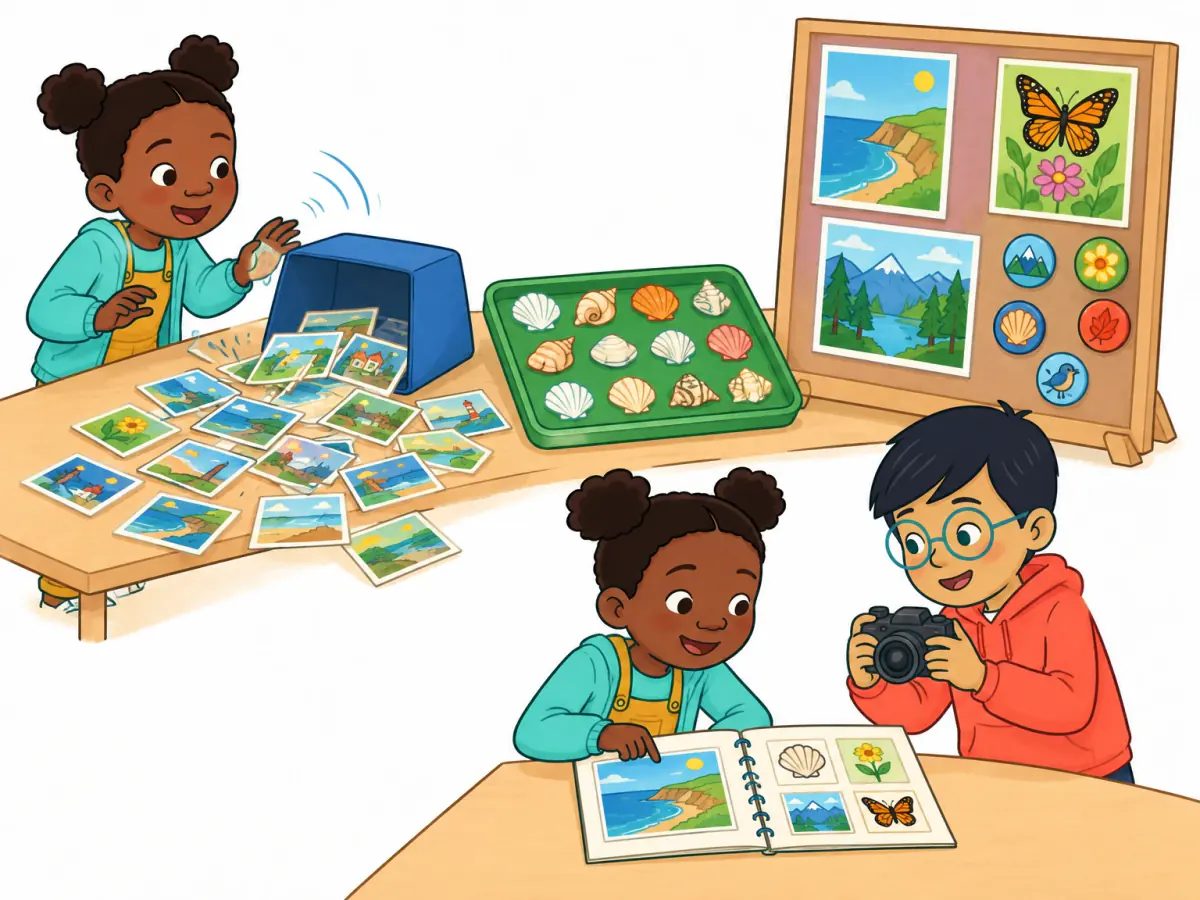
At a class collection fair, postcards spill from a blue box while shells stay on a green tray; posters and badges are displayed as two children make a picture guide.

A1 단계(7–10세) 아이가 Can I, can we, can he로 영어로 허락을 구하고, your, our, their로 물건의 주인을 말하고, 수집품에 대한 짧은 글을 쓰도록 도와주세요.

영어로 허락을 구할 때 아이들은 “Can I” 뒤에 동사를 붙입니다: “Can I use your camera?” 짧은 대답은 “Yes, you can.” 또는 “No, you can’t.”입니다. 물건의 주인을 말할 때는 your, our, their를 쓰고(“This is our computer.”), 주인을 물을 때는 “Whose…?”를 씁니다. 이 주제는 A2를 향해 가는 A1 단계로, 영어로 스물까지 셀 수 있고 간단한 문장을 말하는 약 7–10세 아이에게 알맞습니다.

이 글이 맞는 분

  • 영어로 스물까지 세고 “I like comics.” 같은 간단한 문장을 말하는 아이의 부모님.
  • 집에 수집을 좋아하는 아이가 있는 가족: 스티커, 조개껍데기, 카드, 장난감 자동차가 있으면 실제로 세고, 이름표를 붙이고, 보여 줄 거리가 생깁니다.
  • 집에서 연습하고 싶은 부모님: 상자 하나, 쟁반 하나, 작은 물건 몇 개면 충분하고, 아래 대화에서 모든 문장을 들을 수 있습니다.
  • 아직 이른 경우: 할 수 있는 일을 말할 때 “can”과 “can’t”를 아직 쓰지 못한다면 아래에 연결된 공원에서 배우는 can 글(A1)부터 시작하세요.
  • 너무 쉬운 경우: 허락 구하기와 your, our, their를 이미 자연스럽게 쓴다면 아래에 연결된 -ing 단어로 쓰는 바닷가 엽서 글(A1)로 넘어가세요.

예시 학습 페이지 열기

예시 학습 페이지 열기

단어 카드

stickersstickers
postersposters
comicscomics
postcardspostcards
badgesbadges
shellsshells
Can I use your camera?

Yes, you can. / No, you can’t.

Can we turn on our TV?

Yes, you can.

Can he use their computer?

No, he can’t.

This is your camera.

belongs to you

This is our computer.

belongs to us

That is their CD player.

belongs to them

대화

Nia Our collection fair starts today. I have twenty postcards in this blue box.

Leo Great! I have twelve shells on the green tray.

Nia Can I use your camera to photograph our displays?

Leo Yes, you can, but please turn it off after the last photo.

Leo Whose badges are beside the posters?

Nia They are Mina’s badges.

문장 형태

Can I use your camera?

Yes, you can.

  • Can we turn on our TV? Yes, you can.
  • Can he use their computer? No, he can’t.
  • Please turn it off later.

추가 연습

Change the details

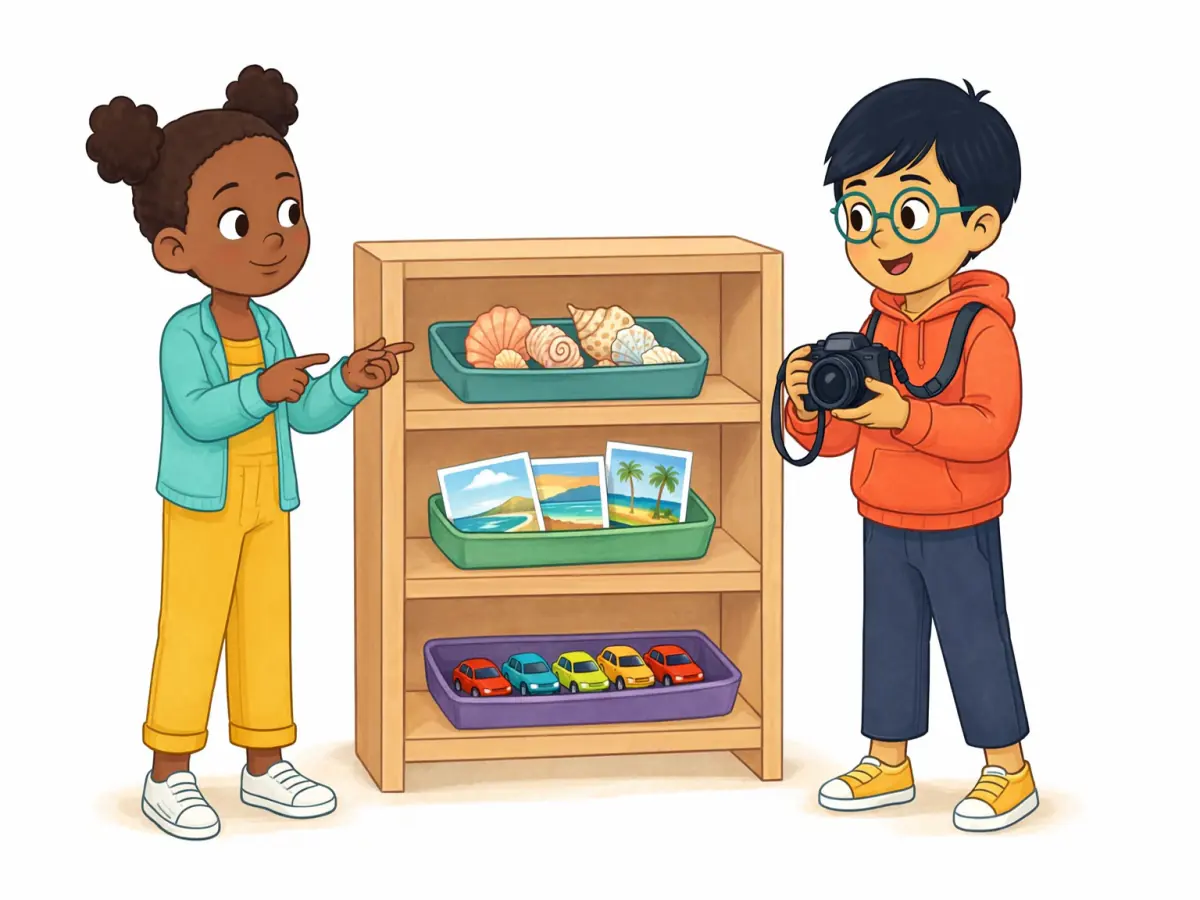
Nia asks to use Leo’s camera while Leo holds it. Three small collections of shells, postcards and toy cars sit in separate trays.
Can I …? · your camera

Can I use your camera?

Can we …? · our TV

Can we turn on our TV?

Can he …? · their computer

Can he use their computer?

your

Your camera belongs to you.

our

Our TV belongs to us.

their

Their computer belongs to them.

Nia Can I use your camera?

Leo Yes, you can.

Leo Can we turn on our TV?

Nia Yes, we can.

Nia Can he use their computer?

Leo No, he can't. It's their computer.

Can I use your camera?

Yes, you can.

  • Can we turn on our TV? Yes, you can.
  • Can he use their computer? No, he can’t.
  • Please turn it off later.

The Collection Fair Mix-Up

At a class collection fair, postcards spill from a blue box while shells stay on a green tray; posters and badges are displayed as Nia and Leo make a picture guide.

THE COLLECTION FAIR MIX-UP

Nia and Leo are preparing a class collection fair. Nia puts twenty postcards in a blue box, and Leo arranges twelve shells on a green tray. Mina hangs her posters and places her badges beside them. The wind from the open window blows the postcards across the table. The children close the window, pick up the postcards, sort every collection, and use Leo’s camera to make a picture guide. At the end, Nia asks, “Can I turn off your camera?” Leo smiles and says, “Yes, you can.” Their careful guide helps every owner find the right collection.

Writer’s notebook

Nia asks to use Leo’s camera while Leo holds it. Three small collections of shells, postcards and toy cars sit in separate trays.

Leo What will you write about?

Nia Our collection.

Leo What is in our collection?

Nia Badges, stickers and comics.

Leo Can I add a shell?

Nia Yes, you can!

What is in your collection?

Our collection has badges, stickers and comics. We have twenty badges, ten stickers and five comics. Can I add a shell? Yes, you can.

  • question mark: Can I add a shell?
  • commas: badges, stickers and comics
  • full stop: We have five comics.
이 단원 배우기
어떻게 배우고 싶나요?

아이들이 모으는 물건 단어

아이들이 많이 모으는 여섯 가지는 stickers(스티커), posters(포스터), comics(만화책), postcards(엽서), badges(배지), shells(조개껍데기)입니다. 영어는 둘 이상이면 숫자 뒤에서도 “s”를 붙입니다: “twelve shells”, “twenty postcards”. 한국어는 “엽서 스무 장”처럼 숫자 뒤에 복수 표시를 하지 않아서 아이들이 “twenty postcard”라고 하기 쉽습니다. “badges”는 끝에 소리가 하나 더 붙어 “배지즈”처럼 들립니다. 위치 단어 세 개도 함께 익히세요: 상자 안은 “in”, 쟁반 위나 벽에 있으면 “on”, 다른 물건 옆은 “beside”입니다.

  • “What do you collect?” “I collect stickers.”
  • “My posters are on the wall.”

허락 구하기: “Can I use your camera?”

“Can I” 뒤에 동사를 붙입니다. “카메라 써도 돼?”에 해당하는 말입니다. 짧은 대답에서는 동사를 반복하지 않습니다: “Yes, you can.” 또는 “No, you can’t.” “please”를 붙이면 더 공손해집니다. “to”로 이유를 덧붙일 수 있고, 허락하는 사람은 “but please…”로 조건을 붙일 수 있습니다.

Nia Can I use your camera to photograph our displays?

Leo Yes, you can, but please turn it off after the last photo.

Can I, can we, can he: 질문과 짧은 대답

“can”이 먼저, 그다음 사람, 그다음 동사가 옵니다. “can”은 모양이 바뀌지 않고, 뒤에 오는 동사에는 “to”도 “s”도 붙지 않습니다. 대답은 말하는 사람에 따라 달라집니다: 아이들이 “Can we turn on our TV?”라고 물으면 부모님은 “Yes, you can.”이라고 하고, 같은 편 친구는 “Yes, we can.”이라고 합니다.

  • “Can I use your camera?” “Yes, you can.”
  • “Can we turn on our TV?” “Yes, you can.”
  • “Can he use their computer?” “No, he can’t.”

Your, our, their: 누구 것인지 말하기

이 단어들은 물건 앞에 와서 주인을 알려 줍니다. “your camera”는 말하는 상대의 것, “our computer”는 나를 포함한 무리의 것, “their CD player”는 다른 사람들의 것입니다. 한국어에서는 혼자 말할 때도 “우리 엄마”, “우리 집”이라고 하지만, 영어에서 자기 것만 말할 때는 보통 “my”를 씁니다: “my mum”. 주인을 물을 때는 “Whose…?”를 쓰고, 이름 뒤에는 ’s를 붙입니다: “Mina’s badges”.

“their”, “there”, “they’re”는 소리가 같고 “whose”와 “who’s”도 같으니, 글로 쓸 때 철자를 확인하세요.

Nia Our collection fair starts today. I have twenty postcards in this blue box.

Leo Great! I have twelve shells on the green tray.

Leo Whose badges are beside the posters?

Nia They are Mina’s badges.

Turn on, turn off: 기기 단어

허락을 구하는 일은 기기와 관련된 경우가 많아서 computer, TV, DVD player, CD player, camera, MP3 player도 배웁니다. 같은 문장을 태블릿에도 쓸 수 있습니다. 명사와 함께 쓸 때 “on”이나 “off”는 명사 앞이나 뒤에 올 수 있습니다: “turn off the TV”, “turn the TV off”. “it”과 함께 쓸 때는 항상 뒤에 옵니다: “Please turn it off.”

  • “Can we turn the TV on?” “No, you can’t. It’s bedtime.”
나에게 맞는 방법으로 이 단원 배우기

수집품 소개 글 쓰기: 질문 하나와 문장 세 개

이제 아이가 수집품에 대해 질문 하나와 문장 세 개 이상을 쓸 수 있습니다. 예를 들면: “Our collection has badges, stickers and comics. We have twenty badges, ten stickers and five comics. Can I add a shell? Yes, you can.”

  • 질문은 물음표로, 문장은 마침표로 끝납니다.
  • 목록에서는 물건 사이에 쉼표를 찍고, 마지막 물건 앞에 “and”를 씁니다.
  • 모든 문장은 대문자로 시작합니다.

집에서 하는 놀이: 우리 집 수집품 전시회

집에 있는 작은 수집품을 두세 가지 고르세요. 스티커, 조개껍데기, 장난감 자동차 등 무엇이든 좋습니다. 아이가 하나씩 세어 상자나 쟁반에 담고 소개합니다: “I have twelve shells on the tray.”

전시를 사진으로 찍기 전에 아이가 영어로 카메라나 휴대폰을 빌려 달라고 하게 하세요. 때로는 조건을 붙여 허락하고, 때로는 이유를 들어 거절하세요. 마지막은 수수께끼로 마무리합니다: “It’s a big fish in the sea. Which word is it?” “Shark!”

흔한 실수와 쉬운 해결법

이 단계에서는 자연스러운 실수입니다. 바른 문장으로 다시 말해 주고 계속 진행하세요.

  • “Can I to use your camera?”: “can” 뒤에는 “to”가 없습니다: “Can I use your camera?”
  • “Yes, you can use.”: “can”에서 멈춥니다: “Yes, you can.”
  • “Can he uses their computer?”: “can” 뒤 동사에는 “s”가 없습니다: “Can he use their computer?”
  • “I have twenty postcard.”: 숫자 뒤에도 “s”를 붙입니다: “twenty postcards”.
  • “There computer”: 주인을 말할 때는 “their”입니다: “their computer”.
  • “Turn off it.”: “Turn it off.”

다음 단계

허락 구하기가 쉬워지면 지금 하고 있는 일을 말해 볼 수 있습니다: “We’re swimming.” 이것은 짧은 휴가 엽서 쓰기와 -ing 단어의 철자로 이어집니다.

자주 묻는 질문

허락을 구할 때 “Can I”와 “May I” 중 무엇을 쓰나요?

둘 다 맞습니다. 일상 대화에서는 “Can I…?”가 가장 흔하고, “May I…?”는 조금 더 격식 있는 표현입니다. 어느 쪽이든 “please”를 붙이면 더 부드럽게 들립니다.

“their”, “there”, “they’re”는 어떻게 다른가요?

“their”는 주인을 나타냅니다: “their computer”. “there”는 장소를 말합니다: “It’s over there.” “they’re”는 “they are”의 줄임말입니다. 소리가 같아서 차이는 글로 쓸 때만 중요합니다.

영어로 “Can I…?”에는 어떻게 대답하나요?

동사 없이 “can”을 반복해 짧게 대답합니다: “Yes, you can.” 또는 “No, you can’t.” “Sure.”라고도 하지만 먼저 짧은 대답을 연습하세요.

이 단원 배우기
어떻게 배우고 싶나요?

다음에는 무엇을 할까요?

라이브 선생님과 함께 배워요

Flalingo 어린이 수업에서는 아이가 이런 단원을 라이브 선생님과 1:1로, 같은 화면의 게임으로 연습합니다.

무료 체험 수업 예약하기