
본문으로 바로가기
Flalingo

영어 연습

여행 중 영어로 짧은 메시지 보내는 법 (B1+): 생략 규칙, 현재 시제, 다섯 메시지 구성

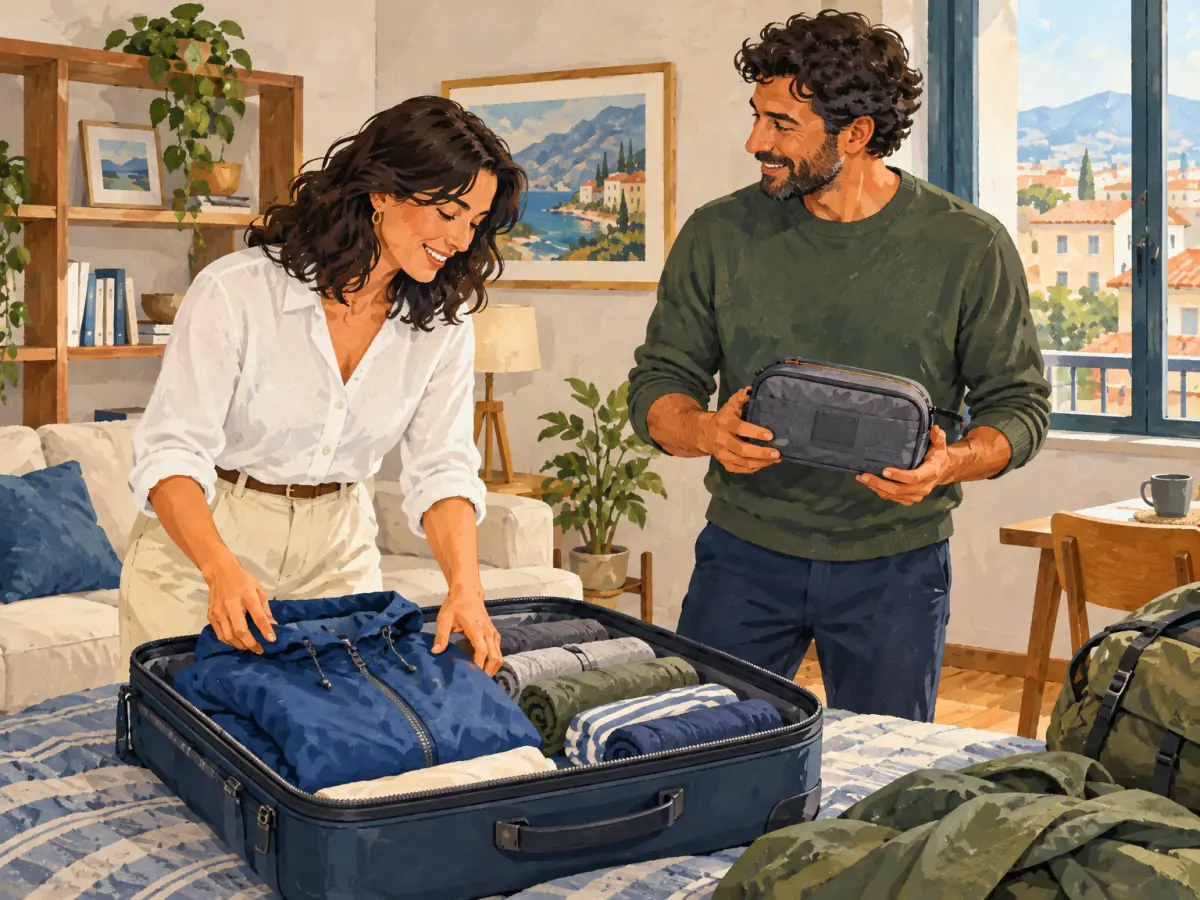
Two friends organize a small suitcase and equipment pouch before an early work trip.

B1+(중급 후반) 영어 여행 메시지 가이드: 짧은 메시지에서 생략해도 되는 것, 시간표와 약속에 쓰는 현재형과 현재진행형, 문제 하나와 해결을 담은 다섯 메시지 구성을 배워요.

좋은 여행 메시지는 하나의 상황을 따라가요. 계획, 잘못된 일, 내가 한 대처, 그리고 결말이요. 격식 없는 영어에서는 “I”나 “I’m”처럼 뻔한 말을 생략할 수 있어요. “Waiting at the harbour. Just received the equipment list.” 하지만 시간은 생략할 수 없어요. “Boat leaves at six. Meeting the instructor at five.” 이 B1+(중급 후반) 가이드는 메시지가 너무 딱딱하거나, 너무 짧아서 이해하기 힘든 성인을 위한 내용이에요.

이 글이 맞는 분

  • 문장은 정확하게 쓰지만, 친구에게 보내는 메시지가 업무 이메일처럼 들리거나 너무 짧아져서 아무도 따라오지 못하는 중급 성인.
  • 영어를 쓰는 친구, 동료, 단체와 여행하면서 변경 사항을 알려야 하는 분: 취소된 페리, 깜빡한 충전기, 바뀐 약속 시간.
  • “The boat leaves at six”와 “We’re leaving at six” 사이에서 망설이고, 믿을 수 있는 규칙을 원하는 분.
  • 아직 이르다면: 과거 시제와 현재 시제가 아직 불안하다면, 배경과 전환점이 있는 초중급 여행 이야기부터 시작하세요.
  • 너무 쉽다면: 시간과 의미를 잃지 않고 메시지를 이미 잘 줄인다면, B2로 넘어가 건강 소식에 개인 이메일로 답하는 연습을 하세요.

예시 학습 페이지 열기

예시 학습 페이지 열기

단어 카드

full sentence

Formal or careful writing normally includes the subject and necessary auxiliary verbs.

I’m waiting at the harbour, and I’ve just received the equipment list.

informal omission

In personal messages, writers often omit obvious subjects and auxiliaries.

Waiting at the harbour. Just received the equipment list.

time must stay clear

Keep enough tense or time language to show whether an event is current, planned, or finished.

Boat leaves at six. Meeting the instructor at five.

reference must stay clear

Do not omit a noun or pronoun if the reader could misunderstand what it refers to.

Bought the boots; collecting them from the hardware shop now.

tone and reaction

Short reactions, punctuation, or symbols can express emotion, but the practical meaning must remain accessible.

Aprons sold out—seriously? Trying the café next.

대화

maya Why are you unpacking the towel? You usually take one on coastal trips.

owen The guesthouse provides towels, and the morning ferry isn’t running tomorrow because the crew are training.

maya So what are we doing?

owen We’re taking the evening crossing. It leaves at 18.10, and we’re meeting the technician at the port at 17.20.

maya I see. Do you think the equipment needs extra protection?

owen Yes. I’m wrapping the recorder now because the weather report says heavy rain.

maya Do we have enough waterproof bags?

owen We have two. I’m using one for electronics, and you’re taking the other for documents.

문장 형태

Does each message tell the reader when the event is happening?

Yes. I used tomorrow, now, on day two, tonight, and just got home to keep the sequence clear.

A strong series develops one situation and keeps time, reference, and outcome clear.

  • Just realized…
  • Trying… next.
  • Problem solved.
  • Back home now.

추가 연습

Present simple and present continuous

present simple: positive and frequency

Use the base form, adding -s/-es with he, she, or it, for habits, repeated facts, and frequency.

Maya usually checks every document twice. Owen rarely packs early.

present simple: negative and question

Use do not or does not plus the base form; begin questions with do or does.

He doesn’t carry a travel iron. Do they need a visa?

present continuous: positive

Use am, is, or are plus verb-ing for an action happening now or a temporary situation around now.

We’re sharing a small office this month, and I’m packing there now.

present continuous: negative and question

Put not after am, is, or are; move am, is, or are before the subject in questions.

She isn’t taking the car. Are you waiting for the driver?

future arrangement

Use the present continuous for a personal future arrangement that has been organized.

We’re meeting the sound engineer at the terminal tomorrow.

timetable future

Use the present simple for scheduled services, classes, or events controlled by a timetable.

The ferry leaves at 07.20, and check-in closes at 06.50.

frequency position

Put most frequency adverbs before a main verb but after be.

I often make a list. I’m usually ready the night before.

The bag that travelled separately

Nadia was travelling to a three-day ceramics workshop on a small island. She normally checked a large suitcase, but the final boat accepted only compact luggage, so she borrowed a waterproof holdall. While she was packing, she assumed the studio provided protective aprons and wrapped only her camera. At the harbour, an instructor sent a late update: every participant needed an apron and closed shoes. Nadia did not have time to shop before boarding. Instead of missing the boat, she phoned the island’s hardware shop and asked whether it could hold suitable items for collection. The owner had boots but no aprons, so he contacted a nearby café that used washable kitchen aprons. Nadia collected both items after arrival and attended the first session. That evening, she added a shared equipment list to the group’s booking page. Future participants could now see what the venue supplied before they started packing.

constraint

What rule on the final boat affected Nadia’s luggage?

Find the sentence and say what she did because of it.

mistaken assumption

What did Nadia believe about the studio, and was she right?

Say what she packed because of this belief.

response

How did Nadia solve the problem without missing the boat?

Name the people who helped her.

system improvement

What did Nadia change for later participants?

Explain how this prevents the same problem.

A developed five-message model

evening before

Anticipation plus a confirmed arrangement

Bag finally packed. Taking the 06.40 train tomorrow, then meeting Jo at the harbour.

first morning

Current action plus a new complication

At the harbour now. Just learned we need closed shoes for the workshop.

second day

Resolved problem plus present experience

Local shop saved the day—wearing borrowed boots and making my first bowl.

last evening

Reflection plus remaining plan

Last evening here. Packing the finished bowl very carefully before dinner.

day after

Completed return plus consequence

Got home safely, but the bowl cracked in the car. Apparently I need another packing lesson!

Write the trip as it changes

Does each message tell the reader when the event is happening?

Yes. I used tomorrow, now, on day two, tonight, and just got home to keep the sequence clear.

A strong series develops one situation and keeps time, reference, and outcome clear.

  • Just realized…
  • Trying… next.
  • Problem solved.
  • Back home now.
이 단원 배우기
어떻게 배우고 싶나요?
계정이 있나요?

무료 계정은 한 단원을 계속 열어 둘 수 있습니다.

하나의 이야기를 전하는 다섯 메시지

여행 메시지는 일기도, 일정표도 아니에요. 하나의 상황을 계획에서 문제, 대처, 결말까지 따라가고, 메시지마다 시간 표시가 있어요. 4일간의 해안 여행이라면:

  • 전날 저녁, 확정된 계획: “All packed. Train leaves at 06.40 tomorrow; meeting Dan at the station at six.”
  • 첫날, 생긴 문제: “Arrived! Just realized I’ve packed the wrong adaptor.”
  • 둘째 날, 대처: “Problem solved: the guesthouse lent me one. Walking to the lighthouse today.”
  • 마지막 날 저녁, 남은 일: “Last evening here. Ferry leaves at 08.15, so packing after dinner.”
  • 다음 날, 결말: “Back home. Note for next time: check the plug type before packing!”

생략해도 되는 것과 안 되는 것

친구에게 보내는 메시지에서는 뻔한 주어와 조동사(“I”, “we”, “I’m”, “I’ve”)를 자주 생략해요. 호텔이나 회사에 보내는 이메일에서는 생략하지 않아요. 한국어도 주어를 쉽게 빼지만, 한국어는 동사 어미가 시제를 보여 줘요. 영어에서 “I’m”을 빼면 “-ing”만 남기 때문에 동사 형태와 시간 표현이 더 중요해져요. 비교해 보세요.

  • 완전한 문장: “I’m waiting at the harbour, and I’ve just received the equipment list.”
  • 줄인 문장: “Waiting at the harbour. Just received the equipment list.” “Waiting”은 여전히 지금을, “just received”는 여전히 끝난 일을 뜻해요.
  • 시간을 분명하게: “Boat leaves at six. Meeting the instructor at five.” “leaves”는 시간표, “meeting”은 내 약속이에요.
  • 가리키는 대상을 분명하게: “Bought the boots; collecting them from the hardware shop now.” “them”이 없으면 무엇을 찾으러 가는지 알 수 없어요.
  • 반응은 짧게, 정보는 빠짐없이: “Charger left at home, of course! Borrowing one from reception.”

현재형과 현재진행형: 의미가 결정해요

두 시제 모두 현재와 미래를 말할 수 있어요. 한국어는 “내일 친구를 만나요”처럼 예정된 일을 현재형으로 말하지만, 영어에서 개인적인 약속은 현재진행형으로 말해요. 동사가 무엇을 하는지 생각해 보세요.

  • 습관이나 일반적인 사실은 현재형: “I usually pack the night before.”
  • 진행 중인 동작이나 일시적인 상황은 현재진행형: “I’m rolling up the shirts; we’re staying with friends this week.”
  • 개인적인 약속은 현재진행형: “We’re meeting the guide at the port at 17.20.”
  • 시간표는 현재형: “The ferry leaves at 07.20, and check-in closes at 06.50.”
  • 앎, 소유, 선호, 필요를 나타내는 동사는 지금 이 순간의 일이어도 보통 현재형을 써요: “I know the route, and we need an adaptor.” 한국어 “알고 있어요”, “가지고 있어요”는 진행형처럼 보이지만 영어로는 “I know”, “I have”예요.

들어 보세요: 취소된 페리가 계획을 바꿔요

아침 페리가 취소되어 두 여행자가 짐을 다시 싸요. 습관 하나, 정해진 계획 둘, 시간표 하나를 찾아보세요. “isn’t running tomorrow”는 일시적인 변경을 나타내요.

Maya Why are you unpacking the towel? You usually take one on coastal trips.

Owen The guesthouse provides towels, and the morning ferry isn’t running tomorrow because the crew are training.

Maya So what are we doing?

Owen We’re taking the evening crossing. It leaves at 18.10, and we’re meeting the technician at the port at 17.20.

나에게 맞는 방법으로 이 단원 배우기

짐, 서류, 작은 문제에 쓰는 단어

깜빡한 물건 하나가 이야기를 이끌어요. 그러니 정확한 이름으로 말하세요.

  • 전자 기기: “adaptor”(어댑터), “phone charger”(휴대폰 충전기), “batteries”(배터리), “earphones”(귀에 꽂는 이어폰), “headphones”(귀를 덮는 헤드폰).
  • “washbag”(세면도구 파우치) 속 물건: “toothpaste”, “shampoo”, “sunscreen”(자외선 차단제), “insect repellent”(벌레 퇴치제).
  • 서류: “passport” 또는 “ID card”, “visa”, “driving licence”(운전면허증), “booking confirmation”(예약 확인서), “travel insurance documents”(여행자 보험 서류).
  • 짐 싸기 동사: “fold clothes”(옷을 개다), “roll up clothes”(옷을 돌돌 말다), “wrap fragile things”(깨지기 쉬운 물건을 감싸다), “unpack”(짐을 풀다).
  • 가게에서 도움을 받지 못할 때: “They’re out of adaptors.” “The sun hats have sold out.” “I’m looking for a waterproof case.”

자주 하는 실수

메시지에서 다음을 확인하세요.

  • “I’m knowing the way.” “know”는 상태 동사예요: “I know the way.”
  • “We meet the guide at nine tomorrow.” 인쇄된 일정표처럼 들려요. 내 약속이라면 “We’re meeting the guide at nine tomorrow.”라고 하세요.
  • “Leaving at six.” 오늘인가요, 내일인가요? 어느 날인지 쓰세요.
  • “Talked to the hotel and the shop. It’s closed.” 어느 쪽인가요? 명사를 다시 쓰세요: “The shop’s closed.”
  • 두 번째 메시지에서 생긴 문제가 끝까지 해결되지 않는 것. 뒤의 메시지에서 마무리하세요.

하루 10분 연습법

모든 문장을 먼저 소리 내어 말해 보세요. 주말에는 이 질문에 소리 내어 답한 뒤, 그 답을 바탕으로 30분 동안 메시지 다섯 개를 써 보세요. “Which forgotten item would cause you the most trouble, and what would you do?”

  • 2분: 메시지 카드 다섯 장을 듣고, 짧은 메시지를 완전한 문장으로 바꿨다가 다시 줄여 보세요.
  • 3분: 내일에 대한 세 문장. 시간표 하나, 약속 하나, 지금 하고 있는 일 하나.
  • 3분: 깜빡한 물건과 내 해결책을 담은 메시지 하나.
  • 2분: 다시 읽으며 모든 시간 표현과 “it”, “them”을 확인하세요.

다음 단계

이 수준에서 다음으로는 실용적인 팁 세 가지를 담은 조언 글을 쓰거나, 방을 네 문단으로 묘사해 보세요. 서비스 문제를 연습하려면 이중 청구를 설명해 보세요. B2에서는 건강 소식에 개인 이메일로 답해 보세요.

자주 묻는 질문

영어 메시지에서 “I”를 생략해도 되나요?

네, 격식 없는 메시지에서는 괜찮아요. “Waiting at the harbour.” 주어가 내가 아니라면 남겨 두세요. “Boat leaves at six.” 호텔이나 회사에 보내는 이메일은 완전한 문장으로 쓰세요.

미래를 말할 때 현재형은 언제 쓰나요?

시간표를 말할 때 써요. “The ferry leaves at 18.10.” 개인적인 약속에는 현재진행형을 써요. “We’re meeting the technician at 17.20.”

“I think”와 “I’m thinking”은 어떻게 다른가요?

“I think”는 의견을 말해요. “I think the case is too heavy.” “I’m thinking of”는 무언가를 고려하고 있다는 뜻이에요. “We’re thinking of taking fewer clothes.”

이 단원 배우기
어떻게 배우고 싶나요?
계정이 있나요?

무료 계정은 한 단원을 계속 열어 둘 수 있습니다.

다음에는 무엇을 할까요?

Flai로 계속 연습하세요

Flai는 음성 대화, 교정 내용, 수업 보고서로 말하기 연습을 돕는 Flalingo의 AI 말하기 앱입니다.

라이브 선생님과 배우기

Flalingo 수업에서는 이런 단원을 라이브 선생님과 1:1로 연습합니다.