
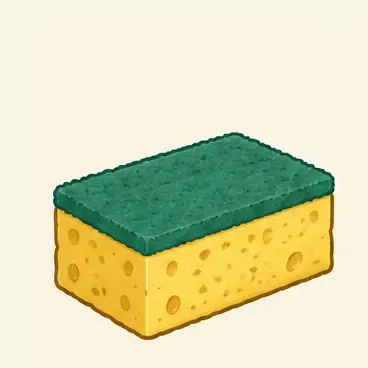
 sponge
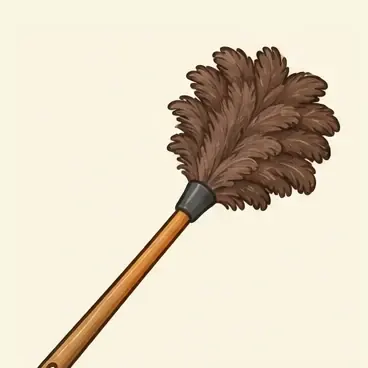 feather duster
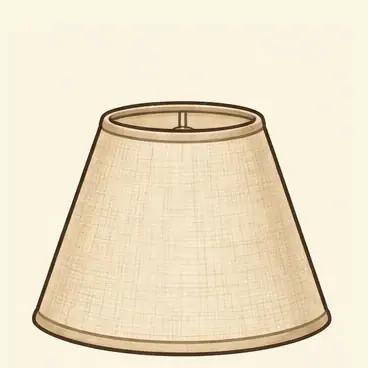 lampshade
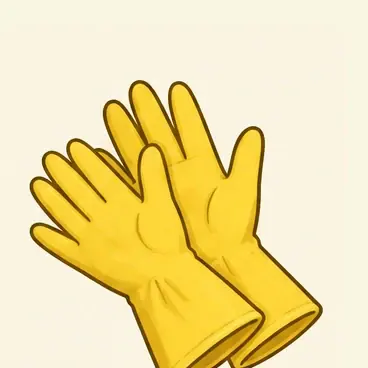 rubber gloves
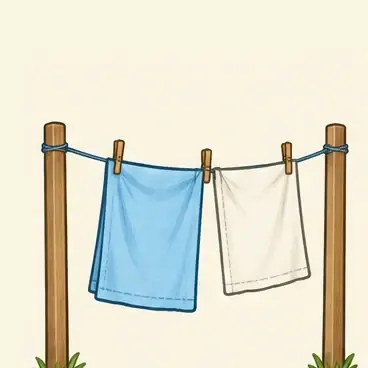 washing line
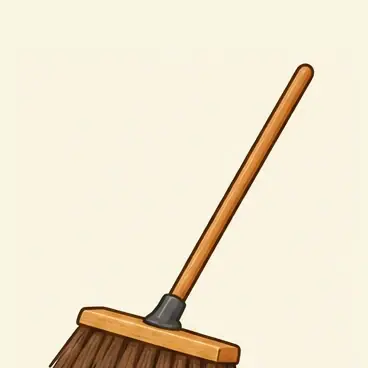 broom
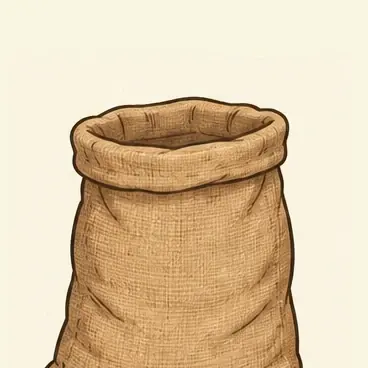 sack
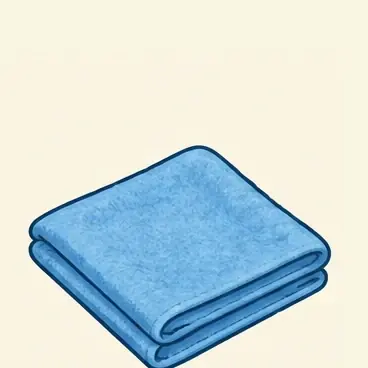 cloth
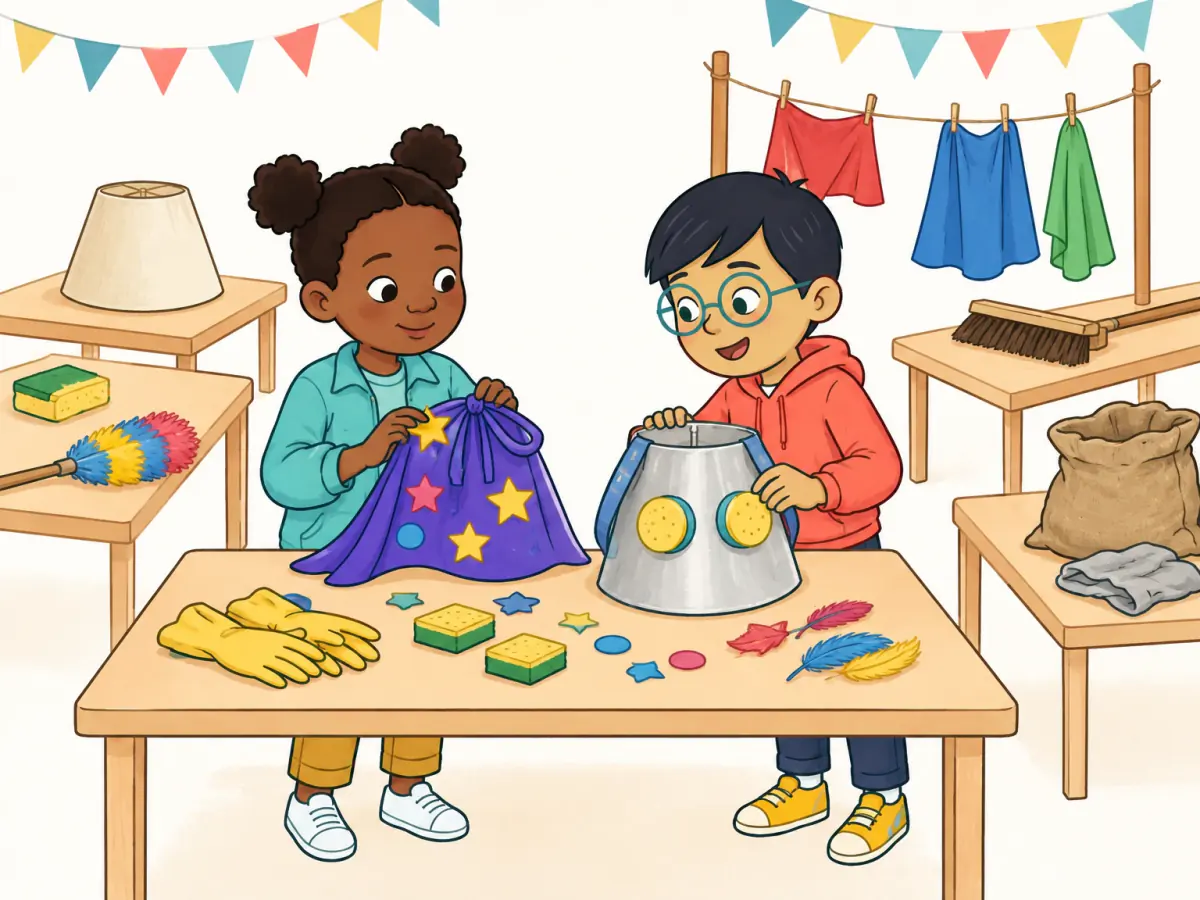
家にある物の言葉と、様子を表す言葉
何もかも戸棚から出てくる仮装パーティーを思い浮かべてください。スポンジで星をスタンプし、1枚の布がマントになります。1語だけ注意しましょう。“cloth”は布という材料で、着る服は“clothes”です。
くらべるために、反対の意味のペアも加えましょう:softとrough(やわらかい・ざらざらした)、lightとheavy(軽い・重い)、brightとdark(明るい・暗い)、longとshort(長い・短い)。
- sponge – スポンジ
- feather duster – 羽根のはたき
- lampshade – ランプのかさ
- rubber gloves – ゴム手袋
- washing line – 物干しロープ
- broom – ほうき
- sack – 目のあらい布の大きな袋
- cloth – 布(服やマントの材料)
tooとenough:その目的に合う?
“too”は目的に対して必要以上という意味で、問題があることを表します:“The sack is too rough.” “enough”は必要なだけあるという意味で、使えることを表します:“It is light enough.” “not”といっしょに使うと、足りないものを表します:“The string is not long enough.”
“too”は形容詞の前、“enough”は形容詞のあとに来ます。「長すぎる」の「すぎる」は“too”によく対応しますが、「十分軽い」の「十分」は前に来るので、子どもは“enough light”と言いがちです。目的を言うときは“to”と動詞を加えます:“too heavy to carry”(重すぎて運べない)、“light enough to wear”(着られるくらい軽い)。
- “The cape is too long.”:問題がある
- “It is short enough to wear safely.”:問題が解決した
as … as、-er than、the -est
“as … as”は2つが同じくらいだという意味です:“The sponge is as soft as the cloth.”(スポンジは布と同じくらいやわらかい。)“not as … as”は前のほうがそれほどではないという意味で、日本語の「~ほど…ない」にあたります。子どもはたぶん、2つをくらべる“-er than”(“The feather duster is softer than the broom.”)と、グループの中の1つを言う“the -est”(“The lampshade is the brightest item on the table.”)を知っているでしょう。
このテーマの中心となる形は、くらべることと決めることを“but”でつなぎます:“Is the cloth as bright as the lampshade?” “No. It is not as bright, but it is light enough to wear.” 布は明るさでは負けても、役目は果たせるのです。
予想して、聞いて、確かめる
聞く前に“What do you think will happen to the costume?”とたずね、子どもに“I predict that… will…”で答えてもらいましょう。それから会話を流して“Who ties the rope?”とたずね、もう一度聞いて確かめます。
予想はこれからのことなので“will”を使います。手順は、物語のあらすじを話すときのように現在形(“cuts”、“ties”)で言います。
Nia What do you think will happen to the costume?
Leo I predict that the bright cloth will become a cape.
Nia Then Mara cuts the cloth and Amir ties the rope.
Leo Jo paints the lampshade, and Suri uses the sponge to add stars.
Nia Was your prediction correct?
Leo Yes. The cloth becomes a cape for the final scene.
衣装の修理の物語を書く
修理の物語は4つの部分でできています:始まり、“too”や“not … enough”で言う問題、修理、“enough”を使った結末です。年下のいとこなど、実際に読む人を決めて書きましょう。
書きかえて使えるお手本:“The music started, but the silver cape was too long. The two friends folded it and fixed it with cloth tape. It was short enough to wear safely. The dancers entered together, and the audience cheered.”
- 計画:衣装、問題、直し方
- 書く:“too”と“enough”を入れた過去形の4文
- 確認:くらべる表現を1つ、大文字、ピリオド
よくある間違いと簡単な直し方
A2では自然な間違いです。正しい文で言い直して、そのまま続けましょう。
- “It is enough light.”:“enough”は形容詞のあとです:“It is light enough.”
- “The cape is too much long.”:“much”はいりません:“The cape is too long.”
- “Your costume is too beautiful!”:問題がないときは“really”を使います:“Your costume is really beautiful!”
- “too heavy for carry”:動詞の前には“to”を使います:“too heavy to carry”。
- “as bright than”:“as bright as”か“brighter than”と言います。
家でできるあそび:衣装づくりチャレンジ
スカーフ、ふきん、紙袋、箱など、安全な物をいくつか集め、スーパーヒーローのマントなど、作る衣装を1つ決めます。子どもは物を1つずつ持って判断します:“The tea towel is too small.” “The scarf is long enough.” 保護者は“Is the bag as strong as the box?”とたずねます。
次は役を交代して、予想を加えます:“What do you think will happen to the box?” “I predict that it will become a robot head.”
次のステップ
tooとenoughが楽に使えるようになったら、つなぎ言葉で考えをつなげましょう:“The cape was too long, so we folded it.” これが、理由と結果を説明する短い説明文につながります。