
本文へ移動
Flalingo

英語の練習

子どもと英語で許可をもらう(A1):“Can I use your camera?”とyour、our、their

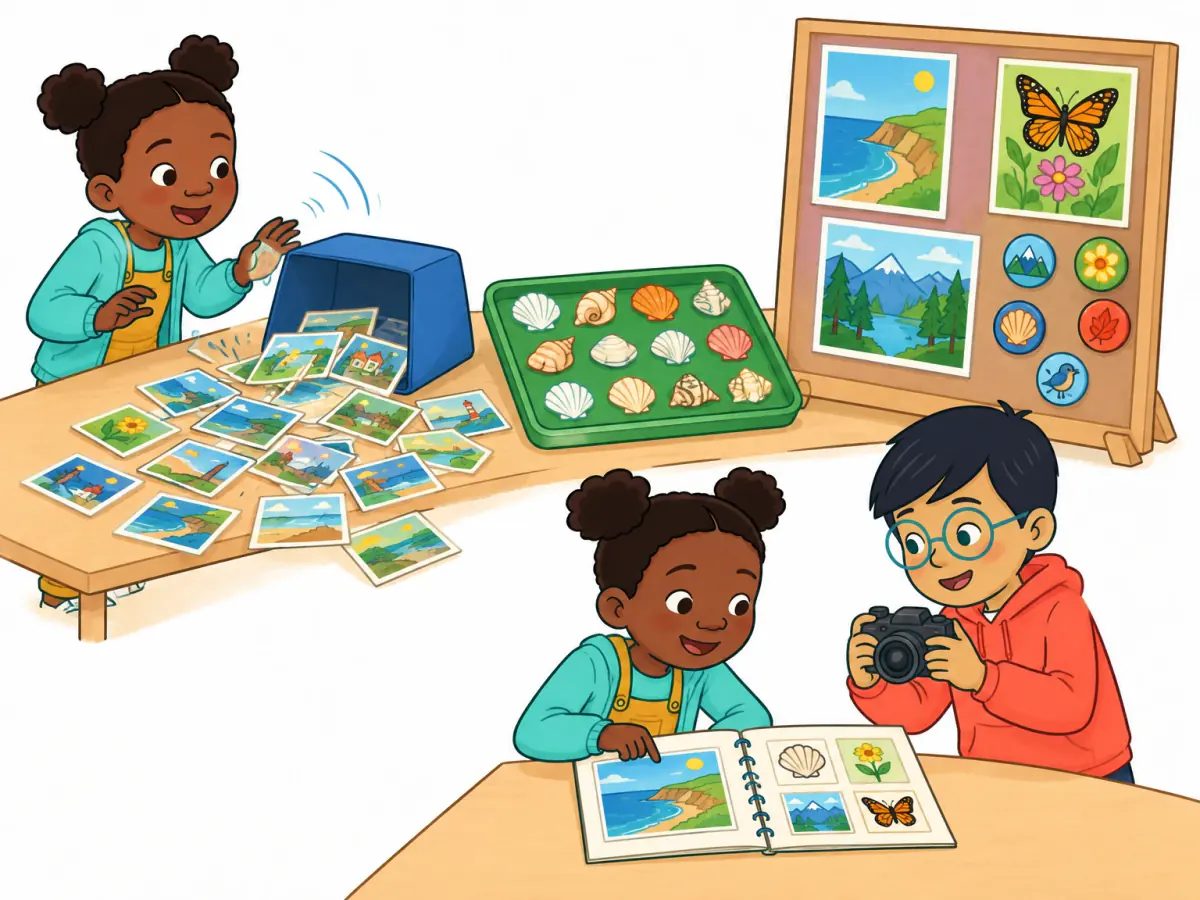
At a class collection fair, postcards spill from a blue box while shells stay on a green tray; posters and badges are displayed as two children make a picture guide.

A1レベル(7~10歳)の子どもが、Can I、can we、can heで英語で許可をもらい、your、our、theirで持ち主を言い、コレクションについて短い文を書けるようにしましょう。

英語で許可をもらうとき、子どもは“Can I”のあとに動詞を続けます:“Can I use your camera?” 短い答えは“Yes, you can.”または“No, you can’t.”です。持ち主を言うときはyour、our、theirを使い(“This is our computer.”)、持ち主をたずねるときは“Whose…?”を使います。このテーマはA2へ向かうA1レベルで、英語で20まで数えられ、簡単な文が言える7~10歳くらいの子どもに向いています。

この記事が向いている人

  • 英語で20まで数えられ、“I like comics.”のような簡単な文が言える子どもの保護者。
  • 家に集めるのが好きな子がいる家庭:シール、貝がら、カード、おもちゃの車があれば、実際に数えて、ラベルをつけて、見せることができます。
  • 家で練習したい保護者:箱とトレーと小さな物がいくつかあれば十分です。下の会話ではすべての文の音声が聞けます。
  • まだ早い場合:できることを言う“can”と“can’t”をまだ使えないなら、下にリンクした公園でできることの記事(A1)から始めましょう。
  • 簡単すぎる場合:許可のたずね方やyour、our、theirをもう自然に使えるなら、下にリンクした-ingの言葉で書く海辺の絵はがきの記事(A1)へ進みましょう。

サンプルページを開く

サンプルページを開く

単語カード

stickersstickers
postersposters
comicscomics
postcardspostcards
badgesbadges
shellsshells
Can I use your camera?

Yes, you can. / No, you can’t.

Can we turn on our TV?

Yes, you can.

Can he use their computer?

No, he can’t.

This is your camera.

belongs to you

This is our computer.

belongs to us

That is their CD player.

belongs to them

会話

Nia Our collection fair starts today. I have twenty postcards in this blue box.

Leo Great! I have twelve shells on the green tray.

Nia Can I use your camera to photograph our displays?

Leo Yes, you can, but please turn it off after the last photo.

Leo Whose badges are beside the posters?

Nia They are Mina’s badges.

文の形

Can I use your camera?

Yes, you can.

  • Can we turn on our TV? Yes, you can.
  • Can he use their computer? No, he can’t.
  • Please turn it off later.

追加の練習

Change the details

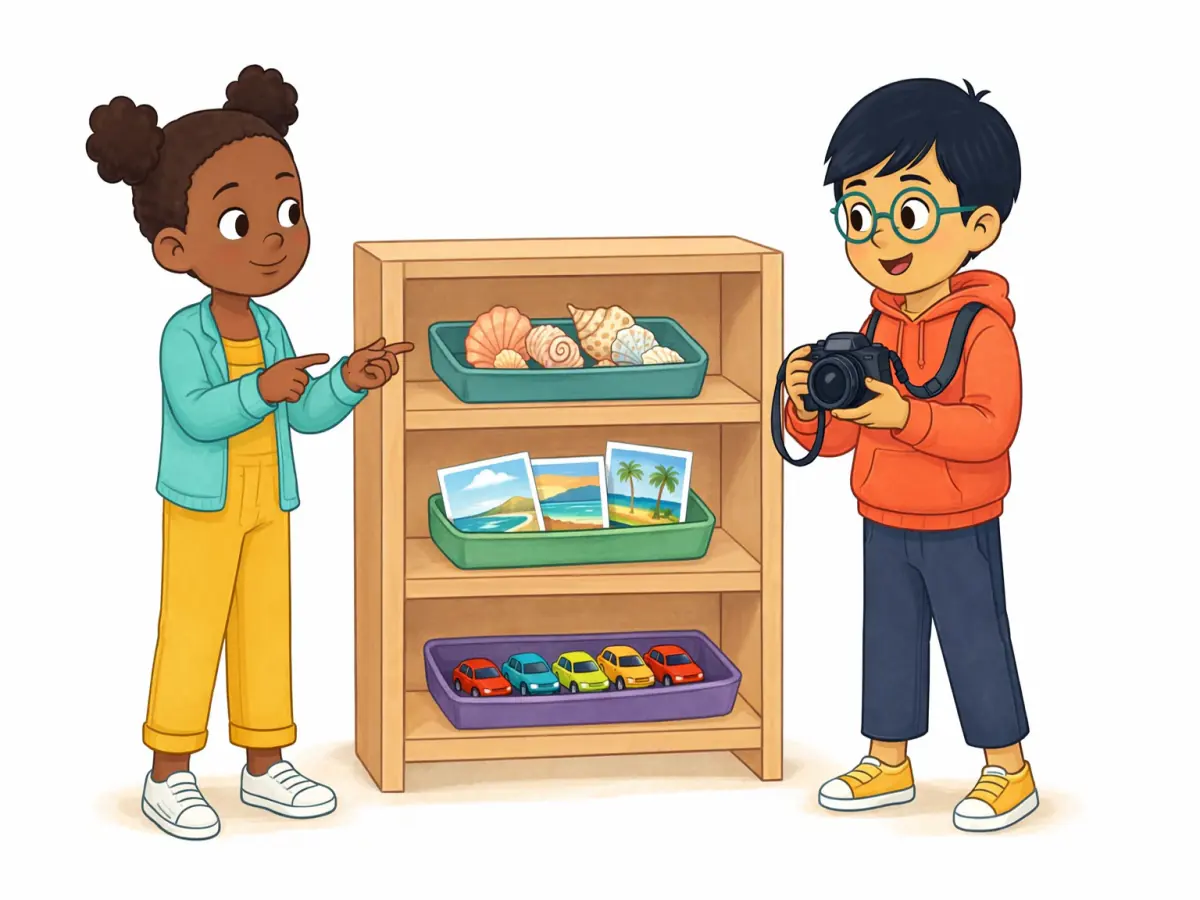
Nia asks to use Leo’s camera while Leo holds it. Three small collections of shells, postcards and toy cars sit in separate trays.
Can I …? · your camera

Can I use your camera?

Can we …? · our TV

Can we turn on our TV?

Can he …? · their computer

Can he use their computer?

your

Your camera belongs to you.

our

Our TV belongs to us.

their

Their computer belongs to them.

Nia Can I use your camera?

Leo Yes, you can.

Leo Can we turn on our TV?

Nia Yes, we can.

Nia Can he use their computer?

Leo No, he can't. It's their computer.

Can I use your camera?

Yes, you can.

  • Can we turn on our TV? Yes, you can.
  • Can he use their computer? No, he can’t.
  • Please turn it off later.

The Collection Fair Mix-Up

At a class collection fair, postcards spill from a blue box while shells stay on a green tray; posters and badges are displayed as Nia and Leo make a picture guide.

THE COLLECTION FAIR MIX-UP

Nia and Leo are preparing a class collection fair. Nia puts twenty postcards in a blue box, and Leo arranges twelve shells on a green tray. Mina hangs her posters and places her badges beside them. The wind from the open window blows the postcards across the table. The children close the window, pick up the postcards, sort every collection, and use Leo’s camera to make a picture guide. At the end, Nia asks, “Can I turn off your camera?” Leo smiles and says, “Yes, you can.” Their careful guide helps every owner find the right collection.

Writer’s notebook

Nia asks to use Leo’s camera while Leo holds it. Three small collections of shells, postcards and toy cars sit in separate trays.

Leo What will you write about?

Nia Our collection.

Leo What is in our collection?

Nia Badges, stickers and comics.

Leo Can I add a shell?

Nia Yes, you can!

What is in your collection?

Our collection has badges, stickers and comics. We have twenty badges, ten stickers and five comics. Can I add a shell? Yes, you can.

  • question mark: Can I add a shell?
  • commas: badges, stickers and comics
  • full stop: We have five comics.
この単元を学ぶ
どの方法で学びますか?

子どもが集めるものの言葉

子どもがよく集めるものを6つ覚えましょう:stickers(シール)、posters(ポスター)、comics(まんが)、postcards(絵はがき)、badges(バッジ)、shells(貝がら)。英語では2つ以上なら、数のあとでも“s”をつけます:“twelve shells”、“twenty postcards”。日本語は「絵はがき20枚」のように数のあとで形が変わらないので、子どもは“twenty postcard”と言いがちです。“badges”は最後に音が1つ増えて「バッジズ」のように聞こえます。場所の言葉も3つ使います:箱の中は“in”、トレーの上や壁にあるときは“on”、ほかの物のとなりは“beside”です。

  • “What do you collect?” “I collect stickers.”
  • “My posters are on the wall.”

許可をもらう:“Can I use your camera?”

“Can I”のあとに動詞を続けます。「カメラ使ってもいい?」にあたる言い方です。日本語では「あなたの」を言わないことが多いですが、英語ではふつう“your camera”のように名詞の前に持ち主の言葉を入れます。短い答えでは動詞をくり返しません:“Yes, you can.”または“No, you can’t.” “please”をつけるとよりていねいになります。“to”で理由を加えることもでき、許可する人は“but please…”で条件をつけられます。

Nia Can I use your camera to photograph our displays?

Leo Yes, you can, but please turn it off after the last photo.

Can I、can we、can he:質問と短い答え

“can”が最初、次に人、そのあとに動詞です。“can”は形が変わらず、あとの動詞には“to”も“s”もつきません。答えは話す人によって変わります:子どもたちが“Can we turn on our TV?”とたずねたら、保護者は“Yes, you can.”、同じグループの友だちなら“Yes, we can.”と答えます。

  • “Can I use your camera?” “Yes, you can.”
  • “Can we turn on our TV?” “Yes, you can.”
  • “Can he use their computer?” “No, he can’t.”

Your、our、their:だれの物かを言う

この3つの言葉は物の前に来て、持ち主を表します。“your camera”は話している相手の物、“our computer”は自分をふくむグループの物、“their CD player”はほかの人たちの物です。持ち主をたずねるときは“Whose…?”を使い、名前のあとには’sをつけます:“Mina’s badges”。

“their”、“there”、“they’re”は同じ音で、“whose”と“who’s”も同じ音です。書くときにつづりを確かめましょう。

Nia Our collection fair starts today. I have twenty postcards in this blue box.

Leo Great! I have twelve shells on the green tray.

Leo Whose badges are beside the posters?

Nia They are Mina’s badges.

Turn on、turn off:機器の言葉

許可をもらう場面は機器に関わることが多いので、computer、TV、DVD player、CD player、camera、MP3 playerも学びます。同じ文はタブレットにも使えます。名詞といっしょのとき、“on”や“off”は名詞の前にもあとにも置けます:“turn off the TV”、“turn the TV off”。“it”のときはいつもあとに置きます:“Please turn it off.”

  • “Can we turn the TV on?” “No, you can’t. It’s bedtime.”
自分に合った方法でこの単元を学ぶ

コレクション紹介を書く:質問1つと文3つ

次は、コレクションについて質問1つと文3つ以上を書いてみましょう。たとえば:“Our collection has badges, stickers and comics. We have twenty badges, ten stickers and five comics. Can I add a shell? Yes, you can.”

  • 質問はクエスチョンマーク、文はピリオドで終わります。
  • リストでは物と物の間にコンマを打ち、最後の物の前に“and”を入れます。
  • 文はいつも大文字で始めます。

家でのあそび:わが家のコレクション展

家にある小さなコレクションを2~3種類選びます。シール、貝がら、おもちゃの車など何でもかまいません。子どもが1つずつ数えて箱やトレーに入れ、紹介します:“I have twelve shells on the tray.”

展示の写真をとる前に、子どもに英語でカメラやスマートフォンを借りたいとたのんでもらいます。条件つきで許可したり、理由を言って断ったりしましょう。最後はなぞなぞでしめくくります:“It’s a big fish in the sea. Which word is it?” “Shark!”

よくある間違いと簡単な直し方

この段階では自然な間違いです。正しい文で言い直して続けましょう。

  • “Can I to use your camera?”:“can”のあとに“to”は入りません:“Can I use your camera?”
  • “Yes, you can use.”:“can”で止めます:“Yes, you can.”
  • “Can he uses their computer?”:“can”のあとの動詞に“s”はつきません:“Can he use their computer?”
  • “Can I use camera?”:持ち主の言葉を入れます:“Can I use your camera?”
  • “I have twenty postcard.”:数のあとにも“s”をつけます:“twenty postcards”。
  • “Turn off it.”:“Turn it off.”

次のステップ

許可をもらうのが簡単になったら、今していることを言ってみましょう:“We’re swimming.” そこから短い休みの絵はがきと、-ingの言葉のつづりへ進みます。

よくある質問

許可をもらうときは“Can I”と“May I”のどちら?

どちらも正しい言い方です。ふだんの会話では“Can I…?”がいちばんよく使われ、“May I…?”は少し改まった言い方です。どちらでも“please”をつけるとやわらかく聞こえます。

“their”、“there”、“they’re”の違いは?

“their”は持ち主を表します:“their computer”。“there”は場所です:“It’s over there.” “they’re”は“they are”の短い形です。音が同じなので、違いが大切なのは書くときだけです。

英語で“Can I…?”にはどう答える?

動詞を言わずに“can”をくり返して短く答えます:“Yes, you can.”または“No, you can’t.” “Sure.”とも言いますが、まずは短い答えを練習しましょう。

この単元を学ぶ
どの方法で学びますか?

次は何をしましょうか?

ライブの先生と学ぼう

Flalingoのキッズレッスンでは、お子さまがこのような単元をライブの先生とマンツーマンで、同じ画面のゲームを通して練習します。

無料体験レッスンを予約