
本文へ移動
Flalingo

英語の練習

IELTSアカデミック・リーディングのTrue, False, Not Given問題:FalseとNot Givenの見分け方

An evidence table with three distinct evidence tabs.

IELTSアカデミック・リーディングのTrue, False, Not Given問題の解き方。根拠の見つけ方、矛盾と情報なしの区別、語数制限、短い文章での練習をまとめました。

IELTSリーディングのTrue, False, Not Given問題では、設問の文(ステートメント)が本文とどういう関係にあるかを判断します。本文が同じことを述べていればTRUE、ステートメントと矛盾することを述べていればFALSE、どちらとも述べていなければNOT GIVENです。点を落としやすいのは後の二つの区別です。FALSEには本文にステートメントを否定する記述が必要で、NOT GIVENは判断に必要な情報がそもそも本文にないことを意味します。根拠を探し、ステートメントのすべての部分を確かめ、一般常識で答えないことが大切です。このガイドは、中上級(B2)以上の英語力があるIELTSアカデミックの受験者向けです。

この記事が向いている人

  • 本文は理解できるのに、FalseとNot Givenの間で点を落とし続けている人。
  • 該当する段落を探すのに手間取り、時間が足りなくなる人。
  • もっともらしい答えや、テーマについての知識で答えてしまう人。
  • まだ早い場合:IELTSで正確な根拠を探すことにまだ慣れていないなら、同じ習慣を養うリスニングの「2つ選ぶ」問題から始めましょう(下のリンク)。
  • 簡単すぎる場合:この問題形式がすでに安定しているなら、筆者の見解を問うYes, No, Not Given問題に進みましょう(下のリンク)。

サンプルページを開く

サンプルページを開く

単語カード

True

the statement agrees with information in the text

Text: access improved after the move. Statement: The move improved access.

False

the statement contradicts information in the text

Text: sewing machines were booked most. Statement: Drills were booked most.

Not Given

the text does not establish the statement either way

Text gives a three-day loan but no renewal count.

文の形

historically significant (adverb + adjective)

an adverb modifies an adjective in a conventional partnership

The recovered notebook was historically significant.

a detailed record (adjective + noun)

an adjective combines conventionally with a noun

The archive preserves a detailed record of the invention.

storage box (noun + noun)

one noun modifies another noun

The research team opened the storage box.

追加の練習

Three evidence states

The Westbridge Repair Library began lending tools in 2019. Its founders expected most members to borrow drills and saws, but sewing machines became the most frequently booked items during the first winter. In 2021, the library moved from a basement to a street-level room, which improved wheelchair access.

Members may reserve an item for three days. Volunteers inspect returned tools every evening, and a qualified technician checks electrical items each Friday. Since 2023, damaged equipment has been sent to a partner workshop rather than repaired in the library.

A survey found that members valued practical advice more than low fees. It recorded strong support for weekend opening, but the trustees have not announced whether Sunday hours will be introduced.

Choose True, False or Not Given

The Westbridge Repair Library began lending tools in 2019. Its founders expected most members to borrow drills and saws, but sewing machines became the most frequently booked items during the first winter. In 2021, the library moved from a basement to a street-level room, which improved wheelchair access.

Members may reserve an item for three days. Volunteers inspect returned tools every evening, and a qualified technician checks electrical items each Friday. Since 2023, damaged equipment has been sent to a partner workshop rather than repaired in the library.

A survey found that members valued practical advice more than low fees. It recorded strong support for weekend opening, but the trustees have not announced whether Sunday hours will be introduced.

  1. Sewing machines were the most frequently booked items in the first winter.

    答えと解説を見る

    True

    The first paragraph states this directly.

  2. Returned electrical tools are checked by a technician every evening.

    答えと解説を見る

    False

    Volunteers inspect returns every evening, but the technician checks electrical items on Fridays.

  3. Members can renew a reservation twice.

    答えと解説を見る

    Not Given

    The passage gives a loan duration but no renewal count.

  4. The trustees have confirmed Sunday opening.

    答えと解説を見る

    False

    The text explicitly says no Sunday decision has been announced.

Defend the evidence state

An evidence table with three distinct evidence tabs.

The Westbridge Repair Library began lending tools in 2019. Its founders expected most members to borrow drills and saws, but sewing machines became the most frequently booked items during the first winter. In 2021, the library moved from a basement to a street-level room, which improved wheelchair access.

Members may reserve an item for three days. The text does not state how many times a reservation can be renewed. Volunteers inspect returned tools every evening, and a qualified technician checks electrical items each Friday. Since 2023, damaged equipment has been sent to a partner workshop rather than repaired in the library.

A survey found that members valued practical advice more than low fees. It recorded strong support for weekend opening, but the trustees have not announced whether Sunday hours will be introduced.

Three-state frame

  • True — matching text evidence
  • False — contradicting text evidence
  • Not Given — information absent

Possible topics

  • popular equipment
  • access
  • loan length
  • renewals
  • inspection
  • Sunday hours

Read for evidence boundaries

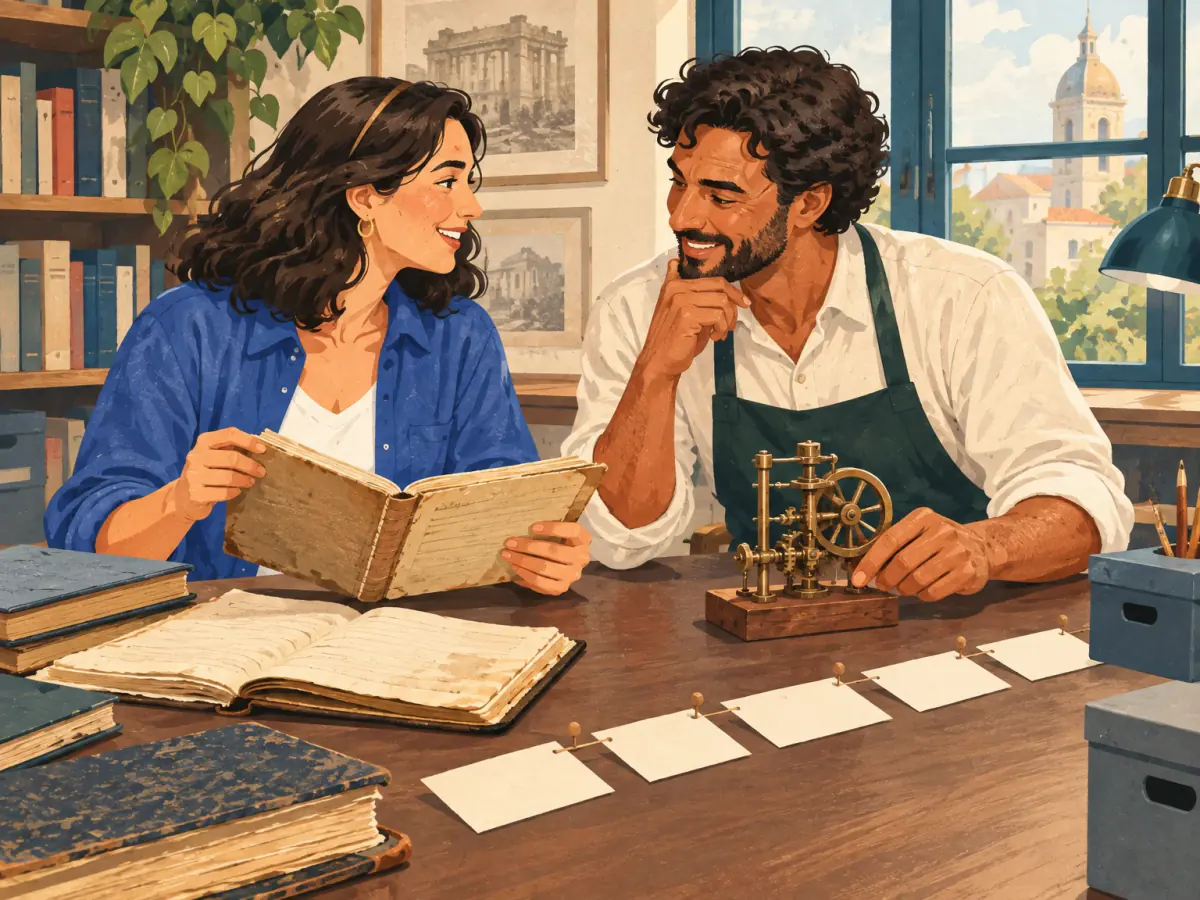
Two adults compare archive evidence and a mechanical model.

In 2018, volunteers at the Harbour Archive opened an unlabelled wooden case donated by a retired engineer. Inside they found a compact tide calculator, three notebooks and a receipt dated 1964. The calculator used rotating metal discs to estimate safe departure times for small boats. An inventory from 1972 mentioned a similar device, but its dimensions were larger and its maker was listed as unknown.

Engineer Lila Morgan signed two of the newly found notebooks. Entries show that she tested the compact calculator between March and July 1963, one year before the receipt. A newspaper profile from 1965 praised Morgan's harbour research but did not mention the device. The archive therefore attributes the compact model to Morgan with moderate confidence. It does not claim that she invented every tide calculator or that the 1972 device was hers.

After conservation, the compact calculator went on display in 2020. A digital replica was added in 2022 so visitors could explore the mechanism without touching the original.

Locate through anchors and paraphrase

Anchor → evidence

  • 2018 → case opened
  • 1963 → Morgan tested compact calculator
  • 1964 → receipt date
  • 2020 → displayed
  • 2022 → digital replica added

Paraphrase links

  • donated → given
  • attributes to → identifies probable maker
  • moderate confidence → supported but not certain
  • replica → copy

Choose only what the text establishes

In 2018, volunteers at the Harbour Archive opened an unlabelled wooden case donated by a retired engineer. Inside they found a compact tide calculator, three notebooks and a receipt dated 1964. The calculator used rotating metal discs to estimate safe departure times for small boats. An inventory from 1972 mentioned a similar device, but its dimensions were larger and its maker was listed as unknown.

Engineer Lila Morgan signed two of the newly found notebooks. Entries show that she tested the compact calculator between March and July 1963, one year before the receipt. A newspaper profile from 1965 praised Morgan's harbour research but did not mention the device. The archive therefore attributes the compact model to Morgan with moderate confidence. It does not claim that she invented every tide calculator or that the 1972 device was hers.

After conservation, the compact calculator went on display in 2020. A digital replica was added in 2022 so visitors could explore the mechanism without touching the original.

  1. What was inside the donated case?

    答えと解説を見る

    a compact tide calculator and three notebooks

    The first paragraph lists the compact calculator and three notebooks.

  2. Why is Morgan linked to the compact model?

    答えと解説を見る

    she signed notebooks describing tests of it

    Her signed notebooks record tests of the compact calculator.

  3. What does the archive avoid claiming?

    答えと解説を見る

    that Morgan invented every tide calculator

    The passage explicitly limits the attribution.

Brief a new curator

Two adults compare archive evidence and a mechanical model.

In 2018, volunteers at the Harbour Archive opened an unlabelled wooden case donated by a retired engineer. Inside they found a compact tide calculator, three notebooks and a receipt dated 1964. The calculator used rotating metal discs to estimate safe departure times for small boats. An list from 1972 mentioned a similar device, but its dimensions were larger and its maker was listed as unknown.

Engineer Lila Morgan signed two of the newly found notebooks. Entries show that she tested the compact calculator between March and July 1963, one year before the receipt. A newspaper profile from 1965 praised Morgan's harbour research but did not mention the device. The archive therefore attributes the compact model to Morgan with moderate confidence. It does not claim that she invented every tide calculator or that the 1972 device was hers.

After conservation, the compact calculator went on display in 2020. A digital replica was added in 2022 so visitors could explore the mechanism without touching the original.

Evidence briefing frame

  • Object/date: ___
  • Direct evidence: ___
  • Cautious inference: ___
  • Not established: ___

Required language

  • the record states
  • this suggests
  • with moderate confidence
  • the text does not establish

Read the process before the blanks

The City Sound Archive receives donated recordings in four stages. First, a coordinator records the donor's name and the number of files. Next, a technician creates a protected copy before opening any original file. The team then checks sound quality and adds a short description. Finally, recordings with clear permission are released to the public catalogue; restricted recordings enter secure storage.

During a 202-file pilot, 140 recordings entered the public catalogue, 30 entered secure storage and 12 were returned because permission was unclear. The remaining 20 recordings were still awaiting review. Each protected copy used the same file name plus a date code.

Predict form from rows and units

Process notes — NO MORE THAN TWO WORDS

  • 1 record donor name and number of ___
  • 2 create a protected ___
  • 3 check sound quality and add a ___
  • 4 clear permission → public catalogue
  • 4 restricted → secure ___

Pilot table — A NUMBER

  • total files: ___
  • public catalogue: ___
  • secure storage: ___
  • returned: ___
  • awaiting review: ___

Complete within the visible limits

The City Sound Archive receives donated recordings in four stages. First, a coordinator records the donor's name and the number of files. Next, a technician creates a protected copy before opening any original file. The team then checks sound quality and adds a short description. Finally, recordings with clear permission are released to the public catalogue; restricted recordings enter secure storage.

During a 202-file pilot, 140 recordings entered the public catalogue, 30 entered secure storage and 12 were returned because permission was unclear. The remaining 20 recordings were still awaiting review. Each protected copy used the same file name plus a date code.

  1. record donor name and number of ___

    答えと解説を見る

    files

    The passage says the coordinator records the number of files.

  2. create a protected ___

    答えと解説を見る

    copy

    The exact process noun is protected copy.

  3. restricted recordings enter secure ___

    答えと解説を見る

    storage

    The final branch sends restricted recordings to secure storage.

  4. How many recordings entered secure storage?

    答えと解説を見る

    30

    The pilot data assigns 30 recordings to secure storage.

Read for concise answer spans

A neighbourhood roof project tested three surface materials during July. White mineral tiles produced the lowest midday temperature, while untreated metal produced the highest. Recycled rubber panels reduced indoor heat but became softer after repeated rain. The team selected mineral tiles for the community clinic because they stayed cool and required little maintenance. Rubber panels will be tested again on a storage building, where surface softness presents less risk. The report does not recommend untreated metal for either site.

Obey the visible word limit

Write NO MORE THAN THREE WORDS

  • Which material was coolest? ___
  • Where will rubber be retested? ___
  • What happened to rubber after rain? ___
  • Which site receives mineral tiles? ___

Form clues

  • Which material → material noun phrase
  • Where → place noun phrase
  • What happened → verb/adjective phrase
  • Which site → site noun phrase

Choose the concise answer from the passage

A neighbourhood roof project tested three surface materials during July. White mineral tiles produced the lowest midday temperature, while untreated metal produced the highest. Recycled rubber panels reduced indoor heat but became softer after repeated rain. The team selected mineral tiles for the community clinic because they stayed cool and required little maintenance. Rubber panels will be tested again on a storage building, where surface softness presents less risk. The report does not recommend untreated metal for either site.

  1. Which material produced the lowest midday temperature?

    答えと解説を見る

    white mineral tiles

    White mineral tiles is the exact three-word phrase from the passage.

  2. Where will rubber panels be tested again?

    答えと解説を見る

    a storage building

    A storage building is the stated future test site and fits the limit.

  3. What did rubber panels become after repeated rain?

    答えと解説を見る

    softer

    The passage states that the panels became softer.

  4. Which site will receive mineral tiles?

    答えと解説を見る

    the community clinic

    The team selected mineral tiles for the community clinic.

Write and check four short answers

Two adults compare archive evidence and a mechanical model.

A neighbourhood roof project tested three surface materials during July. White mineral tiles produced the lowest midday temperature, while untreated metal produced the highest. Recycled rubber panels reduced indoor heat but became softer after repeated rain. The team selected mineral tiles for the community clinic because they stayed cool and required little maintenance. Rubber panels will be tested again on a storage building, where surface softness presents less risk. The report does not recommend untreated metal for either site.

NO MORE THAN THREE WORDS

  • coolest material: ___
  • rubber retest place: ___
  • rain effect: ___
  • tile site: ___

Audit

  • directly answers question
  • uses words from the passage
  • within three words
  • spelling and number correct

Collocation Forms: second set

reach a conclusion (verb + noun)

a verb and noun commonly occur together

Researchers reached a conclusion after comparing the dates.

insight into (noun + preposition)

a content word selects a conventional dependent preposition

The curator gave visitors insight into the design.

Collocation Forms: transfer

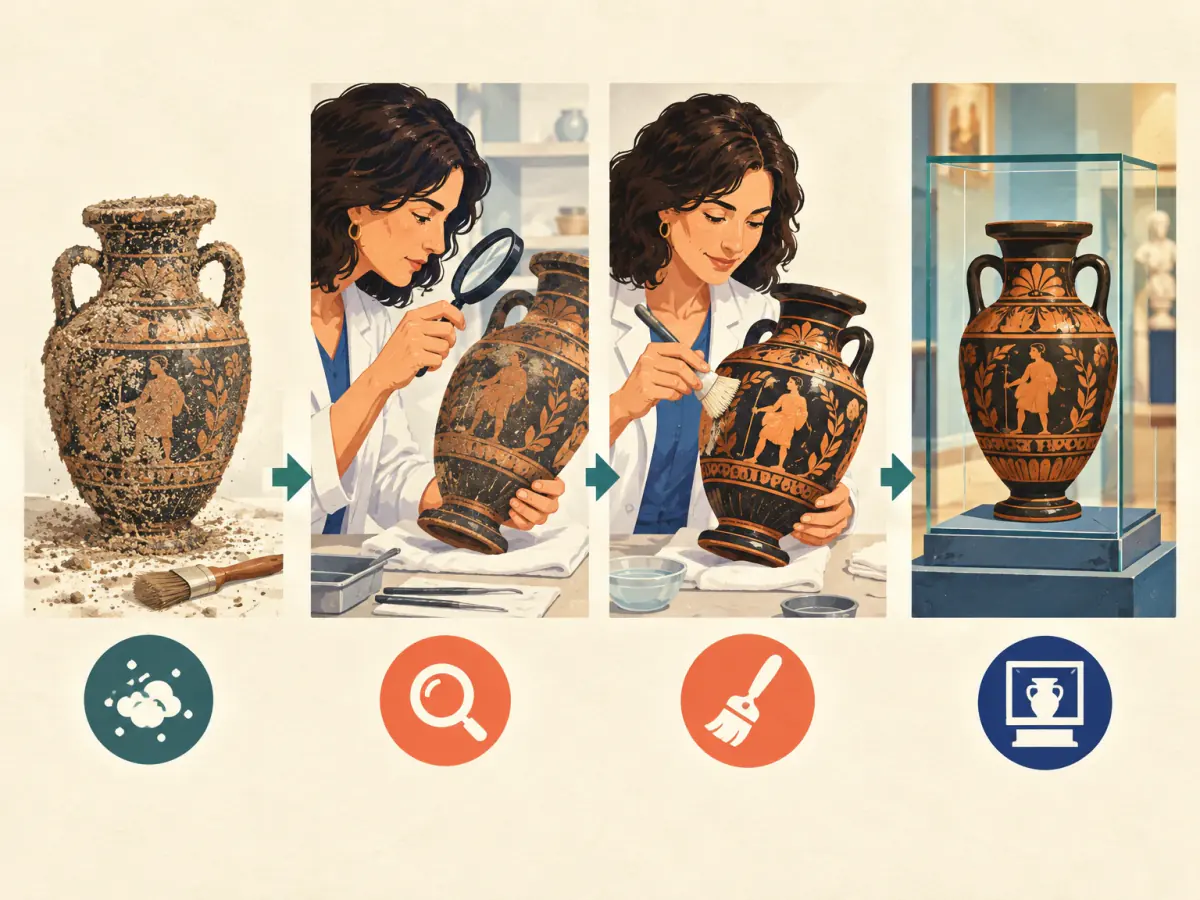
A four-stage restoration process from inspection to display.

Reference A

  • historically significant (adverb + adjective) — an adverb modifies an adjective in a conventional partnership
  • a detailed record (adjective + noun) — an adjective combines conventionally with a noun
  • storage box (noun + noun) — one noun modifies another noun

Reference B

  • reach a conclusion (verb + noun) — a verb and noun commonly occur together
  • insight into (noun + preposition) — a content word selects a conventional dependent preposition
この単元を学ぶ
どの方法で学びますか?
アカウントをお持ちですか?

無料アカウントで1つの単元をずっと開いておけます。

True, False, Not Given問題のしくみ

IELTSアカデミック・リーディングは長文3つ、40問、60分で、紙の試験でも解答用紙に書き写すための追加時間はありません。

指示文はこう問いかけます:“Do the following statements agree with the information given in Reading Passage 1?” ステートメントは本文の順序に沿って並び、答えは次の三つのうちの一つです。

  • TRUE:ステートメントが本文の情報と一致する。
  • FALSE:ステートメントが本文の情報と矛盾する。
  • NOT GIVEN:これについての情報がない。

まず場所を探す:手がかりの語と言い換え

言い換えにくい語を探しましょう。人名、日付、数字、専門用語です。見つけたら、その文全体と次の文まで読みます。決め手になる情報は、手がかりの語から数語離れたところにあることがよくあります。

ある資料館についての練習用の文章では、1963年と1964年という日付が、計算器の試験と領収書へと導きます。日付はどこを見るべきかを教えてくれますが、答えそのものではありません。ステートメントはたいてい本文を言い換えています。

  • “donated”は“given”に言い換えられます。
  • “attributes the model to her”は“identifies her as the probable maker”に言い換えられます。
  • “with moderate confidence”は“supported but not certain”に言い換えられます。

FalseかNot Givenか:矛盾か、沈黙か

二つの質問を順番に考えましょう。本文はまさにこの点について何か述べているか。述べていなければ答えはNOT GIVENです。述べているなら、ステートメントと一致するか、矛盾するか。一致すればTRUE、矛盾すればFALSEです。現実には正しい内容でも、NOT GIVENになることがあります。

このページのカードには、それぞれの例文の音声があります。

  • TRUE:“Text: access improved after the move. Statement: The move improved access.”
  • FALSE:“Text: sewing machines were booked most. Statement: Drills were booked most.” 最も多く予約された物は一つしかありません。
  • NOT GIVEN:“Text gives a three-day loan but no renewal count.” 延長についてのステートメントは確かめられません。

解いてみよう:工具ライブラリー

工具を貸し出す地域の工具ライブラリーについての練習用の文章から一部を読み、判断してください。

  • “Members may reserve an item for three days. Volunteers inspect returned tools every evening, and a qualified technician checks electrical items each Friday.”
ステートメント:“Returned electrical tools are checked by a technician every evening.”

答えを決める小さな語

主張の範囲を、主張そのものと同じくらい丁寧に読みましょう。“expected”は“happened”ではなく、“may”は“will”ではありません。資料館の文章は、計算器をある技術者の作としながら、その確信の度合いを“with moderate confidence”と述べ、さらに“does not claim that she invented every tide calculator”としています。そのため“The archive is certain who made it.”はFALSE、“She invented the first tide calculator.”はNOT GIVENです。

工具ライブラリーの文章に戻ると:

  • “Sewing machines were the most frequently booked items in the first winter.” TRUE。創設者たちはドリルとのこぎりを予想していましたが、結果は違いました。
  • “Members can renew a reservation twice.” NOT GIVEN。3日間という期間は書かれていますが、延長については書かれていません。
  • “The trustees have confirmed Sunday opening.” FALSE。本文によれば、理事会は“have not announced whether Sunday hours will be introduced”という状態です。
自分に合った方法でこの単元を学ぶ

空所補充と短答問題の語数制限

メモ、表、短答の問題も出題されます。答えは本文から取り、“NO MORE THAN TWO WORDS”や“A NUMBER”などの指示文の制限を守ります。制限を超えた答えや、つづりの間違った答えは不正解です。

空所に入る形を予測しましょう。“create a protected ___”なら、本文に“a technician creates a protected copy”とあるので“copy”と書きます。制限が“NO MORE THAN THREE WORDS”のとき、“Where will rubber panels be tested again?”の答えは“a storage building”で、3語です。“a”も1語に数えるからです。日本語には冠詞がないため、“a”や“the”も語数に入ることを忘れがちです。

点を落とす間違い

間違えた問題ごとに、次の原因のどれかを書き込みましょう。

  • 本文に記述がないという理由でFALSEを選ぶ。
  • 一般常識や、ありそうだと感じることで答える。
  • キーワードを一つ照合しただけで、人物、時間、数字を見落とす。
  • “expected”、“most”、“may”のような範囲を限定する語を見落とす。
  • TRUE, FALSE, NOT GIVEN問題にYESやNOと書く。不正解になることがあります。

25分の試験対策ルーティン

週に3~4回、練習用の文章一つで取り組みます。

  • 文章と設問に20分をかけます。
  • 答える前に、手がかりの語と決め手になる語に下線を引きます。
  • 解答で確認します。NOT GIVENごとに欠けている情報を、FALSEごとに矛盾する語句を書き出します。
  • TRUE, FALSE, NOT GIVENのステートメントを自分で一つずつ作り、それぞれ声に出して説明します。
  • “historically significant”, “a detailed record”, “reach a conclusion”, “insight into”のようなアカデミックなコロケーションを書き留めます。

次のステップ

次は、この根拠の確かめ方を、筆者の見解を問うYes, No, Not Given問題に応用しましょう。その後、正確な表現が同じくらい重要な特徴の照合問題と要約完成問題を練習しましょう。

よくある質問

IELTSリーディングのFalseとNot Givenの違いは何ですか?

FALSEは本文がステートメントと矛盾していること、NOT GIVENはステートメントを確かめるのに必要な情報が本文にないことです。

True, False, Not Given問題の答えは本文の順番どおりに出てきますか?

はい。一つ答えが見つかったら、次の答えはその先で探しましょう。

True, False, Not GivenとYes, No, Not Givenはどう違いますか?

前者は事実の情報を、後者は筆者の見解や主張を問います。指示文にある語で答えましょう。

FlalingoはIELTSを運営する団体と提携しておらず、それらの団体から推奨や承認を受けていません。

この単元を学ぶ
どの方法で学びますか?
アカウントをお持ちですか?

無料アカウントで1つの単元をずっと開いておけます。

次は何をしましょうか?

Flaiで練習を続けよう

Flaiは、音声会話、訂正内容、レッスンレポートでスピーキング練習を支えるFlalingoのAIアプリです。

ライブの先生と学ぶ

Flalingoのレッスンでは、このような単元をライブの先生とマンツーマンで練習します。