Ir al contenido
Flalingo

Práctica de inglés

B1 Preliminary Speaking Part 3: cómo comentar ideas ecológicas con tu compañero y decidir juntos

Two friends take part in an online discussion with three other friends.

Cómo hacer la conversación en pareja de B1 Preliminary y B1 Preliminary for Schools: frases para proponer, estar de acuerdo, discrepar con educación y decidir, frases con if para dar razones, vocabulario del medio ambiente, errores típicos y una rutina de práctica.

En la Parte 3 de Speaking de B1 Preliminary, el examinador describe una situación y te da, a ti y a tu compañero, unos dibujos con distintas ideas. Tienes que comentar las ideas con tu compañero y decir cuál sería la mejor. No hay una respuesta correcta: los examinadores escuchan cómo conversas con tu compañero y cómo es tu inglés. Así que comenta varias ideas, da una razón para cada una, pregunta a tu compañero qué piensa y, al final, llega con él a una decisión clara. La tarea es la misma en B1 Preliminary for Schools. Esta guía es para estudiantes de nivel intermedio (B1) de unos 12–16 años.

¿Para quién es este artículo?

  • Estudiantes que preparan B1 Preliminary o B1 Preliminary for Schools, de unos 12–16 años.
  • Sabes dar tu opinión, pero en una tarea en pareja hablas demasiado tiempo tú solo o solo dices “Yes, I agree.” y te quedas callado.
  • Para madres y padres: puedes hacer de compañero en casa. Elige dos planes para el fin de semana y pide a tu hijo o hija que proponga uno en inglés, dé una razón y te pregunte qué piensas. No hace falta un inglés perfecto.
  • Demasiado pronto: si mantener una conversación corta con un compañero a partir de unos dibujos todavía te cuesta, empieza por la tarea en pareja de A2 Key (enlace abajo).
  • Demasiado fácil: si ya comentas varias ideas y decides con tu compañero sin pausas largas, practica cómo defender una opinión por escrito en un artículo de la Parte 2 de Writing o pasa a las normas para la semana de exámenes (enlaces abajo).

Abrir las páginas de muestra

Abrir las páginas de muestra

Tarjetas de vocabulario

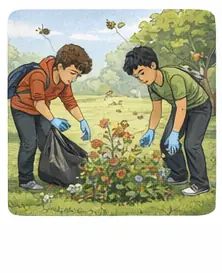
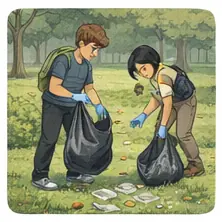
litter-picking daylitter-picking day

everyone picks up litter in the park for one afternoon

A litter-picking day is easy to organise.

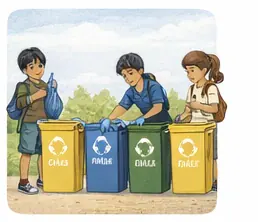
recycling competitionrecycling competition

classes compete to recycle the most bottles and paper

The class that recycles the most wins a prize.

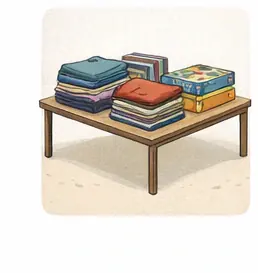
second-hand salesecond-hand sale

people sell old clothes and games instead of throwing them away

At the second-hand sale, Amara bought a jacket for two pounds.

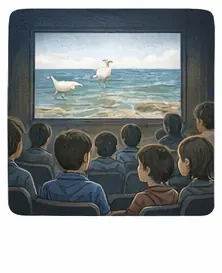
nature film nightnature film night

the school shows a film about animals and the natural world

At the nature film night, we learned about sea birds.

flowers for beesflowers for bees

students plant flowers that bees like around the school

If we plant flowers for bees, more bees will come to the school garden.

Conversación

Hana So, we need one idea for the school green week. Why don't we have a bike-to-school day?

Theo That's a great idea. I cycle every day anyway! But what about students who live far away?

Hana Good point. They could come by public transport instead.

Theo How about a no-plastic lunch day, too? Everyone brings food in boxes, not plastic bags.

Hana I'm not sure about that. Some families might not have boxes.

Theo I see what you mean. What do you think about the bike day, then?

Hana I think it's the best one, because everyone can take part.

Theo OK, so we both agree. The bike-to-school day it is!

Estructura de la frase

The Green Team wants more young people in Kingsbay to help the environment. Here are some ideas. Talk together about the different ideas and say which one would be the best.

Why don't we start with the recycling competition? If classes compete, lots of students will take part. What do you think?

Talk about each idea, give reasons, ask for your partner's opinion and decide together at the end.

  • Why don't we…?
  • What do you think?
  • I'm not sure about that.
  • If we…, more people will…
  • So, we both agree.

Más práctica

What will happen if…?

Theo and Amara take part in an online discussion with Hana, Deniz and Lucas.

Hana Welcome to our debate. The question is: can young people really change anything?

Deniz If we only clean beaches, the plastic will come back next week.

Lucas Maybe. But unless someone starts, nothing will change.

Amara People might listen to us if we share our videos. Climate change is a big problem, but small actions may help.

Theo I agree. If more people take public transport, there will be less pollution.

Hana So, will we save the whole planet? Probably not. But we'll definitely change our four schools.

What will happen if we don't pick up the plastic?

If we don't pick it up, it will end up in the sea.

Use the present simple after 'if' or 'unless', and will, might or may in the result.

  • if
  • unless
  • will
  • won't
  • might
  • may
  • definitely
  • probably
  • perhaps

First conditional

  • If + present simple, will / won't + verb
  • If we only clean beaches, the plastic will come back.
  • The result can come first: The plastic will come back if we only clean beaches.

unless = if … not

  • Unless someone starts, nothing will change.
  • = If someone doesn't start, nothing will change.

How sure are you?

  • will definitely / definitely won't = very sure
  • will probably / probably won't = fairly sure
  • might / may / perhaps = not sure

Useful phrases

How did it go?

Your discussion

  • Did you ask for your partner's opinion?
  • Did you give reasons?
  • Did you decide together at the end?
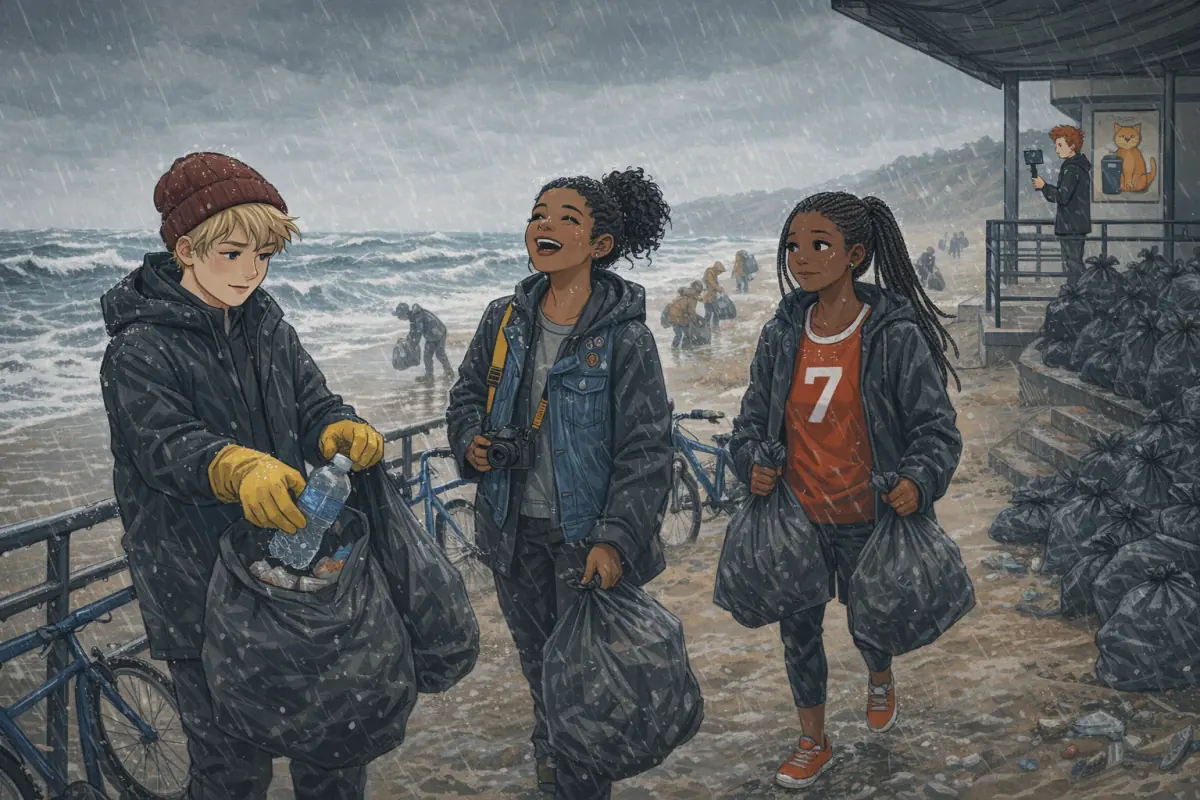
  1. The Green Team picks up litter on Kingsbay beach in heavy rain while Max Carter films them; a poster of Byline hangs by the café.

    Narrator On Saturday, the wind was freezing and the rain didn't stop. But twenty volunteers filled forty bags of rubbish on Kingsbay beach.

    Narrator In Curitiba, Lucas's team cleaned the river on the same day.

    Theo It isn't much, but small actions are a start.

    Narrator That evening, Amara checked her phone.

    Amara Look at this! Max Carter has posted a video of our clean-up, and he's put his own name on it!

Aprende esta unidad
¿Cómo quieres aprender?

Qué pasa en la Parte 3 de Speaking

Haces la prueba de Speaking con otro candidato, delante de dos examinadores. En la Parte 3 recibes una hoja con dibujos, comentas las ideas con tu compañero y decides con él o con ella cuál es la mejor. La Parte 4 continúa el mismo tema con preguntas para los dos.

Aquí tienes una tarea de práctica que hemos escrito nosotros: “Your school wants more young people to help the environment. Here are some ideas. Talk together about the different ideas and say which one would be best.”

  • “a litter-picking day”: recoger basura en un parque
  • “a recycling competition”: una competición entre clases para ver cuál recicla más
  • “a second-hand sale”: vender ropa y juegos viejos en lugar de tirarlos
  • “a nature film night”: una película sobre animales y naturaleza
  • “flowers for bees”: plantar alrededor del colegio flores que les gustan a las abejas

Seis movimientos para que la conversación no se pare

No necesitas ideas brillantes; necesitas repartir la conversación. Usa cada movimiento más de una vez:

  • Proponer: “Why don’t we have …?”, “How about a …?”
  • Dar una razón: “… because everyone can take part.”
  • Estar de acuerdo: “That’s a great idea.”, “Good point.”
  • Discrepar con educación y con una razón: “I’m not sure about that.”, “I see what you mean, but …”
  • Preguntar: “What do you think?”, “Which one do you prefer?”
  • Decidir: “So, we both agree.”, “In the end, the best idea is …”

Escucha: de la propuesta a la decisión

Dos estudiantes eligen una idea para la semana verde del colegio. Fíjate en cada movimiento, desde la primera propuesta hasta la decisión final. “The … it is!” es una forma cercana de confirmar una elección:

Estudiante 1 So, we need one idea for the school green week. Why don't we have a bike-to-school day?

Estudiante 2 That's a great idea. I cycle every day anyway! But what about students who live far away?

Estudiante 1 Good point. They could come by public transport instead.

Estudiante 2 How about a no-plastic lunch day, too? Everyone brings food in boxes, not plastic bags.

Estudiante 1 I'm not sure about that. Some families might not have boxes.

Estudiante 2 I see what you mean. What do you think about the bike day, then?

Estudiante 1 I think it's the best one, because everyone can take part.

Estudiante 2 OK, so we both agree. The bike-to-school day it is!

Da razones con if, unless y might

La forma más rápida de dar una razón es el first conditional: if + present simple y luego will + verbo. Will nunca va justo después de if, igual que en español dices “si plantamos flores, vendrán más abejas” y no “si plantaremos”. Usa might o may cuando estés menos seguro, y unless para decir “a menos que”.

  • “If we have a recycling competition, lots of students will take part.”
  • “If we plant flowers for bees, more bees will come to the school garden.”
  • “A film night might be boring for students who don’t like films.”
  • “Unless the school says yes, we can’t have the sale.” (A menos que el colegio diga que sí…)
Aprende esta unidad a tu manera

Palabras verdes para razones más fuertes

Aprende las palabras junto con las que suelen acompañarlas:

  • “pick up litter” (recoger basura), “reduce waste” (reducir residuos), “cause pollution” (causar contaminación)
  • “recycle bottles and paper”, “a recycling bin” (un contenedor de reciclaje)
  • “protect the beach”, “Plastic damages rivers.”
  • “volunteers” (voluntarios), “public transport” (transporte público), “second-hand clothes” (ropa de segunda mano)

Errores típicos y cómo corregirlos

Búscalos cuando practiques. Varios vienen de traducir del español palabra por palabra:

  • “If we will plant flowers, more bees will come.” → “If we plant flowers, …”
  • “I’m agree.” → “I agree.” Viene de “estoy de acuerdo”, pero agree es un verbo y no lleva am.
  • “I’m not agree.” → “I don’t agree.”
  • “Let’s discuss about the ideas.” → “Let’s discuss the ideas.” Viene de “discutir sobre”, pero discuss no lleva about.
  • “How about make a film night?” → “How about a film night?” o “How about having …?”
  • Solo “Yes, I agree.” → “I agree, because …” y luego una idea nueva.
  • Ninguna decisión al final → “So, our final decision is …”

Una rutina de práctica de 15 minutos

Dos veces por semana con un amigo o con tu madre o tu padre; grábalo si puedes:

  • 2 minutos: elige una situación (una excursión de clase, una semana verde) y escribe cinco ideas.
  • 4 minutos: conversación. Cada uno pregunta “What do you think?” al menos dos veces.
  • 1 minuto: decisión en voz alta: “So, our final decision is …”
  • 5 minutos: escucha la grabación, cuenta tus razones y tus preguntas y corrige una frase con if.
  • 3 minutos: responde a una pregunta como las de la Parte 4: “Do you think young people can help to protect the environment?”

Tu siguiente paso

En la Parte 4, da una opinión, una razón y un ejemplo. Cuando las conversaciones te resulten fáciles, prueba un artículo equilibrado de la Parte 2 de Writing o las normas con must y don’t have to (enlaces abajo).

Preguntas frecuentes

¿Tenemos que estar de acuerdo en la Parte 3 de Speaking de B1 Preliminary?

No. Puedes discrepar con educación, pero intenta llegar a una decisión con tu compañero. Si no es posible, dilo con claridad: “We don’t agree, but we both like …”

¿Qué hago si mi compañero habla demasiado o casi nada?

Hazle una pregunta: “What do you think about …?” Te evalúan por tu propio inglés, no por el de tu compañero.

¿La Parte 3 de Speaking es igual en B1 Preliminary for Schools?

Sí, el formato es el mismo; los temas están pensados para estudiantes de tu edad.

Flalingo no está afiliado a Cambridge English, entidad que ofrece A2 Key y B1 Preliminary, ni cuenta con su respaldo.

Aprende esta unidad
¿Cómo quieres aprender?

¿Qué viene después?

Clases individuales con un profesor en vivo

En Flalingo, los adolescentes trabajan unidades como esta en clases individuales con un profesor en vivo, a su propio ritmo.

Reserva una clase de prueba gratis