Ir al contenido
Flalingo

Práctica de inglés

Just, already y yet en inglés para niños (A2, 9–12 años): el present perfect para “¿Está lista la función?”

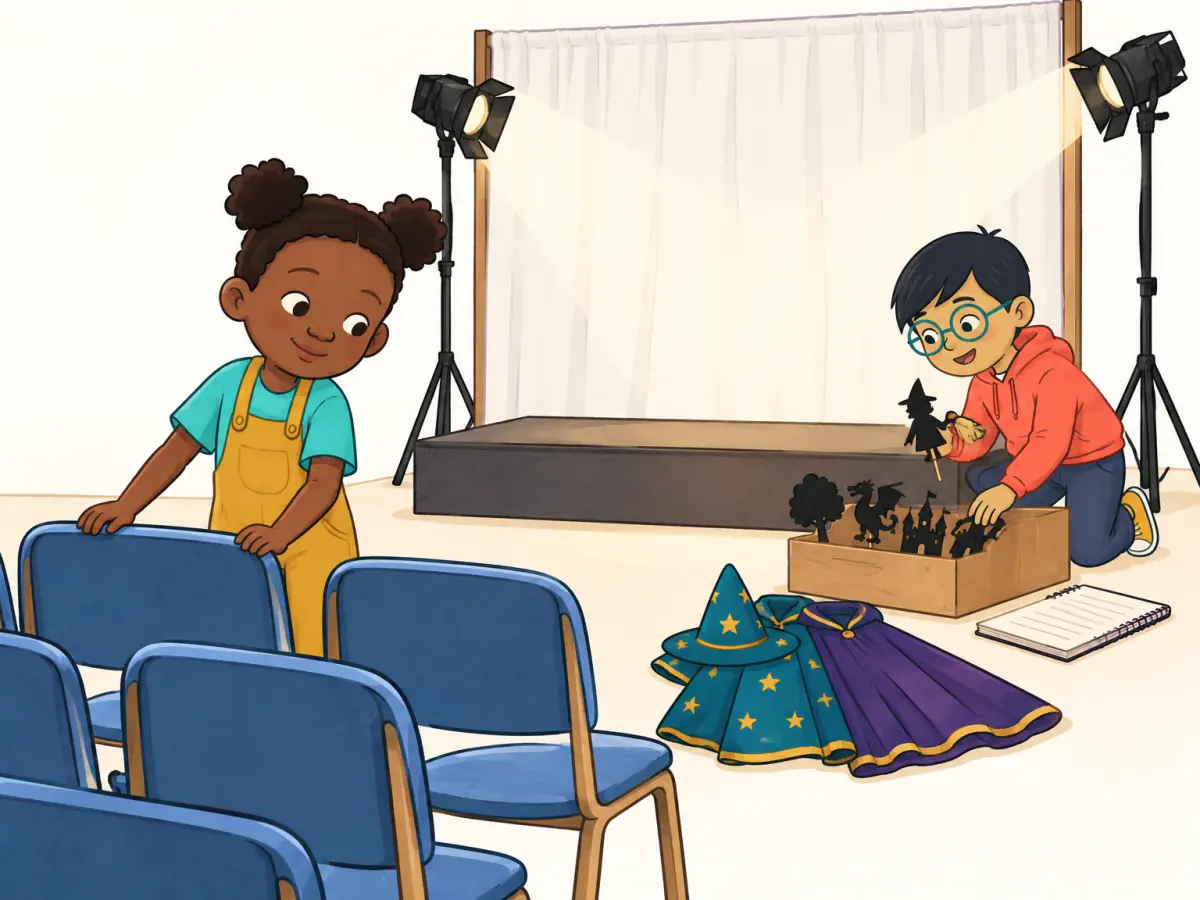
In a school shadow-theatre workshop, lights shine toward a white curtain. A script, two costumes and character cut-outs rest beside the empty stage while a child checks the audience seats.

Ayuda a tu peque de 9 a 12 años a usar just, already y yet en inglés (A2) mientras prepara una función, y a distinguir “We have just tested the lights.” de “I finished it yesterday.”

Para decir qué está listo y qué falta todavía, el inglés usa el present perfect: have o has más el participio pasado. “Just” significa hace un momento (“We have just tested the lights.”), “already” significa que algo ya está hecho, a menudo antes de lo esperado, y “yet” va al final de preguntas y negaciones sobre algo que todavía se espera (“Have you finished the script yet?”). Cuando dices cuándo pasó algo, se cambia al past simple: “I finished it yesterday.” Es un tema de nivel A2 para niños de unos 9 a 12 años que ya usan el past simple.

¿Para quién es este artículo?

  • Familias con peques que ya usan el past simple: tu peque dice “I finished my homework yesterday.” y conoce algunos verbos irregulares.
  • Familias con peques a los que les gusta el teatro, las funciones del colegio o los títeres: comprobar qué está listo antes de una función le da a la gramática nueva un uso real.
  • Familias que quieren practicar en casa: preparar la mochila del colegio o una fiesta sirve igual que un escenario.
  • Demasiado pronto: si todavía dice “Yesterday I go to the concert.”, practica primero el past simple, por ejemplo con la crónica de un concierto (enlace abajo).
  • Demasiado fácil: si ya dice sin ayuda “I haven’t packed yet, but I’ve already found my ticket.”, pasa a “El siguiente paso”, al final.

Abrir las páginas de muestra

Abrir las páginas de muestra

Tarjetas de vocabulario

lightslights
make-upmake-up
scriptscript
curtaincurtain
character

a person or creature in a story or play

stagestage
costumecostume
audience

the people watching or listening to a performance

Have you finished the script yet?

Study how this model connects form with meaning.

Yes. I finished it yesterday, and I have already checked the ending.

Study how this model connects form with meaning.

We have just tested the lights.

Study how this model connects form with meaning.

I have never performed this part before.

Study how this model connects form with meaning.

Conversación

Leo Have you finished the script yet?

Nia Yes. First I finished it yesterday. Then I checked the ending, and we have just tested the lights.

Nia Have you found the costume?

Leo No, I have not found it yet.

Leo What have we just tested?

Nia We have just tested the lights.

Estructura de la frase

Have you finished the script yet?

Yes. I finished it yesterday, and I have already checked the ending.

  • We have just tested the lights.
  • I have never performed this part before.

Más práctica

Use the contrast

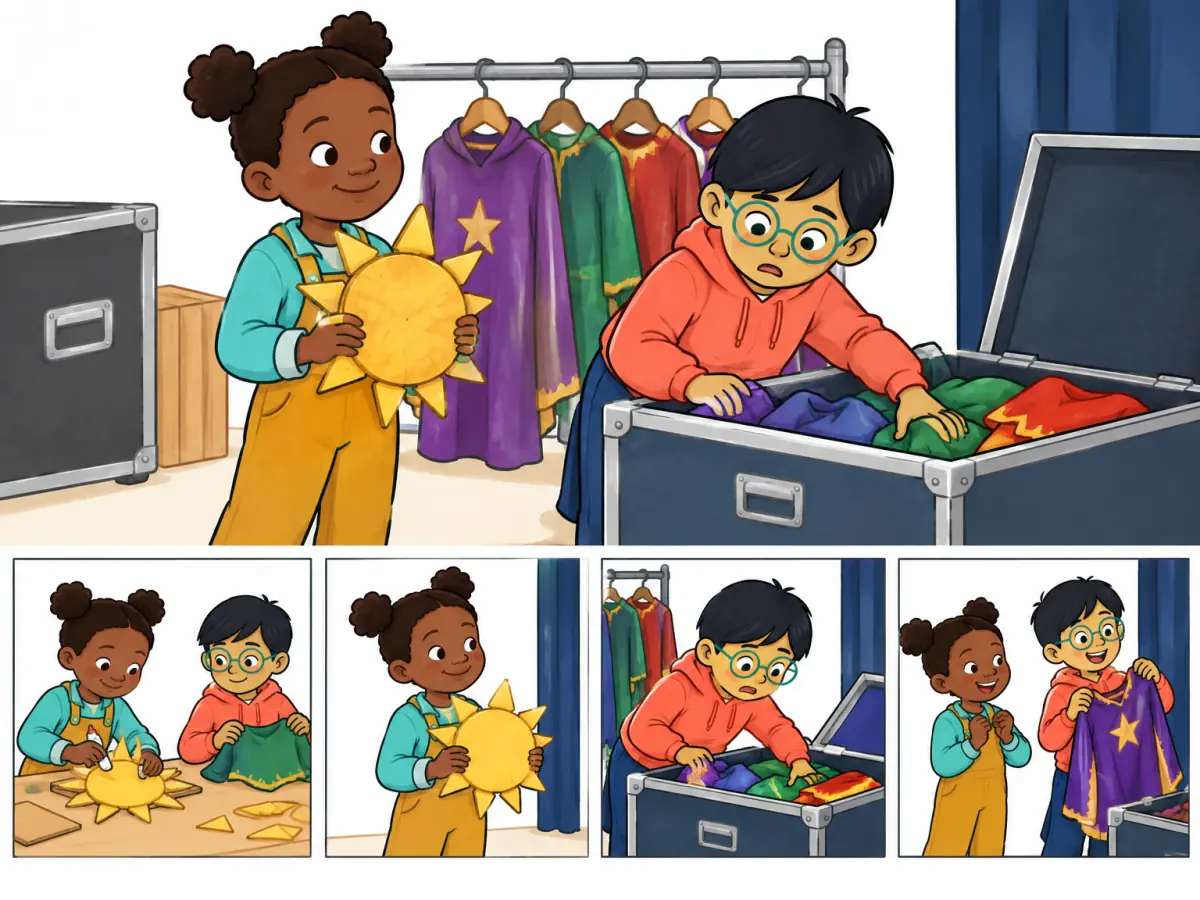
Backstage after rehearsal, Nia holds a completed prop, Leo searches for one missing costume, and a four-panel event strip shows actions before and after the current moment.

Leo Have you finished the script yet?

Nia Yes. I finished it yesterday, and I have already checked the ending.

Nia Have you found the costume?

Leo No, I have not found it yet.

Leo What have we just tested?

Nia We have just tested the lights.

Have you finished the script yet?

Yes. I finished it yesterday, and I have already checked the ending.

  • We have just tested the lights.
  • I have never performed this part before.

The moon behind the curtain

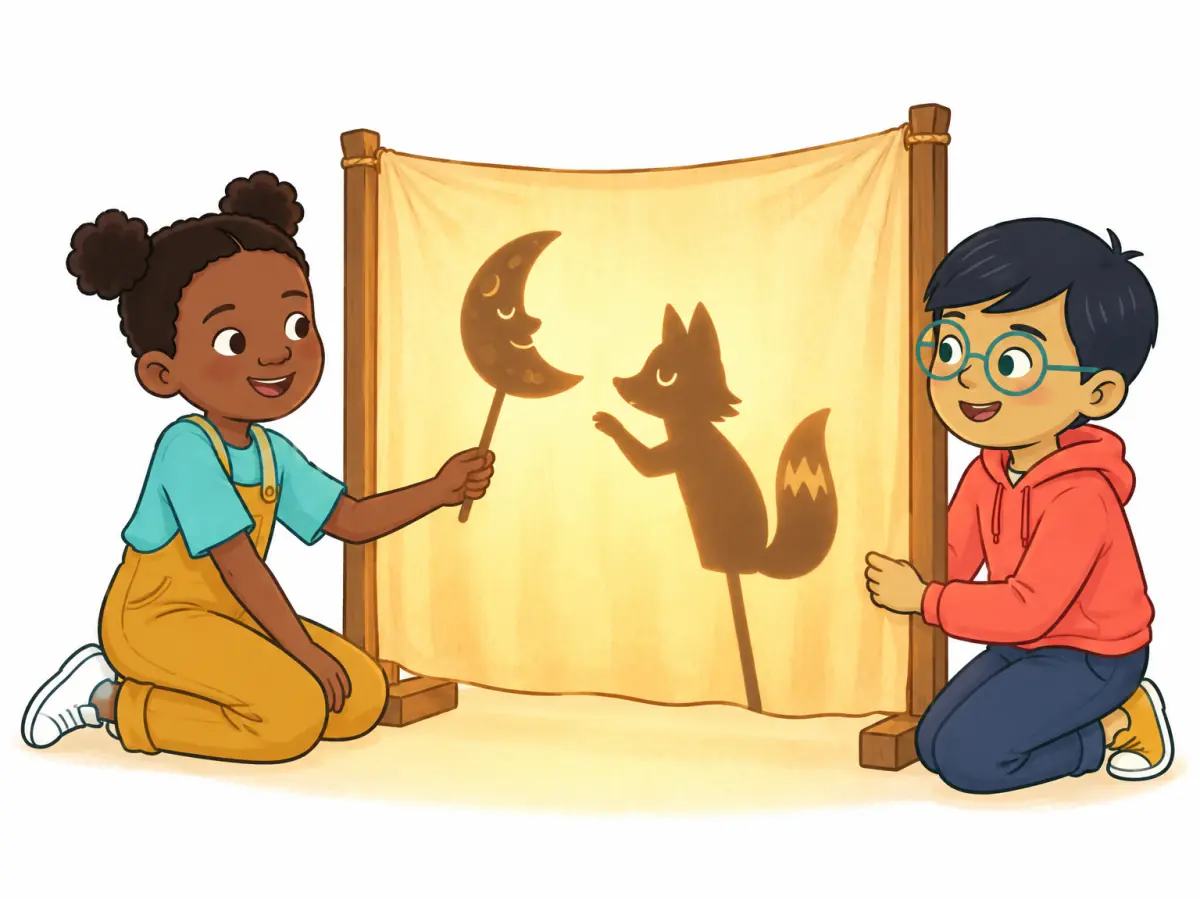
The end of the shadow play: behind a glowing curtain, Nia holds up the moon puppet that has been found, and the fox puppet reaches towards it while Leo holds the curtain.

THE MOON BEHIND THE CURTAIN

NARRATOR: The moon puppet has disappeared before the show.

FOX: I have already looked beside the lights.

CHILD: I checked the costume box ten minutes ago.

FOX: Listen! Something has just moved behind the curtain.

CHILD: It is the moon. The string caught on a nail.

NARRATOR: They free the puppet, and the audience sees a bright ending.

Plan aloud

The end of the shadow play: behind a glowing curtain, Nia holds up the moon puppet that has been found, and the fox puppet reaches towards it while Leo holds the curtain.

Nia How will your new scene end?

Leo The fox finds the moon puppet behind the curtain, and the light returns.

Leo Where will you put the stage directions?

Nia I will put them in brackets.

How will your new scene end?

CHARACTERS: Fox, Child, Narrator SCENE: Behind the theatre curtain. (Child lifts a silver string.) FOX: I have just found the moon puppet. CHILD: The audience is waiting! NARRATOR: The light returns and the scene ends.

  • character list
  • scene heading
  • stage direction in brackets
  • clear ending

Draft and revise

The end of the shadow play: behind a glowing curtain, Nia holds up the moon puppet that has been found, and the fox puppet reaches towards it while Leo holds the curtain.

Nia Who will read your text?

Leo My teacher and I will act it out.

Leo What will you check?

Nia I will check my spelling and punctuation.

How will your new scene end?

CHARACTERS: Fox, Child, Narrator SCENE: Behind the theatre curtain. (Child lifts a silver string.) FOX: I have just found the moon puppet. CHILD: The audience is waiting! NARRATOR: The light returns and the scene ends.

  • character list
  • scene heading
  • stage direction in brackets
  • clear ending
Aprende esta unidad
¿Cómo quieres aprender?

Palabras para preparar una función

Preparar una función es un contexto natural para esta gramática, porque todo el mundo comprueba sin parar qué está hecho. Dos palabras suelen necesitar explicación: “character” es una persona o criatura de una historia o una obra (un personaje), y “audience” son las personas que miran (el público). Una trampa de ortografía: la gh de “lights” no se pronuncia, igual que en “night”.

  • stage – el escenario, donde actúan los actores
  • curtain – el telón, delante del escenario
  • script – el guion de la obra
  • costume, make-up – el vestuario y el maquillaje

El present perfect: have o has + participio

El present perfect une una acción pasada con el ahora: “We have tested the lights.” significa que la prueba ha terminado y las luces están listas ahora. Los verbos regulares añaden -ed: finished, tested. Los irregulares tienen su propia forma, que no siempre coincide con el past simple: write, wrote, written.

En las preguntas, have o has va delante del sujeto: “Have you found the costume?” Al hablar, las negaciones suelen ir contraídas: “I haven’t found it.”

  • I, you, we, they: “We have tested the lights.”
  • he, she, it: “She has found the costume.”

Just, already, yet y never

“Just” y “already” van entre have y el participio. “Just” significa hace muy poco, como “acabar de”: “We have just tested the lights.” es “Acabamos de probar las luces”. “Already” significa que ya está hecho, a menudo antes de lo esperado: “I have already checked the ending.”

“Yet” es para preguntas y negaciones y va al final: “No, I have not found it yet.” En español, “ya” sirve para “already” y también para la pregunta con “yet” (“¿Ya has terminado?” suele ser “Have you finished yet?”), y “todavía no” es “not yet”. Por eso conviene practicar las dos palabras por separado. La respuesta corta “Not yet.” es muy natural. “Never” significa nunca hasta ahora: “I have never performed this part before.”

Nia Have you found the costume?

Leo No, I have not found it yet.

Leo What have we just tested?

Nia We have just tested the lights.

¿Present perfect o past simple?

Esta es la elección clave. Si dices o preguntas cuándo pasó algo (yesterday, ten minutes ago, last year), usa el past simple; las preguntas con “When…?” también. Si no se dice cuándo y lo que importa es el resultado ahora, usa el present perfect. El español ayuda: igual que decimos “Lo terminé ayer” y no “Lo he terminado ayer”, en inglés es “I finished it yesterday.” Truco: si la frase tiene un tiempo ya terminado, elige el past simple.

Las respuestas reales mezclan los dos. Abajo, la respuesta cuenta los pasos terminados en past simple y luego da la noticia más reciente con “have just”.

  • “I have checked the costume box.”: no se dice cuándo
  • “I checked it ten minutes ago.”: un tiempo terminado

Leo Have you finished the script yet?

Nia Yes. First I finished it yesterday. Then I checked the ending, and we have just tested the lights.

Aprende esta unidad a tu manera

Escribir una escena de teatro breve

El mismo lenguaje sirve para una obra corta sobre algo que desaparece justo antes de una función. Escribe la lista de personajes, el nombre de la escena y luego el nombre de cada personaje seguido de dos puntos. Las acotaciones, que dicen a los actores qué hacer, van entre paréntesis y en presente. Un modelo que tu peque puede cambiar:

“CHARACTERS: Fox, Child, Narrator. SCENE: Behind the theatre curtain. (Child lifts a silver string.) FOX: I have just found the moon puppet. CHILD: The audience is waiting! NARRATOR: The light returns and the scene ends.”

  • Planifica: qué falta, dónde buscan, dónde está
  • Revisa: un “just”, un “already” o “yet” y un final claro; después, representadla juntos

Errores frecuentes y cómo corregirlos

Son normales en el nivel A2. Repite la frase bien dicha y seguid.

  • “I have finished it yesterday.”: con un tiempo terminado se usa el past simple: “I finished it yesterday.”
  • “I have already finish.”: se usa el participio: “I have already finished.”
  • “Have you yet finished?”: “yet” va al final: “Have you finished yet?”
  • “I have found it yet.”: en frases afirmativas se usa “already”: “I have already found it.”

Un juego en casa: la lista de entre bastidores

Antes de un plan real, como una excursión del colegio, escribe seis tareas en una lista. Pregunta: “Have you packed your water bottle yet?” Tu peque responde “Yes, I have already packed it.”, “Not yet.” o “I have just done it!” Luego cambiad los papeles. En la segunda ronda, pregunta “When did you do it?” para pasar al past simple. Para una versión más grande, haced un teatro de sombras con una linterna y una sábana.

El siguiente paso

Después, tu peque podrá describir problemas y soluciones con too y enough: “The costume is too big.” “The string is not long enough.” Eso lleva a una historia corta sobre un disfraz que sale mal.

Preguntas frecuentes

¿Qué diferencia hay entre just, already y yet?

“Just” significa hace muy poco; “already”, que ya está hecho, a menudo antes de lo esperado; y “yet” pregunta o dice si algo esperado ha pasado: “Have you finished yet?”

¿Se puede decir “I have finished it yesterday”?

No. Con un tiempo terminado como yesterday o last week se usa el past simple: “I finished it yesterday.” Si no se dice cuándo, se usa el present perfect: “I have finished it.”

¿Está mal decir “I just finished it”?

No. En inglés americano es frecuente usar el past simple con just, already y yet: “Did you finish it yet?” El inglés británico suele preferir el present perfect. Las dos formas son correctas.

Aprende esta unidad
¿Cómo quieres aprender?

¿Qué viene después?

Clases individuales con un profesor en vivo

En las clases infantiles de Flalingo, tu hijo practica unidades como esta en clases individuales con un profesor en vivo, con juegos en la misma pantalla.

Reserva una clase de prueba gratis