Ir al contenido
Flalingo

Práctica de inglés

Describir un cuadro en inglés con niños (A2, 10–12 años): primer plano, fondo, izquierda y derecha

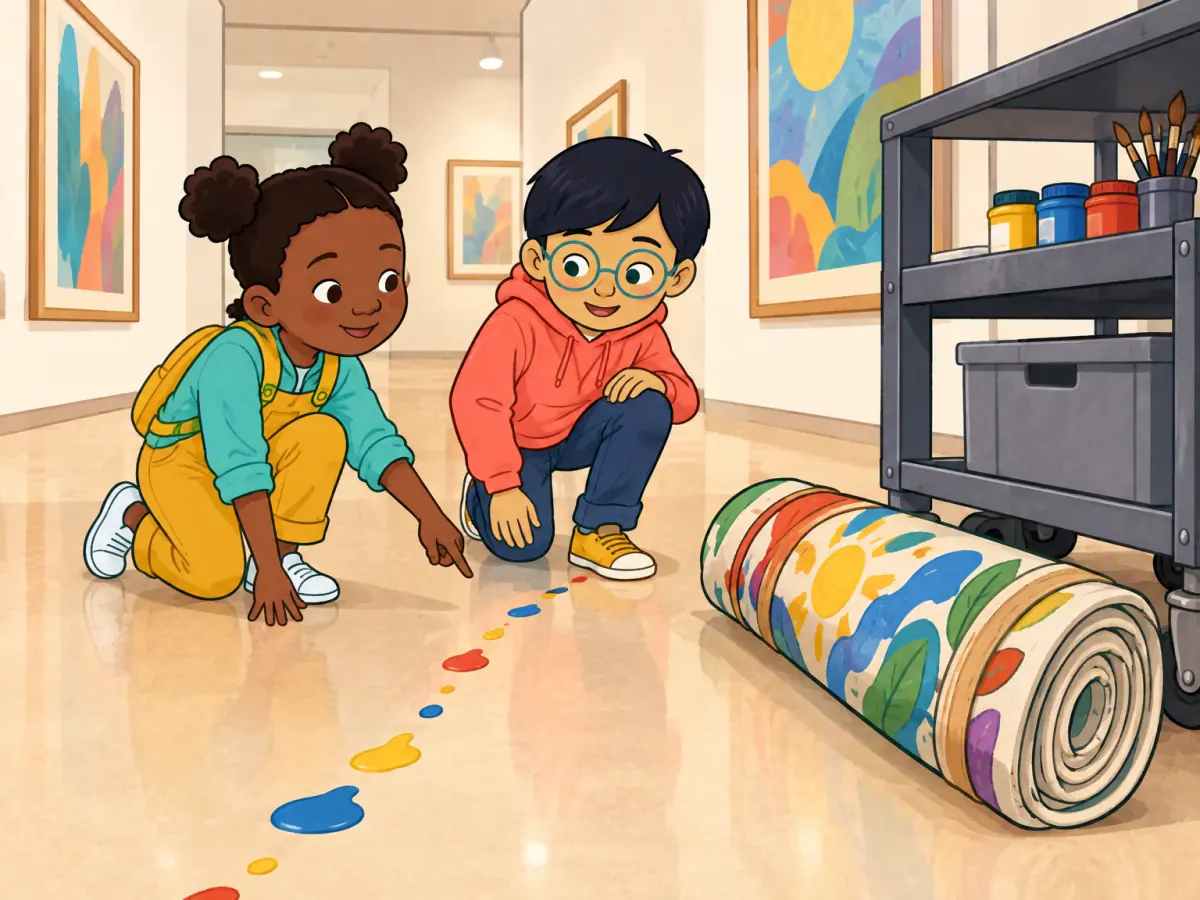
An original adventure scene in a closed gallery: two children follow a trail of red, yellow and blue paint drops to find a rolled community mural safely beside a storage cart.

Ayuda a tu hijo o hija a describir un cuadro en inglés con “in the foreground”, “in the background” y “on the left”, y a planear un proyecto de arte con going to, will y el presente continuo (A2, 10–12 años).

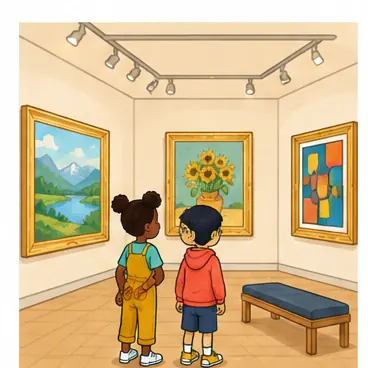
Para describir un cuadro en inglés, los niños dicen lo que ven, añaden un detalle y dicen dónde está: “A woman in a yellow coat stands in the foreground.” Las expresiones clave son “in the foreground” (en primer plano), “in the background” (al fondo), “on the left” (a la izquierda) y “on the right” (a la derecha). Después planean un proyecto de arte con tres formas de futuro: “I am going to paint a river mural.” (un plan), “I will carry the brushes.” (un ofrecimiento) y “We are meeting the artist on Friday.” (una cita acordada). Es un tema de nivel A2 para niños de unos 10 a 12 años que ya hacen frases sencillas sobre personas y lugares.

¿Para quién es este artículo?

  • Familias con hijos que ya describen personas y lugares con frases sencillas: tu hijo o hija dice “There is a bridge.” y “She is wearing a coat.”
  • Niños a los que les gusta dibujar, ir a museos o crear cosas: hablar de arte les da un motivo para hacer frases más largas.
  • Familias que quieren practicar en casa: sirve cualquier imagen, de una postal a la portada de un libro, y el diálogo de abajo tiene la grabación de cada frase.
  • Demasiado pronto: si todavía confunde “She stands” y “She is standing”, empieza por el artículo A2 sobre el desayuno de siempre y el de hoy, enlazado abajo.
  • Demasiado fácil: si ya describe imágenes con detalle y distingue going to, will y el presente continuo, pasa al artículo A2 sobre un diario de fin de semana con planes y ofrecimientos, enlazado abajo.

Abrir las páginas de muestra

Abrir las páginas de muestra

Tarjetas de vocabulario

art galleryart gallery
paintingpainting
muralmural
backgroundbackground
foregroundforeground
portraitportrait
landscapelandscape
sculpturesculpture
What are you going to paint?

I am going to paint a river mural.

I will carry the brushes.
We are meeting the artist on Friday.
The foreground will be bright.

Conversación

Nia Describe the painting for my audio guide, Leo.

Leo A woman in a yellow coat stands in the foreground.

Nia What is behind her?

Leo A blue bridge crosses the background, under a pale grey sky.

Nia Where are the boats?

Leo Three red boats are on the left, beside a dark green riverbank.

Estructura de la frase

What are you going to paint?

I am going to paint a river mural.

  • I will carry the brushes.
  • We are meeting the artist on Friday.
  • The foreground will be bright.

Más práctica

Talk with the grammar

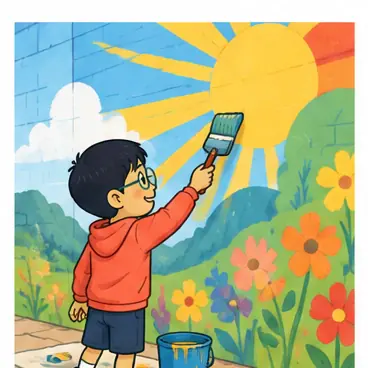
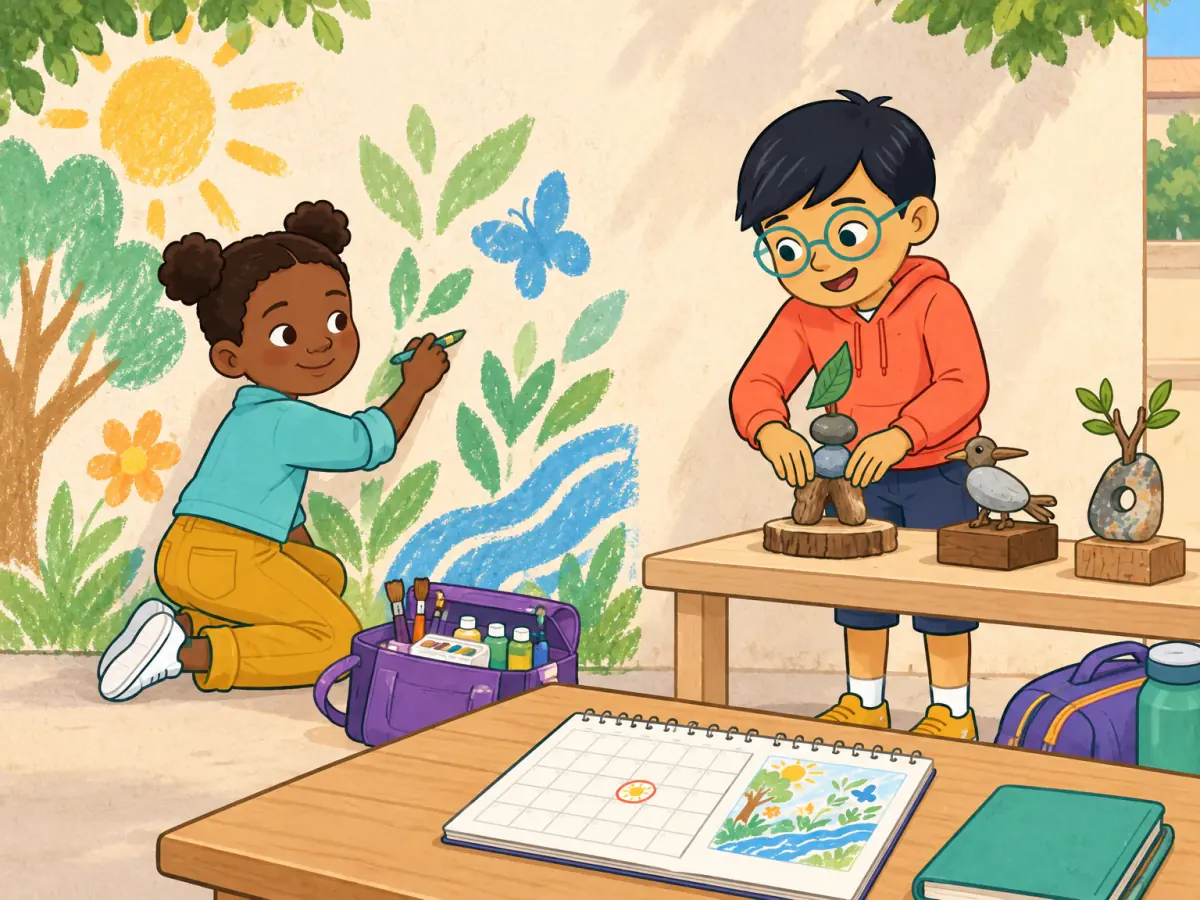
At an empty courtyard wall, Nia sketches a nature mural while Leo offers to arrange a small sculpture display; a calendar and packed art materials show firm future plans.

Leo What are you going to paint?

Nia I am going to paint a river mural.

Nia The paint box is heavy.

Leo I will carry it.

Nia When are we meeting the artist?

Leo We are meeting her on Friday.

What are you going to paint?

I am going to paint a river mural.

  • I will carry the brushes.
  • We are meeting the artist on Friday.
  • The foreground will be bright.

The colour trail

An original adventure scene in a closed gallery: Nia and Leo follow a trail of red, yellow and blue paint drops to find a rolled community mural safely beside a storage cart.

THE COLOUR TRAIL

Nia and Leo were helping to close the community gallery when they noticed a trail of red, yellow and blue paint drops on the floor. They followed the marks past the portrait room and into the quiet store. A large roll rested beside a cart. It was the neighbourhood mural for Saturday, but its label had fallen off. Nia phoned the artist instead of opening it. “I am coming now,” the artist said. Leo smiled. “We found the missing display, and we kept it safe.”

Writer's studio

An original adventure scene in a closed gallery: Nia and Leo follow a trail of red, yellow and blue paint drops to find a rolled community mural safely beside a storage cart.

Nia Who will read your text?

Leo My teacher and my family will read it.

How will your adventure end?

The lights went out, but I used a small torch. I found the missing sculpture behind a curtain. I called the gallery manager before I moved it. We will display it safely tomorrow.

  • I will carry the brushes.
  • We are meeting the artist on Friday.
  • The foreground will be bright.
Aprende esta unidad
¿Cómo quieres aprender?

Palabras de arte para visitar una galería

Painting es cualquier cuadro pintado; mural es una pintura hecha directamente en una pared, igual que en español. Portrait es un retrato y landscape, un paisaje con campo, ríos o mar. Sculpture (escultura) no es plana: puedes rodearla. Puede que tu hijo o hija conozca “portrait” y “landscape” por la tableta, donde significan vertical y horizontal; los retratos suelen ser verticales, y los paisajes, horizontales.

  • art gallery – galería de arte
  • sculpture – escultura de piedra, metal, madera o arcilla

Primer plano, fondo, izquierda y derecha

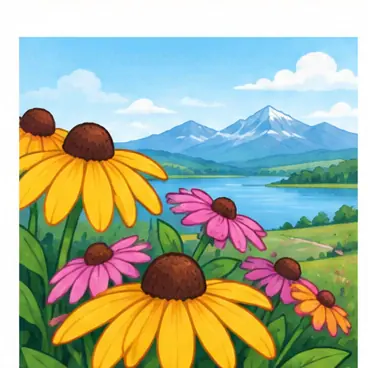
El foreground (primer plano) es la parte de la imagen que parece más cercana, normalmente abajo. El background (fondo) parece la más lejana: a menudo el cielo, colinas o edificios. En inglés se dice “in the foreground” y “in the background”, pero “on the left” y “on the right”. Como en español también se oye “en la izquierda”, es fácil que salga “in the left”: aprende “on the left” como un bloque. Las esquinas llevan “in”: “in the top left corner”.

  • in the middle – en el centro, entre delante y detrás
  • behind, beside, under, above – para relacionar dos cosas

Una frase precisa: qué, detalle y lugar

En el nivel A2, “There is a woman.” se convierte en una sola frase con un detalle y un lugar. Las palabras de tono como pale, dark y bright van antes del color: “a pale grey sky”. En español el orden es justo al revés (un cielo gris claro), así que conviene practicarlo. En la conversación se suele decir “is standing”; “stands” suena más a audioguía. Las dos formas son correctas. Aquí, una persona describe un cuadro para la audioguía de una galería.

Nia Describe the painting for my audio guide, Leo.

Leo A woman in a yellow coat stands in the foreground.

Nia What is behind her?

Leo A blue bridge crosses the background, under a pale grey sky.

Nia Where are the boats?

Leo Three red boats are on the left, beside a dark green riverbank.

Going to, will y el presente continuo

El inglés tiene tres formas habituales de hablar del futuro. Going to es un plan ya decidido, como “voy a…” en español: “What are you going to paint?” “I am going to paint a river mural.” Will es un ofrecimiento o una decisión tomada al hablar: “I will carry the brushes.”, que en la conversación suele ser “I’ll carry the brushes.” En español solemos ofrecer en presente (“Yo llevo los pinceles.”), pero en inglés hace falta will. Will también sirve para predecir: “The foreground will be bright.” El presente continuo con una expresión de tiempo es una cita ya acordada con otras personas: “We are meeting the artist on Friday.” En español diríamos “El viernes nos reunimos con la artista”, en presente simple; en inglés, para estas citas, lo normal es la forma con -ing.

Contrarios con un- e im-

Muchos contrarios en inglés empiezan con un prefijo, como en español. El más común es un-; im- suele ir delante de palabras que empiezan por p o m. Ojo: en español se dice “impopular”, pero en inglés es “unpopular”. Ninguna regla funciona siempre, así que aprende cada pareja junta.

  • popular – unpopular (popular – impopular)
  • friendly – unfriendly (simpático – antipático)
  • tidy – untidy (ordenado – desordenado)
  • patient – impatient (paciente – impaciente)
  • possible – impossible (posible – imposible)
  • polite – impolite (educado – maleducado)
Aprende esta unidad a tu manera

Una historia de aventuras con un final claro

A los 10–12 años los niños escriben a menudo aventuras cortas, y lo difícil es el final: la historia se corta de golpe o todo resulta ser un sueño. Un buen final dice qué se encontró y dónde, muestra una decisión sensata y mira hacia delante con una forma de futuro: “Inside the cupboard, I found the missing portrait. I didn’t move it; I called the gallery manager instead. Tomorrow we are going to hang it back on the wall.”

Un juego en casa: la audioguía

Elige cualquier imagen: una postal, la portada de un libro o un cuadro en internet. Tu hijo o hija hace de audioguía y dice tres frases, sobre el primer plano, el fondo y un lado, cada una con un color. Tú dibujas lo que oyes sin mirar la imagen; luego comparáis y cambiáis los papeles. Para terminar, pregunta “What are you going to draw next?” y espera una respuesta con “I am going to…”.

Errores frecuentes y cómo corregirlos

Repite la frase bien dicha y seguid adelante.

  • “in the left”: los lados llevan “on”: “on the left”.
  • “in foreground”: no olvides “the”: “in the foreground”.
  • “a grey pale sky”: la palabra de tono va primero: “a pale grey sky”.
  • “I’m going to carry it!” como ofrecimiento rápido: usa will: “I’ll carry it.”
  • “unpossible”, “unpolite”: estas llevan im-: “impossible”, “impolite”.

El siguiente paso

Después puede escribir un diario de fin de semana completo con citas, planes y un ofrecimiento. Más adelante llegan los planes que dependen de otra cosa: “If it rains, we will paint indoors.”

Preguntas frecuentes

¿Cómo se describe una imagen en inglés?

Ve de delante hacia atrás y luego de lado a lado: di qué hay en el primer plano, en el fondo y a cada lado, con un color o un detalle cada vez. Bastan tres o cuatro frases.

¿Qué diferencia hay entre foreground y background?

El foreground es la parte que parece más cercana, normalmente abajo; el background es la que parece más lejana, como el cielo o unas colinas a lo lejos. Las dos llevan “in the”.

¿Cuándo se usa going to y cuándo will?

Going to es para un plan decidido antes de hablar; will, para un ofrecimiento o una decisión tomada al hablar, y para predicciones. Para una cita acordada con fecha u hora se usa el presente continuo: “We are meeting the artist on Friday.”

Aprende esta unidad
¿Cómo quieres aprender?

¿Qué viene después?

Clases individuales con un profesor en vivo

En las clases infantiles de Flalingo, tu hijo practica unidades como esta en clases individuales con un profesor en vivo, con juegos en la misma pantalla.

Reserva una clase de prueba gratis