

Ir al contenido
Flalingo

Práctica de inglés

IELTS Academic Reading True, False, Not Given: cómo distinguir False de Not Given

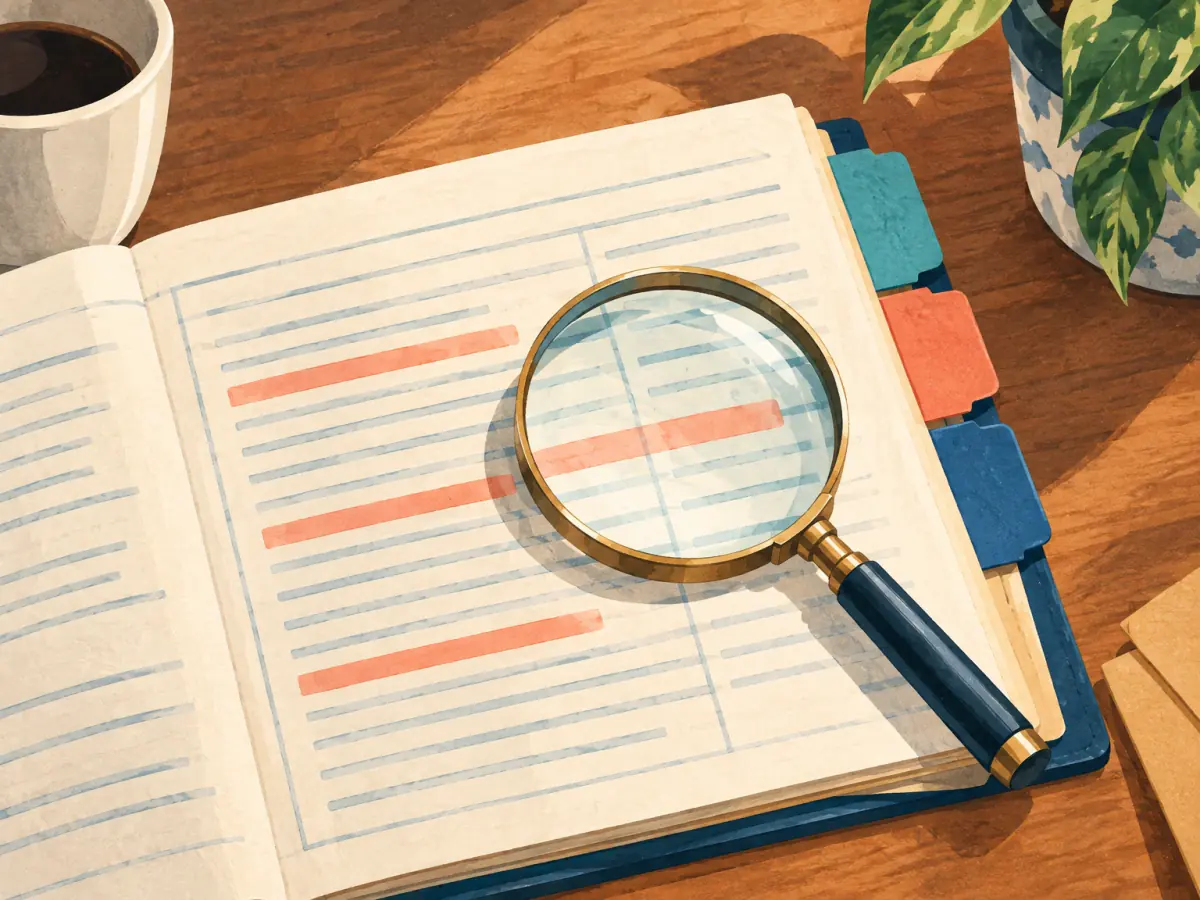
An evidence table with three distinct evidence tabs.

Cómo responder a las preguntas True, False, Not Given de IELTS Academic Reading: encontrar la evidencia, distinguir una contradicción de la información que falta, respetar el límite de palabras y practicar con un texto breve.

En las preguntas True, False, Not Given de IELTS Reading decides qué relación tiene una afirmación con el texto: TRUE si el texto dice lo mismo, FALSE si la contradice y NOT GIVEN si no dice nada en ningún sentido. La mayoría de los puntos se pierden entre las dos últimas: FALSE exige palabras del texto que descarten la afirmación, mientras que NOT GIVEN significa que la información simplemente no está. Localiza la evidencia, comprueba cada parte de la afirmación y nunca respondas con tu cultura general. Esta guía es para candidatos de IELTS Academic con un inglés de nivel intermedio alto (B2) o superior.

¿Para quién es este artículo?

  • Candidatos que entienden el texto pero siguen perdiendo puntos entre False y Not Given.
  • Lectores que tardan demasiado en encontrar el párrafo correcto y se quedan sin tiempo.
  • Candidatos que responden según lo que parece lógico o lo que ya saben del tema.
  • Demasiado pronto: si buscar evidencia exacta en IELTS todavía es nuevo para ti, empieza por la guía de Listening sobre las preguntas de elegir dos respuestas, que entrena el mismo hábito (enlaces abajo).
  • Demasiado fácil: si este tipo de pregunta ya te sale con seguridad, pasa a las preguntas Yes, No, Not Given sobre las opiniones del autor (enlaces abajo).

Abrir las páginas de muestra

Abrir las páginas de muestra

Tarjetas de vocabulario

True

the statement agrees with information in the text

Text: access improved after the move. Statement: The move improved access.

False

the statement contradicts information in the text

Text: sewing machines were booked most. Statement: Drills were booked most.

Not Given

the text does not establish the statement either way

Text gives a three-day loan but no renewal count.

Estructura de la frase

historically significant (adverb + adjective)

an adverb modifies an adjective in a conventional partnership

The recovered notebook was historically significant.

a detailed record (adjective + noun)

an adjective combines conventionally with a noun

The archive preserves a detailed record of the invention.

storage box (noun + noun)

one noun modifies another noun

The research team opened the storage box.

Más práctica

Three evidence states

The Westbridge Repair Library began lending tools in 2019. Its founders expected most members to borrow drills and saws, but sewing machines became the most frequently booked items during the first winter. In 2021, the library moved from a basement to a street-level room, which improved wheelchair access.

Members may reserve an item for three days. Volunteers inspect returned tools every evening, and a qualified technician checks electrical items each Friday. Since 2023, damaged equipment has been sent to a partner workshop rather than repaired in the library.

A survey found that members valued practical advice more than low fees. It recorded strong support for weekend opening, but the trustees have not announced whether Sunday hours will be introduced.

Choose True, False or Not Given

The Westbridge Repair Library began lending tools in 2019. Its founders expected most members to borrow drills and saws, but sewing machines became the most frequently booked items during the first winter. In 2021, the library moved from a basement to a street-level room, which improved wheelchair access.

Members may reserve an item for three days. Volunteers inspect returned tools every evening, and a qualified technician checks electrical items each Friday. Since 2023, damaged equipment has been sent to a partner workshop rather than repaired in the library.

A survey found that members valued practical advice more than low fees. It recorded strong support for weekend opening, but the trustees have not announced whether Sunday hours will be introduced.

  1. Sewing machines were the most frequently booked items in the first winter.

    Mostrar respuesta y explicación

    True

    The first paragraph states this directly.

  2. Returned electrical tools are checked by a technician every evening.

    Mostrar respuesta y explicación

    False

    Volunteers inspect returns every evening, but the technician checks electrical items on Fridays.

  3. Members can renew a reservation twice.

    Mostrar respuesta y explicación

    Not Given

    The passage gives a loan duration but no renewal count.

  4. The trustees have confirmed Sunday opening.

    Mostrar respuesta y explicación

    False

    The text explicitly says no Sunday decision has been announced.

Defend the evidence state

An evidence table with three distinct evidence tabs.

The Westbridge Repair Library began lending tools in 2019. Its founders expected most members to borrow drills and saws, but sewing machines became the most frequently booked items during the first winter. In 2021, the library moved from a basement to a street-level room, which improved wheelchair access.

Members may reserve an item for three days. The text does not state how many times a reservation can be renewed. Volunteers inspect returned tools every evening, and a qualified technician checks electrical items each Friday. Since 2023, damaged equipment has been sent to a partner workshop rather than repaired in the library.

A survey found that members valued practical advice more than low fees. It recorded strong support for weekend opening, but the trustees have not announced whether Sunday hours will be introduced.

Three-state frame

  • True — matching text evidence
  • False — contradicting text evidence
  • Not Given — information absent

Possible topics

  • popular equipment
  • access
  • loan length
  • renewals
  • inspection
  • Sunday hours

Read for evidence boundaries

Two adults compare archive evidence and a mechanical model.

In 2018, volunteers at the Harbour Archive opened an unlabelled wooden case donated by a retired engineer. Inside they found a compact tide calculator, three notebooks and a receipt dated 1964. The calculator used rotating metal discs to estimate safe departure times for small boats. An inventory from 1972 mentioned a similar device, but its dimensions were larger and its maker was listed as unknown.

Engineer Lila Morgan signed two of the newly found notebooks. Entries show that she tested the compact calculator between March and July 1963, one year before the receipt. A newspaper profile from 1965 praised Morgan's harbour research but did not mention the device. The archive therefore attributes the compact model to Morgan with moderate confidence. It does not claim that she invented every tide calculator or that the 1972 device was hers.

After conservation, the compact calculator went on display in 2020. A digital replica was added in 2022 so visitors could explore the mechanism without touching the original.

Locate through anchors and paraphrase

Anchor → evidence

  • 2018 → case opened
  • 1963 → Morgan tested compact calculator
  • 1964 → receipt date
  • 2020 → displayed
  • 2022 → digital replica added

Paraphrase links

  • donated → given
  • attributes to → identifies probable maker
  • moderate confidence → supported but not certain
  • replica → copy

Choose only what the text establishes

In 2018, volunteers at the Harbour Archive opened an unlabelled wooden case donated by a retired engineer. Inside they found a compact tide calculator, three notebooks and a receipt dated 1964. The calculator used rotating metal discs to estimate safe departure times for small boats. An inventory from 1972 mentioned a similar device, but its dimensions were larger and its maker was listed as unknown.

Engineer Lila Morgan signed two of the newly found notebooks. Entries show that she tested the compact calculator between March and July 1963, one year before the receipt. A newspaper profile from 1965 praised Morgan's harbour research but did not mention the device. The archive therefore attributes the compact model to Morgan with moderate confidence. It does not claim that she invented every tide calculator or that the 1972 device was hers.

After conservation, the compact calculator went on display in 2020. A digital replica was added in 2022 so visitors could explore the mechanism without touching the original.

  1. What was inside the donated case?

    Mostrar respuesta y explicación

    a compact tide calculator and three notebooks

    The first paragraph lists the compact calculator and three notebooks.

  2. Why is Morgan linked to the compact model?

    Mostrar respuesta y explicación

    she signed notebooks describing tests of it

    Her signed notebooks record tests of the compact calculator.

  3. What does the archive avoid claiming?

    Mostrar respuesta y explicación

    that Morgan invented every tide calculator

    The passage explicitly limits the attribution.

Brief a new curator

Two adults compare archive evidence and a mechanical model.

In 2018, volunteers at the Harbour Archive opened an unlabelled wooden case donated by a retired engineer. Inside they found a compact tide calculator, three notebooks and a receipt dated 1964. The calculator used rotating metal discs to estimate safe departure times for small boats. An list from 1972 mentioned a similar device, but its dimensions were larger and its maker was listed as unknown.

Engineer Lila Morgan signed two of the newly found notebooks. Entries show that she tested the compact calculator between March and July 1963, one year before the receipt. A newspaper profile from 1965 praised Morgan's harbour research but did not mention the device. The archive therefore attributes the compact model to Morgan with moderate confidence. It does not claim that she invented every tide calculator or that the 1972 device was hers.

After conservation, the compact calculator went on display in 2020. A digital replica was added in 2022 so visitors could explore the mechanism without touching the original.

Evidence briefing frame

  • Object/date: ___
  • Direct evidence: ___
  • Cautious inference: ___
  • Not established: ___

Required language

  • the record states
  • this suggests
  • with moderate confidence
  • the text does not establish

Read the process before the blanks

The City Sound Archive receives donated recordings in four stages. First, a coordinator records the donor's name and the number of files. Next, a technician creates a protected copy before opening any original file. The team then checks sound quality and adds a short description. Finally, recordings with clear permission are released to the public catalogue; restricted recordings enter secure storage.

During a 202-file pilot, 140 recordings entered the public catalogue, 30 entered secure storage and 12 were returned because permission was unclear. The remaining 20 recordings were still awaiting review. Each protected copy used the same file name plus a date code.

Predict form from rows and units

Process notes — NO MORE THAN TWO WORDS

  • 1 record donor name and number of ___
  • 2 create a protected ___
  • 3 check sound quality and add a ___
  • 4 clear permission → public catalogue
  • 4 restricted → secure ___

Pilot table — A NUMBER

  • total files: ___
  • public catalogue: ___
  • secure storage: ___
  • returned: ___
  • awaiting review: ___

Complete within the visible limits

The City Sound Archive receives donated recordings in four stages. First, a coordinator records the donor's name and the number of files. Next, a technician creates a protected copy before opening any original file. The team then checks sound quality and adds a short description. Finally, recordings with clear permission are released to the public catalogue; restricted recordings enter secure storage.

During a 202-file pilot, 140 recordings entered the public catalogue, 30 entered secure storage and 12 were returned because permission was unclear. The remaining 20 recordings were still awaiting review. Each protected copy used the same file name plus a date code.

  1. record donor name and number of ___

    Mostrar respuesta y explicación

    files

    The passage says the coordinator records the number of files.

  2. create a protected ___

    Mostrar respuesta y explicación

    copy

    The exact process noun is protected copy.

  3. restricted recordings enter secure ___

    Mostrar respuesta y explicación

    storage

    The final branch sends restricted recordings to secure storage.

  4. How many recordings entered secure storage?

    Mostrar respuesta y explicación

    30

    The pilot data assigns 30 recordings to secure storage.

Read for concise answer spans

A neighbourhood roof project tested three surface materials during July. White mineral tiles produced the lowest midday temperature, while untreated metal produced the highest. Recycled rubber panels reduced indoor heat but became softer after repeated rain. The team selected mineral tiles for the community clinic because they stayed cool and required little maintenance. Rubber panels will be tested again on a storage building, where surface softness presents less risk. The report does not recommend untreated metal for either site.

Obey the visible word limit

Write NO MORE THAN THREE WORDS

  • Which material was coolest? ___
  • Where will rubber be retested? ___
  • What happened to rubber after rain? ___
  • Which site receives mineral tiles? ___

Form clues

  • Which material → material noun phrase
  • Where → place noun phrase
  • What happened → verb/adjective phrase
  • Which site → site noun phrase

Choose the concise answer from the passage

A neighbourhood roof project tested three surface materials during July. White mineral tiles produced the lowest midday temperature, while untreated metal produced the highest. Recycled rubber panels reduced indoor heat but became softer after repeated rain. The team selected mineral tiles for the community clinic because they stayed cool and required little maintenance. Rubber panels will be tested again on a storage building, where surface softness presents less risk. The report does not recommend untreated metal for either site.

  1. Which material produced the lowest midday temperature?

    Mostrar respuesta y explicación

    white mineral tiles

    White mineral tiles is the exact three-word phrase from the passage.

  2. Where will rubber panels be tested again?

    Mostrar respuesta y explicación

    a storage building

    A storage building is the stated future test site and fits the limit.

  3. What did rubber panels become after repeated rain?

    Mostrar respuesta y explicación

    softer

    The passage states that the panels became softer.

  4. Which site will receive mineral tiles?

    Mostrar respuesta y explicación

    the community clinic

    The team selected mineral tiles for the community clinic.

Write and check four short answers

Two adults compare archive evidence and a mechanical model.

A neighbourhood roof project tested three surface materials during July. White mineral tiles produced the lowest midday temperature, while untreated metal produced the highest. Recycled rubber panels reduced indoor heat but became softer after repeated rain. The team selected mineral tiles for the community clinic because they stayed cool and required little maintenance. Rubber panels will be tested again on a storage building, where surface softness presents less risk. The report does not recommend untreated metal for either site.

NO MORE THAN THREE WORDS

  • coolest material: ___
  • rubber retest place: ___
  • rain effect: ___
  • tile site: ___

Audit

  • directly answers question
  • uses words from the passage
  • within three words
  • spelling and number correct

Collocation Forms: second set

reach a conclusion (verb + noun)

a verb and noun commonly occur together

Researchers reached a conclusion after comparing the dates.

insight into (noun + preposition)

a content word selects a conventional dependent preposition

The curator gave visitors insight into the design.

Collocation Forms: transfer

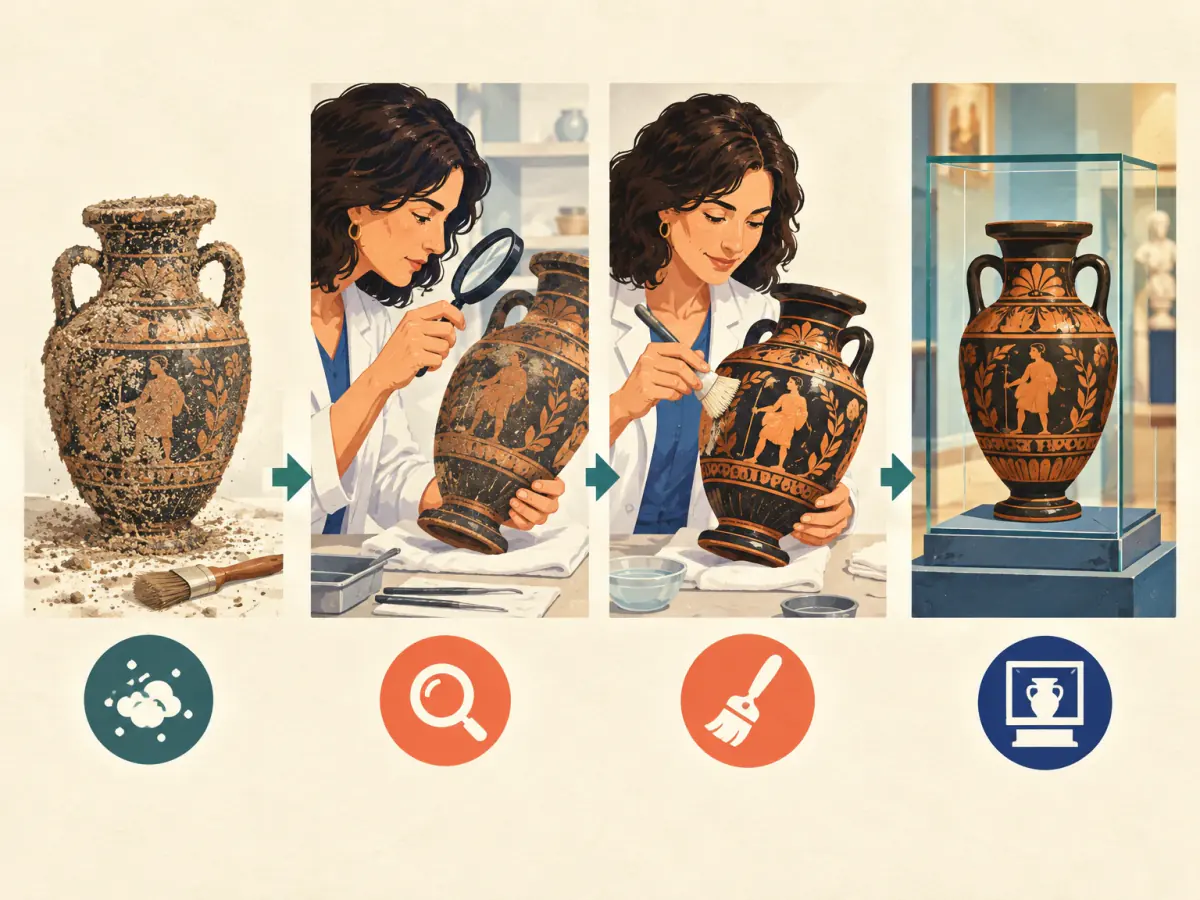
A four-stage restoration process from inspection to display.

Reference A

  • historically significant (adverb + adjective) — an adverb modifies an adjective in a conventional partnership
  • a detailed record (adjective + noun) — an adjective combines conventionally with a noun
  • storage box (noun + noun) — one noun modifies another noun

Reference B

  • reach a conclusion (verb + noun) — a verb and noun commonly occur together
  • insight into (noun + preposition) — a content word selects a conventional dependent preposition
Aprende esta unidad
¿Cómo quieres aprender?
¿Ya tienes cuenta?

Una cuenta gratis abre una unidad para siempre.

Cómo funcionan las preguntas True, False, Not Given

IELTS Academic Reading tiene tres textos largos, 40 preguntas y 60 minutos, y en el examen en papel no hay tiempo extra para pasar las respuestas a la hoja.

La instrucción pregunta: “Do the following statements agree with the information given in Reading Passage 1?” Las afirmaciones siguen el orden del texto y cada una tiene una de tres respuestas:

  • TRUE: la afirmación coincide con la información.
  • FALSE: la afirmación contradice la información.
  • NOT GIVEN: no hay información sobre esto.

Primero, encuentra el lugar: anclas y paráfrasis

Busca palabras difíciles de parafrasear: nombres, fechas, cifras, términos técnicos. Después lee la frase completa y la siguiente; el detalle decisivo suele estar a pocas palabras.

En un texto de práctica sobre un archivo, las fechas 1963 y 1964 llevan a las pruebas de una calculadora y a un recibo. Una fecha te dice dónde mirar, no cuál es la respuesta. Las afirmaciones suelen parafrasear el texto:

  • “donated” pasa a ser “given”.
  • “attributes the model to her” pasa a ser “identifies her as the probable maker”.
  • “with moderate confidence” pasa a ser “supported but not certain”.

False o Not Given: contradicción o silencio

Hazte dos preguntas en este orden. ¿Dice el texto algo sobre este punto exacto? Si no, la respuesta es NOT GIVEN. Si lo dice, ¿coincide con la afirmación o choca con ella? Si coincide, TRUE; si choca, FALSE. Algo que es cierto en la vida real puede ser NOT GIVEN.

Cada tarjeta de esta página tiene la grabación de su ejemplo:

  • TRUE: “Text: access improved after the move. Statement: The move improved access.”
  • FALSE: “Text: sewing machines were booked most. Statement: Drills were booked most.” Solo un objeto puede ser el más reservado.
  • NOT GIVEN: “Text gives a three-day loan but no renewal count.” Una afirmación sobre renovaciones no se puede comprobar.

Prueba con una: una biblioteca de herramientas

Lee este fragmento de un texto de práctica sobre una biblioteca de barrio que presta herramientas y decide.

  • “Members may reserve an item for three days. Volunteers inspect returned tools every evening, and a qualified technician checks electrical items each Friday.”
Afirmación: “Returned electrical tools are checked by a technician every evening.”

Palabras pequeñas que deciden la respuesta

Lee los límites de una afirmación con tanto cuidado como la afirmación: “expected” no es “happened” y “may” no es “will”. El texto del archivo atribuye una calculadora a una ingeniera “with moderate confidence” y aclara que el archivo “does not claim that she invented every tide calculator”. Por eso “The archive is certain who made it.” es FALSE y “She invented the first tide calculator.” es NOT GIVEN.

De vuelta en la biblioteca de herramientas:

  • “Sewing machines were the most frequently booked items in the first winter.” TRUE, aunque los fundadores esperaban taladros y sierras.
  • “Members can renew a reservation twice.” NOT GIVEN: el plazo de tres días aparece; las renovaciones, no.
  • “The trustees have confirmed Sunday opening.” FALSE: según el texto, el patronato “have not announced whether Sunday hours will be introduced”.
Aprende esta unidad a tu manera

Límites de palabras en tareas de completar y de respuesta corta

También hay preguntas de notas, tablas y respuesta corta. Toma la respuesta del texto y respeta el límite de la instrucción, como “NO MORE THAN TWO WORDS” o “A NUMBER”; una respuesta que lo supera o está mal escrita es incorrecta.

Predice la forma a partir del hueco. Para “create a protected ___”, el texto dice “a technician creates a protected copy”, así que escribe “copy”. Con el límite “NO MORE THAN THREE WORDS”, “Where will rubber panels be tested again?” se responde con “a storage building”: tres palabras, porque “a” también cuenta.

Errores que cuestan puntos

Asigna a cada respuesta incorrecta una de estas causas:

  • Elegir FALSE porque el texto no menciona algo.
  • Responder con tu cultura general o con lo que suena probable.
  • Fijarte en una palabra clave e ignorar la persona, el momento o la cifra.
  • Pasar por alto una palabra que limita, como “expected”, “most” o “may”.
  • Caer en falsos amigos: “actually” significa “en realidad”, no “actualmente”, y “eventually” significa “al final”, no “eventualmente”.
  • Escribir YES o NO en una pregunta TRUE, FALSE, NOT GIVEN: puede marcarse como incorrecta.

Rutina de examen de 25 minutos

Tres o cuatro veces por semana, con un texto de práctica:

  • Date 20 minutos para el texto y sus preguntas.
  • Antes de responder, subraya el ancla y las palabras decisivas.
  • Corrige con la clave: en cada NOT GIVEN, escribe qué falta; en cada FALSE, copia las palabras que contradicen la afirmación.
  • Escribe tus propias afirmaciones TRUE, FALSE y NOT GIVEN y explica cada una en voz alta.
  • Anota colocaciones académicas como “historically significant”, “a detailed record”, “reach a conclusion”, “insight into”.

Qué viene después

Después, aplica esta prueba de evidencia a las preguntas Yes, No, Not Given sobre las opiniones del autor. Luego practica las preguntas de relacionar características y de completar resúmenes, donde la redacción exacta importa igual.

Preguntas frecuentes

¿Qué diferencia hay entre False y Not Given en IELTS Reading?

FALSE: el texto contradice la afirmación. NOT GIVEN: la información necesaria para comprobarla no está en el texto.

¿Las respuestas True, False, Not Given siguen el orden del texto?

Sí. Cuando encuentres una respuesta, busca la siguiente más adelante.

¿En qué se diferencia True, False, Not Given de Yes, No, Not Given?

La primera comprueba datos; la segunda, las opiniones o afirmaciones del autor. Responde con las palabras de la instrucción.

Flalingo no está afiliado a las organizaciones que administran IELTS ni cuenta con su respaldo.

Aprende esta unidad
¿Cómo quieres aprender?
¿Ya tienes cuenta?

Una cuenta gratis abre una unidad para siempre.

¿Qué viene después?

Sigue practicando con Flai

Flai es la aplicación de Flalingo para practicar conversación con IA mediante diálogos de voz, correcciones e informes de cada lección.

Aprende con un profesor en vivo

En las clases de Flalingo practicas unidades como esta en clases individuales con un profesor en vivo.