Ir al contenido
Flalingo

Práctica de inglés

Cómo describir una foto en inglés (B1 preintermedio): lugar, personas, acciones y por qué importa

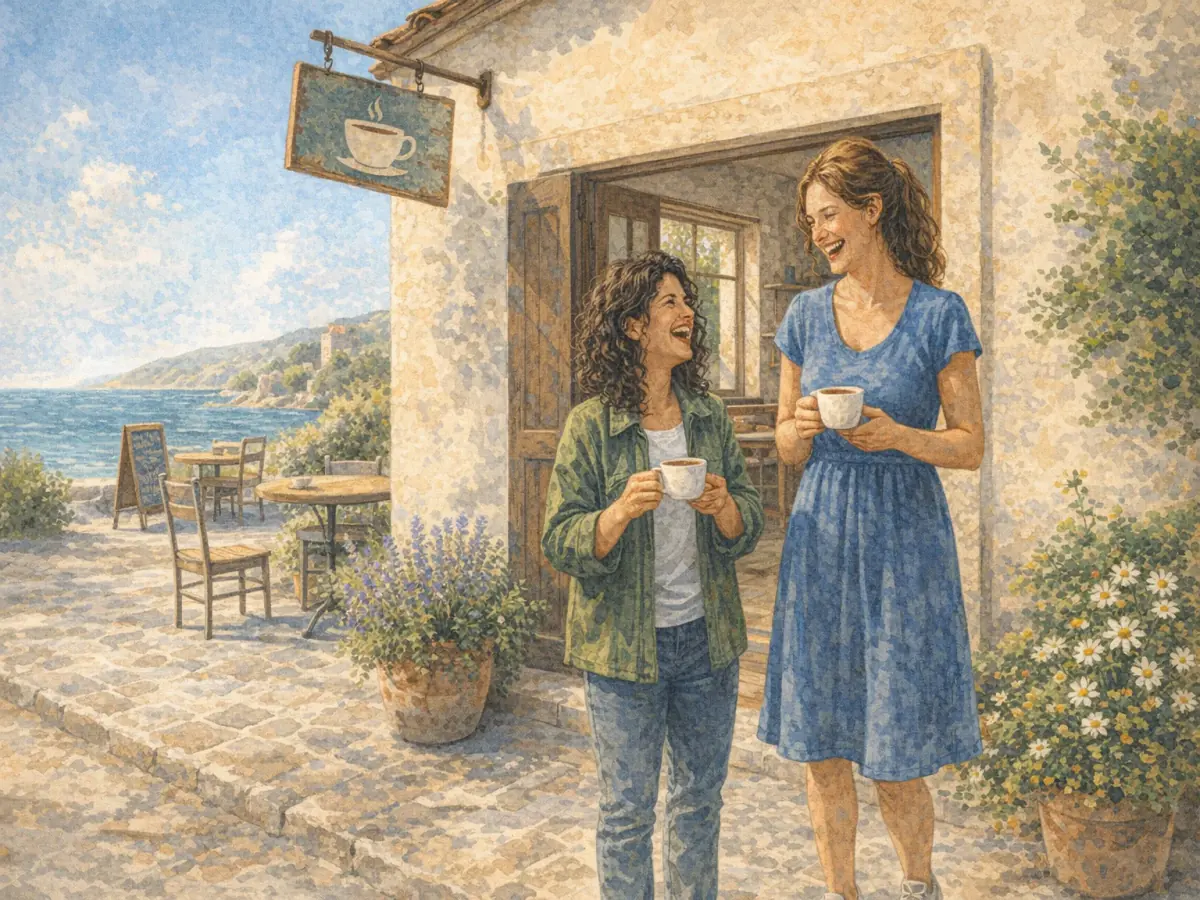
Two women laugh outside their new café on opening morning, each holding a cup of coffee, under a sign that hangs at an angle.

Frases de nivel B1 para describir una foto en inglés: there is/are, next to, behind y between, qué llevan puesto y qué hacen las personas, y un párrafo de 100–130 palabras que termina con por qué la foto es importante para ti.

Describe una foto en cuatro pasos. Di qué muestra: “This photo shows my sister and her business partner outside their new café.” Di dónde están las personas y las cosas: “on the left”, “next to”, “behind”. Di qué llevan puesto y qué hacen con el present continuous: “She’s wearing a green jacket.” “They’re laughing.” Y termina con por qué esa foto es importante para ti. Deja el present simple para los hábitos fuera de la foto: “She usually works in the kitchen.” Este tema es de nivel B1 (preintermedio); con un A2 sólido también puedes seguirlo. Con 10 minutos al día y tus propias fotos es suficiente.

¿Para quién es este artículo?

  • Adultos de nivel preintermedio que pueden hablar de sí mismos pero se quedan callados cuando les piden describir una imagen.
  • Quienes preparan un examen oral o una entrevista con una tarea de describir una foto.
  • Quien comparte fotos con amigos o compañeros que hablan inglés y quiere decir algo más que “This is my family.”
  • Demasiado pronto: si “She’s wearing…” y “There are two…” todavía te resultan nuevos, empieza por los artículos de nivel A2 sobre acciones que pasan ahora y sobre dónde están las cosas.
  • Demasiado fácil: si puedes hablar dos minutos de una foto y explicar por qué importa sin notas, pasa a contar una historia en pasado.

Abrir las páginas de muestra

Abrir las páginas de muestra

Tarjetas de vocabulario

inin

inside an area or enclosed space

Maya is standing in the doorway.

onon

touching and supported by a surface

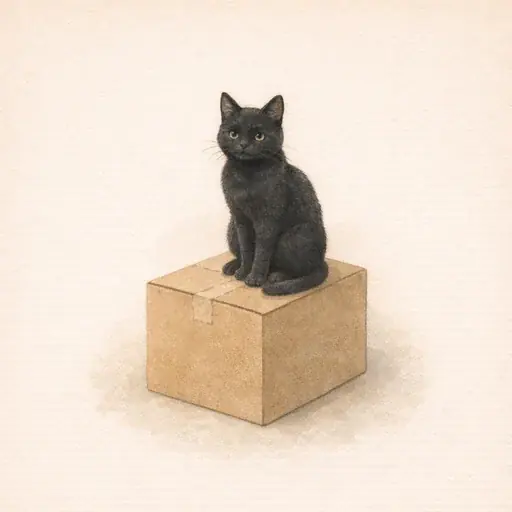
The camera is on the wooden table.

underunder

lower than and often directly below something

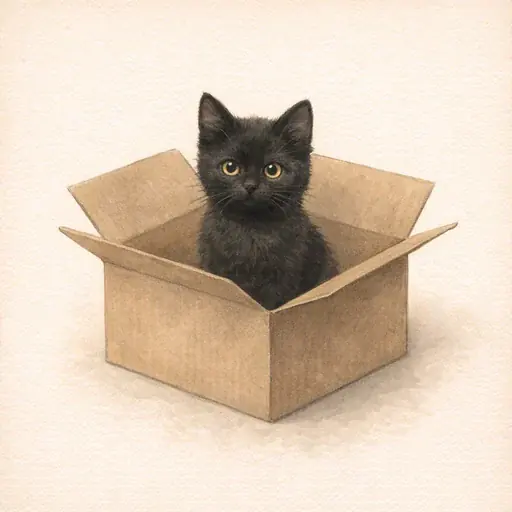
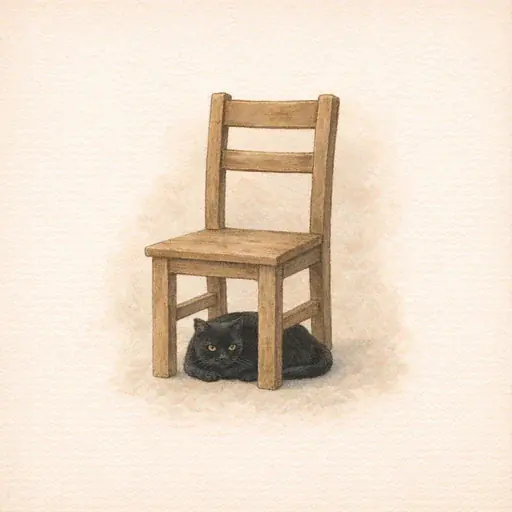
The black bag is under the chair.

next tonext to

at the side of and very near something or someone

Owen is standing next to the woman in the red coat.

behindbehind

at the back of something or someone

The coat is on the rail behind you.

in front ofin front of

further forward than something or someone, facing the same way

The photographer stands in front of the group.

betweenbetween

in the space that separates two people or things

Maya’s aunt can stand between Maya and Owen.

wear / carry / dress

wear takes clothes or jewellery; carry takes bags and cases; dress without an object describes someone’s clothing style

Maya is wearing a coat, carrying a case, and dressing casually this week.

a pair of

a quantity phrase used with plural clothes and footwear such as jeans, trousers, tights, shoes, and boots

I bought a pair of trousers and two pairs of socks.

Conversación

owen The archive photo shows your grandparents in their bakery in 1986. Where does the wooden chair go?

maya It goes next to the counter, not under the window. My grandfather is sitting on it in the original.

owen I’m moving it now. Am I wearing the right jacket?

maya No, you aren’t. He’s wearing a white shirt and a dark coat. The coat is on the rail behind you.

owen Got it. What are you holding in the old photo?

maya A tray of bread. I’m holding the menu at the moment, so let’s swap it.

owen Your aunt usually works at the new bakery. Is she joining us?

maya Yes. She’s parking the car, and then she can stand between us for the final picture.

Estructura de la frase

What is different from the old photograph?

The chair is in the wrong place, Owen is wearing the wrong jacket, and Maya is holding a menu instead of a tray.

Present simple gives routine facts; present continuous and place phrases describe today’s scene.

  • usually works
  • is helping today
  • next to
  • in front of

Más práctica

Present continuous: now and around now

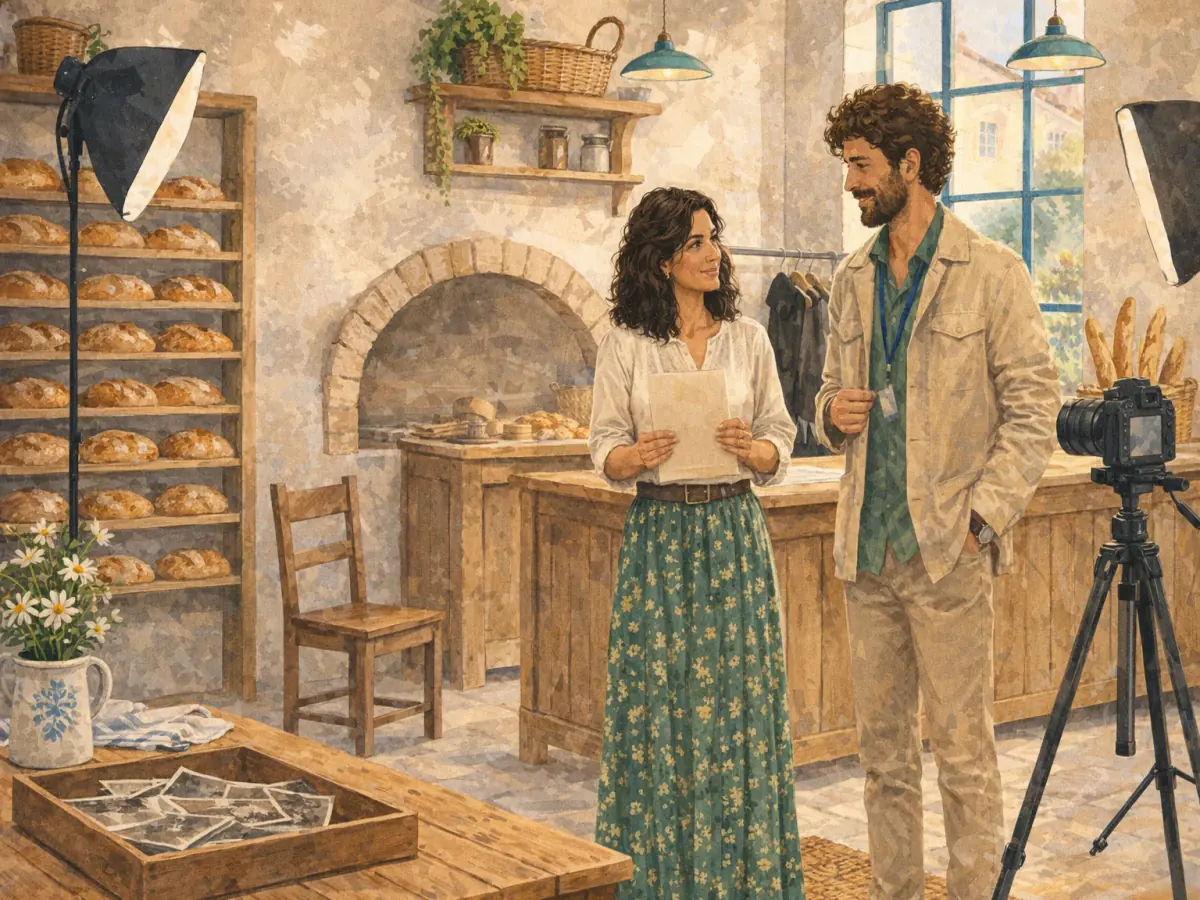
Adults arranging clothes and objects for an archive photo recreation.
am/is/are + verb-ing

Use the present continuous for an action happening now

The photographer is moving the lamp.

am not / isn’t / aren’t + verb-ing

Put not after am, is, or are for a negative action now

The models aren’t looking at the camera yet.

Am/Is/Are + subject + verb-ing?

Move am, is, or are before the subject to ask about an action now

Is Owen wearing the original coat?

present simple: routine or fact

Use the present simple for things that happen regularly or are generally true

Owen works in a studio every weekday.

present continuous: temporary or now

Use the present continuous for the current moment or a temporary situation

This month, Owen is helping with an archive project.

There is / There are

Use there is/are to say what exists in a picture before describing actions

There are two chairs next to the window.

about /ə/ · photographer /ə/

The weak sound /ə/ often appears in unstressed syllables

The photographer is standing behind the camera, and about ten people are waiting.

shirt /ɜː/ · skirt /ɜː/

The long central sound /ɜː/ is stressed in words such as shirt and skirt

The woman in the purple skirt is wearing a white shirt.

Write a concise photo description

Two women laugh outside their new café on opening morning, each holding a cup of coffee, under a sign that hangs at an angle.

This photo shows my sister Lale and her business partner, June, outside their new café in Brighton. I took it on the morning they opened last May. Lale is the short woman on the left. She has curly dark hair and she’s wearing a green jacket over a white T-shirt. June is standing next to her in a blue dress and trainers. They both look tired but excited.

Lale usually works in the kitchen, and June manages the customers. In the photo, they’re holding the first two cups of coffee and laughing because the café sign is hanging at an angle. I like this picture because they spent a year preparing the business, and it captures the exact moment their plan became real.

What information makes a photo description complete?

Identify the people, give the time and place, describe appearance and actions, explain the relationship, and say why the photo matters.

A connected paragraph guides the reader from the whole photo to specific people and its personal meaning.

  • This photo shows…
  • The person on the left…
  • is wearing…
  • At the moment…
  • I like it because…
Aprende esta unidad
¿Cómo quieres aprender?
¿Ya tienes cuenta?

Una cuenta gratis abre una unidad para siempre.

Primero la foto entera, luego los detalles

Una descripción clara va de lo grande a lo pequeño: qué muestra la foto, cuándo y dónde, las personas una por una y, al final, por qué importa. Estas frases de arranque hacen casi todo el trabajo:

  • “This photo shows …” – En esta foto se ve …
  • “I took it last summer at my cousin’s wedding.” – La hice el verano pasado en la boda de mi primo.
  • “The person on the left is …” – La persona de la izquierda es …
  • “I like this picture because …” – Me gusta esta foto porque …

There is, there are y dónde están las cosas

Usa there is/are para decir qué hay en la foto antes de hablar de acciones: “There are two chairs next to the window.” En español “hay” vale para uno y para varios; en inglés el plural necesita “there are”. Después sitúa a cada persona y cada cosa:

  • in (en, dentro de): “A woman is standing in the doorway.”
  • under (debajo de): “The black bag is under the chair.”
  • next to (al lado de): “He’s standing next to the woman in the red coat.”
  • in front of (delante de): “The photographer is standing in front of the group.”
  • between (entre): “Her aunt is standing between them.”

Present continuous para la foto, present simple para la rutina

Lo que hacen las personas en una foto está pasando en ese momento, así que usa am/is/are + -ing. Usa el present simple para hechos y hábitos fuera de ese momento. En español el presente simple sirve para las dos cosas (“¿Qué haces?”); en inglés hay que separarlas. Con las dos en un párrafo, quien lee ve qué es lo normal y qué es especial de ese momento.

  • Ahora: “The photographer is moving the lamp.”
  • Rutina: “He works in a studio every weekday.”
  • Algo temporal: “This month, he’s helping with an archive project.”
  • Los verbos de estado suelen quedarse en simple: “They look tired but excited.”

Una conversación corta: recrear una foto antigua

Dos personas están recreando una foto familiar tomada en una panadería en 1986 y comprueban qué tenía cada uno en la mano y dónde se coloca cada persona. Fíjate en el cambio entre “usually works” (rutina) e “is parking” (ahora mismo).

Owen Got it. What are you holding in the old photo?

Maya A tray of bread. I’m holding the menu at the moment, so let’s swap it.

Owen Your aunt usually works at the new bakery. Is she joining us?

Maya Yes. She’s parking the car, and then she can stand between us for the final picture.

La ropa: wear, carry y a pair of

La ropa aparece en casi cualquier foto de personas. Tres palabras pequeñas causan la mayoría de los problemas:

  • wear para ropa y joyas: “She’s wearing a green jacket over a white T-shirt.”
  • carry para bolsos y maletas: “He’s carrying a case.” En español “llevar” sirve para las dos cosas; en inglés no.
  • dress sin complemento, para el estilo: “She’s dressing casually this week.”
  • a pair of para prendas en plural: “a pair of trousers”, “two pairs of socks”. Como “unos pantalones”, “trousers” va siempre en plural.
  • shirt y skirt se dicen con la vocal larga de “her”: “The woman in the purple skirt is wearing a white shirt.”
Aprende esta unidad a tu manera

Escribir una descripción de 100–130 palabras

Un párrafo de 100–130 palabras es lo bastante largo para el lugar, las personas y una razón, y lo bastante corto para decirlo en un minuto aproximadamente. Constrúyelo en este orden:

  • Qué y quién: “This photo shows my sister Lale and her business partner, June, outside their new café.”
  • Cuándo: “I took it on the morning they opened last May.”
  • Cada persona, de izquierda a derecha: dónde está, cómo es y qué lleva puesto.
  • Rutina frente al momento: “Lale usually works in the kitchen … In the photo, they’re holding the first two cups of coffee.”
  • Por qué importa: “I like this picture because … it captures the exact moment their plan became real.”

Errores frecuentes

Todos tienen un arreglo fácil:

  • “He wears a coat.” Para lo que ves en la foto, di “He’s wearing a coat.”
  • “There is two chairs.” En plural es “there are”: “There are two chairs.”
  • “She’s wearing a bag.” El bolso se lleva en la mano o al hombro: “She’s carrying a bag.”
  • “a trousers”, “a jean”. Di “a pair of trousers”, “jeans”.
  • Terminar después de nombrar a las personas. Sin una última frase sobre por qué importa la foto, el texto parece una lista.

Rutina de práctica de 10 minutos al día

Usa una foto real de tu móvil; es más fácil hablar de gente que conoces.

  • 2 minutos: pon la conversación, para después de cada frase y repítela.
  • 3 minutos: di cinco frases sobre tu foto: una con there is/are, dos con expresiones de lugar y dos con verbos en -ing.
  • 3 minutos: escribe el párrafo en el orden de arriba y cuenta las palabras: 100–130.
  • 2 minutos: léelo en voz alta y fíjate en la vocal débil (/ə/) de “photographer” y “about”.

Qué viene después

Cuando ya sepas describir un momento, cuenta qué pasó antes y después: una historia de viaje corta con contexto, un punto de giro y un final. Después, conecta hechos pasados con el presente, como en un texto sobre una experiencia y lo que cambió.

Preguntas frecuentes

¿Cómo se empieza a describir una foto en inglés?

Empieza con la foto entera en una frase: “This photo shows …” más quién y dónde. Luego di cuándo la hiciste y solo entonces describe a las personas una por una. Si empiezas por un detalle pequeño, cuesta seguir la descripción.

¿Present simple o present continuous para describir una foto?

Usa el present continuous para lo que hacen las personas en la foto: “They’re laughing.” Usa el present simple para hechos fuera de ese momento: “She usually works in the kitchen.” Verbos como look, have y be suelen quedarse en simple: “They look tired.”

¿Cuántas palabras debe tener la descripción de una foto?

Para practicar a este nivel, apunta a 100–130 palabras: de seis a ocho frases. Así cubres el lugar, las personas, un detalle de rutina y por qué importa la foto, y se dice en un minuto aproximadamente.

Aprende esta unidad
¿Cómo quieres aprender?
¿Ya tienes cuenta?

Una cuenta gratis abre una unidad para siempre.

¿Qué viene después?

Sigue practicando con Flai

Flai es la aplicación de Flalingo para practicar conversación con IA mediante diálogos de voz, correcciones e informes de cada lección.

Aprende con un profesor en vivo

En las clases de Flalingo practicas unidades como esta en clases individuales con un profesor en vivo.