
 hot
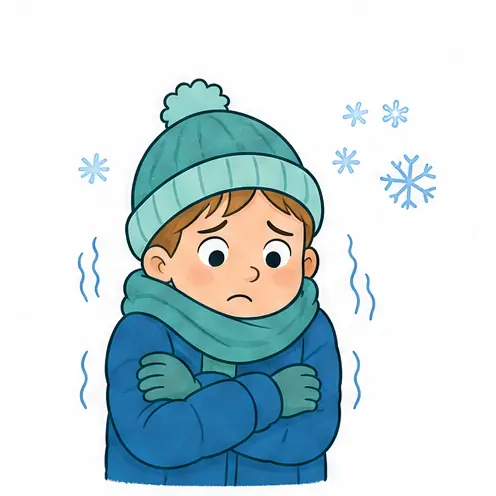 cold
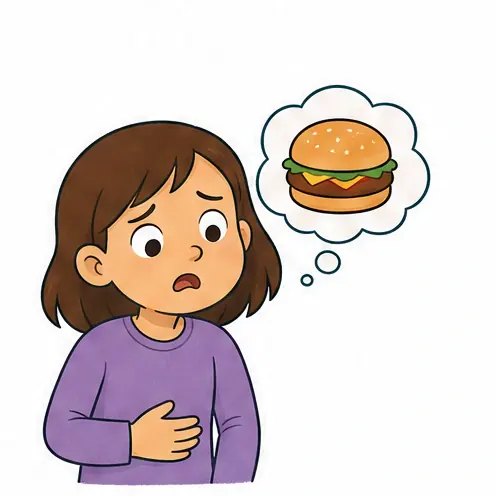 hungry
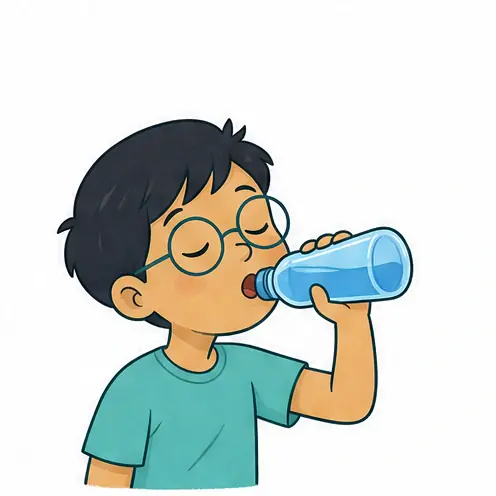 thirsty
 happy
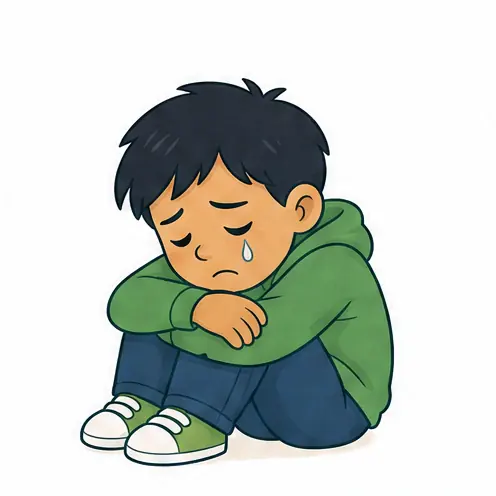 sad
Six words for how we feel
Four words describe the body: hot, cold, hungry and thirsty. Two describe feelings: happy and sad. “Hungry” means you want food, “thirsty” a drink; children often swap them, so give each word an action.
“It’s hot.” is about the day or the room. “We’re hot.” is about our bodies. Some languages use one phrase for both, so say both and point: at the sun, then at yourselves.
- hot – fan your face
- cold – shiver
- hungry – rub your tummy
- thirsty – pretend to drink
- happy – smile
- sad – frown
“We” or “they”: who is in the group?
“We” always includes the speaker: me and at least one other person. “They” means other people: not me, and not the person I am talking to. For “we”, draw a circle in the air around yourself and your child. For “they”, point at the others: two teddies or children in a picture.
English often names people first and then switches to “they”: “Grandma and Grandpa are cold. Are they hungry too?” “They” still means Grandma and Grandpa. If your child points at someone new, say the names again.
Long and short forms: we’re, they’re, aren’t
With “we” and “they” the verb is “are”, and in speech it is usually shortened. For “not” there are two short forms, “We aren’t cold.” and “We’re not cold.”, and both are correct.
When your child starts writing, show them that “they’re” sounds like “their” and “there”: the apostrophe marks the missing “a” of “are”.
- We are hot. = We’re hot.
- They are thirsty. = They’re thirsty.
- We are not cold. = We aren’t cold.
- They are not sad. = They aren’t sad.
Asking “Are they…?” and answering
To ask, put “are” first: “Are they thirsty?” The short answer repeats “are”: “Yes, they are.” or “No, they aren’t.” “Yes, they’re.” is wrong, because short forms like “they’re” can’t end a sentence.
Some children say “yes” to every question, so ask your child to point at the matching card first. When you ask a group “Are you hot?”, the group answers with “we”: “Yes, we are.”
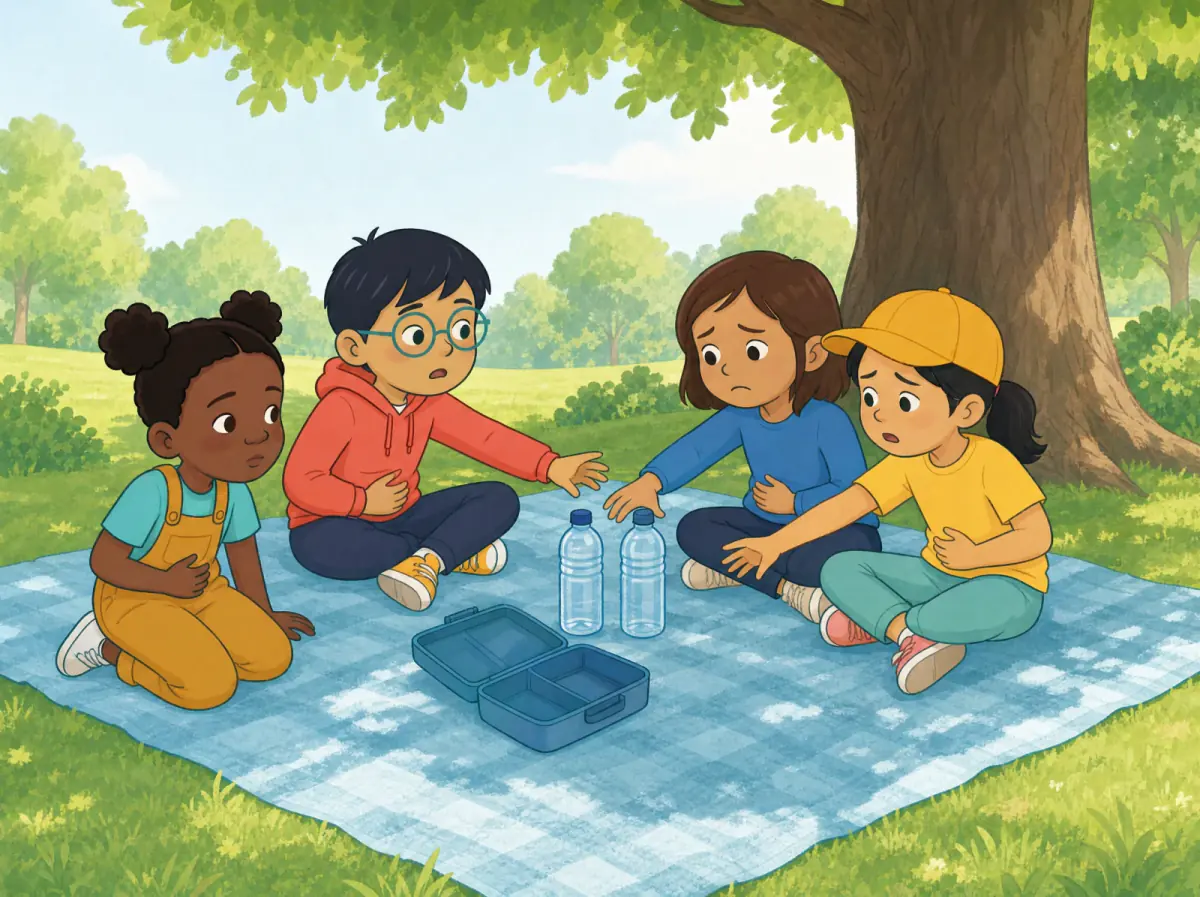
Hear it in a short picnic conversation
Two children at a picnic talk about themselves (“we”) and two friends (“they”). The names come first, then “they”; “too” adds a second feeling. Play it twice: first your child just points, at themselves for “we” and at two imaginary friends for “they”; then pause after the question so your child can answer.
Nia We're hot.
Leo Mina and Jo are thirsty.
Nia Are they hungry too?
Leo Yes, they are.
Five more feelings for confident children
When the first six words are easy, add tired, angry, scared, brave and nervous. “Scared” is for something frightening now, like a loud drum. “Nervous” is the worry before something, like a test. “Brave” is how you feel when you act although you are scared. Use them with “feel”: “She feels brave.”, but “They feel nervous.” with no “s”.
A home game: the teddy picnic
Sit two soft toys opposite you and your child: you two are “we”, the toys are “they”. Set the scene with one object: a blanket, an empty bowl or a cup. Your child decides how the toys feel; you ask “Are they cold?” and your child answers. Then swap roles.
End each round with a “we” sentence: “We aren’t cold. We’re happy.” Three or four questions are enough. In daily life, use moments when the words are true: after running, “We’re thirsty. Let’s get some water.”
Common mistakes and quick fixes
These are normal at this stage. Repeat the sentence back the right way and carry on.
- “We have hot.”: English uses “are” with these words: “We’re hot.”
- “They hungry.”: “are” can’t be left out: “They’re hungry.”
- “Yes, they’re.”: the yes answer stays long: “Yes, they are.”
- “No, they don’t.”: the answer repeats “are”: “No, they aren’t.”
- “They’re hot.” about your child and a friend: if the speaker is in the group, it is “We’re hot.”
What comes next
Next, your child can talk about themselves: “How do you feel today?” “I’m happy today. I’m not sad.” Two sentences like these make a good first piece of writing. After that, “we” and “they” work with “can” for abilities: “We can swim. They can’t swim.”