
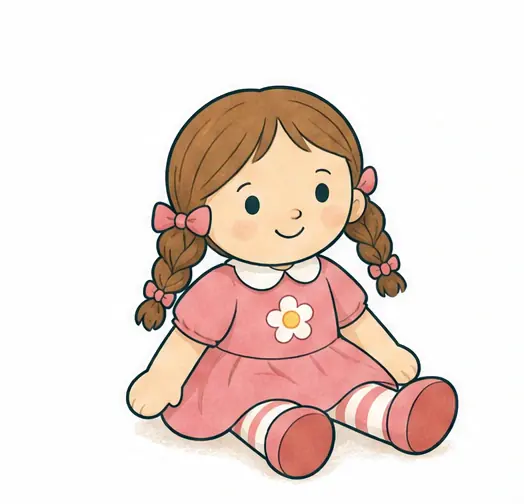
 doll
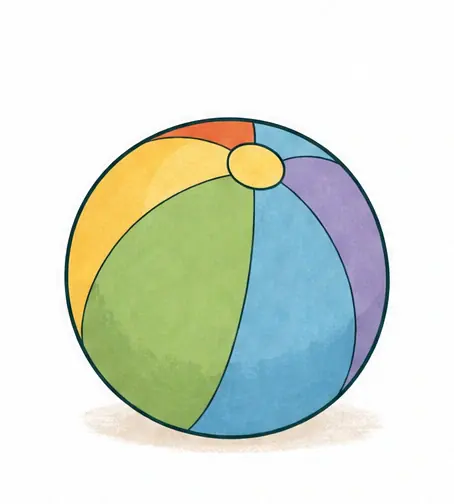 ball
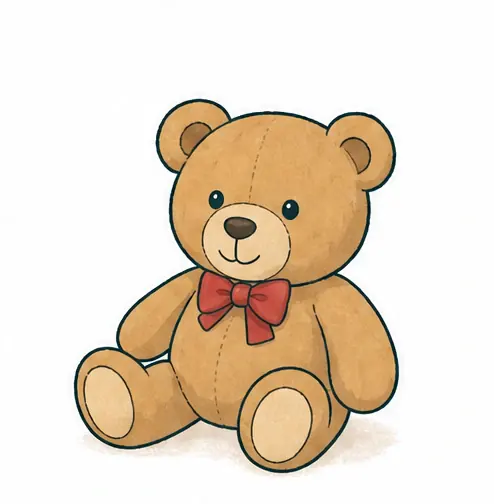 teddy
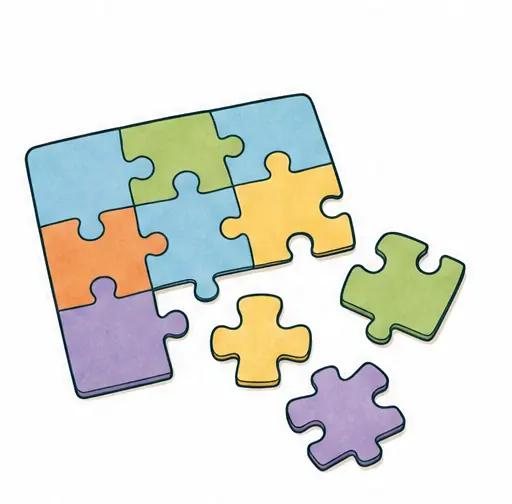 puzzle
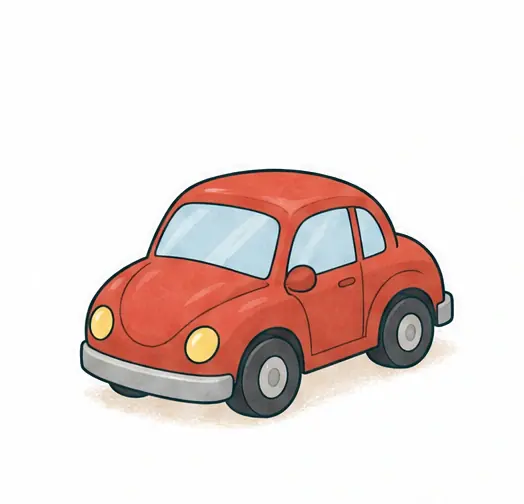 car
Ten toy words to start with
Start with toys your child can hold, or quick drawings. Let your child listen to the cards above and point first; saying the word comes later. Add the next five once the first five feel easy.
- doll
- ball
- teddy (short for “teddy bear”)
- puzzle
- car
- Next five: kite, bike, scooter, train, game
My or your? It depends on who is speaking
“My” means the thing belongs to the person speaking; “your” means it belongs to the person you are talking to. So the same car is “my car” for its owner and “your car” for anyone talking to the owner. The toy stays the same; the word changes with the speaker.
A gesture helps: a hand on your chest for “my”, a point at the other person for “your”. And English “my” and “your” never change form: my doll, my cars.
- This is my car. (I own it.)
- Is this your car? (Do you own it?)
Asking and answering: “Is this your car?”
To make the question, “is” moves to the front: “This is your car.” becomes “Is this your car?” The short answer is “Yes, it is.” or “No, it isn’t.”, never “Yes, it’s.”, because that short form can’t end a sentence.
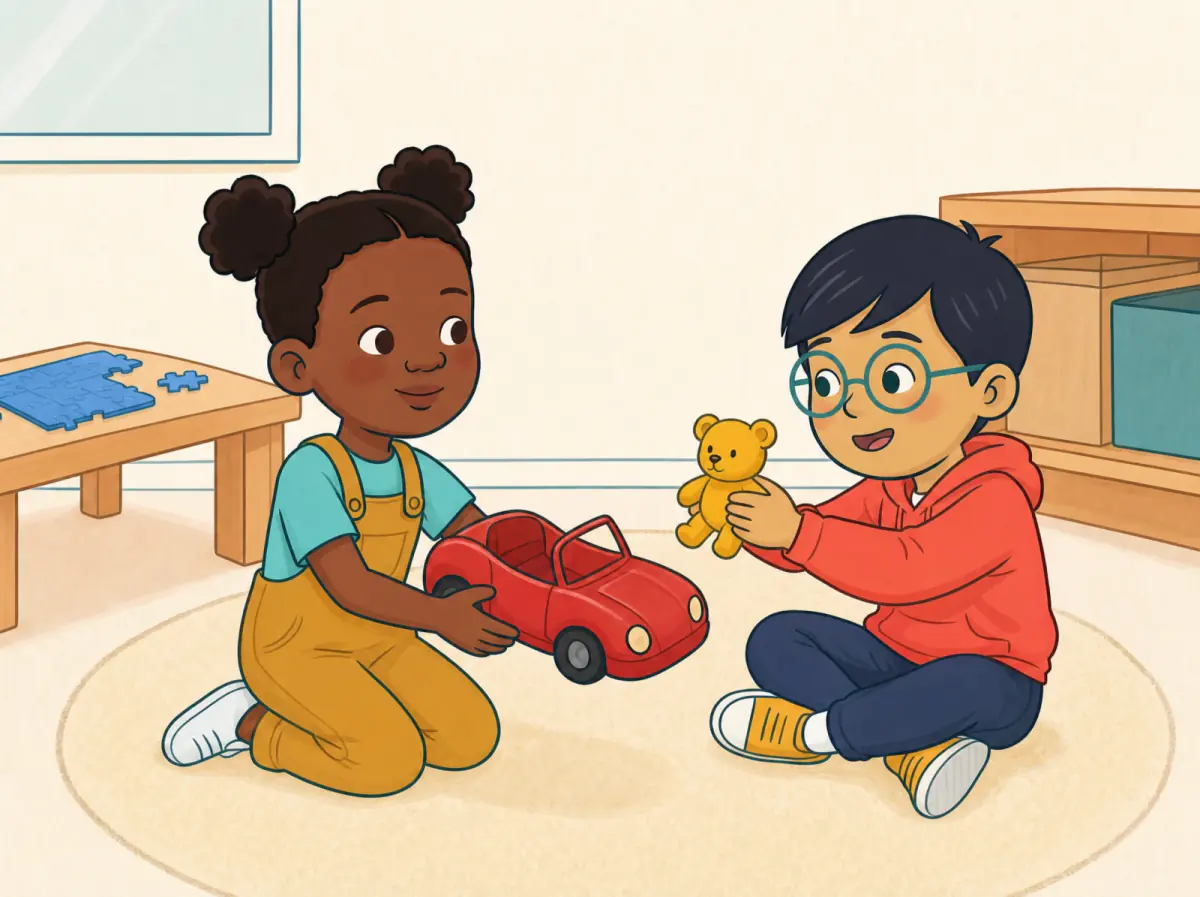
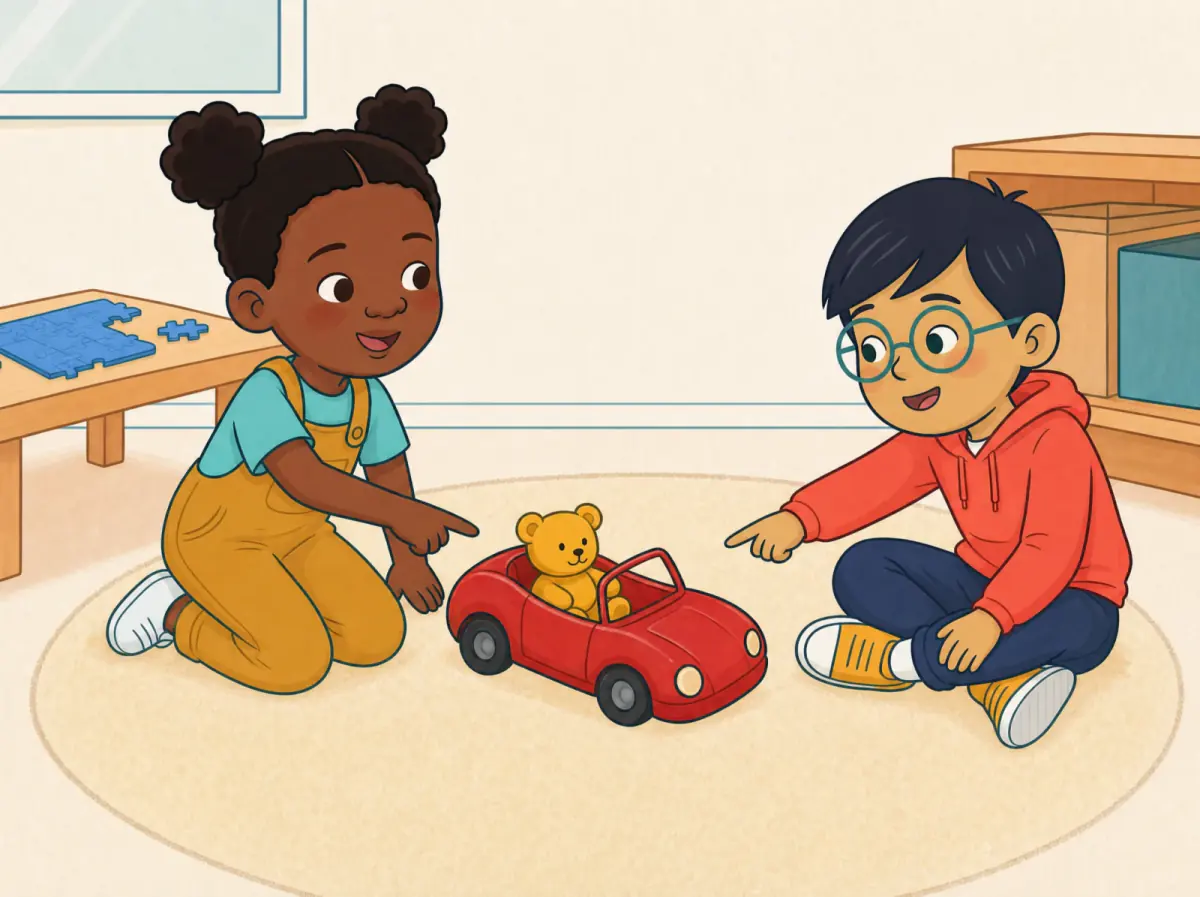
In the recording below, two children ask about each other’s toys. Listen together, then share the roles.
Leo Is this your car?
Nia Yes, it is.
Nia Is this your teddy?
Leo Yes, it is.
When the answer is no
“No, it isn’t.” is correct, but naming the owner completes the answer: “No, it isn’t. It’s your puzzle!” The puzzle belongs to the child who asked, so the answer hands it back with “your”. The next line uses both words: “My teddy is in your car!” Act it out with a teddy in a toy car.
Leo Is this your puzzle?
Nia No, it isn't. It's your puzzle!
Leo My teddy is in your car!
Nia A little driver!
Three five-minute toy games at home
Short and often beats one long session. Stop while your child still wants more.
- Two piles: put a few toys in front of each of you. Pick one up and ask “Is this your ball?” Your child answers “Yes, it is. It’s my ball.” or “No, it isn’t. It’s your ball.” Then swap.
- Wrong owner: hug your child’s teddy and say “This is my teddy!” Most children love correcting a grown-up: “No! It’s my teddy!” Hand it back: “Yes, it’s your teddy.”
- Favourite toy: ask “What’s your favourite toy?” Your child fetches it: “My favourite toy is my kite.” Then you answer.
Sounds and first writing
Children at this level also practise four letter sounds: e as in egg, f as in fig, g as in goat and h as in hat. Teach the sound, not the letter name: the “g” in “goat” is hard, not “gee”. “Teddy” has the short “e” of “egg”, and “game” starts like “goat”.
For writing, write “Thisismykite.” and read it together. Your child finds the four words and copies the sentence with a finger space between them: “This is my kite.” Check the capital T and the full stop, then try one sentence about a favourite toy.
Common mistakes and quick fixes
These slips are normal. Don’t stop the game; just say the right version again.
- Copying “your”: asked “Is this your car?”, your child says “Yes, it’s your car.” about their own car. Put their hand on their chest and say “Yes! It’s my car.”
- Saying “you” for “your”: “Is this you car?” Say “your” slowly before the toy word.
- Leaving out “is”: “This my car.” Many languages don’t need a word like “is” here. Tap once for each word: This / is / my / car.
- Ending with “it’s”: “Yes, it’s.” Use the full form: “Yes, it is.”
What comes next
Once my and your come without help, add “his” and “her”: “It’s her doll.” “It’s his bike.” Then “its” for an animal or a thing: “The cat likes its ball.” Later, use “these” for more than one toy: “These are my cars.”