
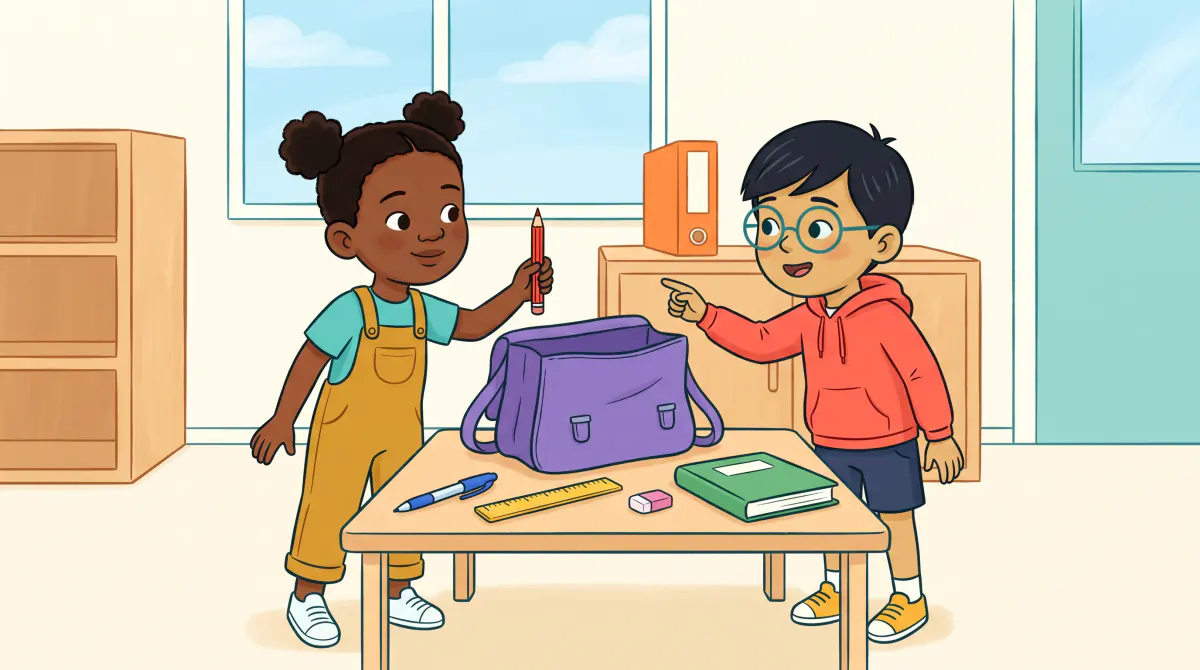
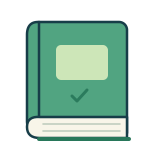
 book
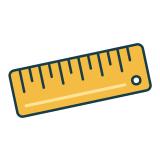 ruler
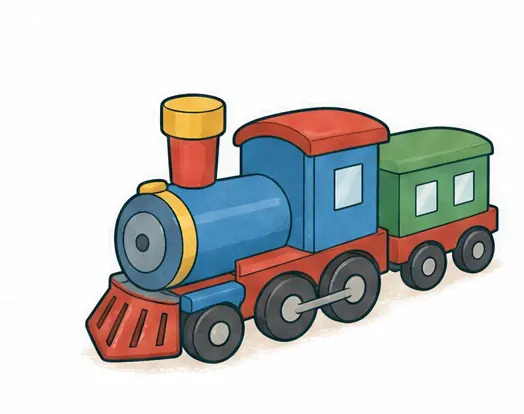 train
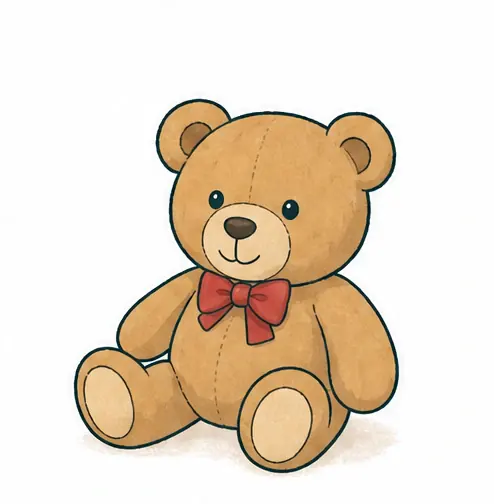 teddy
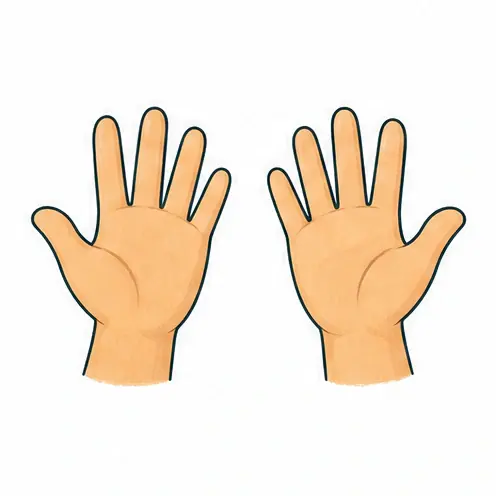 hands
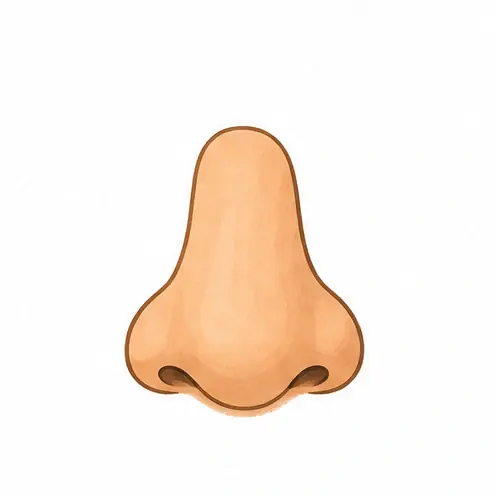 nose
Three small steps, one conversation
A review joins words your child met in separate groups (school things, toys, body words) into one conversation. The new skill is choosing the right question and the right little word each time. Start with the word cards on this page: book, ruler, train, teddy, hands and nose.
- Naming a thing: “What’s this?” “It’s a book.”
- Asking about the owner: “Is this your ruler?” “Yes, it is.” or “No, it isn’t.”
- Naming parts: “This is its nose.” “These are its arms.”
My, your and its: who does it belong to?
“My” points to the person speaking and “your” to the person listening, so the same teddy is “your teddy” in your question and “my teddy” in your child’s answer. “Its” is for something that belongs to a toy, an animal or a thing: the teddy’s nose is “its nose”, not “my nose”.
Use gestures: a hand on your chest for “my”, an open hand towards the listener for “your”, a finger on the teddy for “its”. For a favourite teddy or a pet, “his” or “her” is correct too; for a book, “its” is the word.
- This is my teddy. (It belongs to me.)
- Is this your teddy? (Does it belong to you?)
- These are its arms. (They belong to the teddy.)
This is or these are?
Use “this is” for one thing and “these are” for two or more: “This is its nose.” but “These are its arms.” Hands and arms come in pairs, so they are perfect for practising “these are”. “This is” also introduces people: “This is my friend, Mina.”
Listen: a book and a teddy
In the conversation below, two children name a book, check who owns a teddy and name its parts. Play it once while you point to a real book and teddy, then pause after each line for your child to repeat.
Then share the roles and swap: whoever asks says “your”, and whoever owns the teddy says “my”.
Nia What's this?
Leo It's a book.
Nia Is this your teddy?
Leo Yes, it is. This is my teddy.
Nia These are its arms.
Leo And this is its nose.
“Its” or “it’s”?
The two words sound the same, so the difference only shows in writing, for example on a labelled drawing. “It’s” is short for “it is”: “It’s a book.” “Its” means “belonging to it”: “These are its arms.” A quick test: if “it is” fits, write “it’s”.
Three review games at home
Pick one game a day and stop while your child still wants more.
- Mystery bag: put a book, a ruler, a toy train and a teddy in a bag. Your child pulls one out: “What’s this?” You answer: “It’s a ruler.” Then swap.
- Whose is it?: mix your things with your child’s. Hold one up: “Is this your book?” “Yes, it is. This is my book.” or “No, it isn’t.” Get one wrong on purpose; children love correcting a grown-up.
- Teddy doctor: your child examines the teddy: “These are its arms. This is its nose.” Then the doctor checks you: “These are your hands.”
Common mistakes and quick fixes
These slips are normal. Keep playing and repeat the right version.
- “These are my arms.” about the teddy: point at it and say “Its arms!”, then at your child: “Your arms!”
- “This is your teddy.” about their own teddy (copied from your question): put their hand on their chest and say “This is my teddy.”
- “This are its arms.”: one finger for “this is”, two for “these are”.
- “Yes, it’s.”: short answers use the full form: “Yes, it is.”
- “It’s book.”: one thing needs “a”: “It’s a book.”
What comes next
When this feels easy, your child can write one sentence, “This is my book.”, with a capital letter, finger spaces and a full stop. Then try “he” and “she” with jobs: “Is she a teacher?” “No, she isn’t. She’s a farmer.” Later come “his” and “her” for people’s things (“It’s her ruler.”) and “in”, “on” and “under”.