
Skip to content
Flalingo

English practice

Days of the week in English for children (Pre-A1): say them in order with a colour-week game

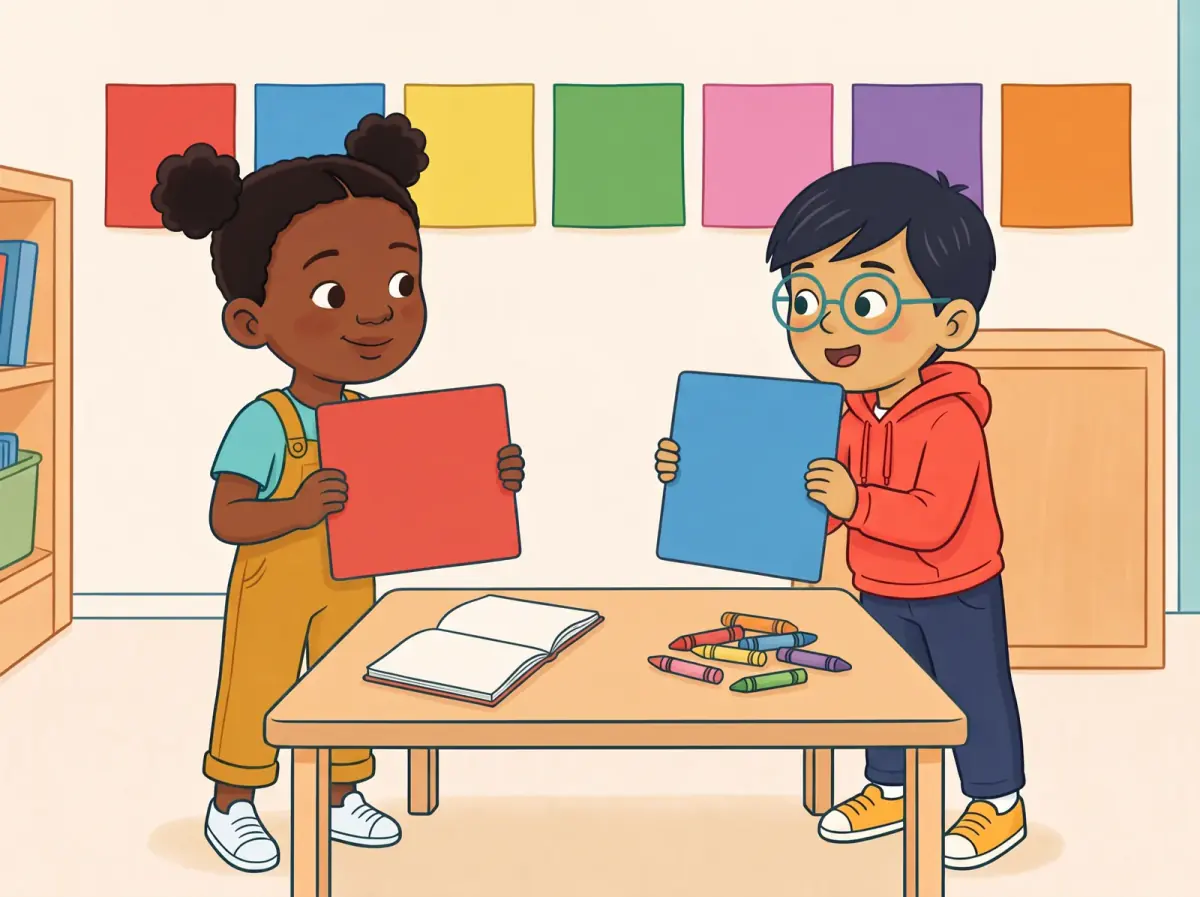
A child holds a red page and another child holds a blue page. Seven colour pages hang on the wall: red, blue, yellow, green, pink, purple and orange.

Teach your child the seven English day names (Pre-A1), the tricky sounds in Wednesday and Thursday, and a five-minute colour-week game to play at home.

The easiest way to teach children the days of the week in English is to say them every day in the same order and link each day to something they can see. Give each day a coloured page: “Monday. A red page!” “Tuesday. A blue page!” This is a very first topic (Pre-A1) for children of about 5–8 who are starting English. A few minutes a day is enough, and you don’t need to speak English yourself: the cards below play every day name.

Who this is for

  • Parents of children starting English: your child knows a few words, such as colours or numbers, and is ready for a fixed sequence.
  • Parents who aren’t confident in English: every day name has audio on the cards, and the sentences you need are written out here.
  • Children who meet the days at school: for a short daily routine at home.
  • Too early: if your child doesn’t know any colour words yet, start with colours first; this game uses them.
  • Too easy: if your child already says “Today is Monday.” or “On Saturday I play football.”, go to “What comes next” at the end.

Open the sample pages

Open the sample pages

Word cards

red
yellow
pink
green
purple
orange
blue
Sunday
Monday
Tuesday
Wednesday
Thursday
Friday
Saturday

Conversation

Nia Monday. A red page!

Leo Tuesday. A blue page!

Nia Wednesday. A yellow page!

Leo Thursday. A green page!

Nia Friday. A pink page!

Leo Saturday and Sunday. Purple and orange!

Language pattern

What colour is it?

It's blue.

More practice

Our little notebook

Nia holds a red page and Leo holds a blue page. Seven colour pages hang on the wall: red, blue, yellow, green, pink, purple and orange.
red
yellow
pink
green
purple
orange
blue
Sunday
Monday
Tuesday
Wednesday
Thursday
Friday
Saturday

Leo What colour is it?

Nia It's blue.

Nia It's red.

Leo Sunday, Monday, Tuesday, Wednesday, Thursday, Friday, Saturday.

Nia Pink, green, purple, orange, yellow.

What colour is it?

It's blue.

My little page

Nia holds a red page and Leo holds a blue page. Seven colour pages hang on the wall: red, blue, yellow, green, pink, purple and orange.

Nia Monday: red. Tuesday: blue.

My writing model

Monday: red. Tuesday: blue.

Learn this unit
How would you like to learn?

The seven days and how to say them

Say the days in the same order every time, like a little chant. Each card above has audio: let your child repeat one day after you, then two, then three. Three or four days at a time is plenty at first; the whole week follows within a few days.

Two days need extra care. In “Wednesday” the first “d” is silent, so it sounds like “Wenz-day”. “Tuesday” and “Thursday” start differently: “Tues-” sounds like “tyooz” (many Americans say “tooz”), while “Thurs-” starts with a soft “th”, made with the tip of the tongue between the teeth.

  • Monday
  • Tuesday
  • Wednesday (sounds like “Wenz-day”)
  • Thursday
  • Friday
  • Saturday
  • Sunday

Does the week start on Sunday or Monday?

It depends on the calendar. In the United States calendars usually start on Sunday; in the UK and much of Europe they usually start on Monday, and you will hear both orders in English recordings. The names and their order never change, only the first day does. Pick one starting point and keep it. If your child hears a list that starts somewhere else, show them that the days go round in a circle and only the starting point is different.

A colour week: listen, point and say

Give each day a coloured page and the order becomes something your child can see. In the short story below, each line names a day and its page. Listen together and point to the matching colour; then pause after each line and let your child say it.

The colours are a free choice, not a rule: Monday is not always red. Your child can make their own colour week, as long as the days stay in order.

Nia Monday. A red page!

Leo Tuesday. A blue page!

Nia Wednesday. A yellow page!

Leo Thursday. A green page!

Nia Friday. A pink page!

Leo Saturday and Sunday. Purple and orange!

Learn this unit your way

Three five-minute games at home

Short and often works better than one long session. Stop while your child still wants more.

  • Colour week on the wall: cut seven paper squares in seven colours. Your child chooses a colour for each day and you write the labels together: “Monday: red. Tuesday: blue.” Stick them up in a row and say the week together every morning.
  • What colour is it?: point to one square and ask “What colour is it?” Your child answers with the colour: “It’s green.” Then swap roles. If your child answers with the day (“Thursday!”), smile, point again and say “It’s green.”
  • Missing day: turn one square over or hide one card. Say the week together and stop at the gap: “Monday, Tuesday, …?” Your child finds the missing day.

Common mistakes and quick fixes

Most slips are normal and short-lived. You don’t need to stop the game; just say the right version again.

  • Mixing up Tuesday and Thursday: to a beginner they sound alike. Say them side by side and exaggerate the start: “Tues-day” with a “t”, “Thurs-day” with the tongue between the teeth.
  • Reading Wednesday the way it is written: the first “d” is silent. Clap two beats as you say “Wenz-day”.
  • Writing day names with a small letter: in English the days always start with a capital letter: “Monday”, not “monday”.
  • Answering a colour question with a day: “What colour is it?” asks for a colour. Point at the page again and offer the answer: “It’s red.”

What comes next

Once your child can say the week in order, add one sentence: “Today is Monday.” Ask “What day is it today?” every morning. Later, link the days to real plans: “On Saturday we go to the park.” Short, true sentences about your own week are the ones that stick.

Frequently asked questions

Do days of the week start with a capital letter in English?

Yes. In English the days of the week always start with a capital letter: Monday, Tuesday, Sunday. Many languages write them with a small letter, so children often forget; a labelled week chart on the wall helps.

How do you pronounce Wednesday?

Most people say it in two parts, like “Wenz-day”. The first “d” and the second “e” are not pronounced. Listen to the Wednesday card above a few times and clap the two beats with your child.

What is an easy way for children to learn the days of the week in English?

Say them in the same order every day and link each day to something visible, such as a colour or that day’s activity. A short daily routine (“Today is Friday.”) works better than learning all seven names in one sitting.

Learn this unit
How would you like to learn?

What comes next?

One-to-one lessons with a live teacher

In Flalingo kids lessons, your child practises units like this one-to-one with a live teacher, through games on the same screen.

Book a free trial lesson