
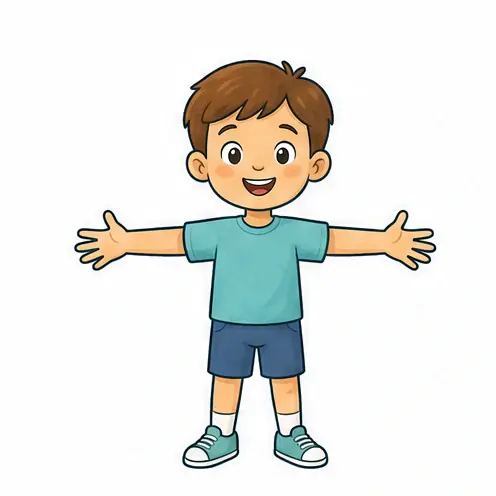
 arms
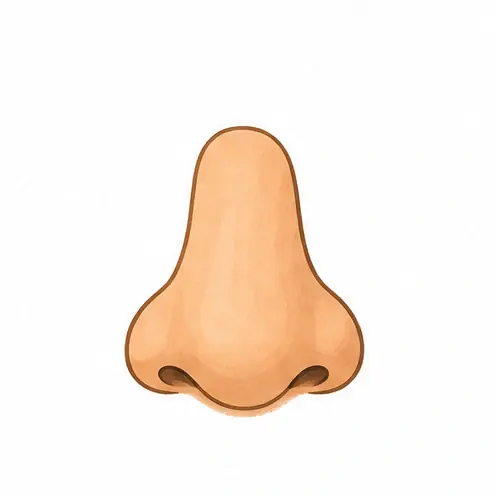 nose
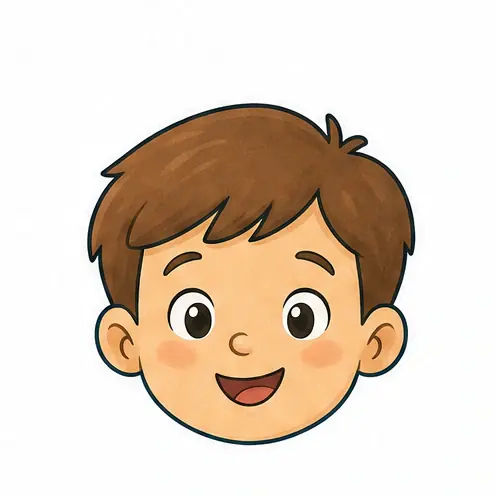 face
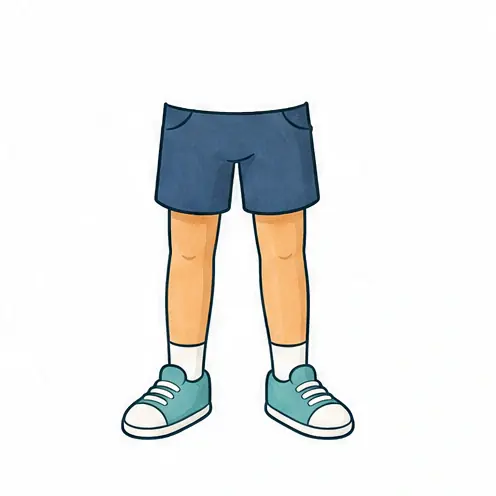 legs
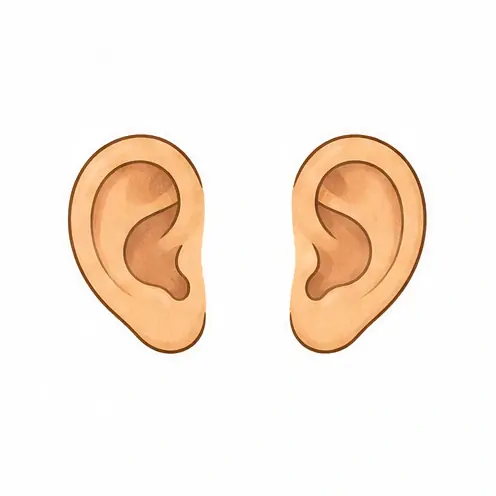 ears
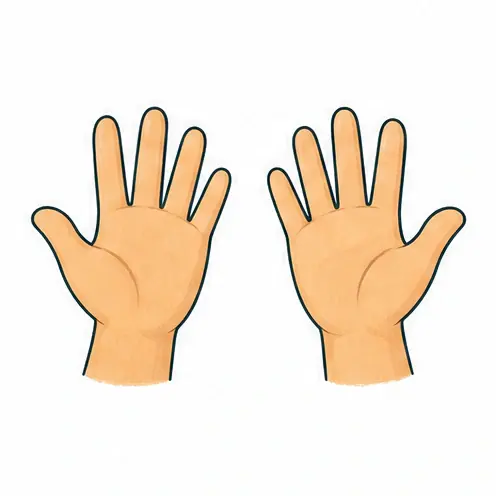 hands
Ten body words to start with
Start with parts your child can touch. Let them listen to the cards above and point to each part on their own body; saying the word comes later. Add the last three once the first seven feel easy.
We have one face and one nose, but two eyes, ears, arms, legs and hands, so most body words are heard with an -s.
- face, nose (one of each)
- eyes, ears (two)
- arms, legs, hands (two)
- Next three: fingers, eyebrows, shoulders
One or more than one: “this is” and “these are”
For one thing, say “This is my nose.” For two or more, say “These are my ears.” Two words change together: “this” goes with “is”, “these” with “are”. The body word changes too: English adds -s for more than one, so one arm, two arms.
Questions work the same way: “What is this?” for one thing, “What are these?” for two or more.
- What is this? This is my nose.
- What are these? These are my arms.
Listen: from one to two
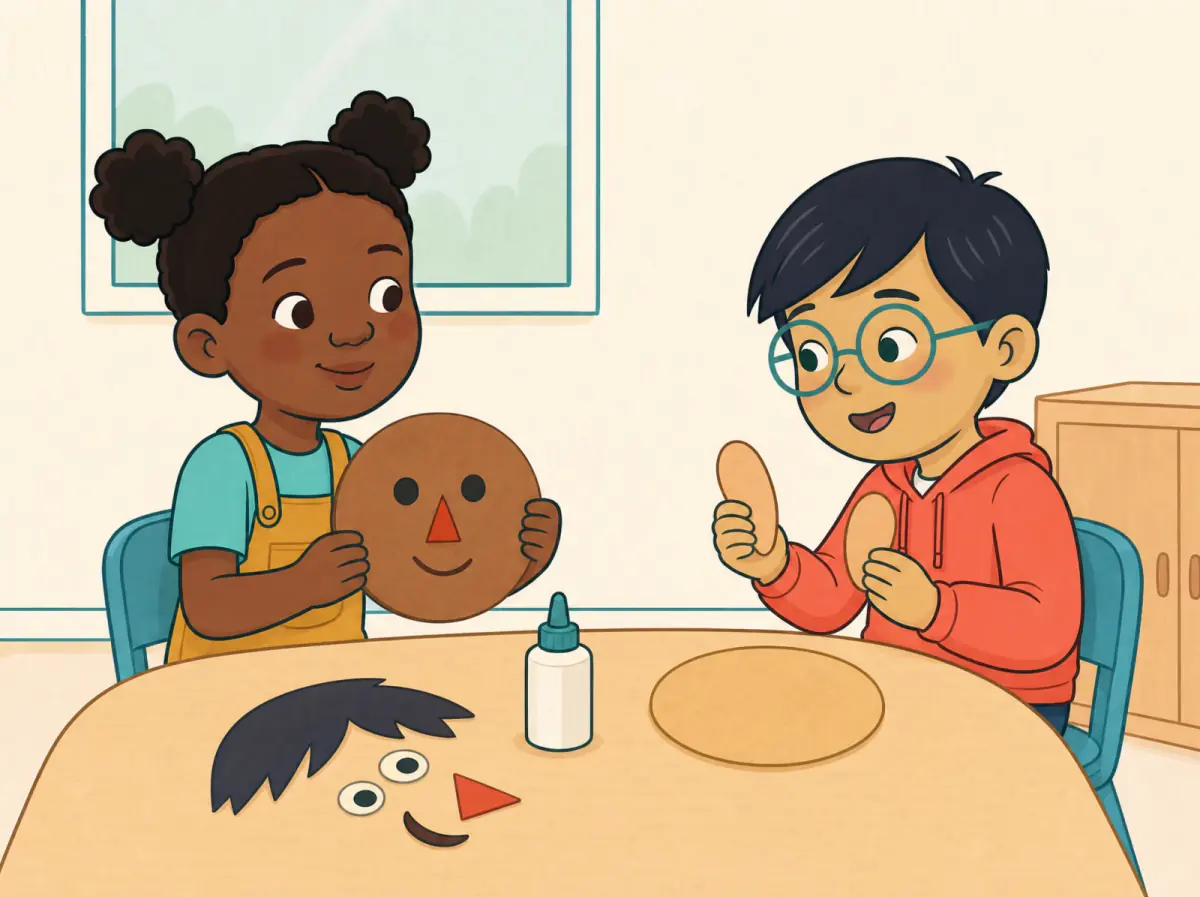
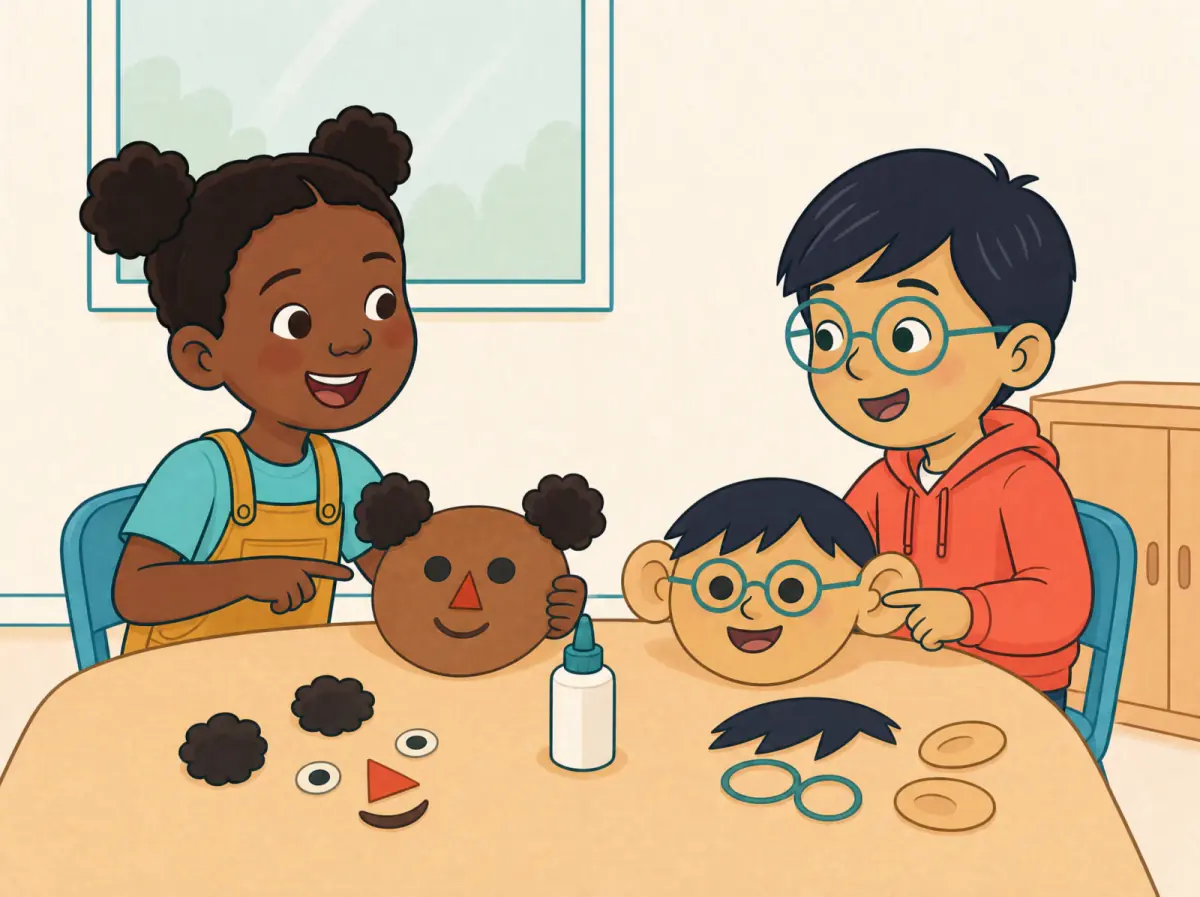
In the recording below, two children show the paper faces they made. The first lines name one thing with “this is”, the next ones name pairs with “these are”. Point to each part on your own face as you listen, then pause after every line for your child to repeat it.
Nia This is my face.
Leo This is my nose.
Nia These are my eyes.
Leo And these are my ears.
Nia Two big ears!
Make a paper face together
Cut a big paper circle and separate pieces: two eyes, two ears, a nose, a mouth and some hair. As your child places each piece, they say a full sentence: “This is my nose.” for one piece, “These are my eyes.” for a pair. When the face is finished, let your child show it to the family: “Look at my paper face!”
Three five-minute games at home
Short and often beats one long session.
- Touch and say: call out a body word and you both touch it. Your child says the sentence: “These are my hands.” Then swap roles.
- One or two?: your child holds up one finger and you ask “What is this?”; then they wiggle all ten: “What are these?” Your child answers “This is my finger.” or “These are my fingers.”
- Draw a friend: give one instruction at a time: “Draw a face. Draw two eyes. Make the eyes blue. Draw a red nose.” Then check: “The eyes are blue.” True or false?
Sounds and first writing
Children at this level also practise four letter sounds: i as in ink, j as in jam, k as in kite, l as in lion. Teach the sound, not the letter name. “Ink” and “this” share the same short i, while “these” has a longer “ee”; hearing that helps your child choose the right word.
For writing, compare “My nose.” with “This is my nose.” Only the second is a full sentence, with a capital letter and a full stop. Under the paper face, your child writes one “This is” and one “These are” sentence.
Common mistakes and quick fixes
These slips are normal; just say the right version again.
- Mixing the pairs: “This are my ears.” Hold up one finger for “this is”, two for “these are”.
- Dropping the -s: “These are my ear.” Count out loud, “One ear, two ears.”, stretching the buzzing “z” at the end.
- Saying “dis” for “this”: put the tip of the tongue lightly between the teeth. Try it in a mirror together.
- Plural hair: “These are my hairs.” The hair on your head counts as one thing: “This is my hair.”
- Leaving out “is”: “This my nose.” Tap once for each word: This / is / my / nose.
What comes next
Once “this is” and “these are” come easily, add “that” and “those” for things further away: “That’s a lion.” “Those are its ears.” Then describe: “My eyes are brown.” Later come two body words without -s: one foot, two feet; one tooth, two teeth. The song “Head, Shoulders, Knees and Toes” reviews several body words.