
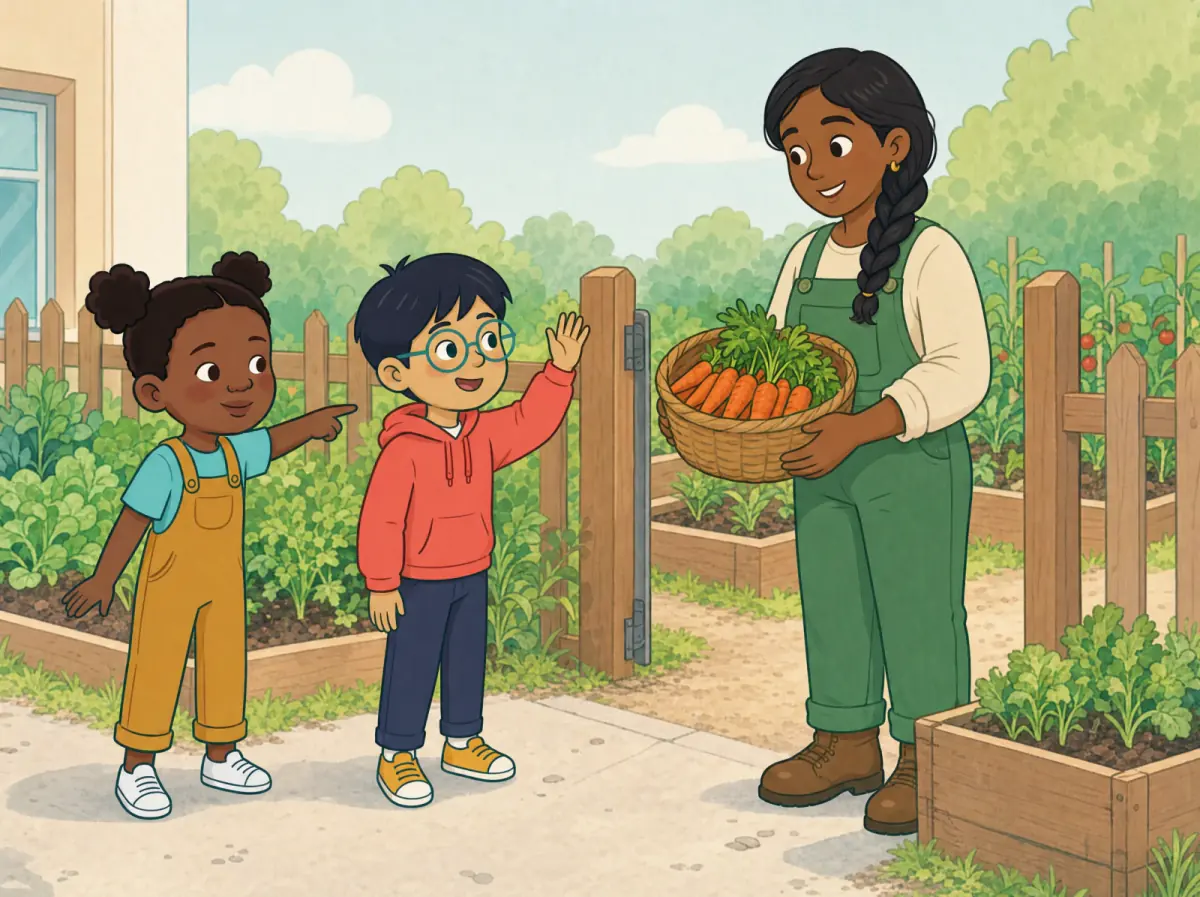
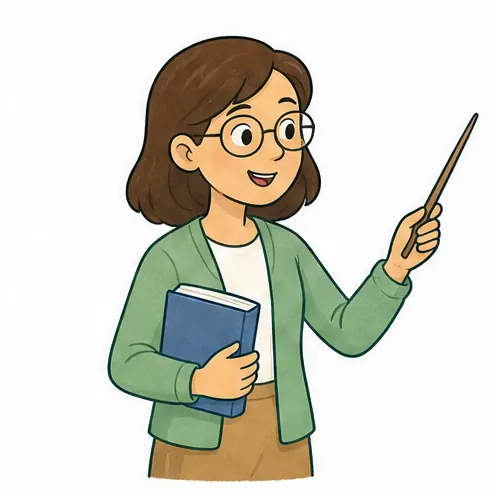
 teacher
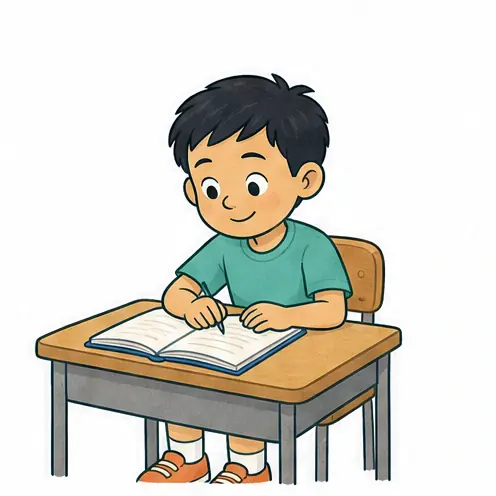 pupil
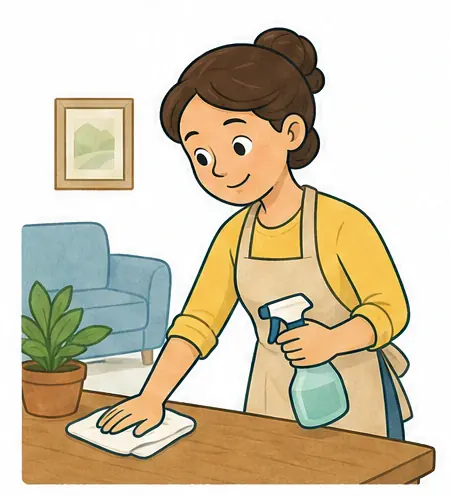 housewife
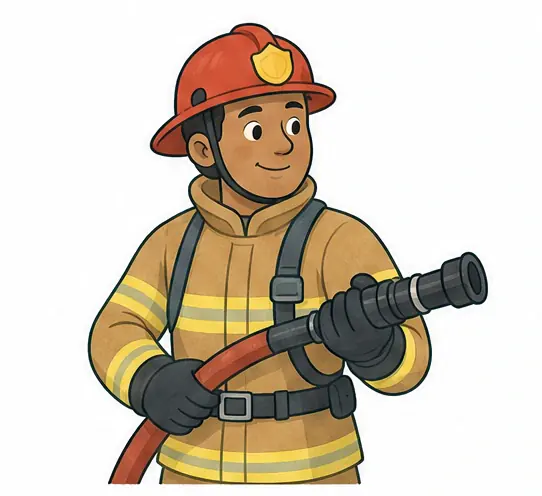 fireman
 pilot
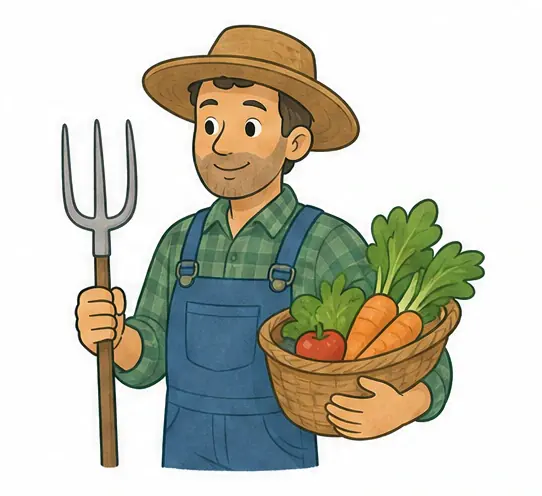 farmer
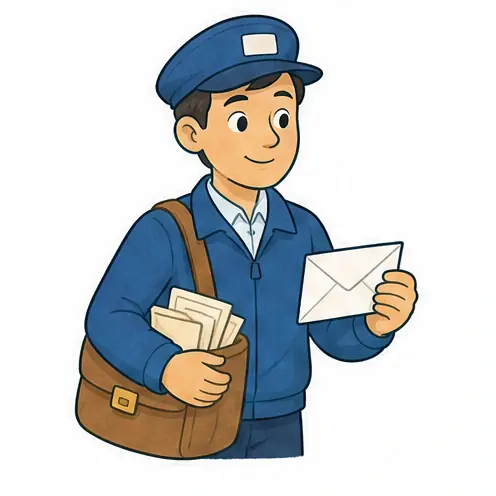 postman
Seven people who help: the words
Start with people your child really sees. Each card above has audio: let your child listen and point first, and say the word later.
Two of the seven are not jobs. A pupil is a child at school (Americans usually say “student”), so your child can say “I’m a pupil.” “Housewife” is an older word for a woman who looks after the home; today many people say “stay-at-home parent”.
- teacher: works at a school
- pupil: a child at school
- housewife: looks after the home
- fireman: puts out fires (today usually “firefighter”)
- pilot: flies a plane
- farmer: grows food
- postman: brings letters and parcels (in the US, “mail carrier”)
“He’s a pilot.” “She’s a farmer.”: naming a job
English needs three pieces: he or she, ’s (short for “is”) and “a” before the job. Only he or she changes; the job word stays the same: “He’s a teacher.” “She’s a teacher.”
Before a vowel sound, “a” becomes “an”: “She’s an artist.” None of the seven words needs it, but new jobs soon will.
- He’s a pilot.
- She’s a farmer.
Making a guess: “Is she a teacher?”
For a question, move “is” to the front: “She is a farmer.” becomes “Is she a farmer?” The answer is short and repeats he or she: “Yes, she is.” or “No, she isn’t.”
Then teach your child to add the right job after a no. That correction is the heart of this topic: it turns a wrong guess into new English.
- Is she a farmer? Yes, she is.
- Is he a pilot? No, he isn’t. He’s a postman.
Listen: two wrong guesses, two corrections
In this short scene, two guesses are wrong and each answer gives the right job. Listen together and point at the cards; then pause after each question so your child answers first.
It ends with a “Thank you!”, often the first English a child says to a real helper.
Leo Is she a teacher?
Nia No, she isn't. She's a farmer.
Nia Look! Is he a pilot?
Leo No, he isn't. He's a postman.
Nia A box for our school!
Leo Thank you!
Sounds to play with: p and m
P and m are both made with closed lips: for p, they pop open with a puff of air; for m, they stay closed and hum. Paper test: hold a strip of paper in front of your mouth and say “pen”, and it moves; say “mum”, and it stays still. Also watch “pilot”: it sounds like “PIE-lut”.
- p: pilot, postman, pupil, pen
- m: mum, farmer, fireman
Three five-minute games at home
Short and often beats one long session. Stop while your child still wants more.
- Wrong guess: point to a person in a picture book or to a toy figure and guess wrong on purpose: “Is he a teacher?” Your child corrects you: “No, he isn’t. He’s a pilot!” Children love catching a grown-up out.
- Mime and guess: act out a job without words: fly a plane, pull up carrots, post a letter. Your child guesses, and you answer in a full sentence: “Yes! I’m a pilot.” Then swap.
- My helper page: your child draws someone from the family, and you write together: “This is my mum. She is a doctor.” Check the capital letters and full stops; younger children can just say it.
Common mistakes and quick fixes
These slips are normal. Don’t stop the game; just say the right version back.
- “She’s farmer.”: add the “a” with a little stress: “She’s a farmer.”
- “Yes, she’s.”: use the full word: “Yes, she is.”
- Mixing up he and she: point at the person. If your child says “He’s a farmer.” about a woman, answer “Yes! She’s a farmer.”
- “No, she not.”: say “No, she isn’t.”
What comes next
When yes and no come easily, let your child ask while you answer. Then try an open question: “What’s her job?” “She’s a doctor.” Add new helpers, such as nurse, police officer and zookeeper, and talk about your own family: “This is my dad. He’s a cook.”