
Fiction and non-fiction: two ways into one idea
At A2, children start comparing a non-fiction text and a fiction text on a similar subject.
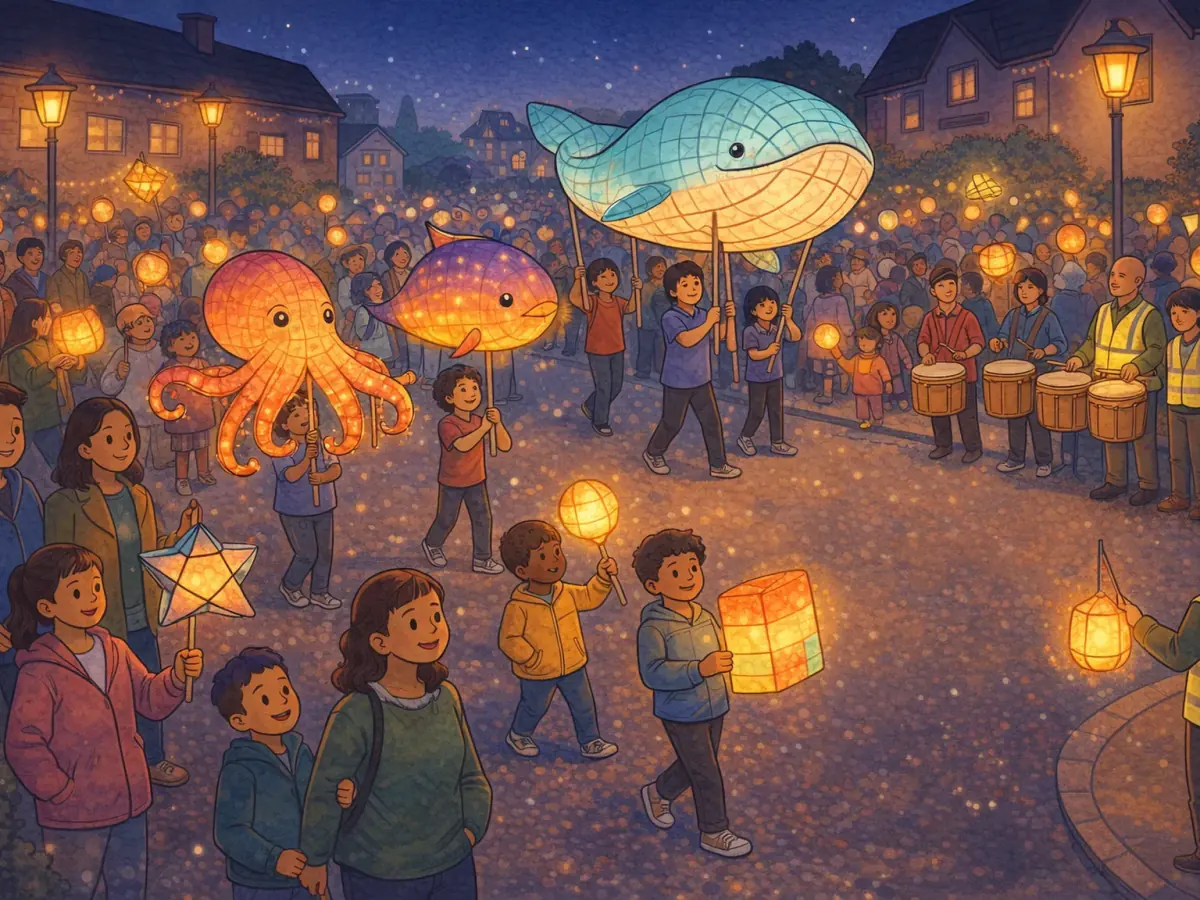
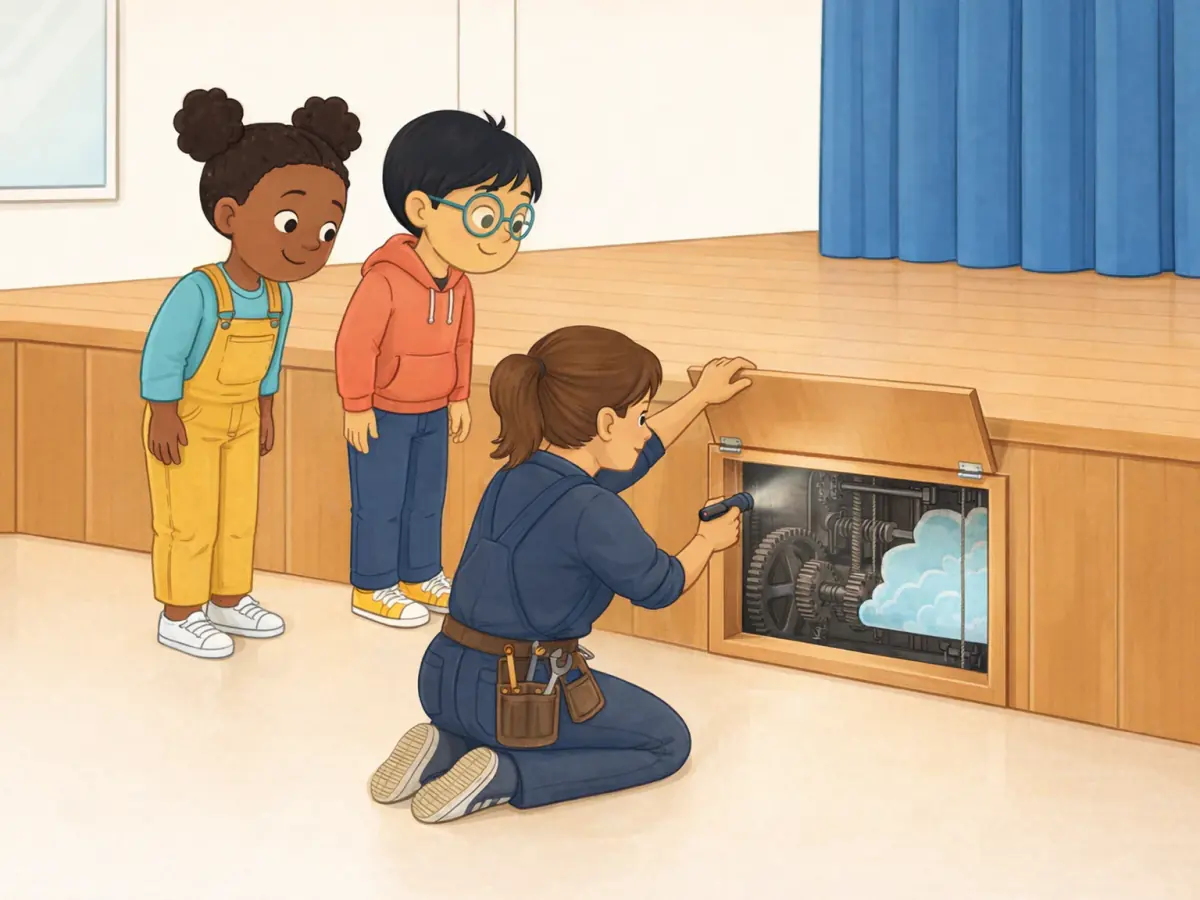
Two short examples run through this article. A report describes a lantern parade: beforehand, volunteers check every candle-free light and widen one narrow corner of the route. In a story, children rehearsing a play hear a knock under the stage. They expect a loose board, but a technician finds an old machine that once lifted painted clouds, and the group puts it on display.
- non-fiction – explains real information with evidence: reports, news
- fiction – creates characters and events to explore an idea: stories, plays
Claim, evidence and a turning point
In the report, a claim could be “The parade was safe because people planned it carefully.” The evidence is the widened corner. In the story, the turning point is the open panel: the children expected a loose board and found a piece of theatre history. To find the turning point in any story, ask “What did they expect?” and “What did they find?”
- claim – the central idea to test
- evidence – a detail that supports an idea
- turning point – a moment that changes understanding
True or false? Prove it with the words in the text
In true-or-false checks, build the habit of pointing to the exact words. “The lights contain real candles.” is false: the report says “candle-free”, and “-free” means “without”, as in “sugar-free”. “The children hide a new set in the machine.” is false: the story says “Instead of hiding their new set inside it…” “The old machine once lifted painted clouds.” is true, though the story says “raised”: match meaning, not words.
- “It’s true. The text says…”
- “It’s false. The text says…”
- “The text doesn’t say.”
From topic to shared theme
A topic is what a text is about: a parade, a theatre. A theme is an idea the text helps us examine, best said as a full sentence. Below, the first answer takes one detail from each text and the last line states the theme. “History” here means old things worth keeping.
After “both”, the verb has no -s.
Nia How do the texts explore the same theme?
Leo The lantern report shows careful planning, and the story shows a careful choice about an old machine.
Leo What do they share?
Nia Both show that careful planning keeps people and history safe.
Writing a four-sentence comparison
Each sentence has one job. First, your child names the reader: for a teacher, that means full sentences, correct spelling and punctuation. Here is a model answer to “Which text changed your thinking most?”
“Gave me a real example” suits non-fiction; “made the idea personal” suits fiction. Either text can win, as long as the reason after “because” comes from the text.
- Report detail: “The lantern report gave me a real example: volunteers widened one narrow corner of the route.”
- Story detail: “The story made the idea personal when an old scenery lift was found under the stage.”
- Shared theme: “Both show that careful choices can protect a community.”
- Preference and reason: “The story changed my thinking most because the forgotten machine became part of opening night.”
A home game: two texts, one idea
Pick two short English texts with a similar idea, such as a children’s news article about a beach clean-up and a story about a child who mends an old toy. Your child underlines one detail in each, completes “Both show that…” and writes four sentences, while you ask only “Where does it say that?” Next time, you write them and slip in a detail from neither text for your child to catch.
Common mistakes and quick fixes
Normal at A2: say the sentence back correctly and carry on.
- Retelling everything: choose one detail per text.
- “Both are about shows.”: that is a topic. A theme says something: “Both show that careful planning keeps people and history safe.”
- “Both texts shows…”: after “both”, no -s: “Both texts show…”
- “I like the story.”: add a reason from the text: “…because the forgotten machine became part of opening night.”
- “The story proves…”: a story can show an idea but cannot prove a fact. Say “The story shows…”
What comes next
Next, your child can write longer texts that link ideas with and, but, so and because, such as a short information text for neighbours.