


Skip to content
Flalingo

English practice

Linking words for children (A2, ages 9–12): and, but, or, so and because in an eco-home text

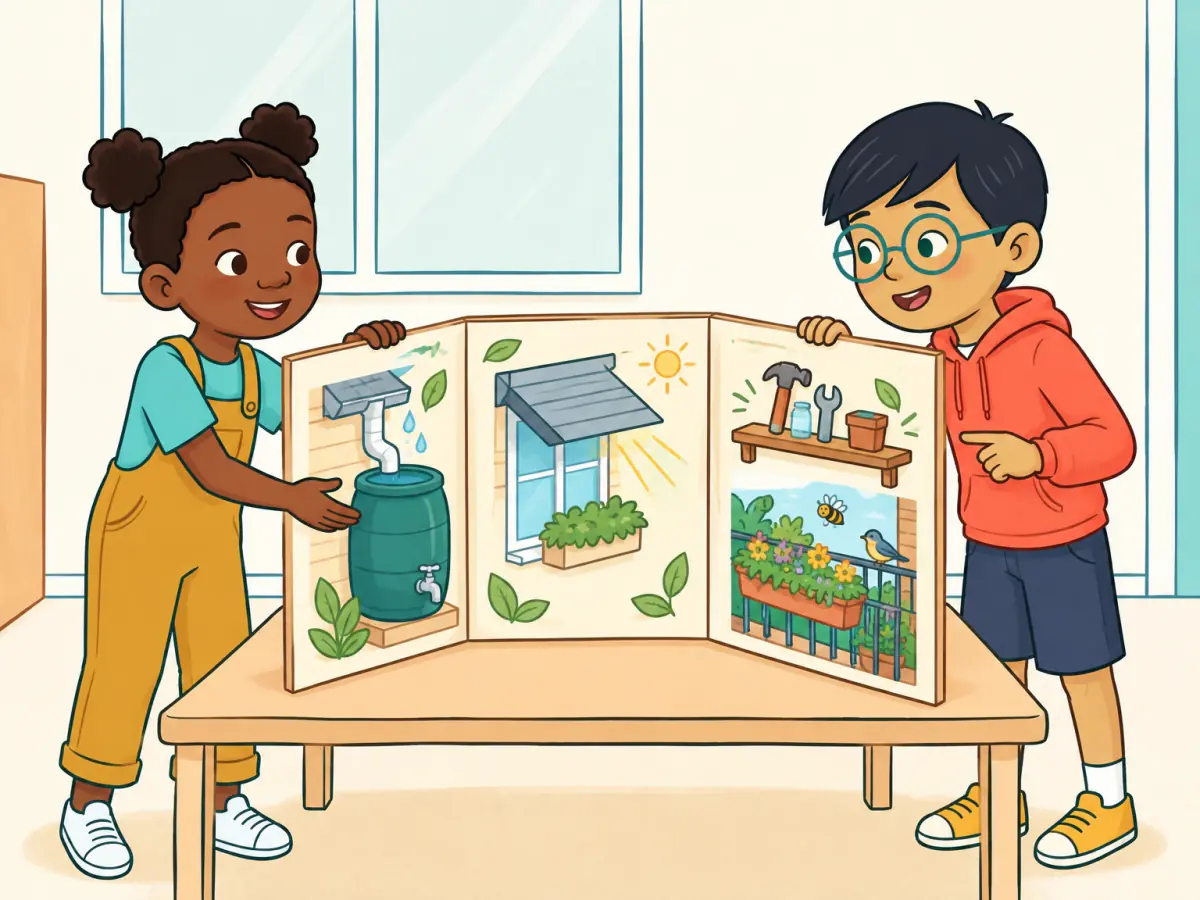
An eco-home information display shows a rain barrel, shaded window, repair shelf and wildlife-friendly balcony garden.

Help your 9–12-year-old join ideas in English with and, but, or, so and because (A2), compare old habits with “used to … but now” and write a short information text about a greener home.

Linking words join two ideas and show how they connect: “and” adds a fact, “but” shows a contrast or a change, “or” gives a choice, “so” gives a result and “because” gives a reason: “We repair toys and lamps, so less rubbish leaves the building.” This A2 topic suits children of about 9–12 who already write simple past and present sentences. It ends with a short text about a greener home for the neighbours.

Who this is for

  • Parents of children who already write simple sentences: your child can say what they did last weekend and what they do every day.
  • Children who care about animals, parks or recycling: a greener home gives linking words a real job.
  • Parents who want to practise at home: true facts about your own home are all you need, and the cards on this page play each word and sentence.
  • Too early: if your child cannot yet write two clear past sentences about one event, start with the previous topic, too and enough in a short repair story (linked below).
  • Too easy: if your child already links facts in a short text without help, go to giving suggestions with reasons in a leaflet (linked below).

Open the sample pages

Open the sample pages

Word cards

clean up

remove litter or mess from a place

damage

harm that makes a place or object worse

the environment

the natural world and the places where people and animals live

litterlitter
planetplanet
pollution

harmful waste that makes air, water or land dirty

rubbish dump

a place where large amounts of waste are taken

wildlife

animals and plants living in natural places

What were you doing when the rain started?

Study how this model connects form with meaning.

I was picking up litter with gloves when the rain started.

Study how this model connects form with meaning.

We used to waste water.

Study how this model connects form with meaning.

The team was planting while we were cleaning.

Study how this model connects form with meaning.

Conversation

Leo What does your group do for the environment?

Nia We clean up the stream bank every Saturday and pick up litter with gloves.

Nia Why does the litter matter?

Leo It can damage wildlife, and a lot of it ends up at the rubbish dump.

Leo What is the biggest problem here?

Nia Plastic pollution. We want to protect our planet, one small place at a time.

Language pattern

What were you doing when the rain started?

I was picking up litter with gloves when the rain started.

  • We used to waste water.
  • The team was planting while we were cleaning.

More practice

Use the contrast

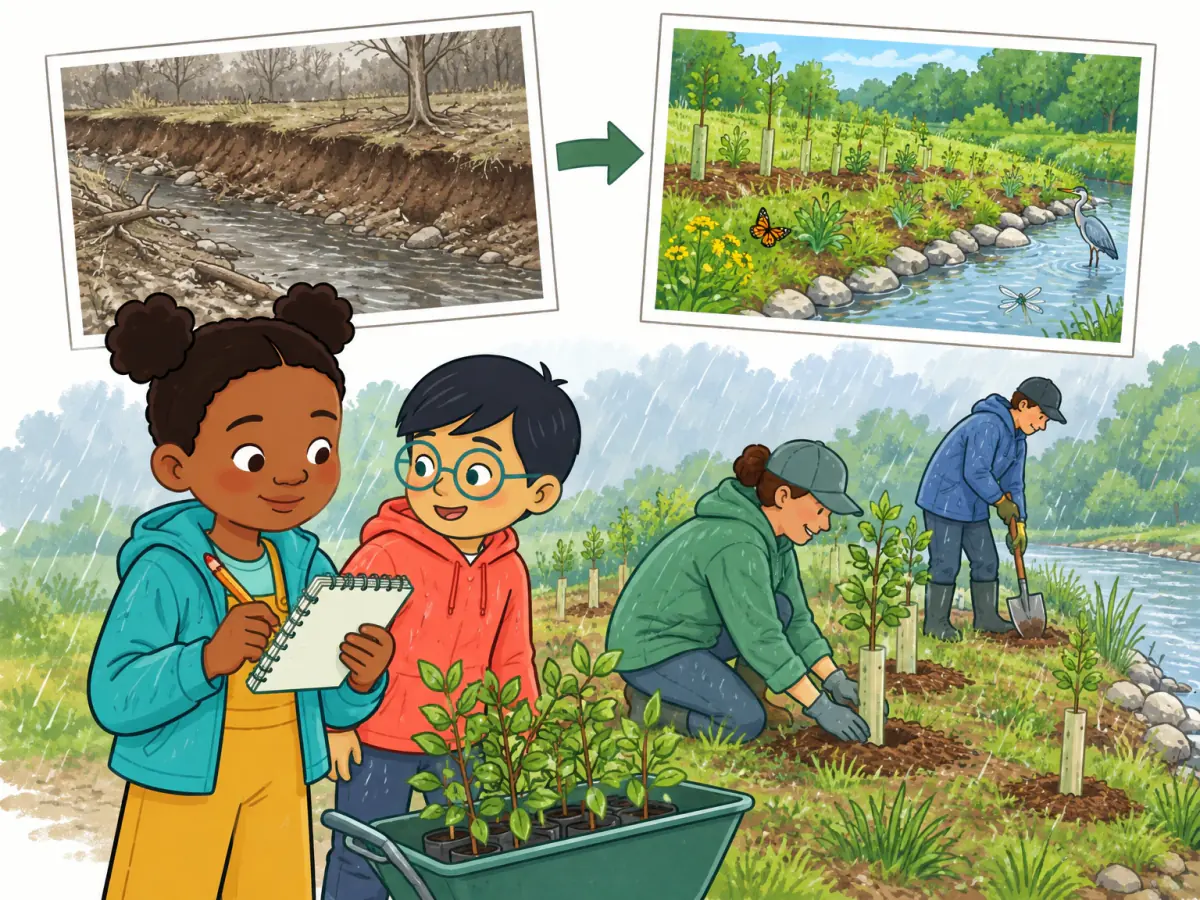
A before-and-now display contrasts a damaged stream bank in an old photograph with a planted bank and clear wildlife area today. Nia records what volunteers were doing when rain began.

Leo What were you doing when the rain started?

Nia I was picking up litter with gloves when the rain started.

Nia What was the team doing?

Leo They were planting while we were cleaning.

Leo Did this place use to have more litter?

Nia Yes, but people changed their habits.

What were you doing when the rain started?

I was picking up litter with gloves when the rain started.

  • We used to waste water.
  • The team was planting while we were cleaning.

Four quiet changes at home

An eco-home information display shows a rain barrel, shaded window, repair shelf and wildlife-friendly balcony garden.

FOUR QUIET CHANGES AT HOME

A greener home does not need dramatic machines. First, a covered rain barrel can store water for plants. Second, a shaded window stays cooler in summer. Third, a repair shelf gives broken objects another chance. Finally, balcony flowers can support insects. Our building used to throw away small items, but neighbours now meet once a month to repair them.

Plan aloud

An eco-home information display shows a rain barrel, shaded window, repair shelf and wildlife-friendly balcony garden.

Nia How will your eco-home text flow?

Leo It will start with what we used to do, and then it will say what we do now.

Leo Which linking words will you use?

Nia I will use but, so and because.

How will your eco-home text flow?

Our building used to waste water, but now we collect rain for the garden. We repair toys and lamps, so less rubbish leaves the building. Neighbours choose herbs or flowers because both support insects.

  • and / but
  • or / so / because
  • used to/now
  • information text

Draft and revise

An eco-home information display shows a rain barrel, shaded window, repair shelf and wildlife-friendly balcony garden.

Nia Who will read your text?

Leo Neighbours in our building will read my information text.

Leo What will you check?

Nia I will check my spelling and punctuation.

How will your eco-home text flow?

Our building used to waste water, but now we collect rain for the garden. We repair toys and lamps, so less rubbish leaves the building. Neighbours choose herbs or flowers because both support insects.

  • and / but
  • or / so / because
  • used to/now
  • information text
Learn this unit
How would you like to learn?

Environment words for this topic

These words help your child talk about caring for a real place, such as a park or a stream. “Litter” has no plural: “a lot of litter”, not “litters”. “Rubbish” is British; American English says “trash”.

  • clean up – remove litter or mess from a place
  • litter – rubbish left on the ground
  • damage – harm that makes something worse
  • wildlife – animals and plants in natural places
  • pollution – waste that makes air, water or land dirty
  • rubbish dump – where large amounts of waste are taken
  • the environment – the natural world around us
  • planet – a large round world in space, such as Earth

Hear the words in a short interview

Two children talk about a group that cleans a stream bank. After one listen, ask “When does the group clean up?” (every Saturday) and “What can litter damage?” (wildlife), then replay to check.

Leo What does your group do for the environment?

Nia We clean up the stream bank every Saturday and pick up litter with gloves.

Nia Why does the litter matter?

Leo It can damage wildlife, and a lot of it ends up at the rubbish dump.

Five linking words, five jobs

Schools also call these connectives or conjunctions. To choose one, ask what the second fact does: add, contrast, give a choice, a result or a reason.

“So” and “because” join the same two facts from opposite ends, so children often swap them. “So” comes before the result, “because” before the reason: “Less rubbish leaves the building because we repair toys.” Use a comma before “so” and “but” between two full sentences, but usually not before “because”.

  • and – adds: “A rain barrel stores water, and we use it for the plants.”
  • but – contrast or change: “Our flat is small, but it has a balcony.”
  • or – choice: “Neighbours can plant herbs or flowers.”
  • so – result: “The window has a shade, so the room stays cooler.”
  • because – reason: “We grow flowers because they support insects.”

Old habits and past actions: used to and was doing

“Used to” + verb describes a past habit that has changed: “We used to waste water.” In questions the “d” goes: “Did you use to recycle?” Add “but now” and the present simple to show the change: “I used to throw old bottles away, but now I recycle them.”

Was or were + -ing describes an action in progress in the past. With “when”, a short action interrupts it: “I was picking up litter with gloves when the rain started.” With “while”, two actions happen at once: “The team was planting while we were cleaning.”

Learn this unit your way

Writing an information text for neighbours

An information text explains facts to a real reader, here the neighbours. Your child plans four facts about a greener home, such as a rain barrel, a shaded window, a repair shelf and balcony flowers, then links them. A model to change: “Our building used to waste water, but now we collect rain for the garden. We repair toys and lamps, so less rubbish leaves the building. Neighbours choose herbs or flowers because both support insects.”

Then check each link: use “so” or “because” only when one fact really causes the other. “We collect rain, so the window stays cool.” sounds linked, but it is not true.

Common mistakes and quick fixes

These are normal at A2: repeat the sentence correctly and carry on.

  • “It was raining, because we went home.”: “It was raining, so we went home.”
  • “I use to recycle.” for a habit you still have: “I usually recycle.”
  • “Now we used to repair lamps.”: “Now we repair lamps.”
  • “We was cleaning.”: “We were cleaning.”
  • “a lot of litters”: “a lot of litter”

A home game: link it

Make five cards: and, but, or, so, because. Write pairs of true facts about your home on paper strips, such as “We turn off the lights.” and “We use less electricity.” Your child picks the right card, reads the sentence aloud and says why. Then they ask a grandparent “What did you use to do with old bottles?”

What comes next

Next comes giving advice with a reason, as in a leaflet: “Why not repair your lamp? It saves money.” Then your child organises longer texts into paragraphs with topic sentences.

Frequently asked questions

What is the difference between “so” and “because”?

“Because” introduces the reason and “so” the result: “The room stays cool because the window has a shade.” “The window has a shade, so the room stays cool.”

Can a sentence start with “Because”?

Yes, if it has both parts: “Because it was raining, we went home.” In writing, “Because it was raining.” alone is incomplete; as a spoken answer to “Why?”, it is fine.

Is “used to” only for the past?

Yes. For habits that are true now, use the present simple: “We usually recycle.”

Learn this unit
How would you like to learn?

What comes next?

One-to-one lessons with a live teacher

In Flalingo kids lessons, your child practises units like this one-to-one with a live teacher, through games on the same screen.

Book a free trial lesson