
 postman
 doctor
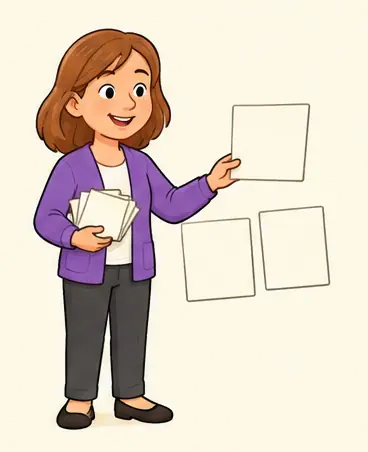 teacher
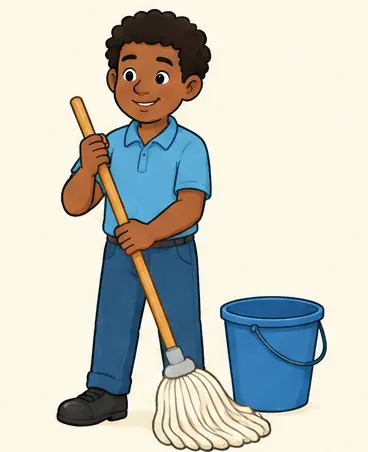 cleaner
Four helper words to start with
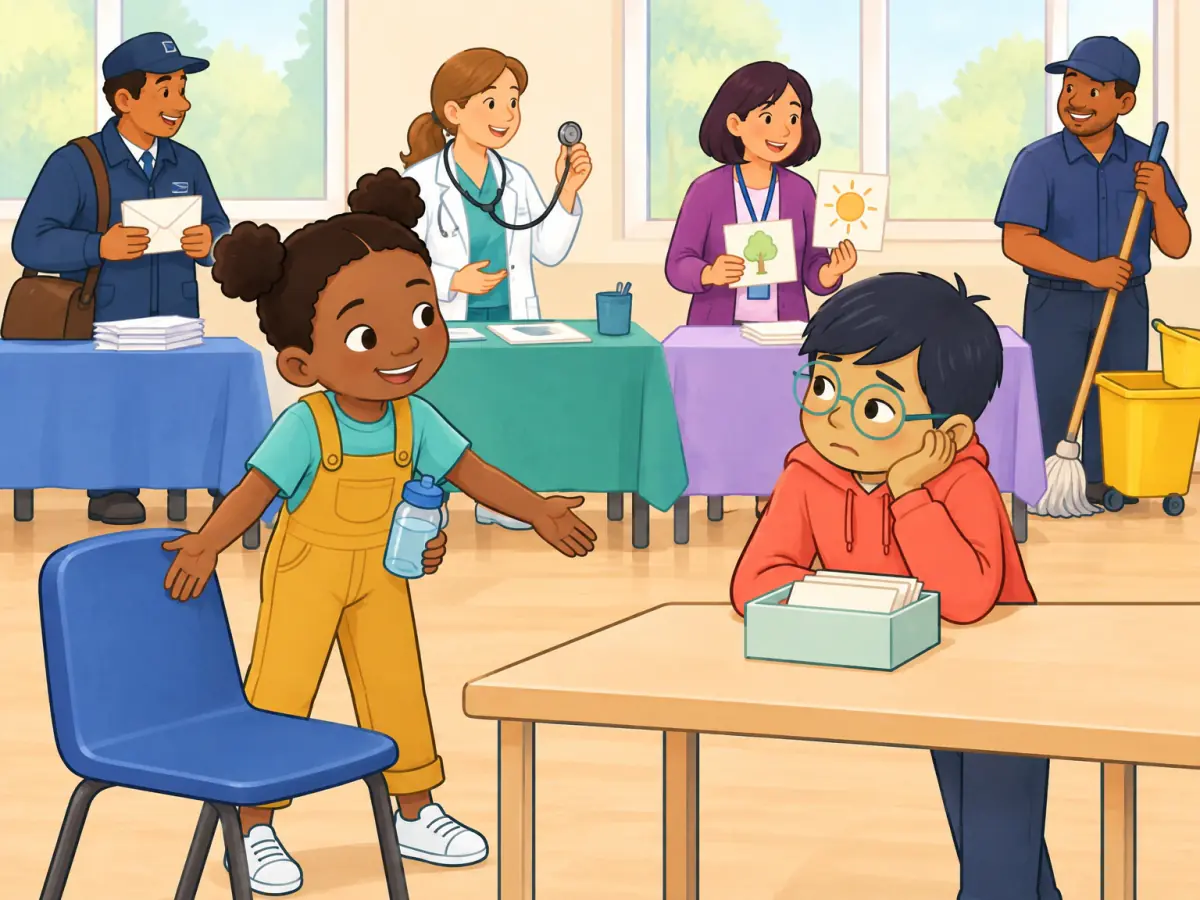
Start with helpers your child knows from daily life or picture books. Play each card above, point to the picture and say the word yourself. Then give each job a small action, so your child can answer by doing:
- postman: post a pretend letter into a box
- doctor: listen to a teddy’s heartbeat with a pretend stethoscope
- teacher: hold up a book and say “Look!”
- cleaner: wipe the table with a cloth in big circles
“What’s your job?”: a question for pretend play
The key question is “What’s your job?”, and the answer is “I’m a…” plus the job. Make the pretending visible: pick up a card, say “Let’s pretend!”, answer as that helper, then put the card down: “Now I’m Mum again.” Your child sees that the question is for the pretend helper, not about them.
Adults usually ask “What do you do?”, but “What’s your job?” is clearer for a young child. Accept a point, one word (“Doctor!”) or the full sentence. When your child gives one word, say the sentence back warmly: “Yes! I’m a doctor.” That is how “a” goes in, with no explanation.
Listen: two pretend helpers take turns
In the recording below, two children play the same game: one asks and the other answers as a doctor, then they swap and the answer is “I’m a teacher.” Listen together, then take one line each and hold up the matching card. The swap matters: your child asks too, not only answers.
Nia What's your job?
Leo I'm a doctor.
Leo What's your job?
Nia I'm a teacher.
“I’m a doctor” or “I’m tired”: a job or a feeling
The same start, “I’m…”, can name a job or a feeling. A job takes “a”: “I’m a teacher.” A feeling does not: “I’m tired.”, “I’m happy.” The question changes too: “How are you?” asks how someone feels.
Give each feeling a face your child can copy:
- tired: a big yawn and droopy shoulders
- happy: a wide smile
- sad: a turned-down mouth
- excited: quick little claps
Noticing a tired friend: words that help
Noticing how someone feels is a big step at this age. In the short story on this page, one child says “I feel tired.”, and a friend answers “I can see that. Please sit down.” At home, act out a shorter exchange: “How are you?” “I’m tired.” “Please sit down. I can help.” Give each line an action, so kindness is something to do, not a lecture:
- “How are you?”: tilt your head and look at your partner.
- “I’m tired.”: yawn and rub your eyes.
- “Please sit down.”: offer a chair with an open hand.
- “I can help.”: carry one light thing, such as a cushion.
The “Who’s at the door?” game: five minutes at home
Use the job pictures or simple props: an envelope, a toy stethoscope, a book and a cloth. Stop while your child still wants more.
- Knock on a door, holding one prop. Your child asks “What’s your job?”
- Step out: “I’m a postman!” Hand over the envelope.
- Swap: your child picks a prop, knocks and answers.
- One tired round: yawn and say “I’m tired.” Your child offers a chair: “Please sit down.”
- Tidy the props away: everyone is themselves again.
Common mistakes
Most are small and easy to fix:
- “I’m doctor”: many languages put no word like “a” before a job. Say “I’m a doctor!” back and keep playing.
- “I’m a tired”: once “a” goes in, some children add it to feelings too. Answer “Oh, you’re tired!”
- Real jobs: the question is for the pretend helper, so hold up a card or a prop first.
- Too many jobs: four are plenty for a week or two.
- Kindness as a rule: “Be kind!” is hard to picture. Show one action and name it.
What comes next
When your child answers “I’m a…” and asks the question back, add helpers they meet every week, such as a cook, a bus driver or a nurse, and a new question: “Who helps us at school?” “The teacher helps us.” The toys and jobs articles below build on the same turn-taking.