
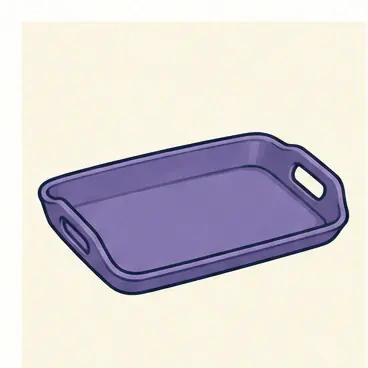
 tray
tray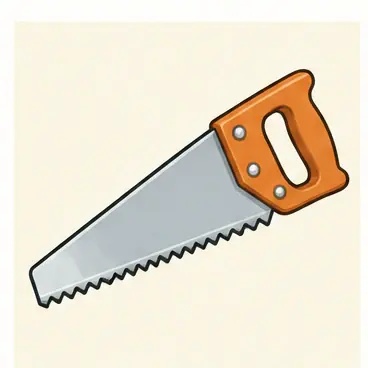 saw
saw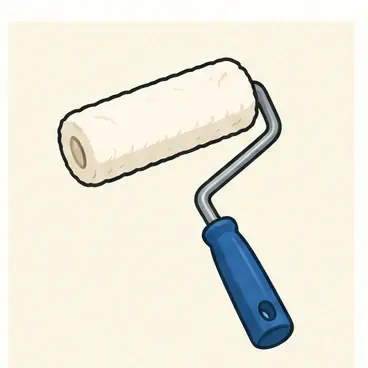 roller
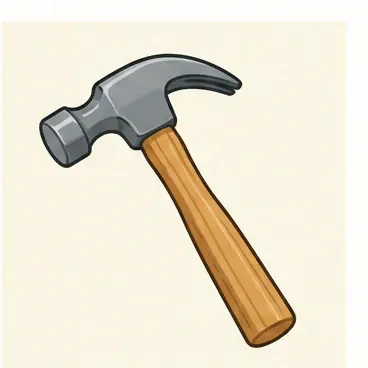 hammer
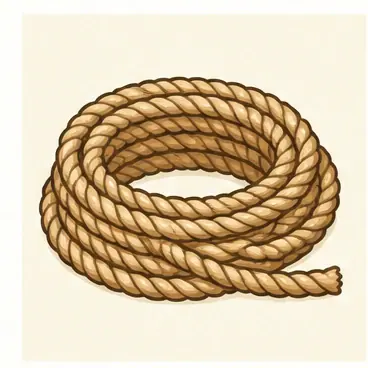 rope
rope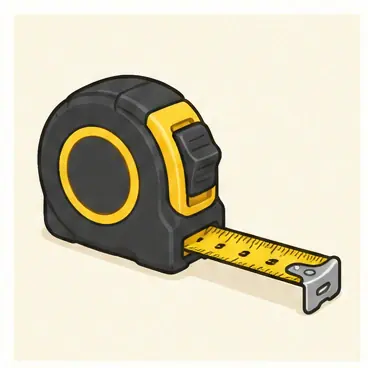 tape measure
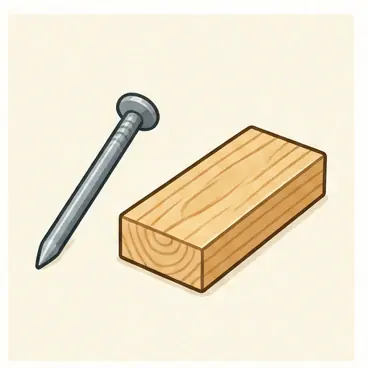 nail
nail
What a four-line action poem looks like
Each line holds one action, and the lines follow the order of the work, so a listener can picture the job from start to finish. Every line has eight syllables and four strong beats, and the lines rhyme in pairs. Read this model aloud and tap the table on each strong beat: MEAsure the WOOD and MARK each SIDE. Even taps mean a steady beat.
- Measure the wood and mark each side. (8)
- Hammer each nail with steady pride. (8)
- Lift with a friend; keep rope pulled tight. (8)
- Rest on the bench in evening light. (8)
Counting syllables, not words
A syllable is one beat of sound built around a vowel sound: “wood” has one, “measure” has two (mea-sure). “Rest on the bench in evening light” has seven words but eight syllables. Clap once per syllable, or rest a hand under the chin and count each time the jaw drops.
Spelling can trick the count. A silent “e” at the end adds nothing: “side” has one syllable. The “-ed” ending usually adds nothing either (“pulled”), except after t or d: “paint-ed”.
- Line too short? Add a describing word: “Lift the heavy box”.
- Line too long? Cut a small word or choose a shorter one.
Rhyming pairs: listen, don’t just look
Words rhyme when they sound the same from the last stressed vowel sound to the end: side and pride, tight and light. Choose the two pairs of end words first, then build each line towards them. Rhyme is about sound, not spelling: “eight” rhymes with “late”, but “wood” does not rhyme with “food”.
- -ide: side, pride, wide
- -ight: tight, light, bright
- -ail: nail, tail, trail
Talking about making: “Have you ever…?”, for and since
Before writing, children talk about things they have made. The present perfect (have + past participle) asks about experience at any time in your life: “Have you ever built something useful?” Answer “Yes, I have.” or “No, I haven’t.”, or use “never”: “I have never used a saw alone.”
For something that started in the past and is still going on, use “for” with a length of time and “since” with a starting point: “for two weeks”, “since ten o’clock”.
Nia Have you ever built something useful?
Leo Yes, I have. I have worked on this stand for two weeks.
Nia How long have we been here?
Leo We have been here since ten o’clock.
Plan four actions, then add tool words
Pick a real job your child has done, such as baking bread or fixing a bike, and list four steps with “first”, “then”, “next” and “finally”, as in the exchange below. Turn each step into a line that starts with a verb, then add an object and a detail: “Hammer each nail with steady pride.”
- Tool words: hammer, nail, saw, tape measure, roller, rope, tray
- “Saw” is also the past of “see”; “nail” is also a fingernail.
Leo Which objects did we put away?
Nia First the tape measure, then the roller, and finally the hammer.
A home project: write it today, perform it tomorrow
Day one, 20 minutes: ask “Have you ever made something useful?”, choose that job, list four steps, pick two rhyming pairs and draft the lines. Clap each line and fix any line that is not eight. Day two, 10 minutes: underline the strong beats and perform the poem for the family, tapping the table. Then swap: you read, and your child spots an uneven line.
Common mistakes and quick fixes
These are normal at A2. Say the sentence back the right way and carry on.
- Counting words, not syllables: clap the line instead.
- Counting a silent “e”: “side” has one syllable, not two.
- “I have worked here since two weeks.”: say “for two weeks”.
- “I am here since ten o’clock.”: say “I have been here since ten o’clock.”
- “Have you ever build…?”: say “Have you ever built…?”
- “I have ever used a saw.”: say “I have used a saw.”
What comes next
When four even lines are easy, try two verses, or let lines one and three rhyme. The next grammar step is “just”, “already” and “yet”: “I have just painted the shelf.” “Have you finished yet?”