
Skip to content
Flalingo

English practice

Asking permission in English for children (A1): “Can I use your camera?” with your, our and their

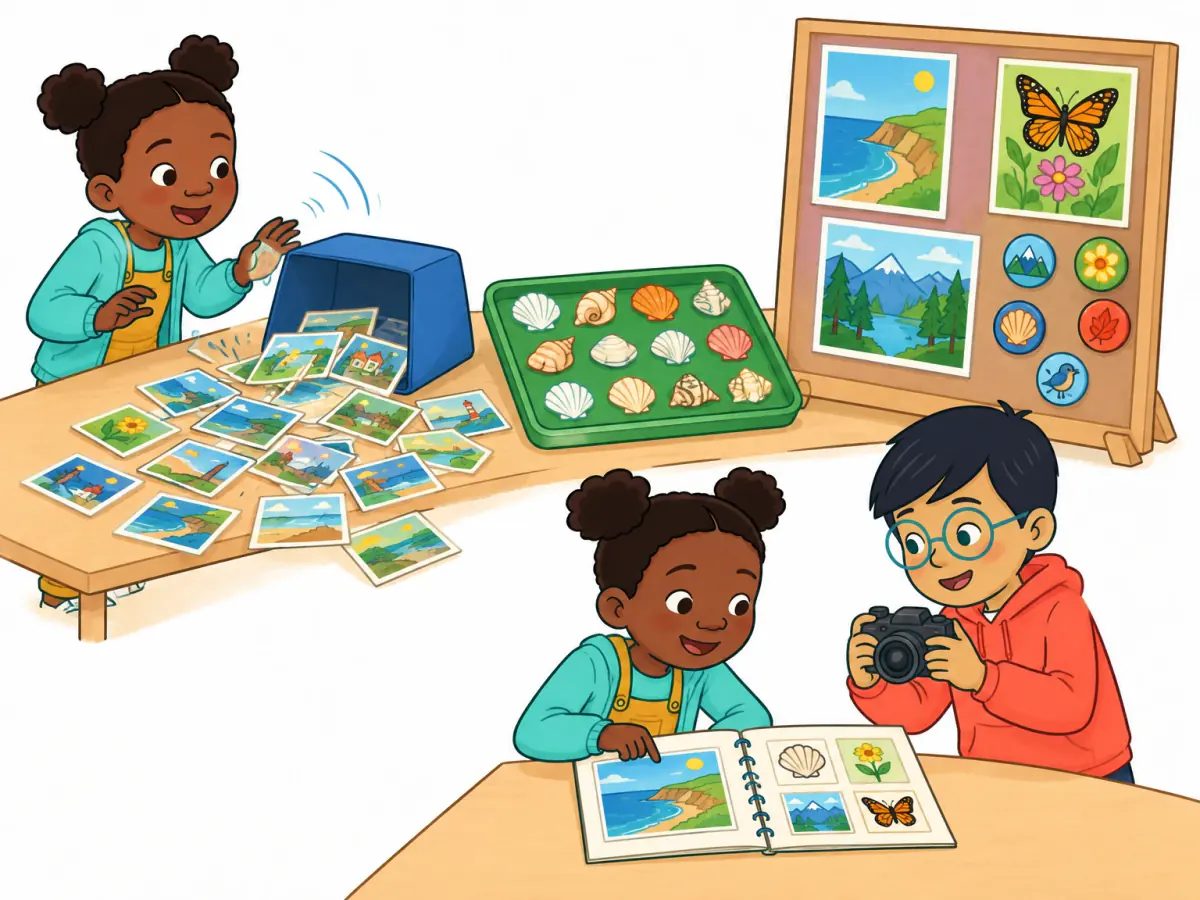
At a class collection fair, postcards spill from a blue box while shells stay on a green tray; posters and badges are displayed as two children make a picture guide.

Help your child ask permission in English with Can I, can we and can he (A1, ages 7–10), say who things belong to with your, our and their, and write a short page about a collection.

To ask permission in English, children say “Can I” and the verb: “Can I use your camera?” The short answer is “Yes, you can.” or “No, you can’t.” To show who owns something, they use your, our and their (“This is our computer.”) and ask about an owner with “Whose…?” This A1 topic, moving towards A2, suits children of about 7–10 who can count to twenty and make simple sentences.

Who this is for

  • Parents of children who can count to twenty in English and say simple sentences such as “I like comics.”
  • Families with a collector at home: stickers, shells, cards or toy cars give your child something real to count, label and show.
  • Parents who want to practise at home: a box, a tray and a few small things are enough, and the conversations below have a recording of every line.
  • Too early: if your child doesn’t yet use “can” and “can’t” for things they are able to do, start with the A1 article on skills in the park, linked below.
  • Too easy: if your child already asks permission and uses your, our and their without thinking, go to the A1 article on a beach postcard with -ing words, linked below.

Open the sample pages

Open the sample pages

Word cards

stickersstickers
postersposters
comicscomics
postcardspostcards
badgesbadges
shellsshells
Can I use your camera?

Yes, you can. / No, you can’t.

Can we turn on our TV?

Yes, you can.

Can he use their computer?

No, he can’t.

This is your camera.

belongs to you

This is our computer.

belongs to us

That is their CD player.

belongs to them

Conversation

Nia Our collection fair starts today. I have twenty postcards in this blue box.

Leo Great! I have twelve shells on the green tray.

Nia Can I use your camera to photograph our displays?

Leo Yes, you can, but please turn it off after the last photo.

Leo Whose badges are beside the posters?

Nia They are Mina’s badges.

Language pattern

Can I use your camera?

Yes, you can.

  • Can we turn on our TV? Yes, you can.
  • Can he use their computer? No, he can’t.
  • Please turn it off later.

More practice

Change the details

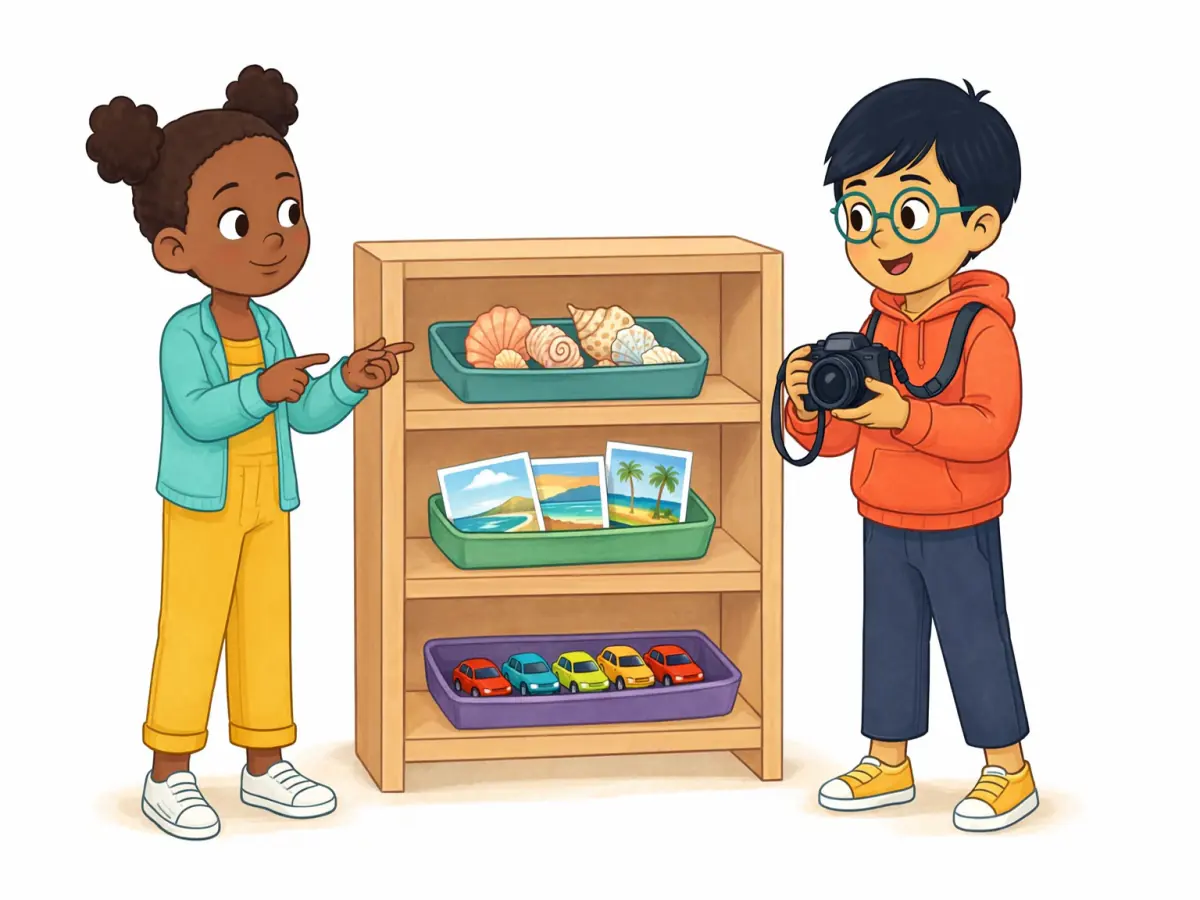
Nia asks to use Leo’s camera while Leo holds it. Three small collections of shells, postcards and toy cars sit in separate trays.
Can I …? · your camera

Can I use your camera?

Can we …? · our TV

Can we turn on our TV?

Can he …? · their computer

Can he use their computer?

your

Your camera belongs to you.

our

Our TV belongs to us.

their

Their computer belongs to them.

Nia Can I use your camera?

Leo Yes, you can.

Leo Can we turn on our TV?

Nia Yes, we can.

Nia Can he use their computer?

Leo No, he can't. It's their computer.

Can I use your camera?

Yes, you can.

  • Can we turn on our TV? Yes, you can.
  • Can he use their computer? No, he can’t.
  • Please turn it off later.

The Collection Fair Mix-Up

At a class collection fair, postcards spill from a blue box while shells stay on a green tray; posters and badges are displayed as Nia and Leo make a picture guide.

THE COLLECTION FAIR MIX-UP

Nia and Leo are preparing a class collection fair. Nia puts twenty postcards in a blue box, and Leo arranges twelve shells on a green tray. Mina hangs her posters and places her badges beside them. The wind from the open window blows the postcards across the table. The children close the window, pick up the postcards, sort every collection, and use Leo’s camera to make a picture guide. At the end, Nia asks, “Can I turn off your camera?” Leo smiles and says, “Yes, you can.” Their careful guide helps every owner find the right collection.

Writer’s notebook

Nia asks to use Leo’s camera while Leo holds it. Three small collections of shells, postcards and toy cars sit in separate trays.

Leo What will you write about?

Nia Our collection.

Leo What is in our collection?

Nia Badges, stickers and comics.

Leo Can I add a shell?

Nia Yes, you can!

What is in your collection?

Our collection has badges, stickers and comics. We have twenty badges, ten stickers and five comics. Can I add a shell? Yes, you can.

  • question mark: Can I add a shell?
  • commas: badges, stickers and comics
  • full stop: We have five comics.
Learn this unit
How would you like to learn?

Words for things children collect

Six things many children collect are stickers, posters, comics, postcards, badges and shells. With more than one, English adds “s”, even after a number: “twelve shells”, “twenty postcards”. In “badges” the ending adds a beat, so it sounds like “badge-iz”. Three place words complete the picture: things are “in” a box, “on” a tray or a wall, and “beside” something else.

  • “What do you collect?” “I collect stickers.”
  • “My posters are on the wall.”

Asking permission: “Can I use your camera?”

Start with “Can I” and add the verb. The short answer does not repeat the verb: “Yes, you can.” or “No, you can’t.” “Please” makes it more polite. A reason can follow with “to”, and the person who agrees can add a condition with “but please…”.

Nia Can I use your camera to photograph our displays?

Leo Yes, you can, but please turn it off after the last photo.

Can I, can we, can he: questions and short answers

“Can” comes first, then the person, then the verb. “Can” never changes, and the verb after it has no “to” and no “s”. The answer depends on who is speaking: if children ask “Can we turn on our TV?”, a parent says “Yes, you can.”, while a friend in the same group says “Yes, we can.”

  • “Can I use your camera?” “Yes, you can.”
  • “Can we turn on our TV?” “Yes, you can.”
  • “Can he use their computer?” “No, he can’t.”

Your, our, their: saying whose it is

These words go before a thing and show its owner. “Your camera” belongs to the person you are talking to, “our computer” to a group that includes you, and “their CD player” to other people. To ask about the owner, use “Whose…?” With a name, add ’s: “Mina’s badges”.

“Their”, “there” and “they’re” sound the same, as do “whose” and “who’s”, so check them in writing.

Nia Our collection fair starts today. I have twenty postcards in this blue box.

Leo Great! I have twelve shells on the green tray.

Leo Whose badges are beside the posters?

Nia They are Mina’s badges.

Turn on, turn off: words for devices

Permission questions are often about technology, so children also learn computer, TV, DVD player, CD player, camera and MP3 player; the same sentences work with a tablet. With a noun, “on” or “off” can go before or after it: “turn off the TV”, “turn the TV off”. With “it”, “on” or “off” always comes after: “Please turn it off.”

  • “Can we turn the TV on?” “No, you can’t. It’s bedtime.”
Learn this unit your way

Writing a collection page: a question and three sentences

Next, your child can write about a collection: one question and at least three sentences. For example: “Our collection has badges, stickers and comics. We have twenty badges, ten stickers and five comics. Can I add a shell? Yes, you can.”

  • A question ends with a question mark, a sentence with a full stop.
  • In a list, put commas between the things and “and” before the last one.
  • Every sentence starts with a capital letter.

A home game: our collection fair

Pick two or three small collections at home, such as stickers, shells or toy cars. Your child counts each one, puts it in a box or on a tray and presents it: “I have twelve shells on the tray.”

Before photographing the display, your child asks for the camera or phone in English. Sometimes say yes with a condition, sometimes no with a reason. End with a clue: “It’s a big fish in the sea. Which word is it?” “Shark!”

Common mistakes and quick fixes

These are normal at this stage. Repeat the sentence back correctly and carry on.

  • “Can I to use your camera?”: no “to” after “can”: “Can I use your camera?”
  • “Yes, you can use.”: stop at “can”: “Yes, you can.”
  • “Can he uses their computer?”: no “s” after “can”: “Can he use their computer?”
  • “There computer”: an owner is “their”: “their computer”.
  • “Who’s badges are these?”: “Whose badges are these?”
  • “Turn off it.”: “Turn it off.”

What comes next

When asking permission is easy, your child can describe what people are doing right now: “We’re swimming.” That leads to a short holiday postcard and the spelling of -ing words.

Frequently asked questions

Is it “Can I” or “May I” when asking permission?

Both are correct. “Can I…?” is the most common in everyday speech; “May I…?” is a little more formal. With either, “please” makes the request kinder.

What is the difference between “their”, “there” and “they’re”?

“Their” shows an owner: “their computer”. “There” is about place: “It’s over there.” “They’re” means “they are”. They sound the same, so the difference matters only in writing.

How do you answer “Can I…?” in English?

Repeat “can” without the verb: “Yes, you can.” or “No, you can’t.” People also say “Sure.”, but practise the short answer first.

Learn this unit
How would you like to learn?

What comes next?

One-to-one lessons with a live teacher

In Flalingo kids lessons, your child practises units like this one-to-one with a live teacher, through games on the same screen.

Book a free trial lesson