
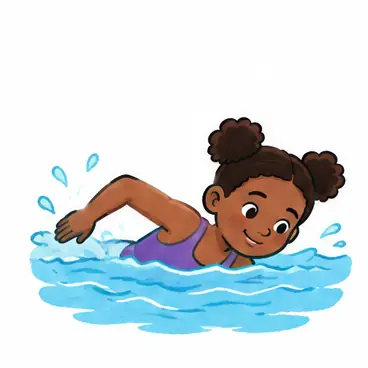
 swim
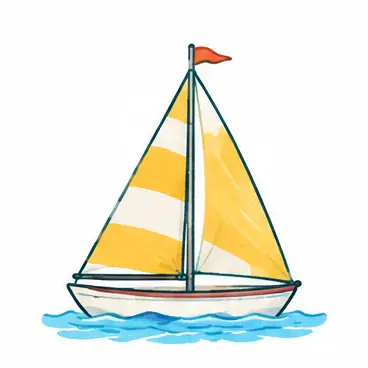 sail
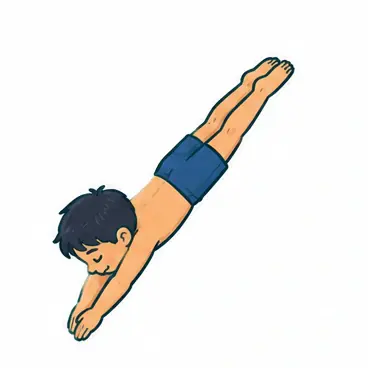 dive
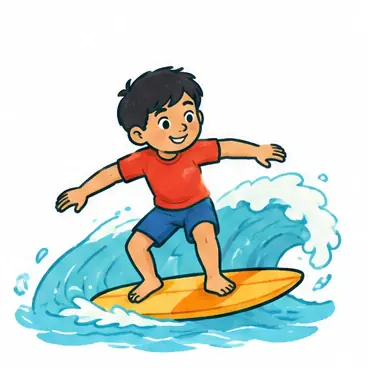 surf
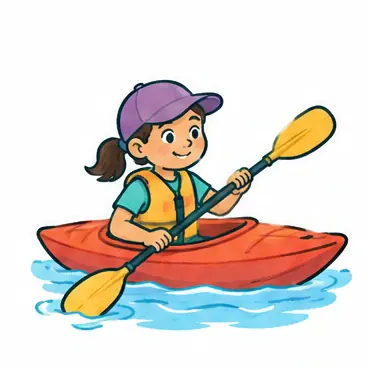 kayak
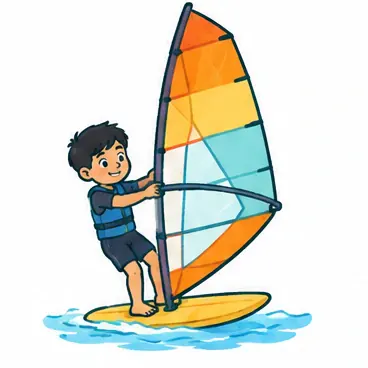 windsurf
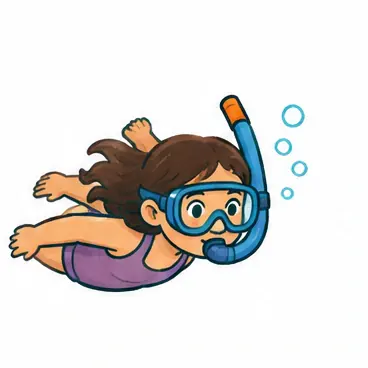 snorkel
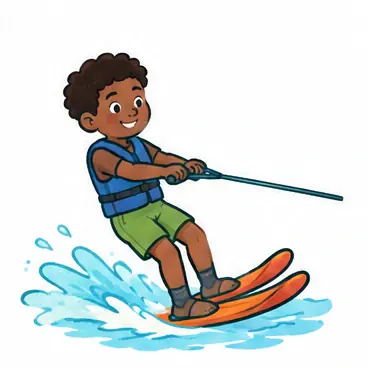 waterski
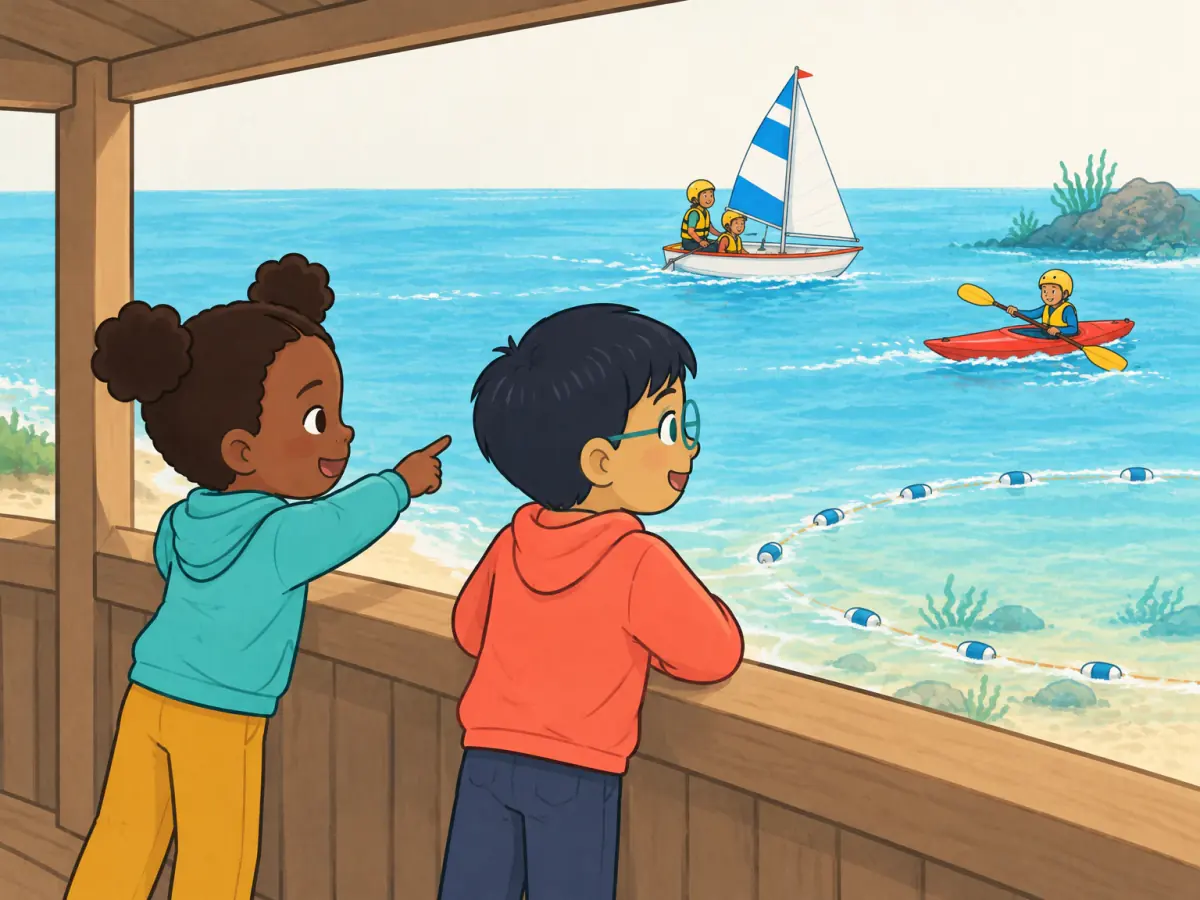
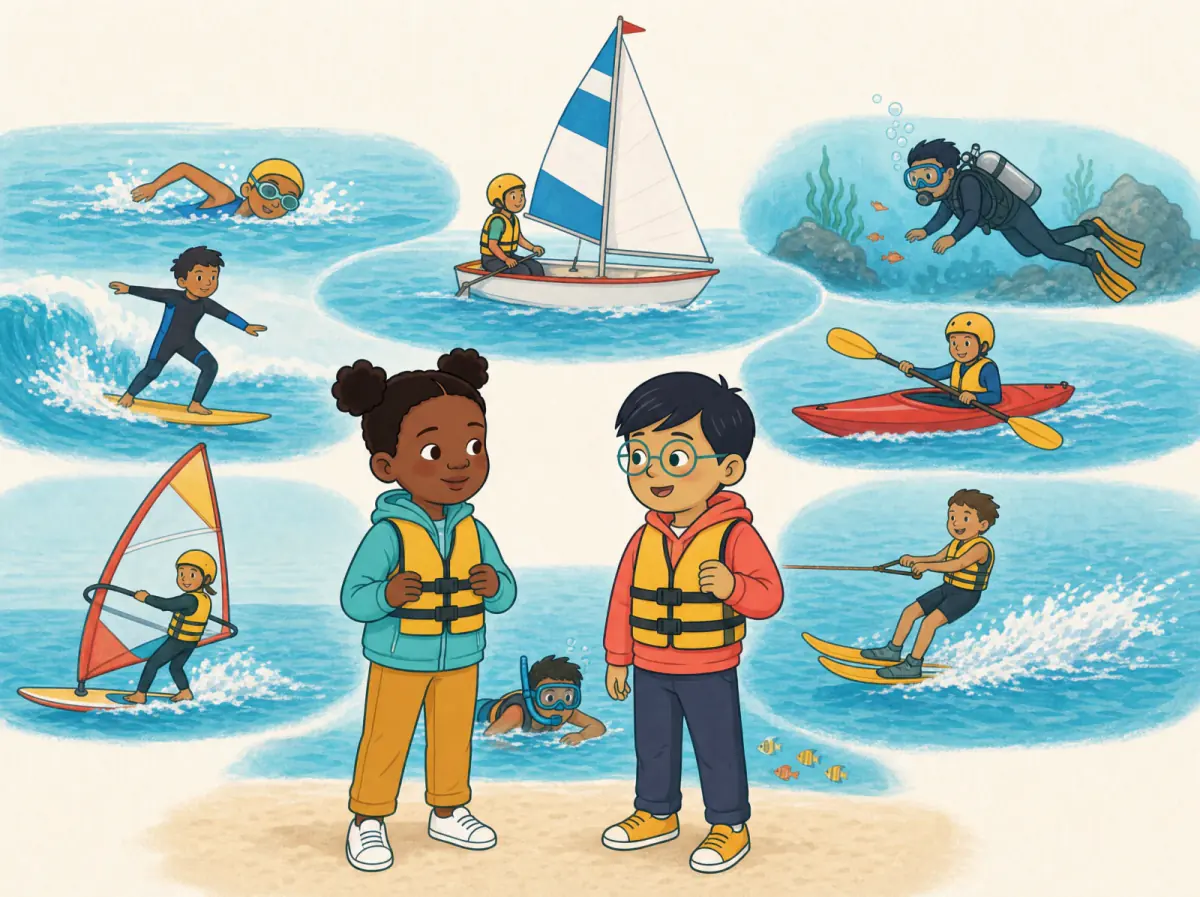
Eight water-sport words
Eight verbs cover what people do in or on the water: swim, sail, dive, surf, kayak, windsurf, snorkel and waterski. Link each one to its equipment: a sail, a paddle, a board, a mask and breathing tube, or skis behind a fast boat.
- In the water: swim, dive, snorkel
- In a boat: sail, kayak
- On a board or skis: surf, windsurf, waterski
Am, is, are + -ing: what is happening now
For something happening at this moment, English uses am, is or are with an -ing verb. In speech these are usually short: I’m, he’s, she’s, we’re, they’re. The negatives are I’m not, he isn’t, she isn’t, we aren’t and they aren’t.
“She swims.” is something she does regularly; “She’s swimming.” is happening now. “Look!” is a good test: “Look! She’s swimming.”
- “I’m swimming.” / “I’m not sailing.”
- “She’s snorkelling.” / “He isn’t surfing.”
- “We’re kayaking.” / “They aren’t waterskiing.”
Yes or no questions: “Is he sailing?”
To ask, move is or are to the front: “Is he sailing?” “Are they diving?” The short answer repeats is or are and stops: “Yes, he is.” or “No, he isn’t.”, never “Yes, he’s.” After a “No”, give the right action:
Nia Look! Sam is sailing in the calm bay.
Leo Is Ben sailing too?
Nia No, he isn't. He's kayaking.
“What is she doing?” and “What are they doing?”
An open question starts with “What”, then is or are, the person and “doing”. Use “is” for one person and “are” for two or more: “What is he doing?” “What are they doing?” “They’re sailing.”
Leo What is Mina doing?
Nia She's windsurfing.
Spelling -ing words: three rules
Spelling is where many children slip. Check every -ing word against these groups.
- Most verbs just add -ing: sail → sailing, surf → surfing, kayak → kayaking, windsurf → windsurfing.
- A verb ending in a silent e loses the e: dive → diving, ride → riding.
- Many short verbs ending in one vowel and one consonant double the last letter: swim → swimming, run → running, sit → sitting.
- Watch out: waterskiing has two i’s in a row, and British English writes snorkelling with two l’s (American English: snorkeling).
Writing a beach postcard: four lines or more
A postcard puts it all together: a greeting, the place, the weather, two activities and a closing. Place words come in opposite pairs: clean and polluted, safe and dangerous, beautiful and ugly. Weather words fit naturally: “It’s windy, so people are windsurfing.”
Here is a model in six lines:
- Dear Grandma,
- We’re at the beach today. It’s clean and beautiful.
- It’s sunny and warm.
- I’m swimming, and Dad is kayaking.
- My sister isn’t surfing. She’s snorkelling!
- Love, Sara
A home game: guess the water sport
No pool is needed. Your child mimes a water sport in the living room, and you guess: “Are you surfing?” “No, I’m not. I’m kayaking.” After three rounds, swap roles. With a sibling, add the group form: “Are they sailing?” “Yes, they are.”
Then take the postcard, underline every -ing word, and let your child name the rule for each one: add -ing, drop the e, or double the letter.
Common mistakes and quick fixes
These are normal at this stage. Repeat the sentence back correctly and carry on.
- “He sailing.”: the “is” is missing: “He’s sailing.”
- “She is swim.”: the verb needs -ing: “She is swimming.”
- “swiming”, “diveing”: double the m in swimming, drop the e in diving.
- “Yes, he’s.”: a short answer ends with the full word: “Yes, he is.”
- “They is kayaking.”: two or more people take “are”: “They’re kayaking.”
- “Look! Dad sails.”: for now, use -ing: “Look! Dad is sailing.”
What comes next
Next, the same form works for animals: “What is the bear doing?” “It’s sleeping.” After that comes the hardest step at this level: telling “What is he doing?” (now) from “What does he do on Saturdays?” (habit).