
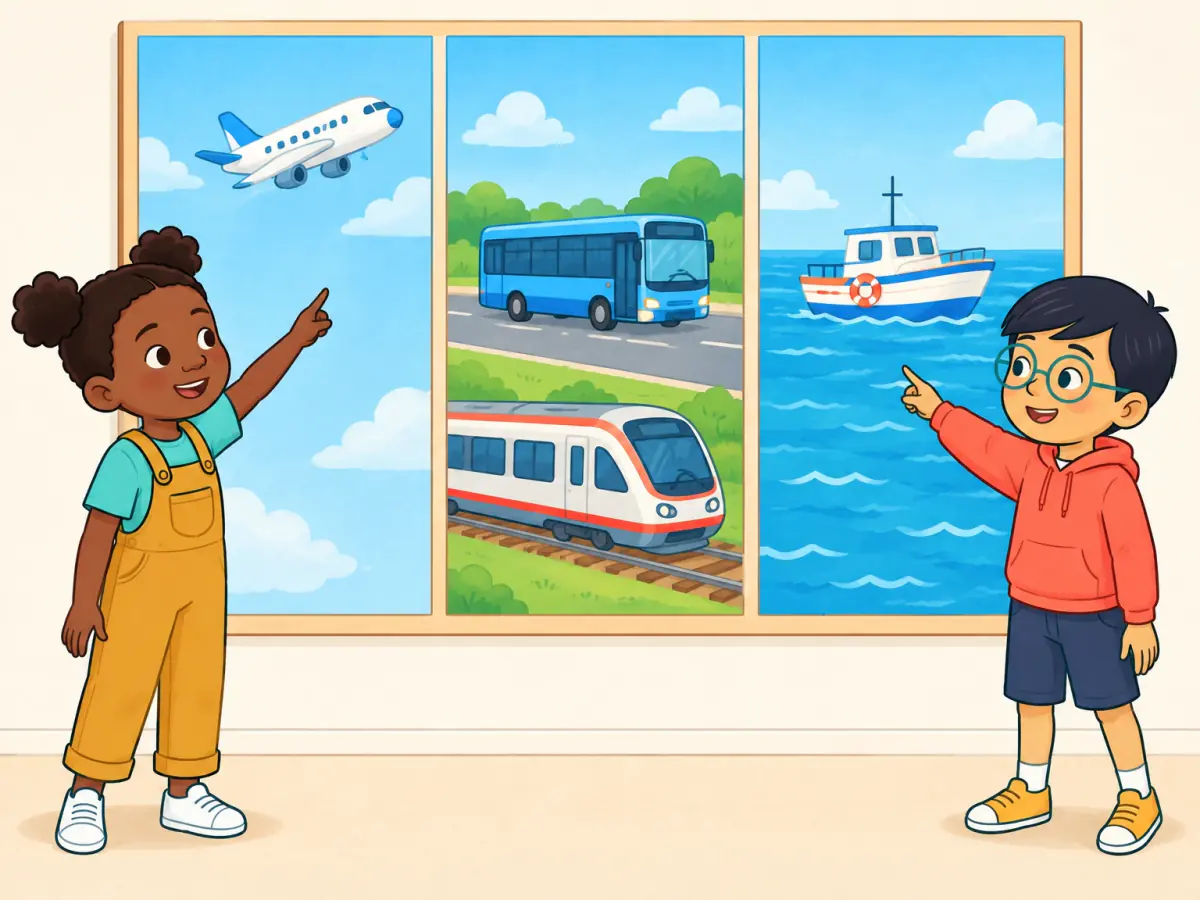
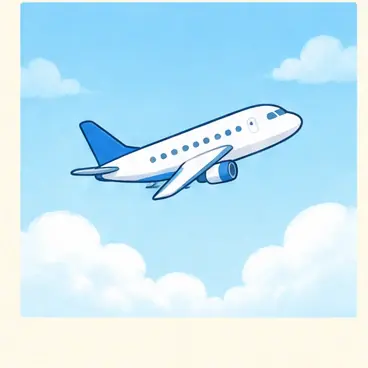
 plane by air
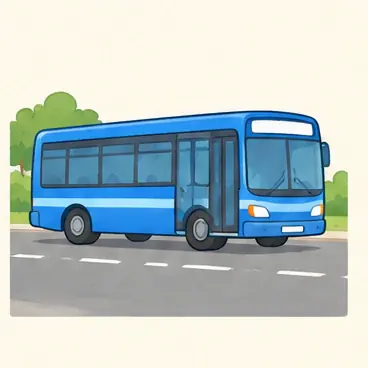 bus by land
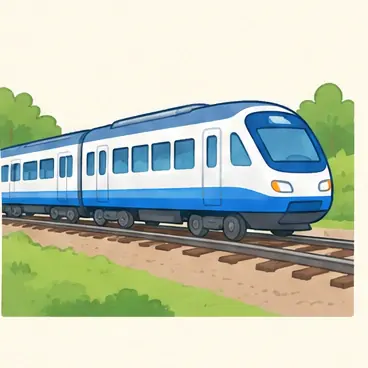 train by land
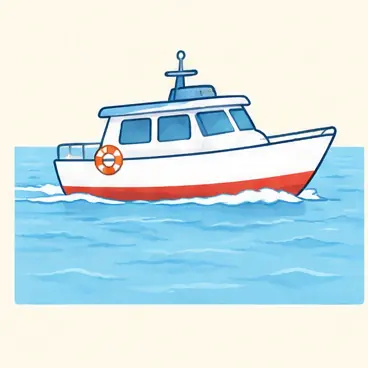 boat by sea
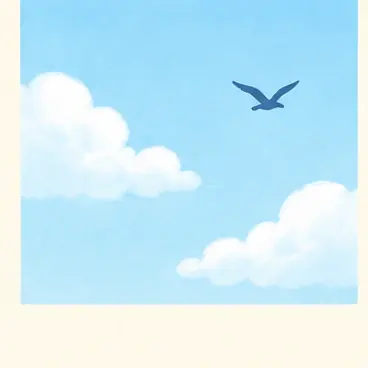 air
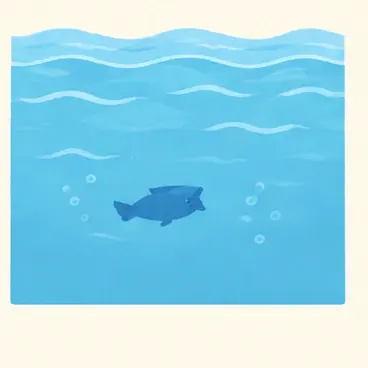 sea
Six vehicles and “Here’s a…”
Use toys or pictures: a toy car, a bus from a puzzle, a boat drawn on paper. To show one, use one short sentence: “Here’s a plane.” Your child hides a toy behind their back and you ask “What have you got?”: your child pulls out the vehicle and says “Here’s a bus.” Then swap. “Bus!” is fine at first; say the full sentence back.
Start with three and add the rest later. A gesture and a sound help each word stick:
- car – turn a small steering wheel: “Vroom!”
- bus – turn a big, wide steering wheel
- taxi – raise your hand as if stopping one in the street
- train – roll your arms like wheels: “Choo choo!”
- plane – stretch out your arms like wings: “Whoosh!”
- boat – put your palms together and make waves
One question: “Where does it travel?”
The real thinking starts with “Where does it travel?”, because your child has to picture the vehicle moving. The answer is “It travels by air.” or, with the name, “The bus travels by land.” There is no “the” after “by”, and “travels” ends in a buzzing “z” sound. There are three places to choose from:
- by air – in the sky: a plane
- by land – on roads or rails: a car, a bus, a taxi, a train
- by sea – on the water: a boat
Listen: a plane and a boat
Two children decide where a plane and a boat travel. Notice “What about the boat?”: it moves on without repeating the whole question. Listen together, then act it out with your toys.
Nia Look at the plane.
Leo It travels by air.
Leo What about the boat?
Nia It travels by sea.
The air, land and sea game
Now your child chooses a vehicle, decides where it travels and puts it there. Make three zones: a blue towel for the sea, the bare floor for the land, and a cushion on a chair for the air.
- Model first: hold up the plane, say “Look at the plane. It travels by air.” and put it on the cushion.
- Hand over: your child picks the next vehicle and you ask “Where does it travel?” Pointing or “Land!” is fine; say the full sentence back, then ask “What about the bus?”
- Get it wrong on purpose: put the boat on the land. Most children love to correct a grown-up: “No! By sea!”
- Swap roles, and stop after five or six vehicles, while it is still fun.
Ready to fly: three steps with a toy plane
With a toy or paper plane, act out three steps in order: “Choose a plane.”, “Check the wings.”, “Let’s fly together!” Between steps, ask “What do we do next?” and let your child name the step first. This short sequence trains listening memory. Then swap, so your child leads. If your child wants to be the plane and run, choose a clear space.
“How do you come to school?”
At school, children often hear “How do you come to school?”; “How do you get to school?” means the same. The answers use “by” too: “I come by car.”, “I come by bike.”, or simply “I walk.” On the way home, spot vehicles and ask “Where does it travel?” Two minutes on most days keeps the words fresh.
Common mistakes
These slips are normal at this age. Say the right version back instead of correcting:
- “It travel by air.”: after “it”, the verb takes an “-s”: “Yes, it travels by air!”
- “It travels by the sea.”: with “the”, it means next to the sea. For travelling, say “by sea”.
- “I come with bus.” or “in car”: many languages use “with” or “in” here; English uses “by”: “I come by bus.”
- “I come by walk.”: walking has no “by”: “I walk.” or “I come on foot.”
What comes next
When your child sorts all six alone, add new vehicles and decide together: a helicopter goes by air, a bike by land, a ship by sea. A seaplane is a fun puzzle: it flies and lands on water. The articles below continue with houses and an island map with “There’s a…”.