
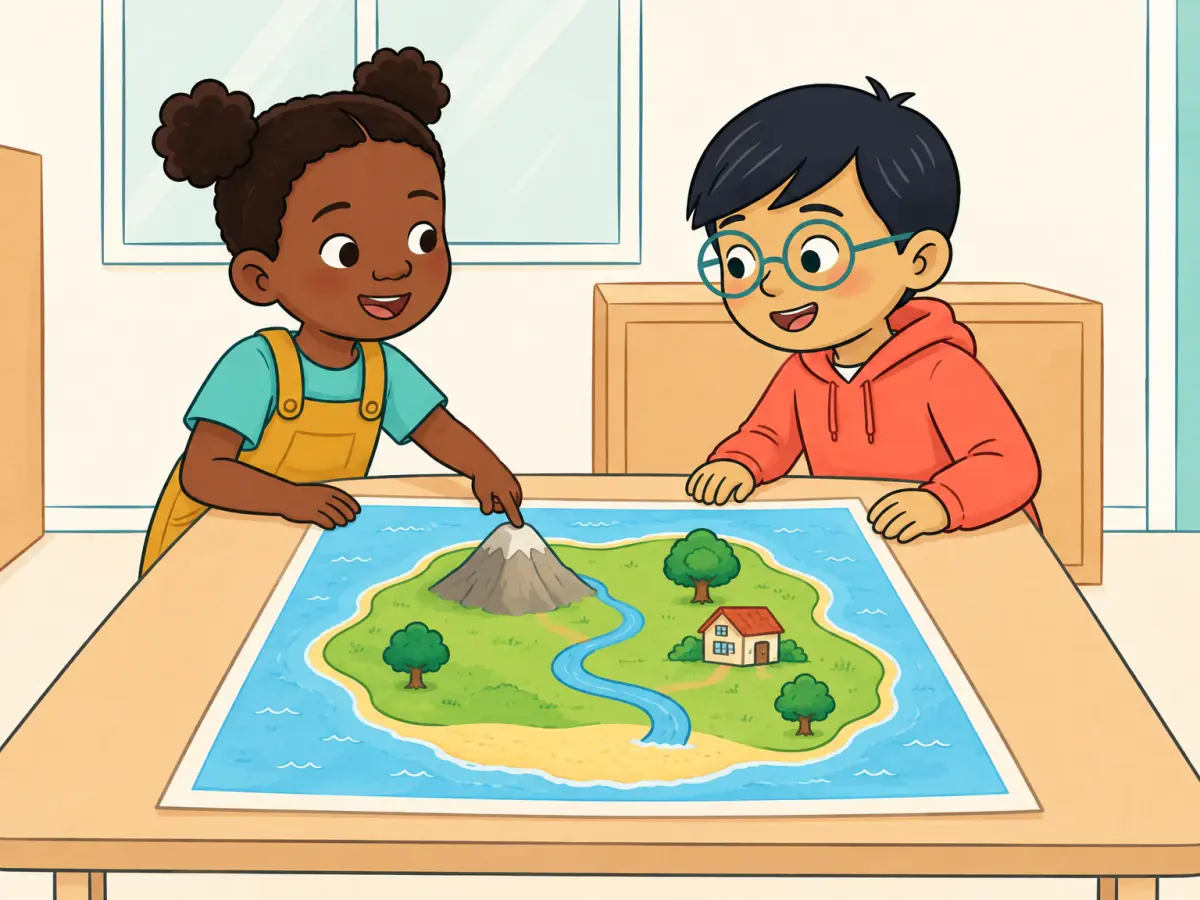
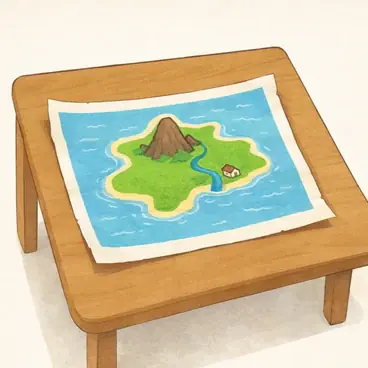
 map
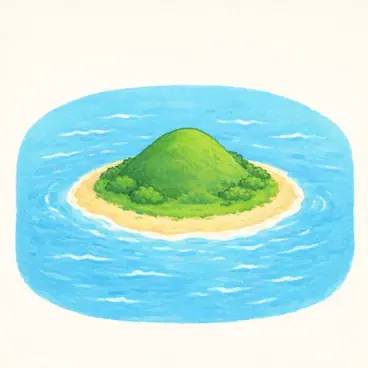 island
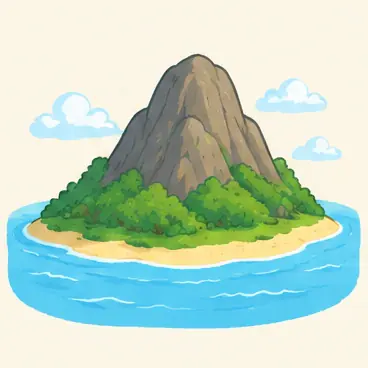 mountain
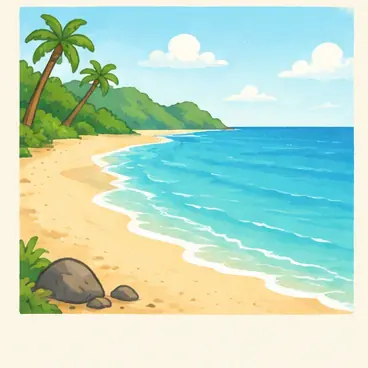 beach
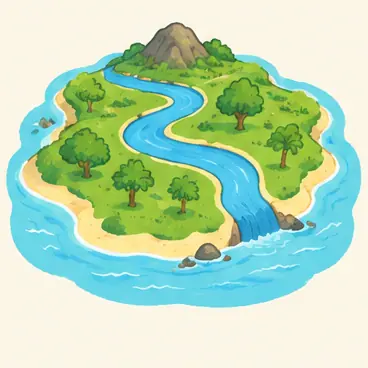 river
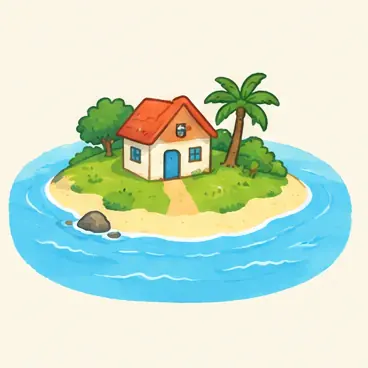 house
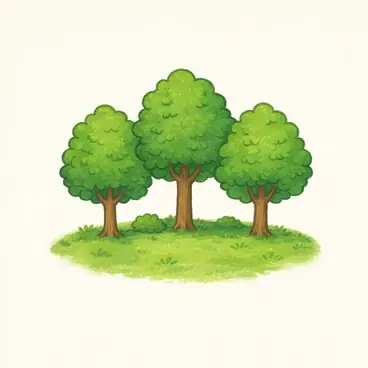 trees
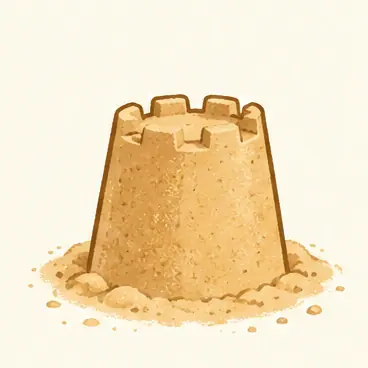 castle
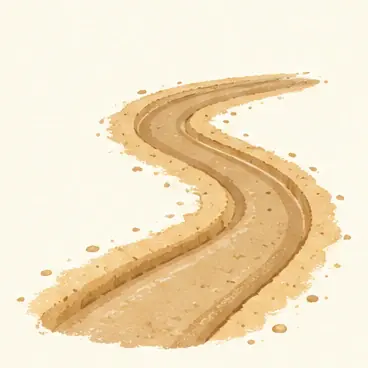 road
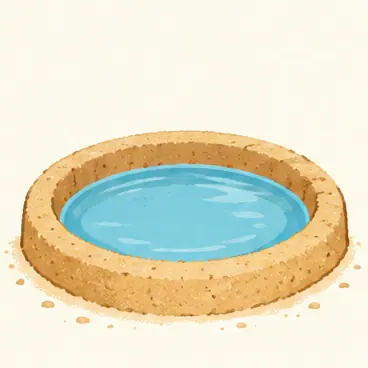 lake
Seven map words and one drawing
Draw a big island on paper while your child watches, adding one place at a time and saying its word. Play the card and let your child point to the drawing. Start with island, mountain, beach and river; add house and trees another day. Save “map” for the whole picture: “Look, a map!”
- island – land with water all round it: trace the edge
- mountain – a big triangle: make a peak with your hands
- beach – the sandy edge: rub your fingers like sand
- river – a wavy blue line: move your hand like water
- house – a square with a roof: make a roof with your hands
- trees – a few green circles: arms up like branches (note the “s”)
- map – the whole place, seen from above
How “There’s a…” works
“There’s a…” is how English says that something is in a place. “There’s” is short for “there is”, and everyday speech nearly always uses the short form. Your child needs the pattern, not the rule: “There’s a” plus one thing.
The trees are the exception: there is more than one, so English says “There are trees.” Don’t explain; just say it back the right way.
- “What’s on our island?” – “There’s a mountain.”
- “There’s a beach.” – “There’s a river.”
- At first, one word is a great answer: “Mountain!” Say the full sentence back.
Listen: what’s on the island?
One child asks what is on the island and the other answers with “There’s a…”. Then comes “Can you see the river?”, which asks the listener to look and find. Listen together, then ask both questions about your own map.
Nia What's on our island?
Leo There's a mountain.
Leo Can you see the river?
Nia Yes. There's a river.
The island hunt: let your child lead
Children remember words better when they do something with them. In the island hunt, your child is the guide and you are the explorer:
- Your child points and says “There’s a beach.” You put a small toy on it.
- Swap: ask “Can you see the river?” Your child finds it: “Yes. There’s a river.”
- Get it wrong on purpose: put the toy on the mountain and say “There’s a beach!” Most children love to correct a grown-up.
- Stop after three or four rounds, while it is still fun.
Sand play: “What are you making?”
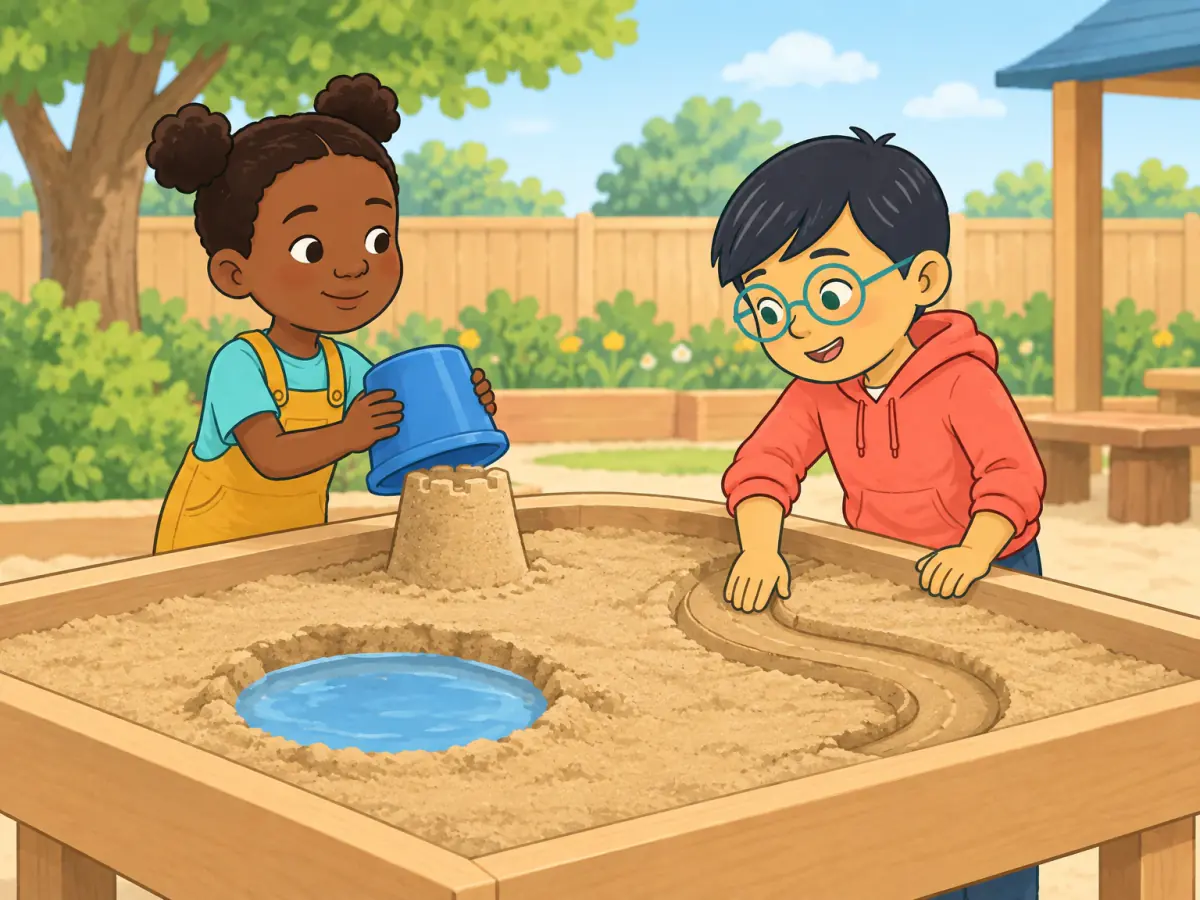
Sand, play dough or blocks suit a different question: “What are you making?” – “I’m making a castle.” It describes an action happening now, while “There’s a…” describes what is already there. Keep them apart at first.
- “I’m making a castle.” – pile up sand or dough
- “I’m making a road.” – draw a long line with one finger
- “I’m making a lake.” – press a hollow and pretend to fill it
- Finished? Switch: “Look! There’s a castle.”
Common mistakes
These slips are normal at this age. Say the right version back instead of correcting:
- “There’s mountain.”: one thing needs “a”. Many languages have no word like “a”, so it is easy to drop.
- “There’s a trees.”: more than one needs “There are…”. Many languages use one phrase for one and many, so say “There are trees.” back.
- “Dere’s” or “zere’s”: many languages lack the “th” sound. Put your tongue tip lightly between your teeth and let it buzz.
- All seven words on day one: three or four are plenty.
A five-minute routine for the week
Keep one map on the fridge or a wall:
- Day 1: draw the island with a mountain, beach and river.
- Day 2: add the house and trees, and ask “What’s on our island?”
- Day 3: play the island hunt.
- Day 4: your child draws a new island and shows you round.
- Any day: on a walk or in a picture book, ask “Can you see the…?”
What comes next
When your child describes the map without help, put two things in one sentence: “There’s a house and a tree.” Then comes “There are…” for more than one, which the garden article below practises.