
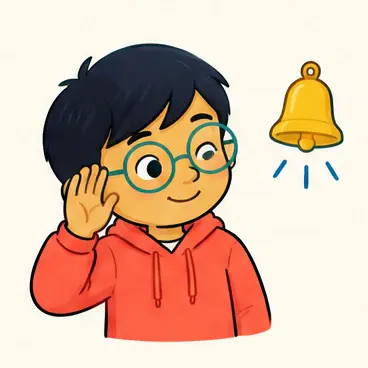
 hear with ears
 see with eyes
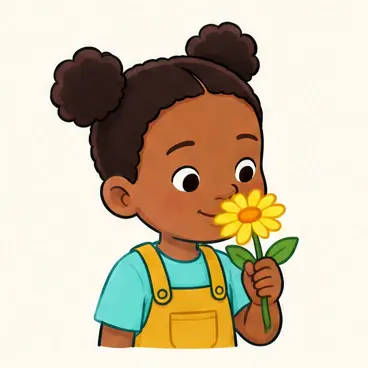 smell with nose
 taste with mouth
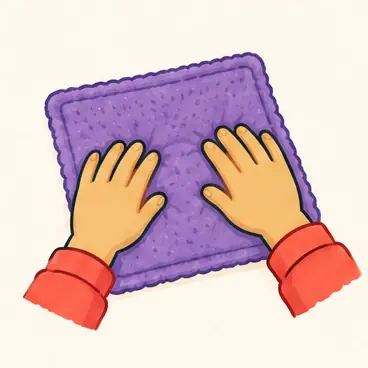 touch with hands
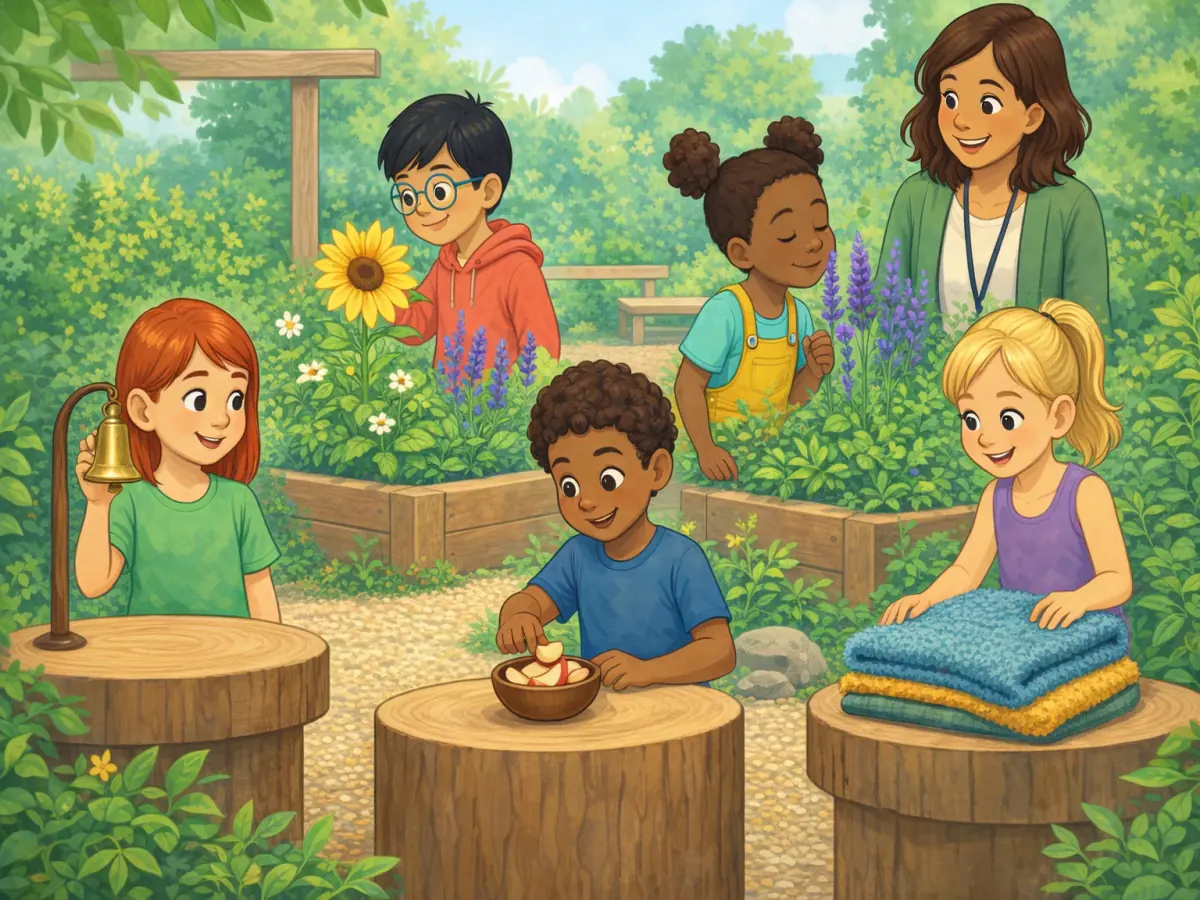
Five senses, five body parts
Young children learn the senses best as actions: in English, each sense is something your child does with one body part. Start with see and hear, the easiest to show, add touch, and leave smell and taste for last. Play a card, do its mime, and let your child copy the mime before the words:
- see with eyes – make finger circles around your eyes, like glasses
- hear with ears – cup a hand behind one ear
- smell with nose – sniff a pretend flower: “Mmm!”
- taste with mouth – lick a pretend ice cream
- touch with hands – stroke a pretend cat
One pattern for all five senses
One sentence covers the whole topic: “I can hear with my ears.” It has three parts: “I can”, the sense word, and “with my” plus the body part. Change the last two and you have all five: “I can see with my eyes.”, “I can touch with my hands.”
The question ends with “with”: “What can you hear with?” This is normal everyday English. A short answer, “My ears!”, is natural too and a great first answer; say the full sentence back.
Listen: two children notice a flower
Two children notice the same flower in two ways, then one asks the key question. Notice that a thing can sit in the middle of the pattern (“I can smell the flower with my nose.”), and that “it” then replaces “the flower”.
Nia I can smell the flower with my nose.
Leo I can see it with my eyes.
Leo What can you hear with?
Nia My ears!
The senses mime game: let your child lead
Children remember the words they use in play. Take turns acting and guessing:
- Ask “What can you hear with?” Your child cups an ear: “My ears!”
- Swap: your child mimes without speaking, and you guess: “You can smell with your nose!”
- Get it wrong on purpose: point to your nose and say “I can hear with my nose!” Most children love correcting a grown-up: “No! Ears!”
- Stop after three or four turns, while it is still fun.
Find the sense in a picture
On other days, point to things in any picture book: a bell, a flower, a cake, a kitten. For the bell, ask “What can you hear with?” and let your child answer with the mime and the words. Pictures are enough; there is no need for real food or things to sniff.
Children of 6 or 7 can go further: some things fit more than one sense. Ask “What can you do with an apple?” and accept every sense your child can show: see, touch and taste.
Warm up with a three-step dance
A one-minute dance before the game gets everyone moving. Say the steps in order, do them together, then let your child call them: “Raise your arms. Move your body. Tap your feet.”
The same word “can” turns any action into a question: “Can you stamp your feet?” – “Yes, I can.” Try three more moves:
- stamp your feet
- nod your head
- bend your legs
Common mistakes
These slips are normal at this age. Say the right version back instead of correcting:
- “I can hear my ears.”: “with” links the action to the body part: “I can hear with my ears.”
- “I can see with eyes.”: many languages put “with” and “my” into a word ending, or use “the” instead of “my”. English needs both words: “with my eyes”.
- “I can see with my eye.”: we use both eyes, both ears and both hands, so the usual sentence takes “-s”: “with my eyes”. Nose and mouth stay singular.
- Correcting every answer: if your child gets the words right with a small slip, smile and say them correctly.
What comes next
When your child uses the pattern without help, add a thing: “I can hear the bell with my ears.” Later, turn it around: “What can you see?” – “I can see a bird.” The articles below continue with face words, classroom objects, counting and transport.