
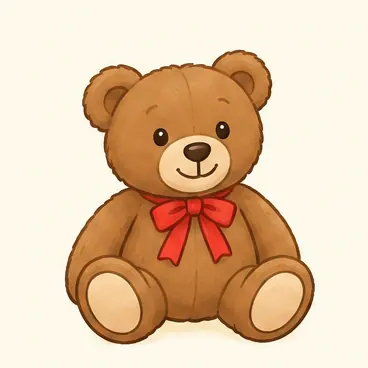
 teddy
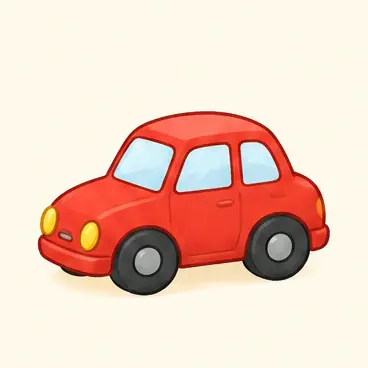 car
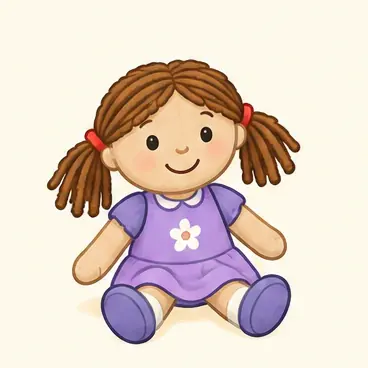 doll
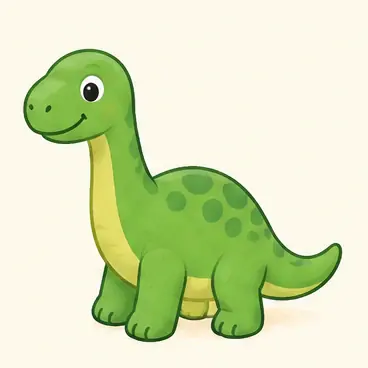 dinosaur
Four toy words to start with
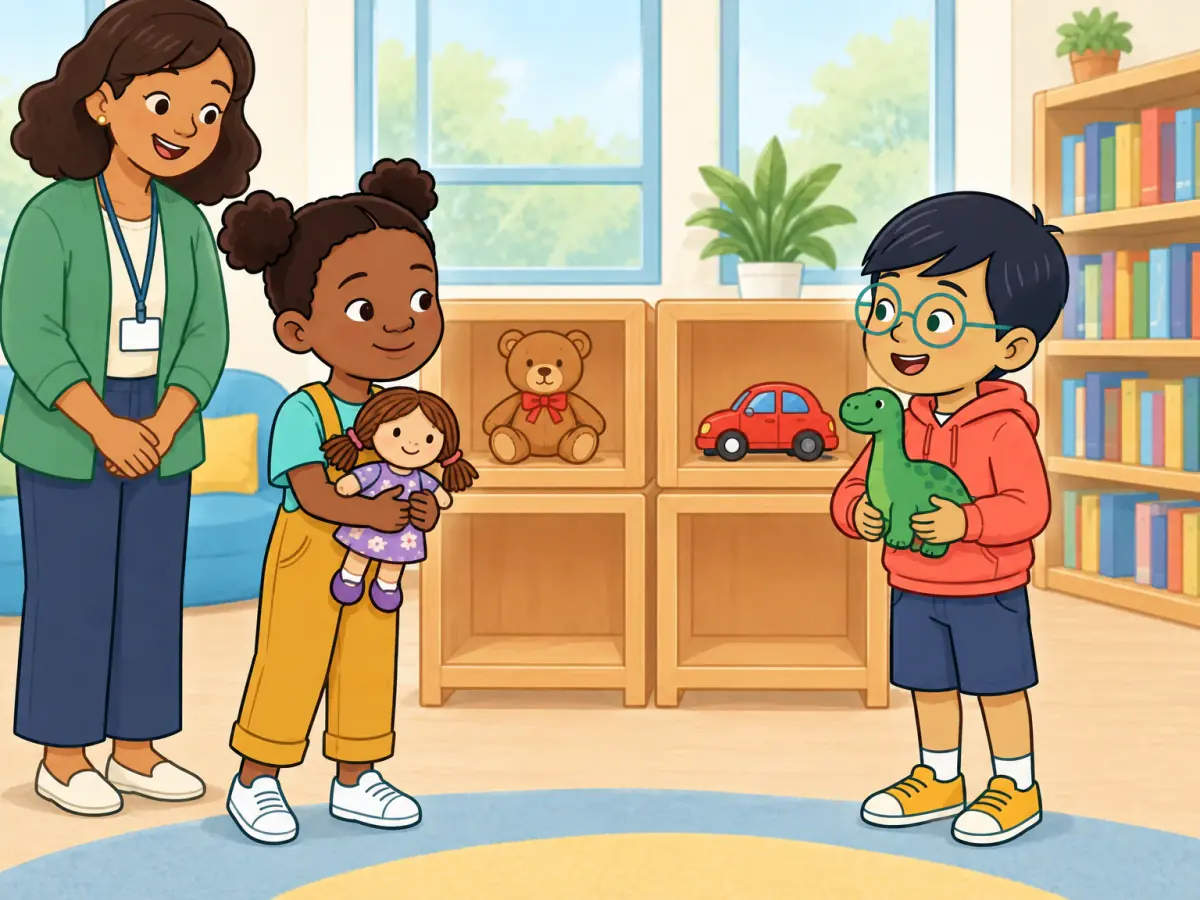
Choose four toys your child can see or hold: a teddy, a car, a doll and a dinosaur. Real toys and pictures both work. Play each card above, point and say the word yourself. “Teddy” is short for “teddy bear”; both are correct. Give each toy a small action, so your child can answer by doing:
- teddy: give it a big hug
- car: push it along the floor with a “vroom”
- doll: rock it gently in your arms
- dinosaur: stomp twice and give a small roar
“Can I have the teddy, please?”: one request, four parts
Teach the request as one chunk, not word by word. It has four parts: “Can I have” asks, “the” points to a toy you can both see, the toy word changes, and “please” makes it polite. From round to round, only the toy word changes: “Can I have the car, please?”
The answer, “Yes. Here you are.”, always comes with the handover: hold the toy out as you say it. Accept any step towards the question: a point, “Teddy, please!” or the full sentence. Say the whole question back warmly and hand the toy over anyway; in this game, asking always works.
Listen: two children borrow toys
In the recording below, two children take turns at a toy shelf: one asks for the teddy, then they swap and the other asks for the car. Listen together and point to each toy. Then take one line each and pass a real toy at “Here you are.” The swap matters: your child asks as well as gives.
Nia Can I have the teddy, please?
Leo Yes. Here you are.
Leo Can I have the car, please?
Nia Yes. Here you are.
Asking for a toy or naming a favourite
Young children often mix up asking for something and saying what they like. “Can I have the car, please?” is a request, and the car should move. “My favourite toy is a robot.” or “I like my dinosaur.” only shares a choice; nothing changes hands.
Practise both in one round. Ask “What’s your favourite toy?” and let your child hold up a picture: “My favourite toy is a dinosaur.” Share yours: “My favourite toy is a doll.” Give both a thumbs-up and say “Different favourites are fun.” Your child hears the difference, and learns that a different choice is still a good one.
The toy-library game: five minutes at home
Line up three or four toys on a low shelf or a cushion: that is the library. One person looks after it, the other borrows. End on a happy round.
- The librarian points to each toy and names it: teddy, car, doll, dinosaur.
- The borrower picks one and asks: “Can I have the doll, please?”
- The librarian hands it over: “Yes. Here you are.”
- Swap roles, so your child does the giving too.
- At the end, every toy goes back on the shelf.
Common mistakes
Most are small and easy to fix:
- “Can I have teddy?”: young children often drop small words such as “the”, and many languages have no word like it. Say the full question back and hand the toy over.
- “Give me the car!”: a command gets the toy, but in English it sounds bossy. Say “Can I have the car, please?” for your child.
- Holding the toy back until the sentence is perfect: that turns a game into a test.
- Saying “Here you are” with empty hands: the words and the handover belong together.
- Lending a treasured toy: a favourite teddy is hard to give away, even in play. Use spare toys or pictures.
What comes next
When your child asks and answers without help, bring in new toys: a truck, a jigsaw or a robot indoors, and a ball, a bike or a scooter outside. Outdoors, each toy gets its own sentence: “I can roll a ball.”, “I can ride a bike.”, “I can ride a scooter with a helmet.” The picnic article below moves from asking for a toy to saying what you need: “I need milk.”