
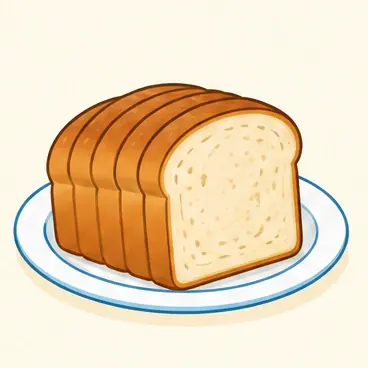
 bread
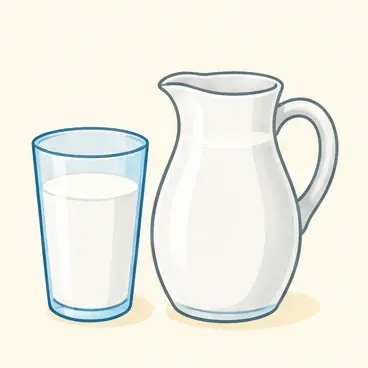 milk
 apple
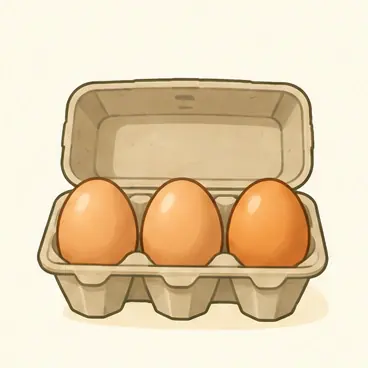 eggs
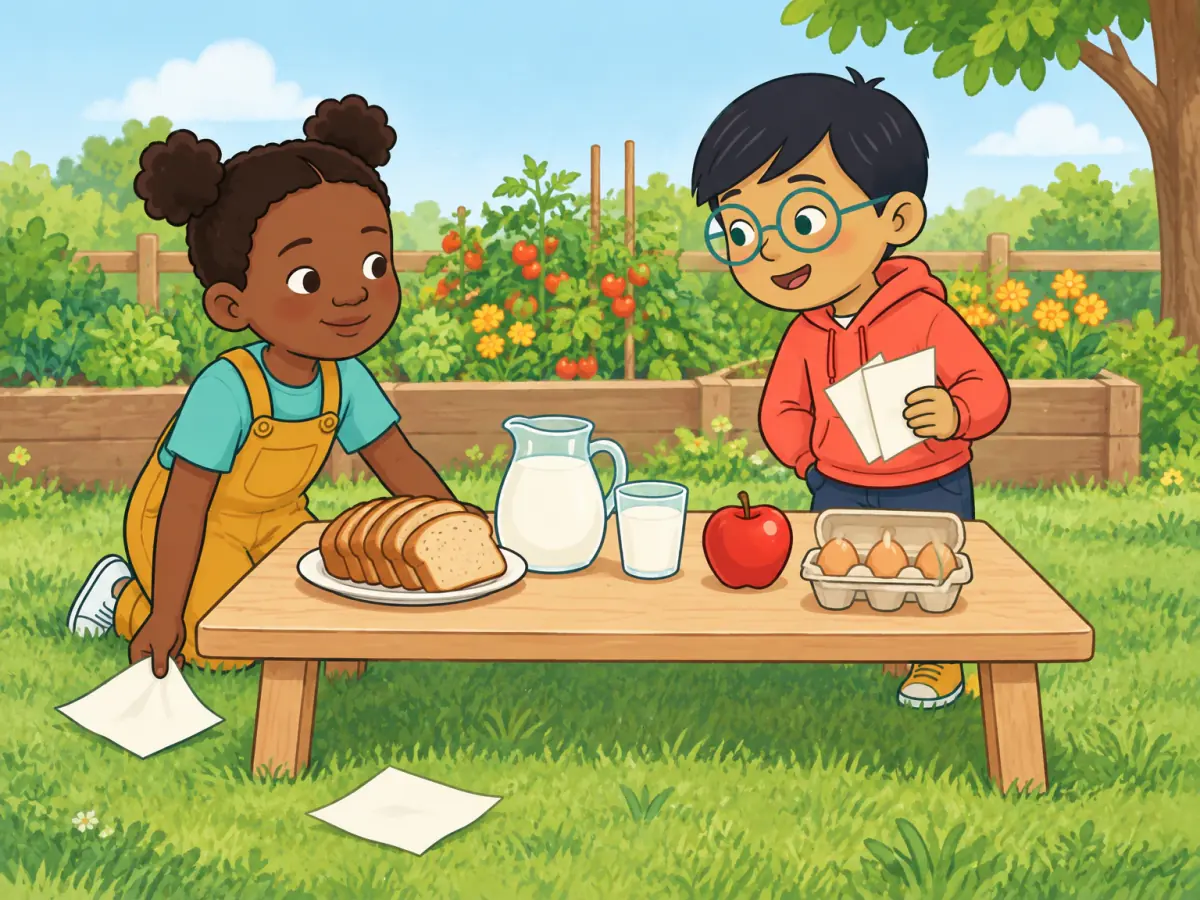
Four food words to start with
Bread, milk, apples and eggs are in most kitchens, so the words have real things to attach to. Play each card above, point to the picture and say the word yourself. Then give each food an action, so your child can answer without speaking:
- bread: tear a pretend slice in half
- milk: pour from a pretend jug, then sip
- apple: hold a round shape and take a big crunchy bite
- eggs: tap a pretend egg on the edge of a bowl
“What do you need?” “I need bread.”
The key question is “What do you need?”, and the model answer is “I need bread.” In a picnic game, “need” has a clear meaning: what the picnic must have. You ask, your child chooses a food and packs it.
Accept every kind of answer. Pointing to the right picture shows understanding, and one word, “Milk!”, is a great step; the full sentence usually comes after weeks of hearing it. Answer a single word by saying the sentence back warmly, “Yes! I need milk.”, and pack it.
Three small patterns in four words
These four words show three different patterns. Don’t explain them; just say each one the same way every time:
- No “a”: we say “I need bread.” and “I need milk.”, not “a bread” or “a milk”.
- “an apple”: before a vowel sound, “a” becomes “an”. Said quickly, it sounds like “a-napple”.
- “eggs”: more than one, so the word ends in a buzzy “z” sound.
- Sound tip: “bread” rhymes with “red”, even though it is spelled with “ea”.
From “I need” to “we need”: packing for two
A picnic is shared, so it is a natural place for “we”. “I need” is about me; “we need” is about you and me. Give each a gesture: a hand on your chest for “I”, a circle around you both for “we”.
In the recording below, two children pack a picnic: two lines with “I need”, then two with “we need”. Listen together, then take one line each and pack that picture.
Nia I need bread for our picnic.
Leo I need milk.
Nia We need an apple.
Leo And we need eggs.
Tidying up is part of the picnic
Another exchange on this page adds a problem children recognise: the wind has blown the napkins off the picnic cloth. One child asks “Can we tidy together?”, the other answers “Yes. I can pick up two napkins.”, and the first adds “I can pick up one.” Tidying becomes teamwork, with a little counting built in.
The picnic basket game: five minutes at home
You need a towel, a bag and the four food pictures or toy foods; no real food. Stop while your child still wants more.
- Spread the towel and put the pictures beside it.
- Ask “What do you need?” Your child points, says a word or says “I need bread.”, then packs it.
- Swap: your child asks, and you answer with a full sentence.
- Add “we”: “We need an apple.” Put it in the middle for both of you.
- Make a whoosh of wind with your hands, drop three tissues and ask “Can we tidy together?”
Common mistakes
Most are small and easy to fix:
- “a bread”: some languages happily say “one bread”, so this sounds right to many children. Say “I need bread.” back and keep playing.
- “I need apple”: children keep the important word and drop the small ones. Say “an apple” back clearly.
- “I need egg” for a whole box: hold up two pretend eggs and say “eggs”.
- Dropping “I”: in many languages the verb alone is enough, so “Need bread!” is common. Answer “I need bread.” with the hand-on-chest gesture.
- Quizzing: asking “What is this?” again and again feels like a test. Ask what your child needs instead.
What comes next
When your child finds all four foods without help, add fish, salad and biscuits. Later, try a lunchtime question: “What are you having today?” “I’m having a cold lunch.” The articles below on toys, clothes and where food comes from use the same short turns.