
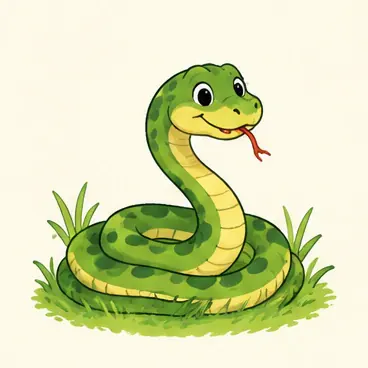
 snake
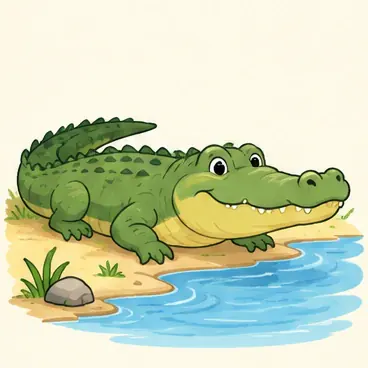 crocodile
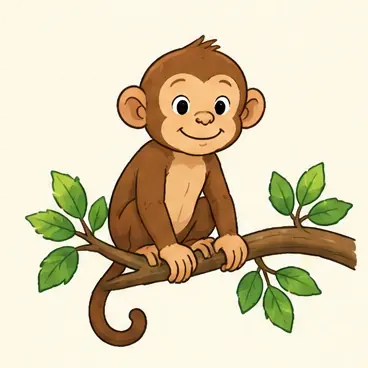 monkey
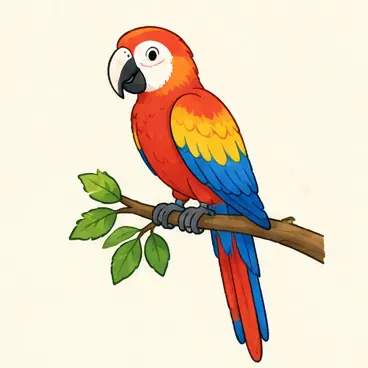 parrot
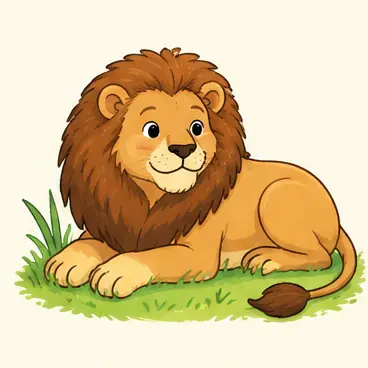 lion
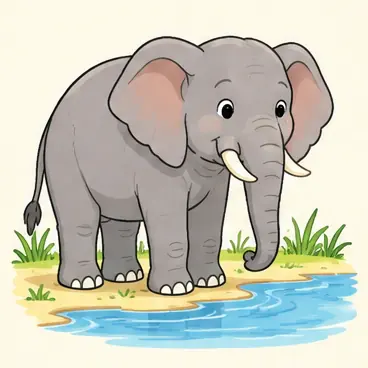 elephant
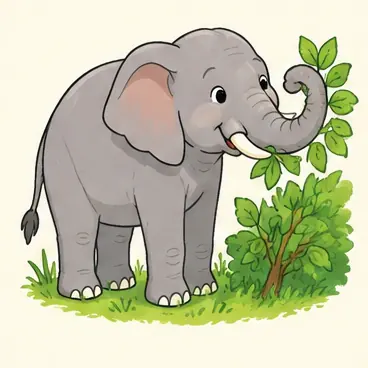 eating
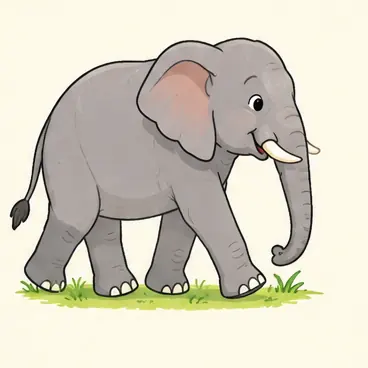 walking
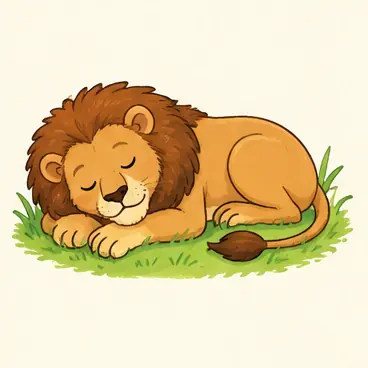 sleeping
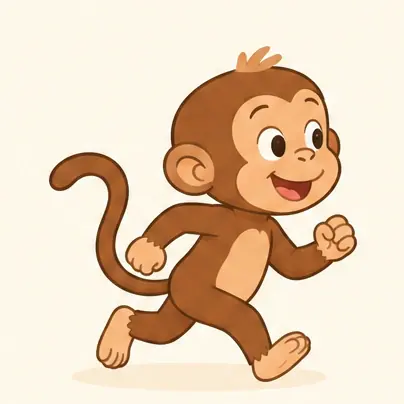 running
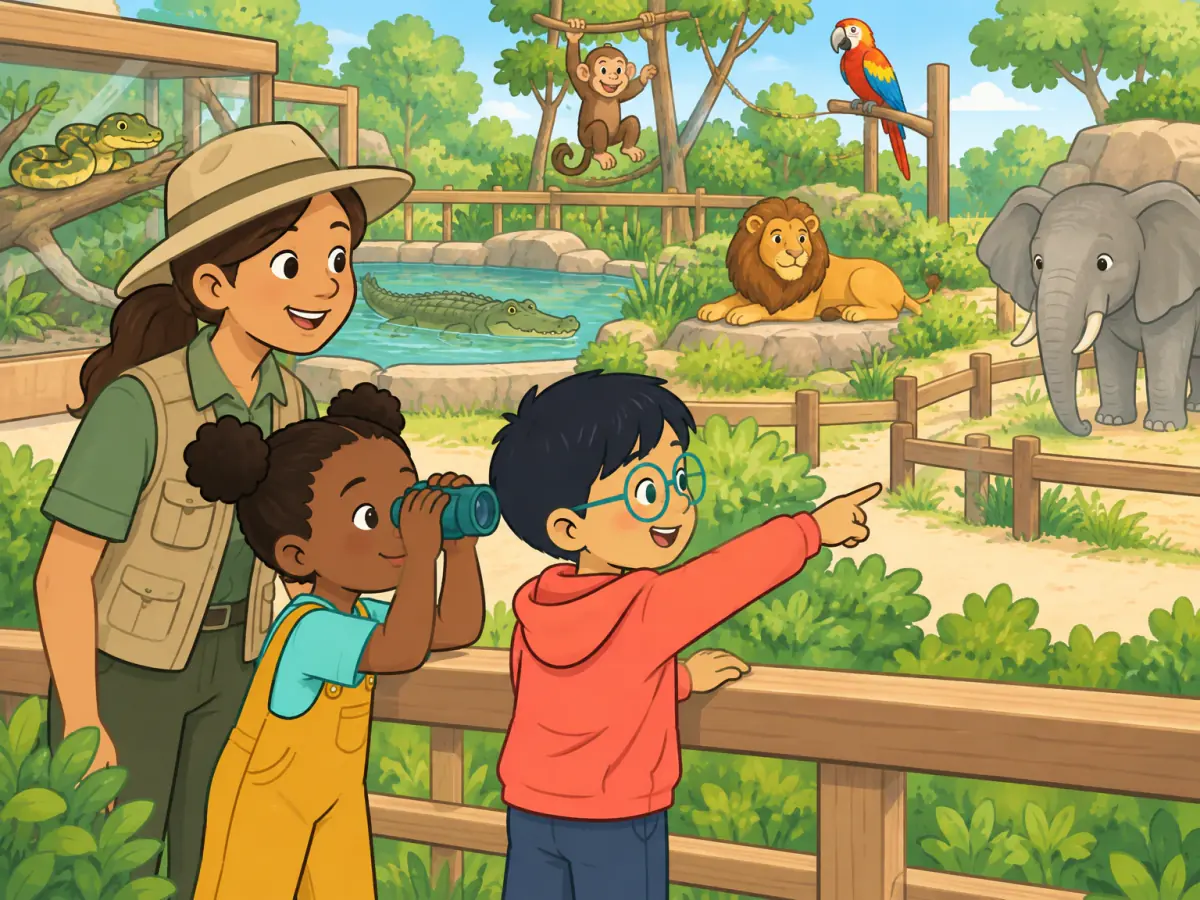
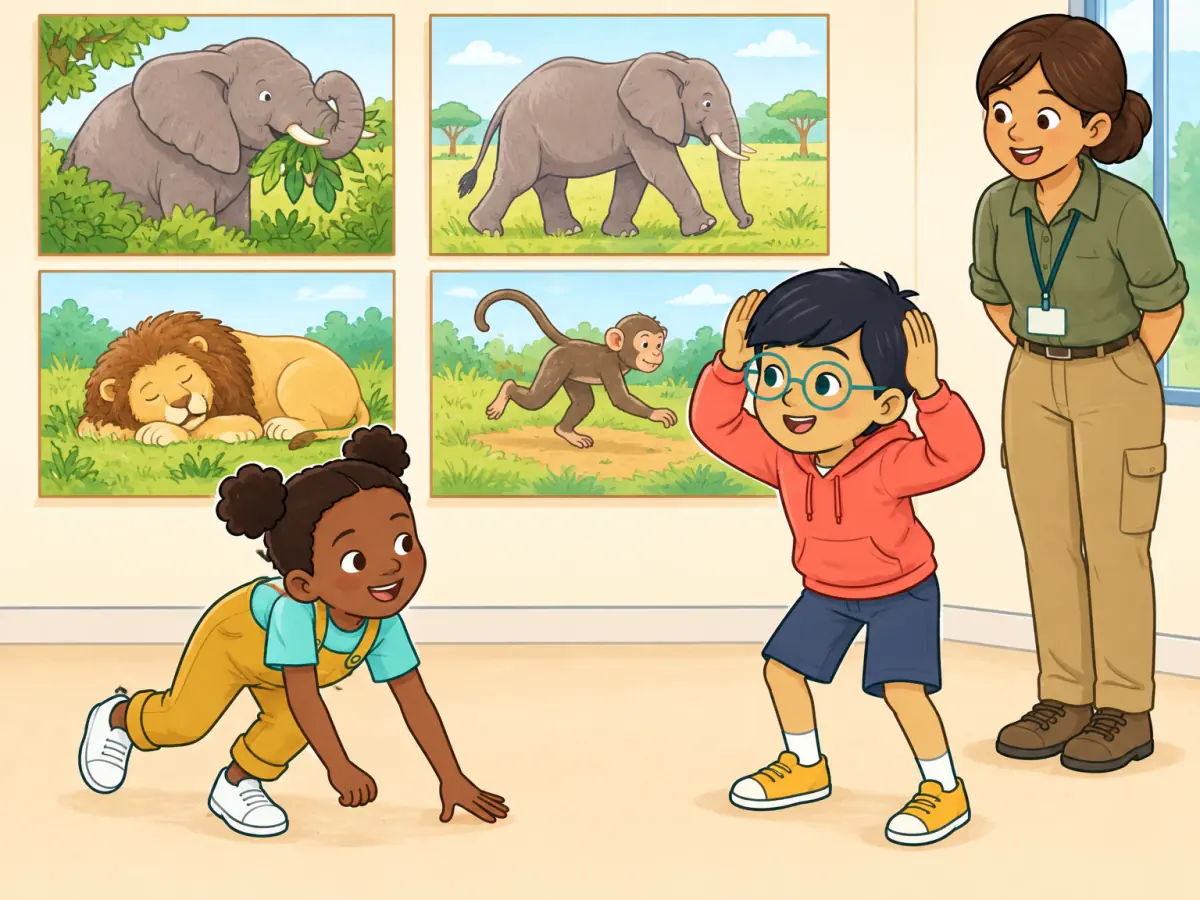
Four actions and six animals
Your child probably knows some animal names already. This topic adds the next step: what the animal is doing. Start with two actions that look completely different, sleeping and running, and add eating and walking when those feel easy. Play each card, do the movement and let your child copy it; the word usually follows.
The six animals are snake, crocodile, monkey, parrot, lion and elephant, and each is easy to act out: a hissing snake, an elephant swinging its trunk. Two animals and two actions are enough for a first game.
- sleeping – hands together under your cheek, eyes closed, a soft snore
- running – pump your arms and run on the spot
- eating – bring your hand to your mouth and munch
- walking – take big, slow steps around the room
Two questions: “What is it?” and “What’s it doing?”
Naming an animal and describing what it does are two different questions with two different answers. The “-ing” word tells you what is happening at this moment. Your child doesn’t need the grammar: at this age, “It’s sleeping” is learned as one chunk, like a line from a song.
Ask the two questions in this order:
- “What is it?” – “It’s a lion.” This names the animal.
- “What’s it doing?” – “It’s sleeping.” This says what it is doing right now. “What’s” is short for “what is”, and “It’s” for “it is”.
- “What’s the monkey doing?” – “It’s running.” The name can go into the question; the answer still starts with “It’s”.
Listen to the questions and answers
In the short exchange below, two children look at animal pictures. Notice the two ways to ask: “What’s it doing?” after “Look at the lion.”, and “What’s the monkey doing?” Listen together and point to the right picture after each answer.
Leo Look at the lion. What's it doing?
Nia It's sleeping.
Nia What's the monkey doing?
Leo It's running.
The animal action game: let your child lead
Children remember words better when they move with them. In this game, your child becomes the animal:
- Hold up an animal card and an action card, such as the lion and running. Your child acts it out, and you ask “What’s the lion doing?” A movement, “Running!” or the full sentence all count.
- Swap: your child picks two cards and you perform. Silly pairs get laughs: a running snake, a sleeping parrot.
- Action calls: walk around like elephants and call “Running!” or “Sleeping!”; everyone switches. Then let your child call.
- Stop after three or four turns, while your child still wants more.
Watch real animals, patiently
Real animals make the best examples, because what they do keeps changing. A cat on the windowsill, a dog in the park or birds by a pond all work. Stand still and watch quietly first. If nothing happens, model a calm line: “Not yet. I can wait.” When the animal moves, whisper: “What’s it doing?”
Answer only about what you can both see. If the cat stops sleeping and starts eating, the answer changes: “Look! Now it’s eating.” That is exactly what the “-ing” form is for.
Common mistakes
These slips are normal at this age. Say the right version back instead of correcting:
- “It’s a lion.” after “What’s it doing?”: your child named the animal, not the action. Point and say “Yes, it’s a lion. It’s sleeping!”
- “It sleeping.”: the small word “is” goes missing, because many languages don’t need one there. Say the full “It’s sleeping” back.
- “It’s sleep.”: the “-ing” ending disappears. Answer with it: “Yes, it’s sleeping!”
- All ten cards at once: two animals and two actions are plenty for one game.
What comes next
When your child answers “What’s it doing?” without help, ask about people too: “What’s Daddy doing?” – “He’s cooking.” This brings in “he” and “she” and turns every action at home into English practice. Add new animal actions such as swimming, flying and jumping. The articles below continue with a pretend space trip, feeling hungry or thirsty, and an island map.