
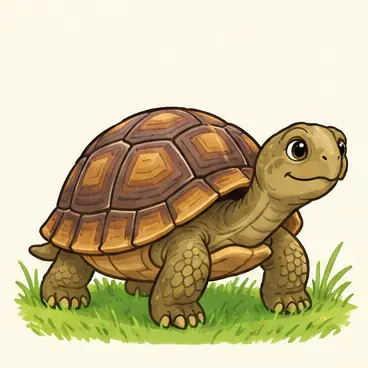
 tortoise
 dog
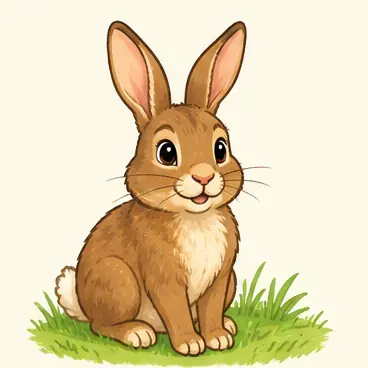 rabbit
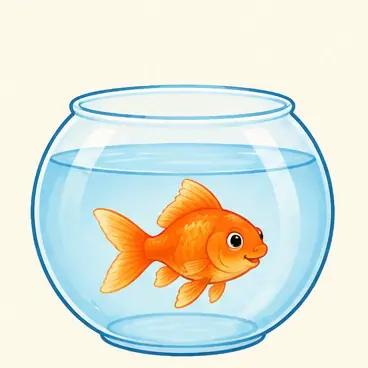 fish
Four animal words to start with
Animals that look nothing alike make pointing easy, so your child can show understanding before saying a word. Play each card above, point to the picture and say the word again yourself. Then give each animal a small action:
- tortoise: pull your head down into your shoulders and move very slowly
- dog: pant, or wag a pretend tail
- rabbit: two fingers up for ears, then one small hop
- fish: palms together, swimming through the air
“What can you see?”: one question does the work
The key question is “What can you see?”, and the model answer is “I can see a rabbit.” In everyday English, especially British English, “I can see” is the usual way to say what you notice right now; it is not about ability.
Accept every kind of answer. Pointing at the right picture shows understanding, and one word, “Rabbit!”, is a great step. The full sentence usually comes after weeks of hearing it. When your child gives one word, say the sentence back warmly: “Yes! I can see a rabbit.” That is also how the small word “a” goes in, without any explanation.
Four ways to point out an animal
In the recording below, two children look at four animals and point each one out. Listen together, then take one line each and point to that animal on the cards. Each line does a slightly different job:
- “Look! A tortoise.” calls someone’s attention.
- “I can see a dog.” says what you notice.
- “Here is a rabbit.” shows something close, or hands it over.
- “And here is a fish.” adds one more.
Nia Look! A tortoise.
Leo I can see a dog.
Nia Here is a rabbit.
Leo And here is a fish.
Why we wait quietly: a reason your child can see
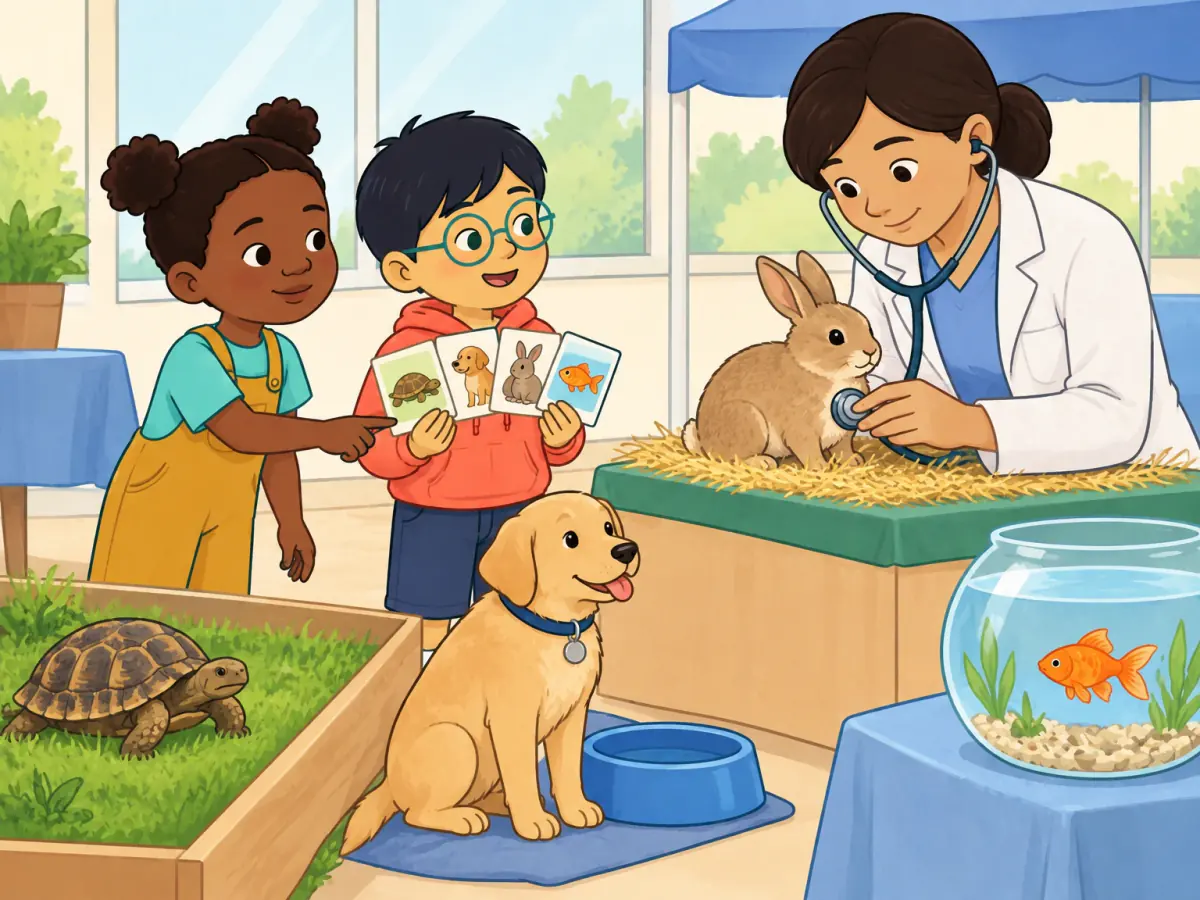
“Be quiet!” on its own can sound like a telling-off. Young children wait more easily when they can see the reason. In the short story on this page, a vet is listening to a rabbit, and the children wait quietly so the vet can hear.
A second exchange adds polite words: “Is the vet listening?” “Yes. I can be quiet.” “Thank you.” Quiet becomes something we do for someone, not a punishment. Listen, then act out the story:
- “The vet is listening to the rabbit.”: point to the vet, then the rabbit.
- “Be quiet, please.”: one finger near your lips.
- “I can wait quietly.”: still hands in your lap.
- “Now the vet can hear.”: point to your ear and smile.
The “Find it, then shh” game: five minutes at home
You need four animal pictures or toys, a soft toy as the patient and a pretend stethoscope, such as a scarf. Stop while your child still wants more.
- Spread out the animals and ask “What can you see?”
- Hide one under a cup, then lift it: “Look! A tortoise.”
- Swap: your child hides one and asks you “What can you see?”
- Play vet. You listen to the toy rabbit while your child whispers “Be quiet, please.” and keeps their hands still.
- Count three quiet breaths, say “Now the vet can hear.”, then swap roles.
Common mistakes
Most are small and easy to fix:
- Dropping “a”: young children keep the important word and drop the small ones, so “I can see dog” is normal. Say “I can see a dog!” back and keep playing.
- “Tor-toys”: the spelling misleads. “Tortoise” sounds like “TOR-tus”. Replay the card instead of explaining.
- “Two fishes”: in everyday English it is one fish, two fish.
- Quiet as a punishment: if “Be quiet” only comes when your child is in trouble, the game loses its fun. Keep a reason and an end.
What comes next
When your child finds all four animals and answers with a word or a sentence, add farm animals and their sounds: “The cow says moo.” Later, ask about favourites: “What’s your favourite pet?” “My favourite pet is a kitten.” The jobs and toys articles below use the same pointing and turn-taking.