
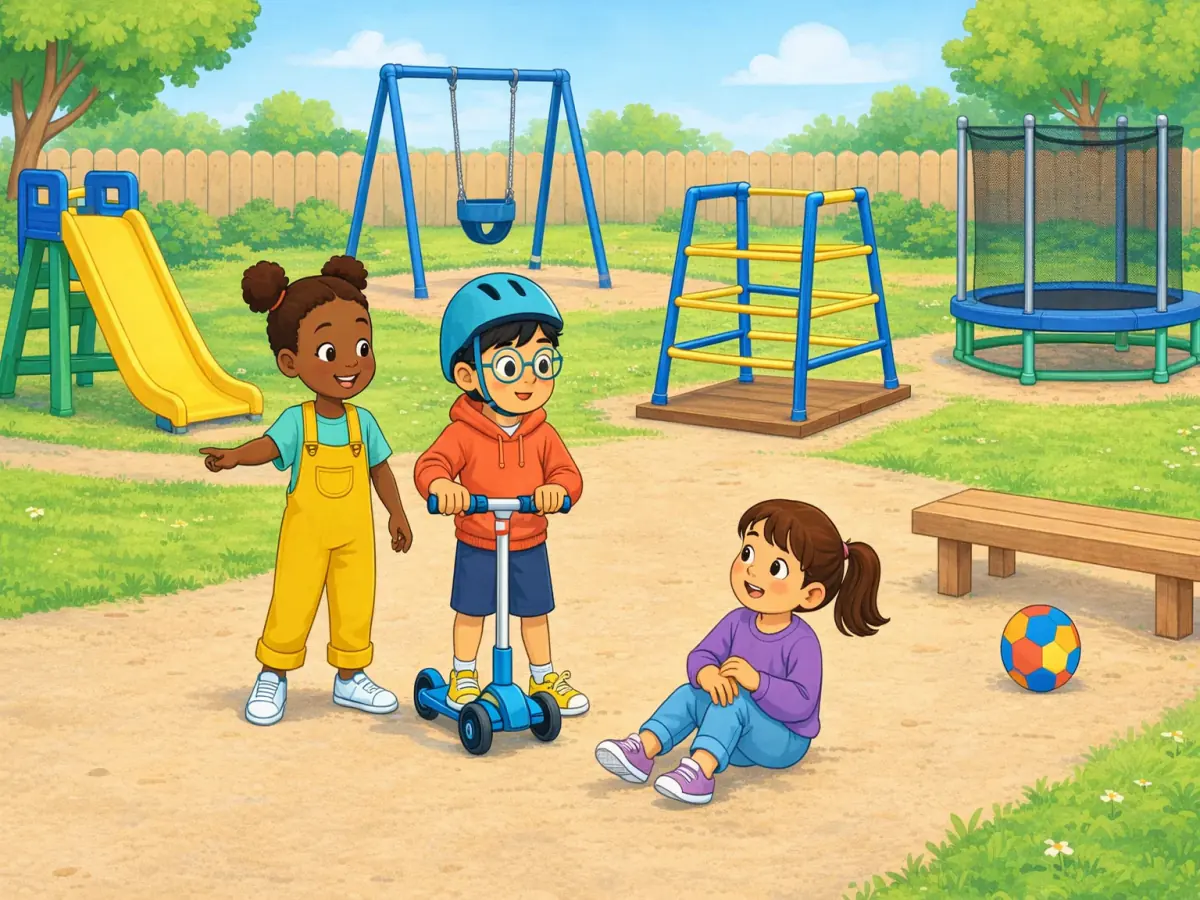
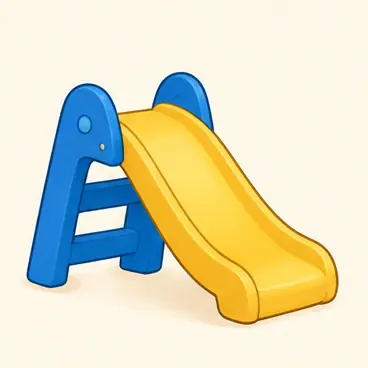
 slide
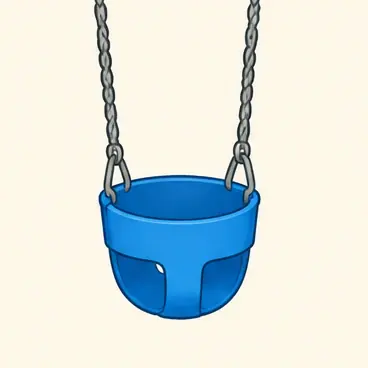 swing
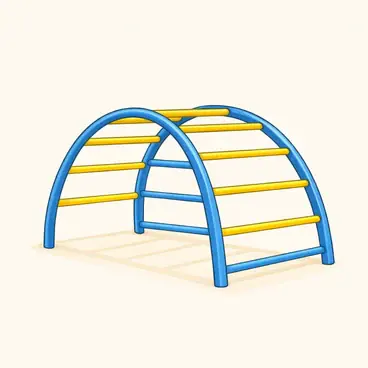 climbing frame
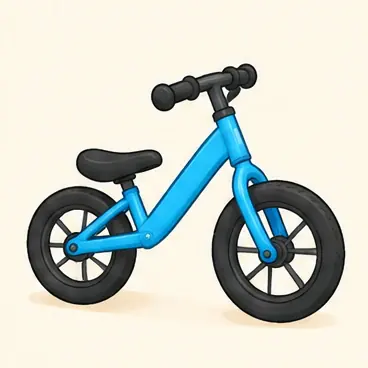 bike
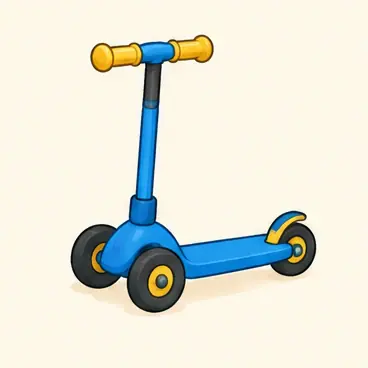 scooter
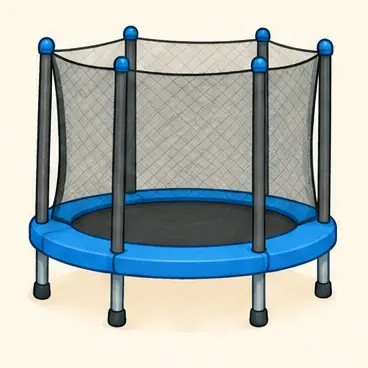 trampoline
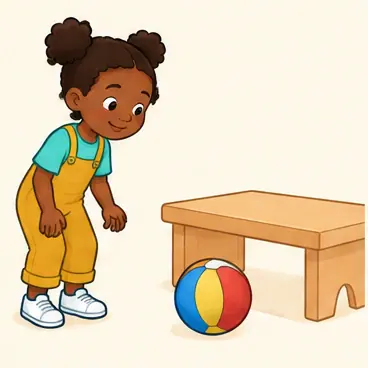 see the ball
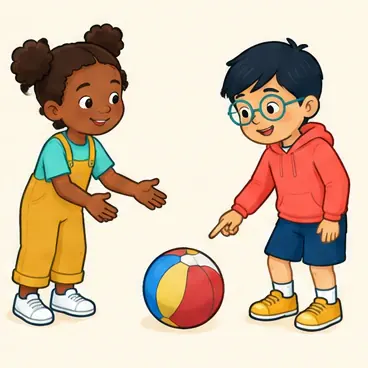 ask
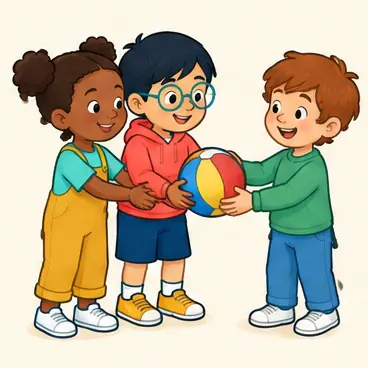 help together
Six playground words and a movement for each
The six words name things your child sees in almost any park. Start with slide and scooter, the two in the recorded conversation, then add swing and bike; keep the longer climbing frame and trampoline for last. Play each card, do its movement and let your child copy the movement first; the word usually follows.
- slide – slide one hand down your other arm: “Whee!”
- swing – swing both arms forwards and back
- climbing frame – climb the air, hand over hand
- bike – pedal in circles with your hands
- scooter – hold an invisible handlebar and push with one foot
- trampoline – bounce gently on the spot
One question: “What’s this?” – “It’s a slide.”
Point at one picture and ask “What’s this?” The answer has three parts: “It’s” (short for “it is”), “a” and the name. All six words take “a”; “an” comes later, with words such as “an apple”.
A one-word answer such as “Slide!” is a great start. Say the full sentence back, “Yes, it’s a slide!”, so your child hears the pattern each time. In the exchange below, “And what’s this?” keeps the turns going.
Nia What's this?
Leo It's a scooter.
Leo And what's this?
Nia It's a slide.
The playground tour: a pointing game at home
Children remember words better when they use them. Lay the pictures out like a little park and take turns as the tour guide:
- You point and ask “What’s this?”; your child answers. A word, a point or a movement all count.
- Swap: your child points and asks, and you answer. Get one wrong on purpose (“It’s a bike!” for the slide); most children love to shout “No! It’s a slide!”
- Mystery movement: do a movement silently and ask “What’s this?” Your child guesses the word.
- Stop after three or four turns, while your child still wants more.
Take the question to a real playground
Ask from a bench or on the way in, not while your child is climbing or swinging. Point at one thing close to you, ask “What’s this?” and wait. If your child names it, add the full sentence; if not, answer yourself and move on. One or two questions per visit is plenty: the park should stay a park, not a quiz.
Offering help: “Can I help?” – “Yes, please.”
The second half is a small, kind moment: a friend’s ball rolls away and stops by a bench. The short story near the top of this page has three steps, each with one line:
- See: “Look! The ball is by the bench.”
- Ask: “Can I help?” – “Yes, please.” When two children help, it becomes “Can we help?”
- Help together: “Here is your ball!” – “Thank you.”
The rolling-ball game
Play the story with a soft ball. Roll it under a chair, look surprised and wait for your child to offer “Can I help?” Answer “Yes, please.”, take the ball and say “Thank you.” Then swap, so your child practises accepting help too. Now and then answer “No, thank you.”, the polite way to say you can manage.
Praise the kind act as much as the English. If your child fetches the ball and says only “Here!”, add the full line: “Here is your ball!”
Common mistakes
These slips are normal at this age. Say the right version back instead of correcting:
- “It’s slide.”: many languages have no word like “a”, so it goes missing. Answer with it: “Yes, it’s a slide!”
- Saying the “b” in “climbing”: it is silent, as in “climb”. Say “CLY-ming frame”.
- Just “Yes.” after “Can I help?”: fine for now, but say “Yes, please.” whenever you accept an offer; your child will copy it.
What comes next
When your child names all six things and asks “What’s this?” without help, move from naming things to describing actions: “What’s it doing?” Keep offering “Can I help?” at home too, when you carry shopping or tidy toys; your child will soon offer it back. The articles below continue with families, animal actions and tidying up.