
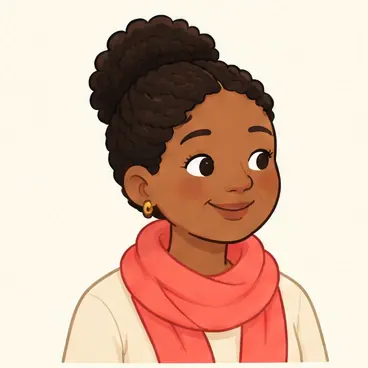
 mummy
 daddy
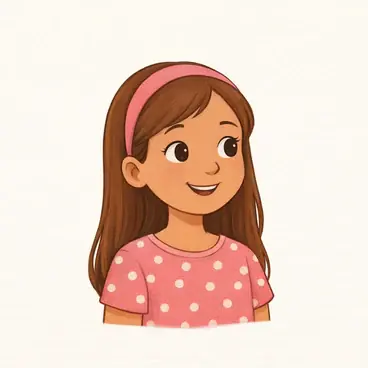 sister
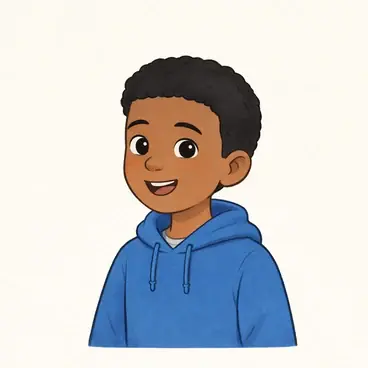 brother
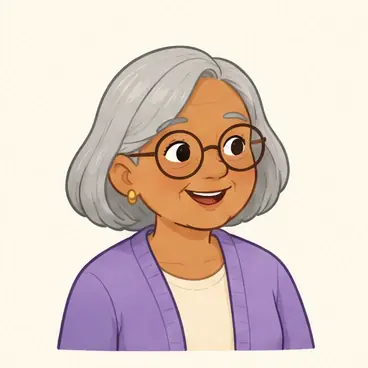 granny
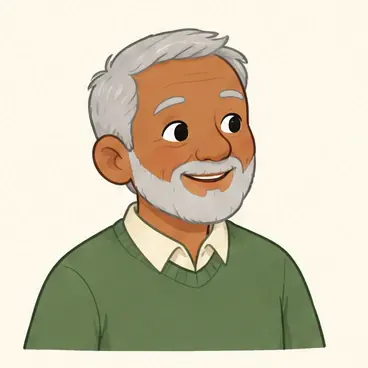 grandad
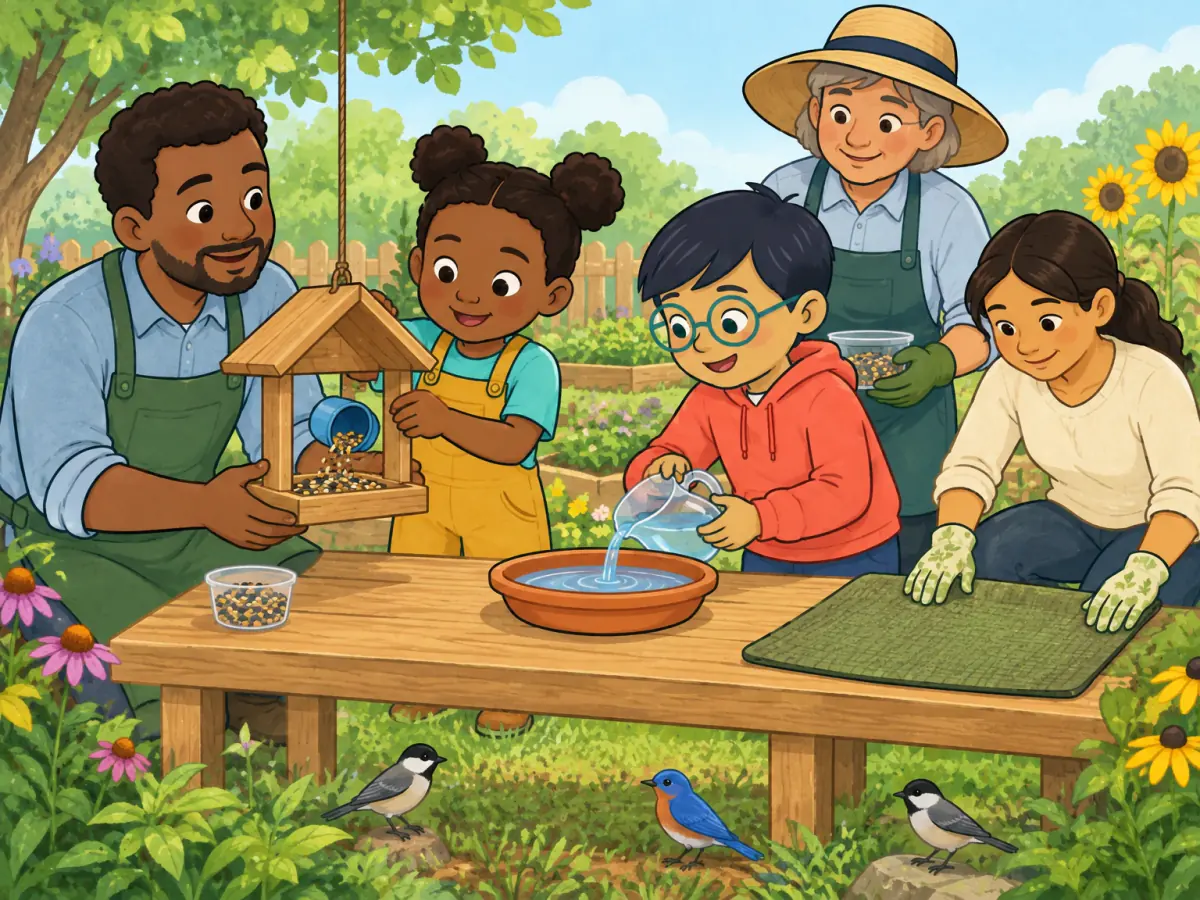
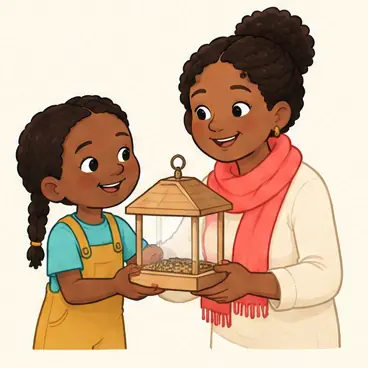 hold the feeder
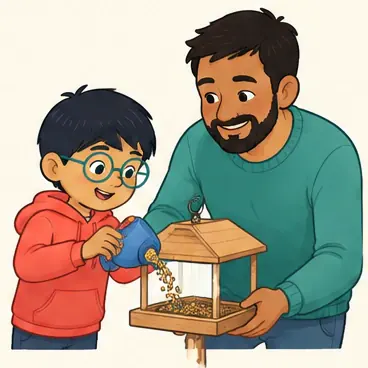 add the seeds
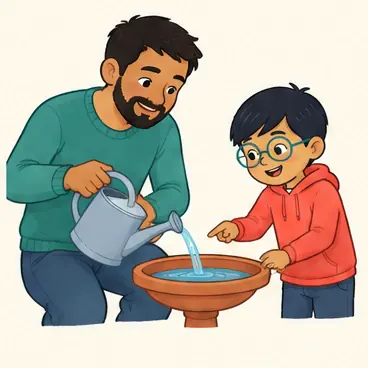 fill the water bowl
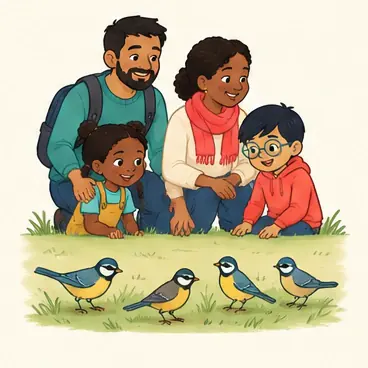 watch together
Six family words, two at a time
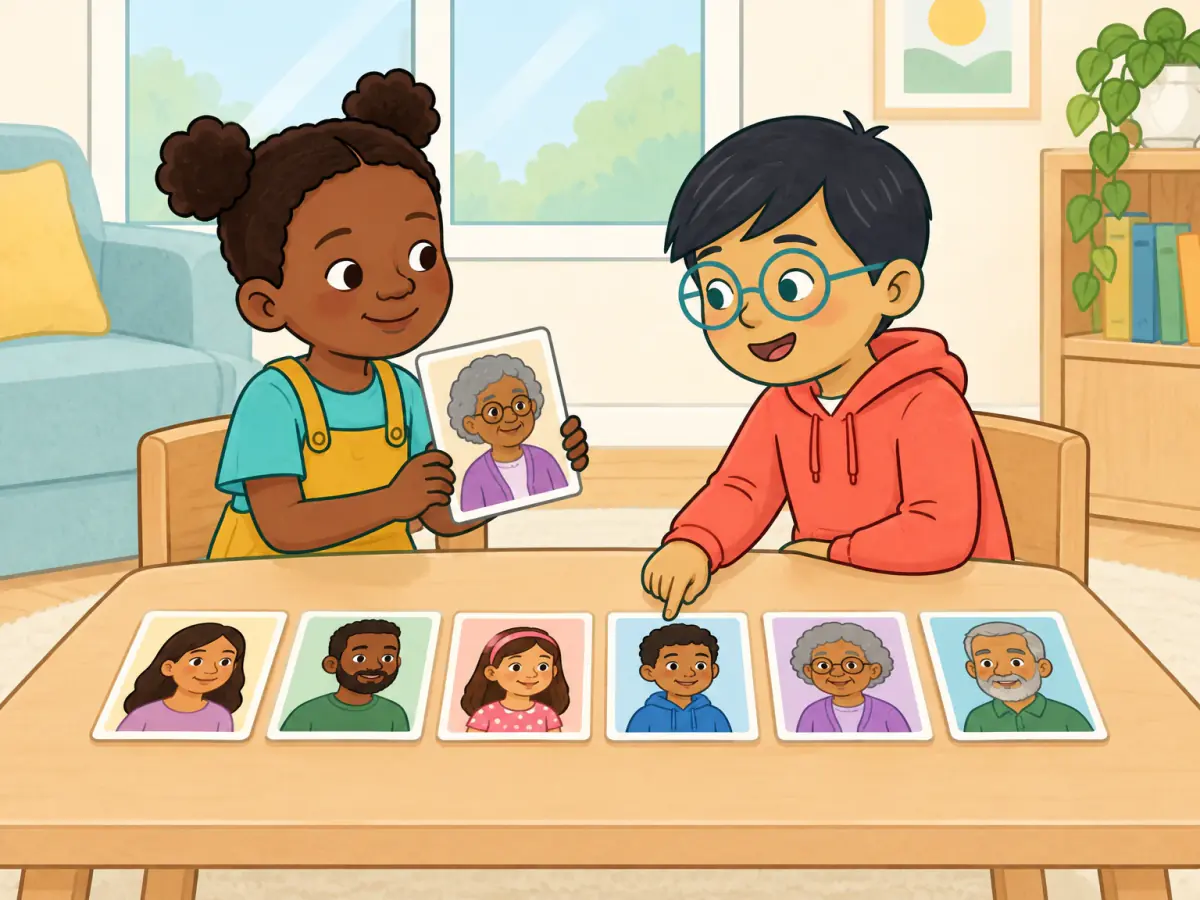
Teach the words in pairs so your child hears each one many times: granny and grandad first, then mummy and daddy, then sister and brother. Play a card above, point to the picture and say the word again yourself.
- mummy: mother
- daddy: father
- sister: a girl in the family, older or younger
- brother: a boy in the family, older or younger
- granny: mummy’s or daddy’s mother
- grandad: mummy’s or daddy’s father
One sentence for showing someone: “Here’s my…”
The question is “Show me your family.” and the answer is “Here’s my granny.” “Here’s” is the short form of “here is”, and English uses it when you hold something up for someone to see. “My” tells the listener whose granny it is.
Your child doesn’t need the whole sentence on day one. A raised card is already an answer; then one word, “Granny!”; then “My granny”; then the full line. Whatever your child says, say the complete sentence back once and carry on.
Listen first: two children show their families
In the short exchange below, two children take turns holding up family pictures. Listen together two or three times before you play. Notice the friendly “Hello!” and “Show me one more.”, which keeps the turns going.
Nia Leo, here's my granny.
Leo Hello! Here's my grandad.
Leo Show me one more.
Nia Here's my sister.
The show-and-tell game
Lay the cards or a few photos face down between you. Turning one over feels like a small surprise:
- Say “Show me your family.” Your child turns over a card, holds it up and says “Here’s my granny!” or just “Granny!”
- Wave at the picture: “Hello, granny!” It shows you understood.
- Ask “Show me one more.” until every card is up.
- Swap roles: you show and your child asks. Hold up the wrong card now and then; most children love to correct a grown-up.
- Stop after three or four turns, while your child still wants more.
Pretend family or real photos: let your child choose
The cards show a pretend family, and that is enough. Some children love bringing out real photos; others prefer to speak for a toy family. Not every family has a granny, a brother or a daddy, so use the words that fit and leave the rest as picture words. If your child wants to show someone else, give the word: auntie, uncle or cousin.
One job each: a pretend team game
After the introductions, give the family something to do together. Make a pretend bird feeder from a bowl, an empty cup and torn paper “seeds”. Say “We have four jobs.”, ask “How can we help?” and let each person answer with “I can…” while doing the action. End with “Everyone helps. Good team!”
- “I can hold the feeder.” – hold the bowl up with both hands
- “I can add the seeds.” – sprinkle the paper in
- “I can fill the water bowl.” – pour from the empty cup
- “Let’s watch together.” – sit side by side and look
Common mistakes
These slips are normal at this age. Say the right version back instead of correcting:
- “Here my granny.”: the small “’s” disappears, because many languages need no verb in this kind of sentence. Answer “Yes, here’s my granny!”
- “Here’s granny.” without “my”: not wrong, but say it back with “my”, which shows whose granny it is.
- Teaching all six words on day one: two new words a day is plenty.
- Asking about real relatives your child doesn’t want to show: the pretend cards are always enough.
What comes next
When your child shows a picture with “Here’s my…” without help, add a question about people nearby: “Who’s this?” – “This is my friend.” Later, “I can…” grows into offering help on the playground. The articles below continue with “my” and “your”, playground words and tidying up.