Skip to content
Flalingo

English practice

How to start English at home with a 3–5-year-old: a 5-minute daily routine (Pre-A1)

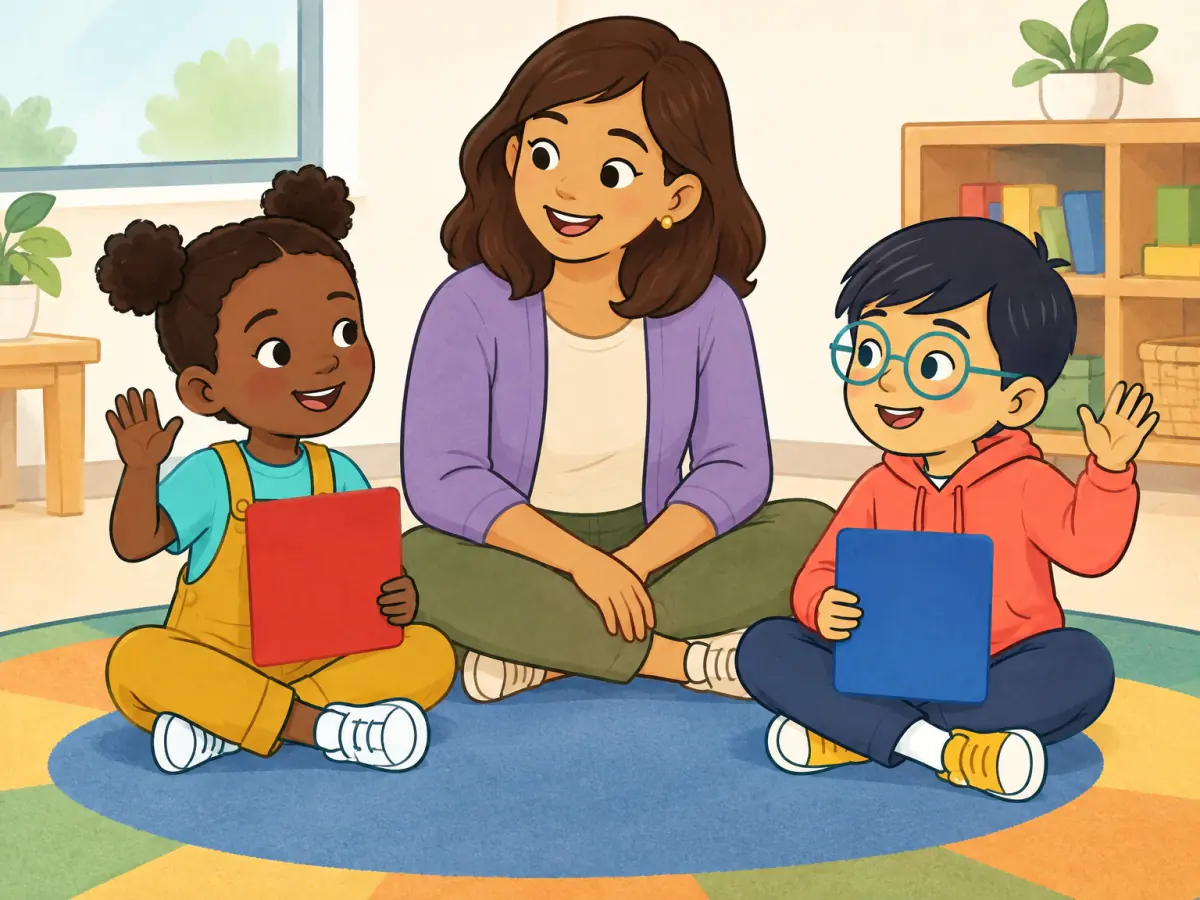
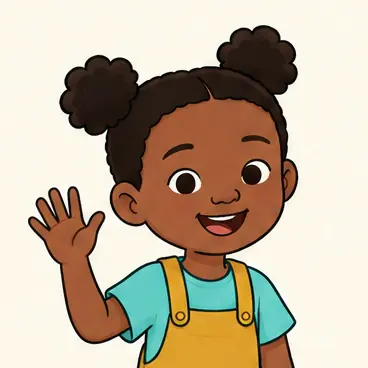
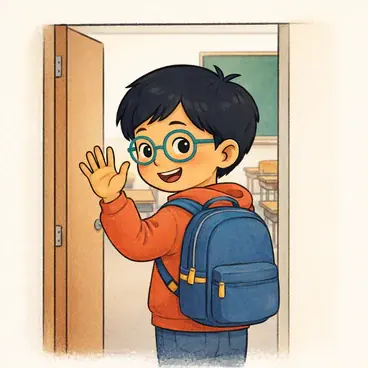
Nia and Leo wave hello in a preschool circle beside red and blue swatches.

A five-minute English routine for 3–5-year-olds: say hello, look at the weather, count and tidy three books, and say goodbye, with audio for every word.

The easiest way to start English with a 3–5-year-old is a short routine you repeat every day: say “Hello!”, ask “Are you ready?”, look at the weather together, count three books as you tidy them away, and say “Goodbye!” This is a first-steps topic (Pre-A1) for children of about 3–5 who have heard little or no English. Five minutes a day is enough, and you don’t need to speak English yourself: the cards below play every word, and the sentences you need are written out here. Your child can join in with waves, nods and pointing long before they say a word.

Who this is for

  • Parents of 3–5-year-olds hearing English for the first time: no earlier words are needed.
  • Parents who aren’t confident in English: every word has audio on the cards, and each step is written out here.
  • Children who go to an English playgroup or nursery class: a short home routine brings the same words back every day.
  • Too early: if your child is under 3, skip the questions; waving while you say “hello” and “goodbye”, or singing, is enough.
  • Too easy: if your child already greets you, names the weather and counts to ten in English, move on to colour and number games (links below).

Open the sample pages

Open the sample pages

Word cards

hellohello
goodbyegoodbye
yesyes
nono
redred
blueblue
sunnysunny
rainyrainy
cloudycloudy
oneone
twotwo
threethree
bookbook
booksbooks

Conversation

Nia Hello! I'm Nia.

Leo Hello! I'm Leo.

Nia Are you ready?

Leo Yes!

Nia Goodbye, Leo.

Leo Goodbye, Nia.

Language pattern

Are you ready?

Yes!

  • Hello! I'm Nia.
  • Hello! I'm Leo.
  • Are you ready?
  • Yes!
  • Goodbye, Leo.
  • Goodbye, Nia.

More practice

Ask about the weather

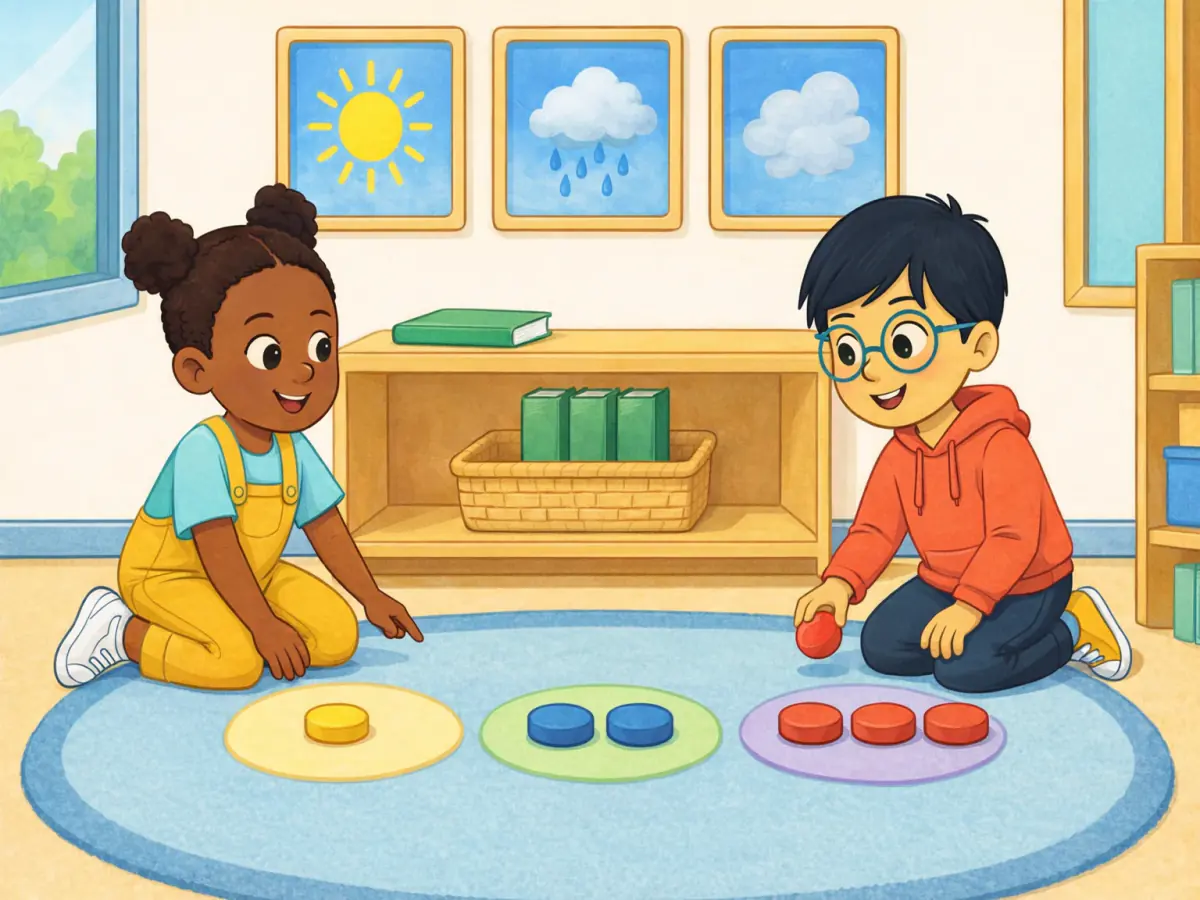
Nia and Leo point to sunny, rainy and cloudy pictures, count groups of one to three and tidy books.

Nia What's the weather like today?

Leo It's cloudy.

Leo Let's count the pictures.

Nia One, two, three.

What's the weather like today?

It's cloudy.

  • What's the weather like today?
  • It's cloudy.
  • Let's count the pictures.
  • One, two, three.

Tidy our books

Nia and Leo point to sunny, rainy and cloudy pictures, count groups of one to three and tidy books.
bookbook
booksbooks
oneone
threethree

How many books?

Three books.

Lead the welcome

Nia and Leo wave hello in a preschool circle beside red and blue swatches.
hellohello
goodbyegoodbye
yesyes
nono
redred
blueblue

What colour do you choose?

Blue.

Learn this unit
How would you like to learn?

Why a short routine works at this age

Young children learn a new language best from things that happen the same way every day. When the routine never changes, your child knows what comes next and can join in before they can speak: a wave for “hello”, a nod for “yes”, a point at the window for the weather. Keep the same order, the same words and the same time of day, for example after breakfast or before a bath.

Each card above has audio. Play a word, then say it yourself; your child hears it twice, from the recording and from you.

Step 1: say hello and ask “Are you ready?”

Wave and say “Hello!” Then add your name, as in the recording: “Hello! I’m Mum.” or “Hello! I’m Dad.” Ask “Are you ready?” and nod. A nod, a smile or “Yes!” all count as an answer.

Listen to the short exchange below together. Later you can share the roles: one of you says hello, the other answers.

Nia Hello! I'm Nia.

Leo Hello! I'm Leo.

Nia Are you ready?

Leo Yes!

Step 2: look at the weather

Go to the window, or look at a weather picture, and say one word. Give each word a gesture so your child can answer without speaking:

  • sunny – make a big circle with your arms
  • rainy – wiggle your fingers down like rain
  • cloudy – hold both hands above your head like a cloud
  • If the sky doesn’t match any of the words, choose a picture instead; one word a day is enough.

Step 3: count three books and tidy up

Put three books on the floor. Count them together as you put them away: “One book, two books, three books!” If one has a red or a blue cover, point to it: “A red book!” Tidying gives the counting a purpose, and the routine a clear end.

You will hear “book” for one and “books” for more than one. Say the “s” a little more clearly, but don’t ask your child to copy it; it comes with time.

Learn this unit your way

Step 4: say goodbye

Finish the same way every day: wave and say “Goodbye!” Your child can wave back or say “Bye!” A fixed ending tells your child that English time is over and will come back tomorrow, which makes the next start easier.

Common mistakes

Most of these are small parent mistakes, and they are easy to fix:

  • Translating every word: say the English word and show the meaning with a gesture or a picture. Your child links the word to the thing, not to another word.
  • Asking your child to repeat: at this age, listening and joining in with gestures come first. Words usually follow when your child is ready.
  • Adding new words every day: keep the same few words for a week or two. Repetition is what makes them stick.
  • Turning it into a test: questions such as “What is this?” can feel like an exam. Say the word yourself and let your child point.
  • Plural after numbers: if your first language doesn’t add a plural ending after a number, “three book” will sound right to your child. Just say “three books” back and keep going.

What comes next

When your child waves and nods without help, keep the routine and change one part at a time: a new weather word, counting to five, or a colour question with toys. The weather and counting articles below build on these same words.

Frequently asked questions

What age can a child start learning English?

Children can start hearing English early, as long as it feels like play. This routine is written for children of about 3–5; with younger children, waving while you say “hello” and “goodbye”, or singing, is enough.

Can I teach my child English if I don’t speak it well?

Yes. At this stage you only need a handful of words, and the cards play each one so your child hears a clear model. Your role is to keep the routine going and to join in; if you say a word differently from the recording, play the card again.

My child doesn’t say anything in English. Is that normal?

Yes. Many young children listen for a while before they speak a new language. If your child waves, nods, points or tidies at the right moment, they understand. Keep the routine, don’t push for words, and celebrate the first “Hello!” when it comes.

Learn this unit
How would you like to learn?

What comes next?

One-to-one lessons with a live teacher

In Flalingo kids lessons, your child practises units like this one-to-one with a live teacher, through games on the same screen.

Book a free trial lesson