
Skip to content
Flalingo

English practice

How to teach your child hello, goodbye and their name in English (Pre-A1, first words)

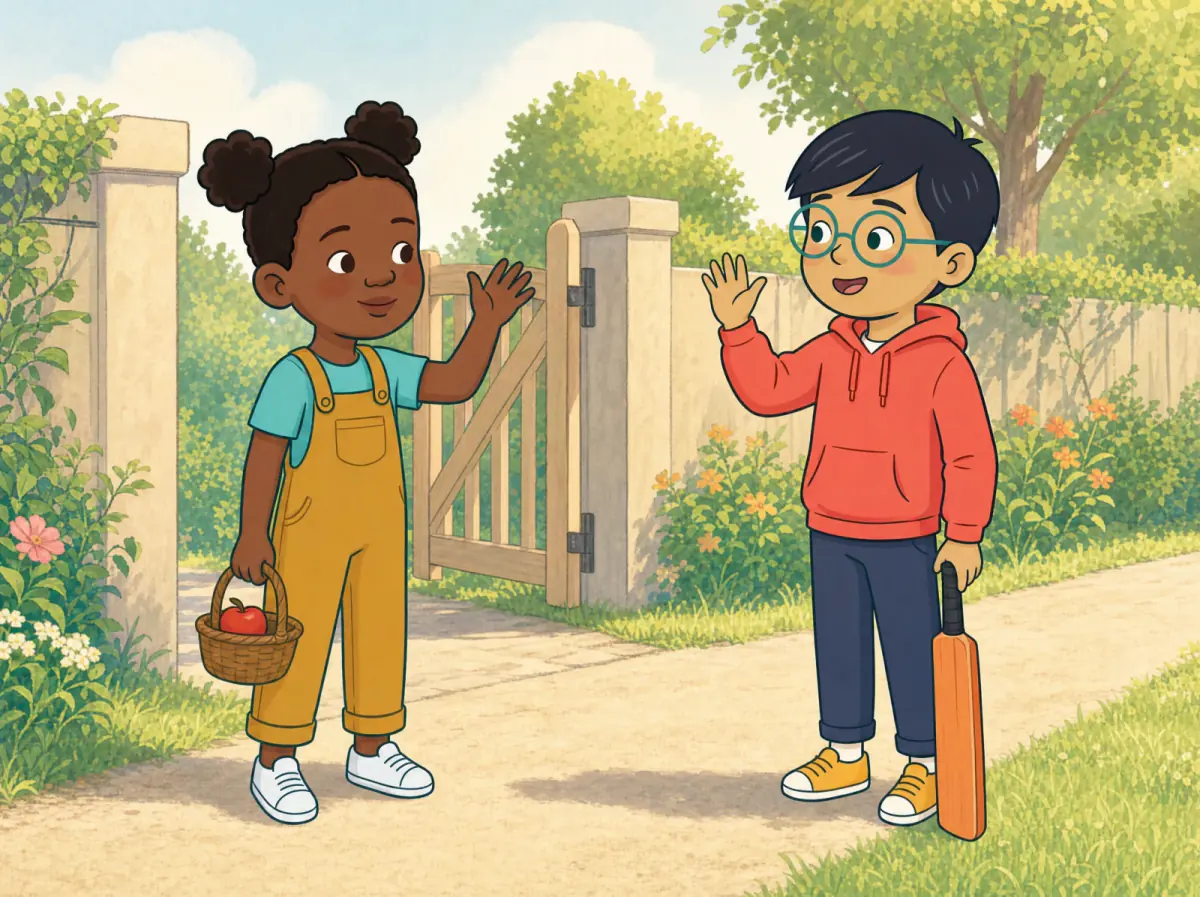
Nia and Leo wave hello beside an apple and a small sports bat.

Your child’s very first English conversation: “Hello!”, “What’s your name?”, “I’m …” and “Goodbye!”, with audio and three two-minute games at home.

The best first English conversation for a child is four short lines: “Hello!”, “What’s your name?”, “I’m Sam.” and “Goodbye, Sam!” It is the very first level (Pre-A1) and suits children of about 4–7 who are just starting English. Two or three minutes a day of greeting toys and family members is enough, and you don’t need to speak English yourself: every line has audio on this page.

Who this is for

  • Children meeting English for the first time: greetings and names are a natural first topic, because your child can use them every day.
  • Parents who aren’t confident in English: every line has audio on this page, and the sentences you need are written out here.
  • Children starting English at nursery or school: greetings and names are often the first lesson, so a few minutes at home help them join in.
  • Too early: if your child doesn’t yet answer “What’s your name?” in your home language, just wave hello and goodbye in English with toys for now.
  • Too easy: if your child already greets people and answers “What’s your name?” in English without help, go straight to “The next questions to add” at the end.

Open the sample pages

Open the sample pages

Word cards

hello
goodbye

Conversation

Nia Hello!

Leo Hello!

Nia What's your name?

Leo I'm Leo. What's your name?

Nia I'm Nia.

Leo Goodbye, Nia!

Nia Goodbye, Leo!

Language pattern

What's your name?

I'm Leo.

  • I'm Nia.
  • Hello!
  • Goodbye!

More practice

A path for hello

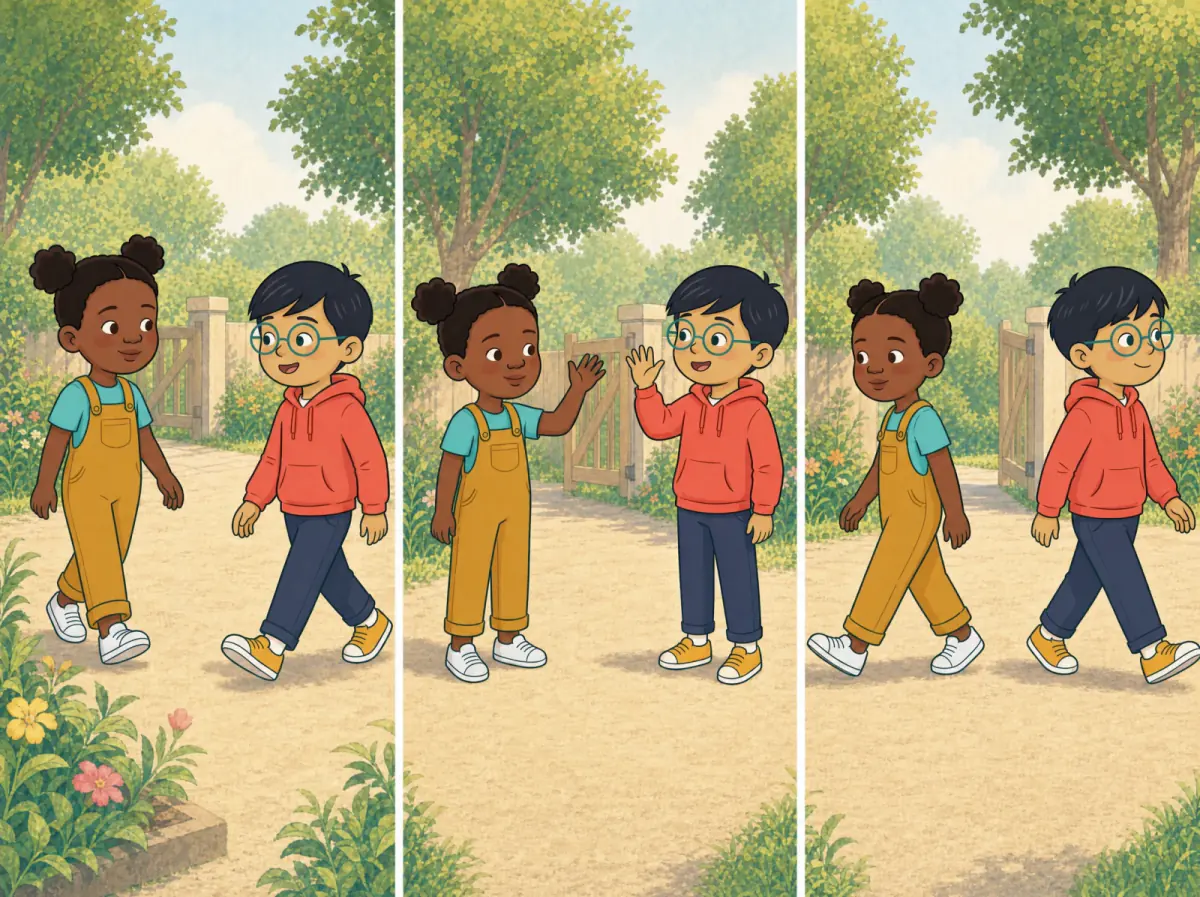
Three pictures from left to right: Nia and Leo walk towards each other, wave hello, then walk home in different directions past a garden gate.

Hello!

Goodbye!

  • one
  • two
Learn this unit
How would you like to learn?

The four lines to start with

A first English conversation needs only four short lines. The hello and goodbye cards above have audio: play them, wave as you listen, and let your child wave back before saying anything. Most children understand words before they say them, so listening and waving already count.

  • “Hello!” when someone arrives
  • “What’s your name?” to ask someone’s name
  • “I’m Sam.” to answer, with your child’s own name
  • “Goodbye, Sam!” when someone leaves, with the other person’s name

Whose name goes where

In “I’m …” the name always belongs to the speaker, so it changes when the speaker changes. Listen to the short conversation below together: Nia asks, Leo gives his name and asks back, Nia gives hers, and then they say goodbye. Asking the question back is what turns two answers into a real conversation.

At the end it works the other way round: when Leo says “Goodbye, Nia!”, he uses the name of the person he is saying goodbye to. Point to that person as you say it, so your child sees whose name it is. When you practise, use your child’s real name; they don’t need to pretend to be a character.

Nia What's your name?

Leo I'm Leo. What's your name?

Nia I'm Nia.

Leo Goodbye, Nia!

Nia Goodbye, Leo!

Three two-minute games at home

Greetings are easy to practise because they happen many times a day. Keep each game short and stop while your child still wants to play.

  • Puppet meeting: two toys walk towards each other, say “Hello!”, ask each other’s names and wave “Goodbye!” Play both toys yourself the first time, then give one to your child.
  • Name ball: sit in a circle and roll a ball. Whoever rolls it asks “What’s your name?”, and whoever catches it answers “I’m …”. Brothers, sisters and grandparents make the circle bigger.
  • Real hellos and goodbyes: when someone comes home, say “Hello, Grandma!”; at the door, at the school gate or at the end of a video call, say “Goodbye, Grandma!” and let your child say it too. Real moments help the words stick.
Learn this unit your way

If your child gets stuck

If your child repeats the question instead of answering, that is a normal first step. Let a toy answer first, “I’m Teddy.”, then ask again and whisper the start of the answer, “I’m …”, so your child only has to add their name.

Don’t correct every slip; say the right line naturally instead. If your child says “Hello!” as someone leaves, smile, wave and say “Goodbye!” Hearing the right word at the right moment is enough.

Some mix-ups come from the home language. Many languages use one word for both hello and goodbye, or need no word like “am” in “I’m Sam”. If your child says “I Sam.”, repeat the full line back with a smile, “I’m Sam!”, and carry on.

The next questions to add

When your child greets you and answers the name question without help, add one new question at a time: “How are you?” – “I’m fine, thank you.” Then “How old are you?” – “I’m five.” The “I’m …” your child already knows does most of the work. Colours, feelings and the days of the week are good next topics; the links below show how to start them.

Frequently asked questions

Should children say “I’m Sam” or “My name is Sam” in English?

Both are correct. “I’m Sam.” is short and natural in everyday speech, so it is the easier start for a young child. “My name is Sam.” is a little more formal and common in class; once “I’m …” feels easy, teach it as another way to say the same thing.

Should I teach my child “Hello” or “Hi” first?

Start with “Hello”: it works everywhere, with friends, teachers and family. “Hi” is more casual and very common between friends, so your child will hear it too. Once “Hello” feels easy, tell them that “Hi” means the same.

What if my child won’t answer in English?

That is very common at the start, and it doesn’t mean your child isn’t learning: many children listen for a while before they speak. Keep greeting them in English, accept a wave or a nod as an answer, and let a toy speak for them if they are shy. Don’t force an answer; the words usually come once your child feels comfortable.

Learn this unit
How would you like to learn?

What comes next?

One-to-one lessons with a live teacher

In Flalingo kids lessons, your child practises units like this one-to-one with a live teacher, through games on the same screen.

Book a free trial lesson