
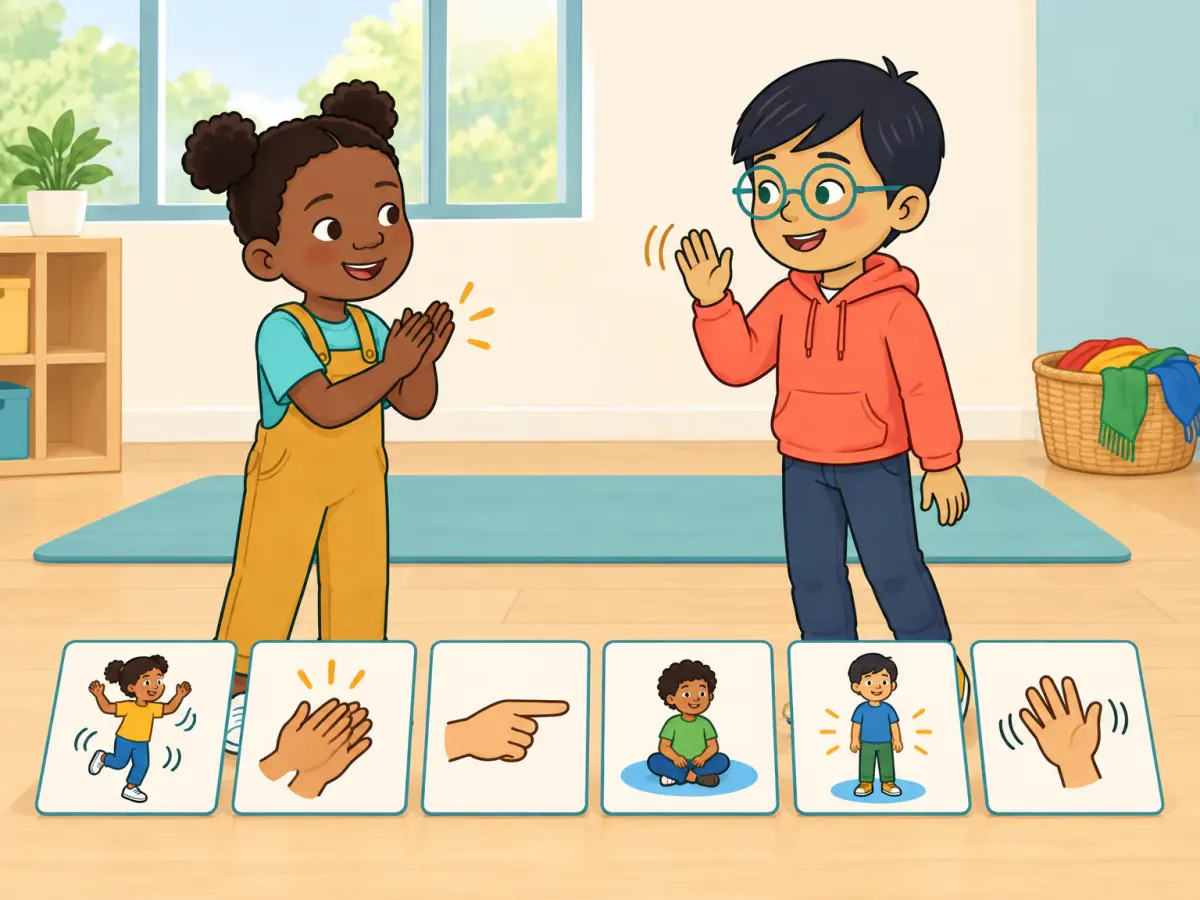
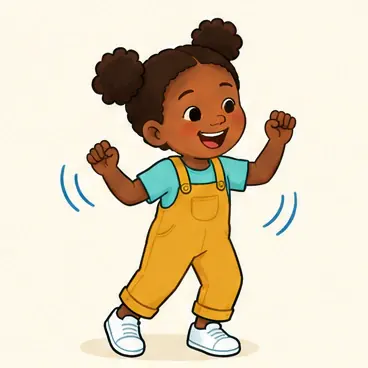
 dance
dance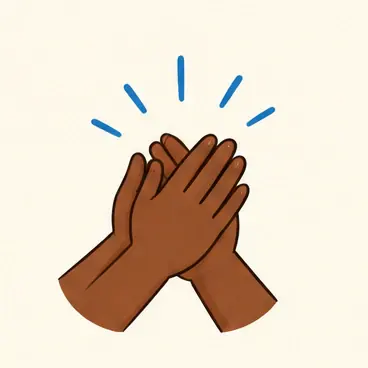 clap
clap point
point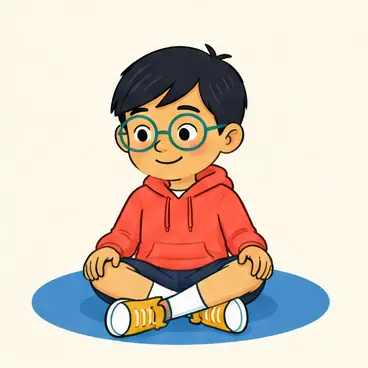 sit down
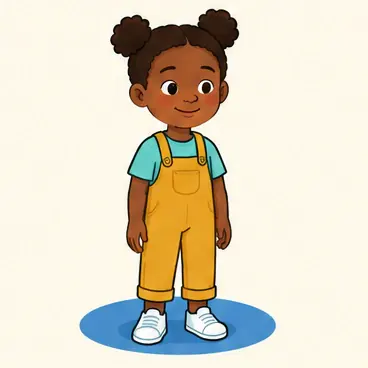 stand up
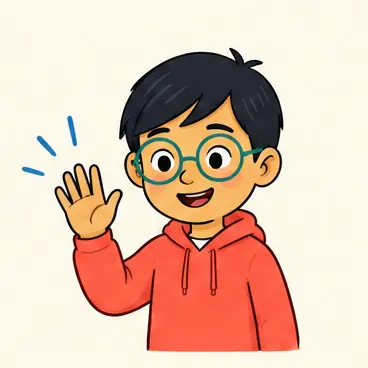 wave
wave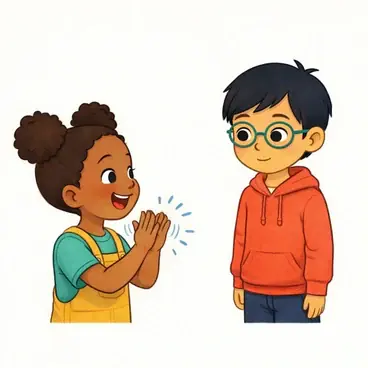 watch
watch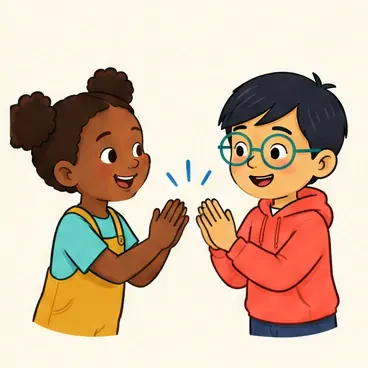 try together
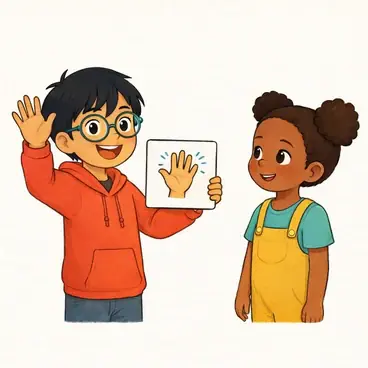 lead
leadSix action words to start with
Choose moves that fit in a small room. Play a card, do the move yourself and let your child copy you. At first the move is the answer; the word can come later.
Teach “stand up” and “sit down” as whole phrases: “up” and “down” tell your child which way to go.
- clap – clap twice: “Clap, clap!”
- wave – wave hello with one hand
- point – point at the door or the window
- dance – wiggle and turn around
- stand up – rise tall from the floor
- sit down – sit down again, slowly
“Let’s …”: one phrase that turns a word into a game
“Let’s” is short for “let us”. It doesn’t give an order; it invites someone to join you. “Clap!” tells your child what to do, while “Let’s clap!” means you will both do it. After “Let’s”, use the plain action word: “Let’s wave.”, “Let’s sit down.”
To hand over the choice, ask “What shall we do?” and wait. A word (“Dance!”) or a finger on a card is a fine answer; say the full sentence back, “Let’s dance.”, and start moving.
Below, two children take turns: one invites, the other joins in, then picks the next move.
Nia Leo, let's clap.
Leo Yes! Clap, clap.
Leo Now let's wave.
Nia OK! Let's wave.
Watch, try, lead: helping a shy child join in
Some children jump straight in; others stand still and stare. Staring is not refusing: many young children watch a game before they join it. Offer three steps and let your child move through them at their own pace:
- Watch: your child can say “I can watch first.” or just look. Say “That’s OK.” and keep playing. If your child stays at this step today, that is fine. They are still hearing the words.
- Try together: hold out your hands and say “Let’s clap together.” A move done with you feels safer than one done alone.
- Lead: once your child is moving, say “Now you choose.” and follow their pick.
Home game: follow the leader in five minutes
Lay out the action pictures, or draw stick figures, and play one short round a day:
- Your child points to three pictures in any order. Point back to each one so you both remember.
- Your child leads: “Let’s point. Let’s stand up. Let’s wave.” You follow.
- Swap leaders. Now and then, do the wrong move on purpose; most children love to correct a grown-up.
- Copy my move: one of you moves without speaking, and the other names it: “Wave! You’re waving.”
- Stop after three or four rounds, while your child still wants more.
Bigger moves for outside: run, jump, climb, stretch
When the six indoor actions come easily, add four bigger ones for the park: run, jump, climb and stretch. Indoors, act them out on the spot: run in place, make a small jump, climb an imaginary ladder, stretch up high.
Finish a round together with “We’re strong!” On the playground, ask a real question: “Can you jump?” “Yes, I can!” is a great answer, and so is “I can try.”
Common mistakes
These slips are normal at this age. Say the right version back instead of correcting:
- “Let’s to clap.” or “Let’s clapping.”: after “Let’s”, the action word stays plain: “Let’s clap.”
- Only the action word: in many languages the “let’s” meaning sits on the end of the verb, so children often say just “Clap!” That is a good start; answer “Yes! Let’s clap!”
- Dropping “up” or “down”: “Sit!” or “Stand!” alone sounds unfinished. Say back “Sit down.”, “Stand up.”
- Only giving orders: if you always say “Clap! Wave!”, your child follows but never chooses. Mix in “What shall we do?”
What comes next
When your child leads a round with “Let’s …” without help, ask “Can you …?” during real play: “Can you catch the ball?” The same inviting and turn-taking carries over to faces and feelings and to sharing in a classroom (articles below).